
NetEase Cloud Music’s Million-dollar AI Music Creation Competition Comes To An End, And The Winners Are Announced
A champion is born! NetEase Cloud Music’s Million Dollar Prize AI Music Creation Competition Concludes
A champion is born! NetEase Cloud Music’s Million Dollar Prize AI Music Creation Competition Concludes
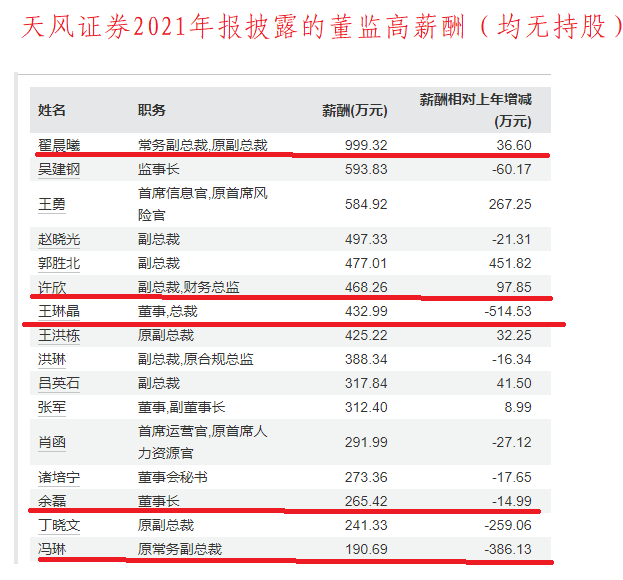
Tianfeng Securities received the "Notification of Case Filing" from the China Securities Regulatory Commission on November 28, 2025, and the "Advance Notice of Administrative Penalty" (E Pension Zi [2026] No. 7) issued by the Hubei Supervision Bureau of the China Securities Regulatory Commission on February 13, 2026.

Is it feasible for junior college students to study in Australia? Is it feasible for junior college students to study in Australia? The inclusiveness of Australia’s education system allows domestic college students to also apply to study in Australia. They can choose either bachelor’s or bachelor’s degree programs or master’s degree programs to satisfy international students.

Seeing that there are no signs of the Strait of Hormuz being restored to navigation, some European countries finally couldn't sit still and wanted to talk to Iran. The British "Financial Times" quoted people familiar with the matter as saying on the 14th..._Sina.com
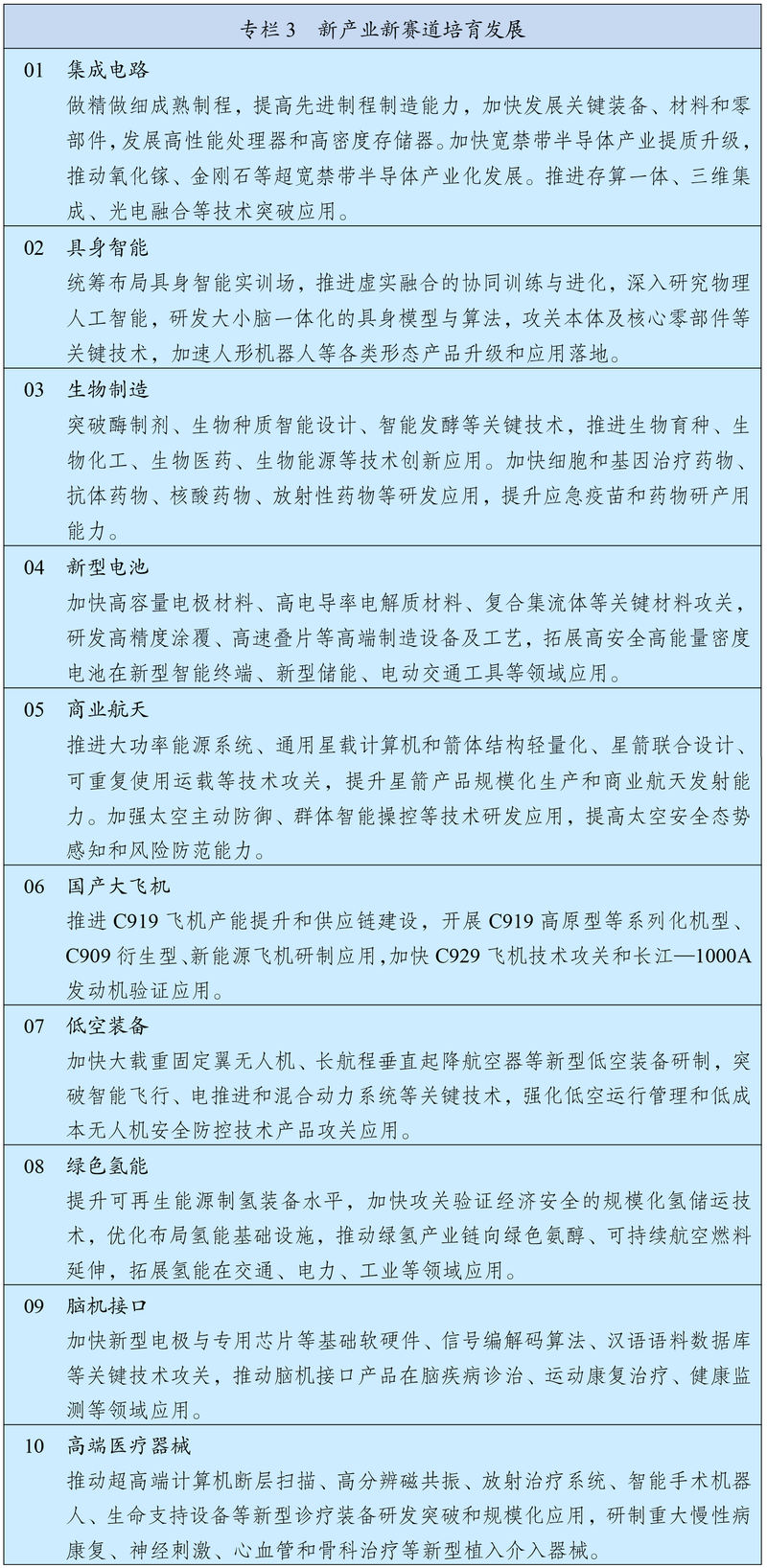
From embodied intelligence to biomanufacturing, from new batteries to green hydrogen energy, more and more new technologies are leaving the laboratory and entering application scenarios, comprehensively reshaping the industrial landscape and the future of economic and social development.
Recently, NetEase Cloud Music's "Million Prize AI Music Creation Competition" officially concluded. After a professional jury and public voting by more than 30,000 music fans, "Unikara"'s work "Just Right" won the championship, "Burrito Truck Cannon"'s work "Second Heartbeat" won the runner-up, and "Shou De Mao"'s work "Year-End Summary and Conclusion" won the third runner-up. The 10 new stars with creative potential have also been announced, and the list of winners of the competition is being announced.

The song "Just Right" composed by the musician "Unikara" won the competition championship "Peak Golden Melody Award" and received a bonus of 500,000 yuan. "Just Right" is a work that expresses the rhythm of life and emotional blankness, paying tribute to Fang Datong's "Orange Moon" album. The author uses R&B, neo-soul, etc. as the core when creating. The lyrics focus on daily moments that are easily overlooked. The melody retains the natural rhythm and human flavor, and is close to the texture of real singing. The theme of the song hopes that "oneself" can learn to slow down, not pull or escape in relationships, and find the "just right" that belongs to each other. Peng Fei, a well-known producer and music composer, commented: "(This is a) relatively complete work. It feels like the author put a lot of thought into its creation. The music library materials are used in multiple languages and styles, and there is a certain space for popular potential."
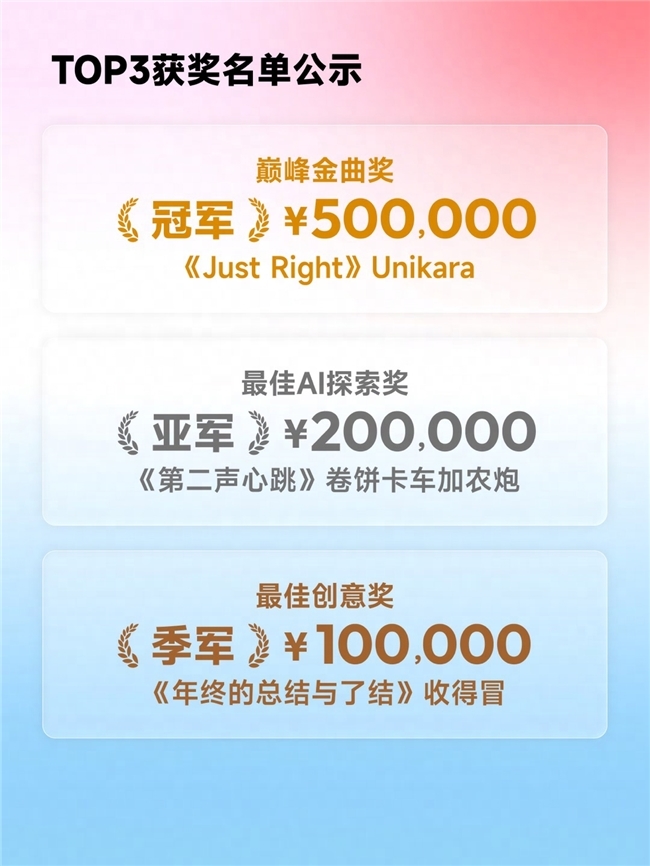
Musician "Burrito Truck Cannon"'s "Second Heartbeat" won the runner-up "Best AI Exploration Award" and received a bonus of 200,000 yuan. This work was inspired by the question "When AI can perfectly simulate human emotions and creativity, will people feel threatened or surprised?" and AI's answer to this question, emphasizing the AI's "desire to be treated as the same kind" emotion. Well-known lyricist Hong Ruiye commented: "The lyrics are great. 'Why the second tone' was used in the planning to arouse curiosity. The style of the song is not guava, but more of a new soul style. Overall it is excellent."
The musician's "Year-End Summary and Conclusion" won the third runner-up "Best Creative Award" and received a bonus of 100,000 yuan. Competition judge and AI musician "Roaming Conference Room" commented: "(This is) a positive song with a complete structure and rich details. It uses a large number of life symbols to create a strong sense of substitution. The whole song perfectly combines the two themes of bidding farewell to the past and embracing the future."
The competition also has 10 "Rising Stars with Creative Potential" awards, with bonuses of 20,000 yuan each. The list of winners has also been announced: Le Jiupei ("Want to Kiss You"), Lan Yan ("In a Time You Don't Know - Scarecrow x Wall Breaker CP Song"), Harris ("Umbrella Tends to You in the Wind and Rain"), Mengying ("Missed Call"), potherD ("If Wukong Goes to Deliver Food"), Sweam Lee ("Reflection"), Kag Chuu ("Ode to Mongolia"), Wu Lin ("Looking at each other is a spiritual kiss without contact"), Xiaotang Acridine ("Love You from Zero Distance"), XIAO_YUking ("You are fine").
In order to encourage the creation of high-quality AI songs, NetEase Cloud Music launched the "Million Prize AI Music Creation Competition" on December 11, 2025, inviting well-known professional musicians and AI music experts such as Peng Fei, Ruiye, Guan Tiantian, Roaming Conference Room, An Qi, etc. to form a professional jury, hoping to explore "what high-quality AI music should look like" and let more people feel the more possibilities of "AI+ creativity" at a higher level. In addition to bonus incentives, contestants who publish their works on NetEase Tianyin will also have the opportunity to receive exclusive incentives for AI songs, tens of millions of promotional resources, free AI creation points, platform contract cooperation and other generous resources.
Competition judge and AI musician "Roaming Conference Room" said in an interview: "I think it is a big trend for all walks of life to embrace AI, and high-prize competitions can promote the development of AI music. This is a virtuous circle. AI is still a tool in the end. Only when people use it will it be better used, and more people will use it if it is better."
It is reported that this competition attracted a total of more than 20,000 people to participate, with more than 50,000 submitted works, more than 30,000 review partners, and more than 100 million online exposures. The prize money and influence are the highest in the field of domestic AI music competitions. The competition has become one of the landmark events of domestic AI music creation.
AI is reshaping the music consumption scene, influencing and restructuring the entire music industry. In this process, NetEase Cloud Music insists on being at the forefront, not only promoting the deep integration of AI technology into users' music listening scenes, but also helping to build a healthy AI music industry ecosystem through systematic measures such as "creation tools + business mechanisms + benchmarking events". In the future, NetEase Cloud Music will continue to explore more possibilities of AI music.
Tianfeng Securities received the "Notification of Case Filing" from the China Securities Regulatory Commission on November 28, 2025, and the "Advance Notice of Administrative Penalty" (E Penalty No. 7) issued by the Hubei Supervision Bureau of the China Securities Regulatory Commission on February 13, 2026.
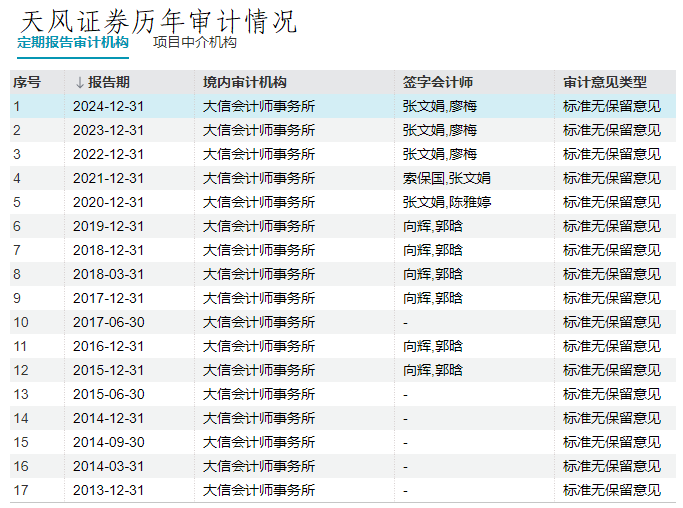
It was found that Tianfeng Securities failed to fulfill its information disclosure obligations as required and there were major omissions in the annual report.
(1) Tianfeng Securities failed to disclose related transactions with Contemporary Group as required, and there were major omissions in the annual report from 2020 to 2022
1. Tianfeng Securities failed to disclose the occupation of non-operating funds as required, and there were major omissions in the 2020 annual report and the 2021 annual report.
Tianfeng Securities provides financing to Contemporary Group through its subsidiaries Tianfeng Tianrui and Tianrui Property, resulting in the occupation of non-operating funds by related parties. In 2020 and 2021, the amount of non-operating funds occupied by Contemporary Group from Tianfeng Securities was 1.475 billion yuan and 695 million yuan respectively, accounting for 12.17% of the latest audited net assets of Tianfeng Securities. 3.98%; as of the end of 2020 and 2021, the balance occupied by Contemporary Group was 1.208 billion yuan and 1.903 billion yuan respectively, accounting for 6.92% and 7.58% of the net assets recorded in the current report of Tianfeng Securities. As of October 8, 2022, Tianfeng Securities has recovered the principal occupied by Contemporary Group and the interest during the occupation period.
2. Tianfeng Securities failed to disclose other types of related transactions with Contemporary Group as required, and there were major omissions in the annual report from 2020 to 2022.
In 2020, Tianfeng Securities purchased 2.455 billion yuan of Moderna bonds through designated investment relief projects and private equity fund products, providing a total of 2.583 billion yuan in financing for Moderna Group. It invested 238 million yuan in external investments through Wuhan Tianying Investment Group Co., Ltd., a subsidiary of Moderna Group, forming a related transaction between Tianfeng Securities and Moderna Group.
In 2021, Tianfeng Securities purchased 500 million yuan of contemporary bonds through private equity products to provide financing to the Contemporary Group; by paying 1.3 billion yuan to transfer the debt of the Contemporary Group to a company related to Xue, a related transaction between Tianfeng Securities and the Contemporary Group was formed.
In 2022, Tianfeng Securities provided 249 million yuan in financing to Contemporary Group through reverse repurchase of its own department, forming a related transaction between Tianfeng Securities and Contemporary Group.
(2) Tianfeng Securities failed to disclose related transactions with Optics Valley Financial Leasing as required, and there were major omissions in the 2021 annual report
In 2021, Tianfeng Securities participated in the capital increase and share expansion of Optics Valley Financial Leasing and transferred 500 million yuan to Optics Valley Financial Leasing in the name of equity interest payment, forming a related transaction between Tianfeng Securities and Optics Valley Financial Leasing. Tianfeng Securities should disclose the above-mentioned related-party transactions in a timely manner and in regular reports, but it did not disclose it as required, nor did it disclose it in the annual report from 2020 to 2022. Tianfeng Securities’ annual report from 2020 to 2022 contained major omissions.
In addition, from 2020 to 2023, Tianfeng Securities issued 13 bonds. The relevant bonds reference the annual reports from 2020 to 2022 in the prospectus or periodic reports on continuous information disclosure. The above-mentioned illegal facts are proved by evidence such as Tianfeng Securities announcements, situation descriptions, contract documents, bank statements, and party inquiry records.
Based on the facts, nature, circumstances and degree of social harm of the parties’ illegal acts, our Bureau decides:
1. Tianfeng Securities Co., Ltd.’s provision of financing to shareholders or shareholders’ affiliates shall be based on the provisions of Article 205 of the 2019 Securities Law:
1. Give Tianfeng Securities Co., Ltd. a warning and impose a fine of 5 million yuan; 2. Give Yu Lei a warning and impose a fine of 1 million yuan;
3. Give Xu Xin a warning and impose a fine of 1 million yuan;
4. Give Feng Lin a warning and impose a fine of 500,000 yuan;
5. Give Zhai Chenxi a warning and impose a fine of 300,000 yuan.
2. Regarding Tianfeng Securities Co., Ltd.’s illegal information disclosure, according to the provisions of paragraph 2 of Article 197 of the 2019 Securities Law:
1. Give Tianfeng Securities Co., Ltd. a warning and impose a fine of 10 million yuan; 2. Give Yu Lei a warning and impose a fine of 5 million yuan;
3. Give Xu Xin a warning and impose a fine of 5 million yuan;
4. Give Wang Linjing a warning and impose a fine of 3 million yuan;
5. Give Zhai Chenxi a warning and impose a fine of 3 million yuan;
6. Give Feng Lin a warning and impose a fine of 2.5 million yuan.
Based on the above two illegal facts:
1. Give Tianfeng Securities Co., Ltd. a warning and impose a fine of 15 million yuan;
2. Warn Yu Lei (then chairman of Tianfeng Securities) and impose a fine of 6 million yuan;
3. Warn Xu Xin (then vice president and financial director of Tianfeng Securities) and impose a fine of 6 million yuan;
4. Warn Zhai Chenxi (then vice president and executive vice president of Tianfeng Securities) and impose a fine of 3.3 million yuan;
5. Warn Wang Linjing (then director and president of Tianfeng Securities) and impose a fine of 3 million yuan;
6. Give Feng Lin (then executive vice president of Tianfeng Securities) a warning and a fine of 3 million yuan.
In view of the seriousness of the illegal behavior of the parties involved, Yu Lei and Xu Xin, our bureau decided to adopt lifelong market ban measures against Yu Lei and Xu Xin.

Is it feasible for junior college students to study in Australia?
Is it feasible for junior college students to study in Australia? The inclusiveness of the Australian education system allows domestic junior college students to also apply to study in Australia.
To study, you can either choose a junior college-to-undergraduate course or apply for a professional master's degree course to meet the various needs of international students.
Junior college students apply for study abroad program in Australia
1. Apply for a master's degree in Australia after three years of full-time college education
It is now possible for full-time three-year college students to directly study for a master's degree in Australia. There are many universities in Australia that offer accounting,
Computer and media majors are widely popular among international students. If Chinese students continue to study this major or switch to other majors,
is feasible. The duration of a master's degree program in Australia is generally 2 years, with tuition fees ranging from 14,000 to 20,000. The minimum 2-year guarantee is
About 300,000 is enough. Save several years of undergraduate studies and get a master's degree in 2 years, saving time and money.
The general IELTS requirement is 6 or above
superior.
2. Three years of full-time college education and more than 2 years of work experience
Whether you choose a major to study in Australia or find a job in the future, work experience will always be your indispensable asset. For those who have
For students with work experience, they can choose courses such as MBA, which have high career clarity and practicality.
The length of study ranges from 1.5 to 2 years.
The general IELTS requirement is 6 or above.
3. Correspondence courses, evening courses, self-study exams, adult education and other part-time colleges
For part-time 3-year college students, most Australian schools will require students to study for a master's degree before enrolling in a master's program.
Take some transition courses. Such as GraduateCertificate or PQP (PostgraduateQualifyingProgram).
This type of course plays a very important role in making up for students' insufficient background or language ability.
The general academic duration is from half a year to
It takes about a year to study mainly 3 to 8 courses. After completing the course, you can pass the course examination and enter the master's degree program.
habit. The IELTS requirement for master's transition courses is generally 5.5 or above.
When choosing a school, don't blindly pursue famous schools. Choose the one that is most suitable for students to study. often learn
Parents of students complain that there is no way to apply for the prestigious school they expect from a junior college to a master's degree. In fact, when choosing a school major
Course practicality and professional development must be combined. Combining theory with practice, and finally being able to apply what we have learned is what we expect to see
achieved results.
Many Australian public universities offer associate's and master's degree courses with affordable tuition fees, meet immigration policy requirements, and are highly practical.
Get rid of the blindness of studying abroad, choose professional schools carefully and rationally, and take the first step to successfully study abroad.
Studying in Australia and upgrading to bachelor's degree
Advantages
There are a wide range of choices, and there are many accepting schools. Both current students and graduates can apply for the same major, such as studying business as a junior college, and studying business as an undergraduate.
If you also choose business majors, credit exemptions can be made based on the student's course of study and credit status. The specific exemption standards are determined by each school
The school makes the decision based on the student's transcript. Most undergraduate majors in Australia last for three years. Transfer credits for the same major may only require reading the last 2
year or 2.5 years. If it is cross-professional,
Generally, you need to study preparatory courses + undergraduate courses. If you have excellent grades, you can apply for exemption from preparatory courses and go directly to study.
This way, the time to complete an undergraduate degree is shortened to 3 years.
Disadvantages
The courses are long, usually 3 years for undergraduate studies, or 2.5 or 2 years for transfer credits, so they are not suitable for those who want to graduate in a short period of time.
Students upgrading their diploma or further studies.
Study in Australia and get a master's degree
Advantages
time is short,
It varies from one year to one and a half years to 2 years. The majors are different, so the opening times of each institution are different. from junior college to master's degree
Students studying for a master's degree in Australia are the same as students who have graduated from a normal undergraduate degree, and the classes are all together, except for the undergraduate degree.
There is a wide range of options for applying for a master's degree in Australia after graduation.
Generally, work experience is not required. Some programs from junior college to master's degree require work experience.
The requirements will vary. In terms of graduation and master's degree, there is no difference between undergraduate and master's degree, and there is no need to doubt the gold content.
The amount is different. Because Australia is a country that is open to immigration and where you can obtain a work visa, you only need to study in Australia for two years.
No matter you graduate from any major, you can get a two-year work visa.
Disadvantages
There are few schools in Australia that accept associate's degree to master's degree. There are no associate's degree to master's degree programs in the Eighth National University. There are only some four-star schools, and ** is ranked among the top.
It’s about 200, and the majors from associate to master’s degree are generally only business majors. Therefore, students are required to submit detailed academic background. Some colleges
The school requires work experience.
Most of the schools and advantageous majors in Australia that accept associate's degree to master's degree include:
University of Wollongong, Business and IT, University of Newcastle, Business and other majors, University of Western Sydney, Translation, Business
Department of Science, Swinburne National University of Technology, IT Design, Deakin University, Accounting CPA Examination Center, Double Degree Courses,
Central Queensland, Business, etc.
_1726_
_19926.html
Seeing that there are no signs of the Strait of Hormuz being restored to navigation, some European countries finally couldn't sit still and wanted to talk to Iran.
The British "Financial Times" quoted people familiar with the matter as saying on the 14th that some European countries, including France, have launched exploratory contacts with Iran, seeking to reach some arrangement for the safe passage of their ships through the Strait of Hormuz, with a view to restarting energy transportation from the Gulf. The report also said that Italy is also trying to open channels for dialogue.
However, there is currently no clear answer as to whether the negotiations can advance and whether Iran is willing to negotiate on this matter.
Europe has not been kind to Iran in recent years. Following the footsteps of the United States, European countries have launched sanctions on Iran and criticized its human rights situation. Since the United States and Israel launched military strikes against Iran, although Europe has expressed different opinions - some are closer to Washington, and some have openly questioned the legality of the United States and Israel's actions, on the whole, Europe has not sided with Iran.
However, now that the Strait of Hormuz is blocked, European countries have to face reality.

On March 11, an oil tanker caught fire in the ship-to-ship transfer area of Khor Zubair Port near Basra, Iraq.
For Europe, blocking a strait affects more than just a few ships. The Strait of Hormuz is responsible for about one-fifth of the world's oil and liquefied natural gas transportation. Although Europe is not the region most directly dependent on this channel, after the Russia-Ukraine conflict, European countries sharply reduced Russian energy imports and became highly dependent on liquefied natural gas from the Middle East. The energy structure has become more fragile and more sensitive to fluctuations in global oil and gas prices and natural gas spot markets.
The impact is first reflected in energy prices. International oil prices have risen sharply, with London Brent crude oil futures prices once rising to about US$119 per barrel, setting a new high since 2022. As the European natural gas benchmark price, the price of Dutch TTF natural gas futures once soared by more than 80% compared with before the war. It can be seen that the obstruction of shipping directly triggered market panic.
The British "Guardian" quoted Citi analysts as warning that if the Strait of Hormuz is completely closed for three months, European wholesale natural gas prices may rise to $100/MWh, nearly three times the pre-crisis level, which will seriously exacerbate Europe's cost of living crisis. Goldman Sachs also predicts that even a month-long blockade will be enough to increase European natural gas prices by 130% compared with pre-crisis levels.
Secondly, the supply chain faces the risk of disruption. Currently, some energy facilities in the Middle East have stopped production due to war and overlapping waterways are blocked. The European natural gas supply chain is facing huge uncertainty. Europe's current natural gas inventories are only about 30% of storage capacity. Industry data shows that German gas storage inventories are about 21% of storage capacity, which is the lowest level for the same period in recent years.
The Bruegel Institute pointed out that Europe's direct dependence on Gulf oil and gas is relatively limited, but any long-term disturbance to the Strait of Hormuz will be transmitted to Europe through global oil and gas prices and increase the difficulty of replenishing its reserves for the next winter.
Finally, there are inflationary and recessionary pressures. Shipping detours or stagnations have caused global oil shipping costs to soar rapidly, and the rise in energy and transportation costs will be quickly passed on to production costs, thereby pushing up local prices in Europe, eroding corporate profit margins and household purchasing power, and creating huge resistance to Europe's economic recovery.
Europe is no stranger to this pain.
After the conflict between Russia and Ukraine broke out, Europe paid a high price to get rid of its energy dependence on Russia. Financial subsidies, high-priced gas purchases, pressure on industries, and tightening of people's livelihoods took several years to fill the hole until it stopped losing blood.
But now, the fire in the Middle East has opened another hole. With the Strait of Hormuz, Europe's anxiety was almost immediately reawakened. Old wounds have not healed, and new ones have appeared. This is the background that Europe is eager to talk about right now.
But what makes Europe even more uncomfortable is not just energy.
Since the Trump administration began its second term, what Europe has felt is not an "alliance dividend" but one blow after another. The threat of tariffs has returned, and the United States has recently launched trade investigations against the EU and many European countries. Karas, the EU's high representative for foreign affairs and security policy, bluntly said that the United States is trying to "split Europe."
The most obvious move was the threat to annex Greenland. Trump has repeatedly threatened to acquire Greenland on the grounds of so-called "national security," which has caused the transatlantic alliance to fall apart at an alarming rate. It has also made it increasingly clear to Europe that "alliance" does not mean that its own interests will be prioritized.
As a result, Europe's situation is now increasingly embarrassing. On the one hand, Eastern European countries, especially Poland and other countries, still need to rely on the United States for security and diplomacy; on the other hand, Europe continues to find that the United States will not be particularly merciful when it threatens because of the word "ally."
The aftermath of the energy crisis caused by the Russia-Ukraine conflict is still there, and the fire in the Middle East has been burned again. However, the United States has brought about the reality that in addition to asking Europe to continue to cooperate, it has put European interests in the back seat again and again.
Europe wants to talk to Iran, and the core materials of the discussion are straits, shipping and energy. Because it has followed the same path all the way to today, Europe finds that what it has gained in exchange is not a more stable sense of security, but a higher price, less room for maneuver, and an America that increasingly does not hide its "America First" policy.
From embodied intelligence to biomanufacturing, from new batteries to green hydrogen energy, more and more new technologies are leaving the laboratory and entering application scenarios, comprehensively reshaping the industrial landscape and the future of economic and social development. The "Fifteenth Five-Year Plan for National Economic and Social Development of the People's Republic of China" released on March 13 proposed that in the next five years, our country will "cultivate and strengthen emerging industries and future industries." It also proposed ten "new industries and new tracks" including embodied intelligence, domestically produced large aircraft, brain-computer interfaces, and low-altitude equipment.
How to achieve this goal? What impact will the layout of new industries and new tracks have on future industrial development? A reporter from the Beijing News interviewed Zhu Keli, a well-known economist and founding director of the Guoyan New Economic Research Institute. He said that emerging industries and future industries represent the forefront of scientific and technological revolution and industrial transformation, and are the core carriers of cultivating new productive forces. Listing them as key industries in the future reflects the strategic vision of "based on the future and planning in advance."

The “15th Five-Year Plan” outlines the layout of ten new industries and new tracks. Xinhua News Agency
New industries, new economic growth poles
When brain-computer interfaces, embodied intelligence, etc. increasingly appear in people's daily lives, they are not only cutting-edge technologies in the laboratory, but also the foundation of industries that will lead the future. Zhu Keli said that this is precisely why the "15th Five-Year Plan" outlines the layout of new technologies, new industries and new tracks at the national strategic level, "reflecting the country's strategic choice on the driving force of economic transformation in the new development stage."
This strategic choice is the inevitable result of adapting to new trends in international and domestic development. Zhu Keli said, "Emerging industries and future industries represent the forefront of technological revolution and industrial transformation, and are the core carriers of cultivating new productivity. Among them, aerospace, low-altitude economy, green hydrogen energy, new batteries and other tracks are accelerating to grow into emerging pillar industries. From an international perspective, global technology competition is intensifying, and all countries are competing in frontier fields. my country must take advantage of the trend to seize the commanding heights of the global industrial division of labor; from a domestic perspective, the fundamental way to solve the "stuck neck" problem and achieve high-level technological self-reliance is to rely on these emerging tracks to achieve technological breakthroughs and industry changes. Placing them in a prominent position is to focus on medium- and long-term competitiveness, build strategic advantages for sustained and healthy economic development, and is also a precise grasp and scientific response to the trends of the times. "

Zhu Keli, economist and founding director of the Guoyan New Economic Research Institute. Photo provided by interviewee
Although at present, some new industries and new tracks, such as embodied intelligence and brain-computer interfaces, still need a process to reach large-scale application, Zhu Keli believes that making them a priority in national planning reflects the strategic vision of "based on the future and planning in advance." "Future industries have long cultivation cycles, large investments, and rapid technological iterations. Strategic reserves must be launched when the technology is still in the breakthrough stage to avoid being controlled by others at the critical stage. These fields contain disruptive technological potential. Once breakthroughs are made, the industrial pattern will be completely restructured and huge economic and social value will be created. For example, the low-altitude economy can link manufacturing, transportation, cultural tourism and other fields to form a new industrial ecosystem. From the perspective of industrial planning According to the law, the development of emerging industries needs to go through a long incubation period from laboratory to industrialization, and early policy guidance and resource support are crucial. Advance planning can accelerate the process of technological maturity and industrialization through policy guidance, factor aggregation and scene opening, and form a first-mover advantage. This is not only an investment in the future, but also to seize the initiative in future industrial competition and inject lasting momentum into national development."
New goals to build a complete business format
In the layout of new industries and new tracks, what goals and paths does the “15th Five-Year Plan” outline show?
Zhu Keli said that from the perspective of goals, the cultivation of new industries and new tracks has clear phased goals. “The overall goal is to build an internationally competitive modern industrial system and provide solid industrial support for the realization of Chinese-style modernization. Specifically, the goals are reflected in three levels. The first is the technical goal. We strive to achieve a number of key core technology breakthroughs in key areas such as embodied intelligence and biomanufacturing in the next five years, narrow the gap with international advanced levels, and achieve international leadership in some areas. The second is the industrial goal, which is to promote emerging industries to become an important pillar of the national economy. In the future, the industry will form a large-scale and industrialized development trend, significantly increase its proportion in GDP, and create a number of industrial clusters with global influence. The third is the ecological goal, to build a number of industrial ecology with aggregation of elements, complete functions, and open collaboration, and to cultivate a large number of leading enterprises and specialized new enterprises with innovative vitality and market competitiveness, laying a solid foundation for the long-term healthy development of the industry."
On August 7, 2025, the world's first "smart canteen" Galaxy Space Capsule with embodied intelligent robots as store clerks was unveiled at Zhongguancun Fusion City. Data map/photo by Beijing News reporter Pu Feng
How to achieve these goals? The “15th Five-Year Plan” outline also draws a clear road map. Zhu Keli explained that the "15th Five-Year Plan" outline emphasizes systematic promotion and precise policy implementation for the cultivation of new industries and new tracks. The core path includes strengthening top-level design and overall coordination, building a three-level linkage cultivation system of national, local and enterprise levels, and clarifying development priorities and implementation steps. Adhere to the innovation drive, increase investment in basic research and cutting-edge technology, rely on national laboratories, new R&D institutions and other platforms to concentrate on breakthroughs in key core technologies and consolidate the foundation for industrial development; deepen openness and collaboration, encourage cooperation between domestic and foreign innovation forces, actively participate in the formulation of international standards, and integrate into the global innovation network; focus on scenario empowerment, targeting low-altitude economies, specific We will build exclusive application scenario demonstration bases and open professional test platforms for featured tracks such as personal intelligence. Through the construction of application scenario demonstration bases and open test platforms, we will promote the iterative verification of technologies in real scenarios and accelerate the transformation of results. We will also improve factor guarantees and give preference to the allocation of funds, talents, data, land and other factors to provide a good ecosystem for corporate innovation. "It can be seen that in the implementation path of the '15th Five-Year Plan' outline, through the above multi-dimensional measures, we will ultimately promote new industries and new tracks from concept to reality and achieve healthy and sustainable development." He said.
New track, multiple measures to lay out the future
Although many new technologies have attracted widespread attention across society, and have even given rise to many hot spots and new trends, many new technologies are still far from being truly universal and maturely applied. The “15th Five-Year Plan” outline also clearly proposes the establishment of a risk-sharing mechanism.
What are the risks of new technologies and new industries in the future? Zhu Keli said that the development of new technologies first faces the risk of uncertainty. The technical routes in frontier fields have not yet been completely finalized. Technologies such as multi-modal perception of embodied intelligence require large R&D investments and high failure rates. There are R&D bottlenecks and technology iteration risks. Secondly, there is the risk of an imperfect industrial ecology. There are shortcomings in the supply chain of core components, materials, equipment, etc. For example, the supporting system for key materials such as new batteries is not yet complete, which restricts the large-scale development of the industry. Thirdly, there are market risks. Application scenarios in some areas have not yet been fully opened. For example, the commercial operation model of low-altitude economy needs to be verified, and there is uncertainty in market acceptance. At the same time, international competition and the risk of technology blockade are intensifying, global technology competition is intensifying, and key technologies and equipment are facing the pressure of being "stuck". In addition, there are still problems such as talent shortage, insufficient capital investment, lagging regulatory rules, safety and ethical challenges, etc., which all pose real challenges to the healthy development of the industry.
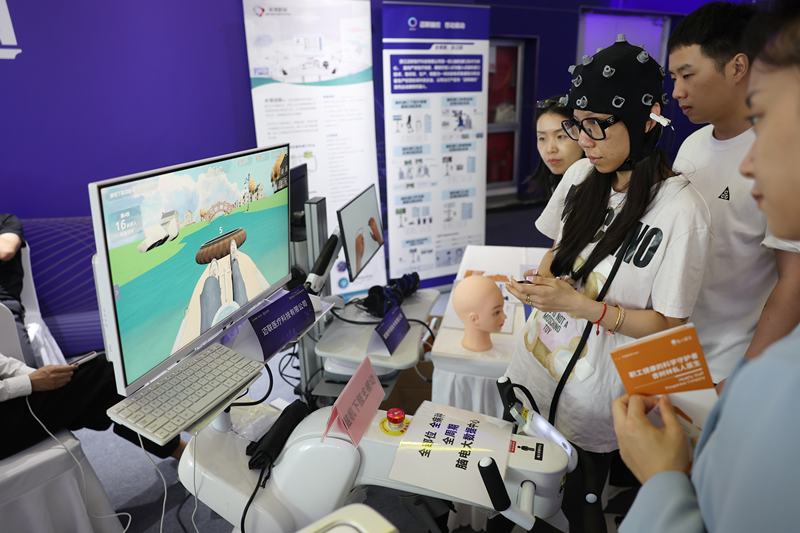
On June 26, 2025, at the Second Intelligent Medical Industry Innovation and Development Conference held in Fengtai District, staff demonstrated brain-computer interface equipment. Photo by Beijing News reporter Tao Ran
How to deal with future challenges and risks? How to establish a risk sharing mechanism? Zhu Keli believes that to deal with challenges and risks, we need to adhere to a problem-oriented approach and take multiple measures. The first is to strengthen core technology research, give full play to the advantages of the new national system, and concentrate resources to break through key bottlenecks in new batteries, low-altitude equipment, brain-computer interfaces and other fields. The second is to improve the industrial ecology, strengthen upstream and downstream collaboration in the industrial chain, cultivate supporting enterprises, and improve the emerging track supply chain system. The third is to optimize the market environment, increase the opening of scenarios, and cultivate market demand through policy guidance and demonstration applications. The fourth is to strengthen international cooperation, actively participate in global governance, and enhance international voice. Regarding the risk sharing mechanism, a diversified system involving the participation of governments, enterprises, financial institutions, and social capital should be established. At the government level, special funds can be set up, risk compensation can be provided, tax incentives can be implemented, and early R&D and trial-and-error costs can be reduced. At the enterprise level, an internal risk sharing mechanism should be established to disperse risks through technological innovation cooperation, intellectual property sharing, etc. At the financial level, develop financial tools such as technology insurance, intellectual property pledge financing, and venture capital to provide capital guarantees for enterprises. At the social level, guide industry associations, scientific research institutions, etc. to participate in risk co-management, forming a good pattern in which multiple parties work together and share risks.
On July 17, Eastern Time, the U.S. House of Representatives passed the "National Innovation Act to Guidance and Establishment of U.S. Stablecoins" (referred to as the "Genius Act" or "Stablecoin Act") with a vote of 308 in favor and 122 against, aiming to carry out major legislative reforms to cryptocurrency regulation.
According to CCTV News, a month ago, the U.S. Senate passed the aforementioned "Genius Act" with a rare overwhelming majority. This was also the first time that the Senate passed crypto-asset legislation. After passing the House of Representatives, the bill will be submitted to President Trump, who will sign it into law.
The bill clearly requires stablecoin issuers to hold U.S. dollar asset reserves at a ratio of 1:1, and the purpose of issuance is payment or settlement, rather than securities or commodities. It also restricts technology giants from issuing stablecoins and mandates federal or state-level license management.
The analysis pointed out that this marks that the entire cryptocurrency market will enter a more standardized but more competitive stage, and will also have a profound impact on the digital asset landscape and financial markets in the United States and even the world, including further helping to strengthen the status of the U.S. dollar while further weakening the sovereign currency credit of some countries, which may face greater trade challenges.
The biggest feature of traditional cryptocurrencies such as Bitcoin is that their prices fluctuate violently. Stablecoins, as a cryptocurrency anchored to stable assets (such as legal currency and gold), exist to solve this problem and require cryptocurrency to use 100% of legal currency as a reserve value.
Entering 2025, stablecoins will usher in a major breakthrough. The current global scale has exceeded US$250 billion, exceeding the combined transactions of VISA and MasterCard for the first time. U.S. Treasury Secretary Bessent recently predicted that this scale may reach 2 trillion U.S. dollars in the future, which will significantly increase the demand for the U.S. dollar and U.S. debt, thereby directly strengthening the U.S. dollar monetary system.
In addition to the United States, since 2018, the United Kingdom, Australia, Japan, the United Arab Emirates, Singapore, the European Union, Hong Kong, Cayman Islands, Panama and other countries/regions have successively issued or announced regulatory bills to promote stablecoins and cryptocurrencies. Among them, the European Union, the United States, and Hong Kong, China, all have statutory reserve ratios for banks close to 0%, but stablecoin issuers require a reserve ratio of 100%.
In addition, the U.S. House of Representatives also passed a broader cryptocurrency market structure bill, the Clarity Act, on July 17, which will be submitted to the Senate for consideration.
The Clarity Act aims to clarify the division of responsibilities between the U.S. Securities and Exchange Commission and the U.S. Commodity Futures Trading Commission in the regulation of digital assets. The bill covers all digital assets associated with blockchain systems, including mainstream cryptocurrencies such as Ethereum and Ripple, and divides these digital assets into two categories: securities assets (still regulated by the Securities and Exchange Commission) and commodity assets (regulated by the Commodity Futures Trading Commission).
 Meta Cut Equity Incentives For Most Employees For The Second Consecutive Year, And Some Employees Had Mixed Reactions2026-02-28Comments(0)
 Qianwen’s First AI Hardware Qianwen AI Glasses Are On Sale And Will Hit The Global Market In 20262026-03-22Comments(0)