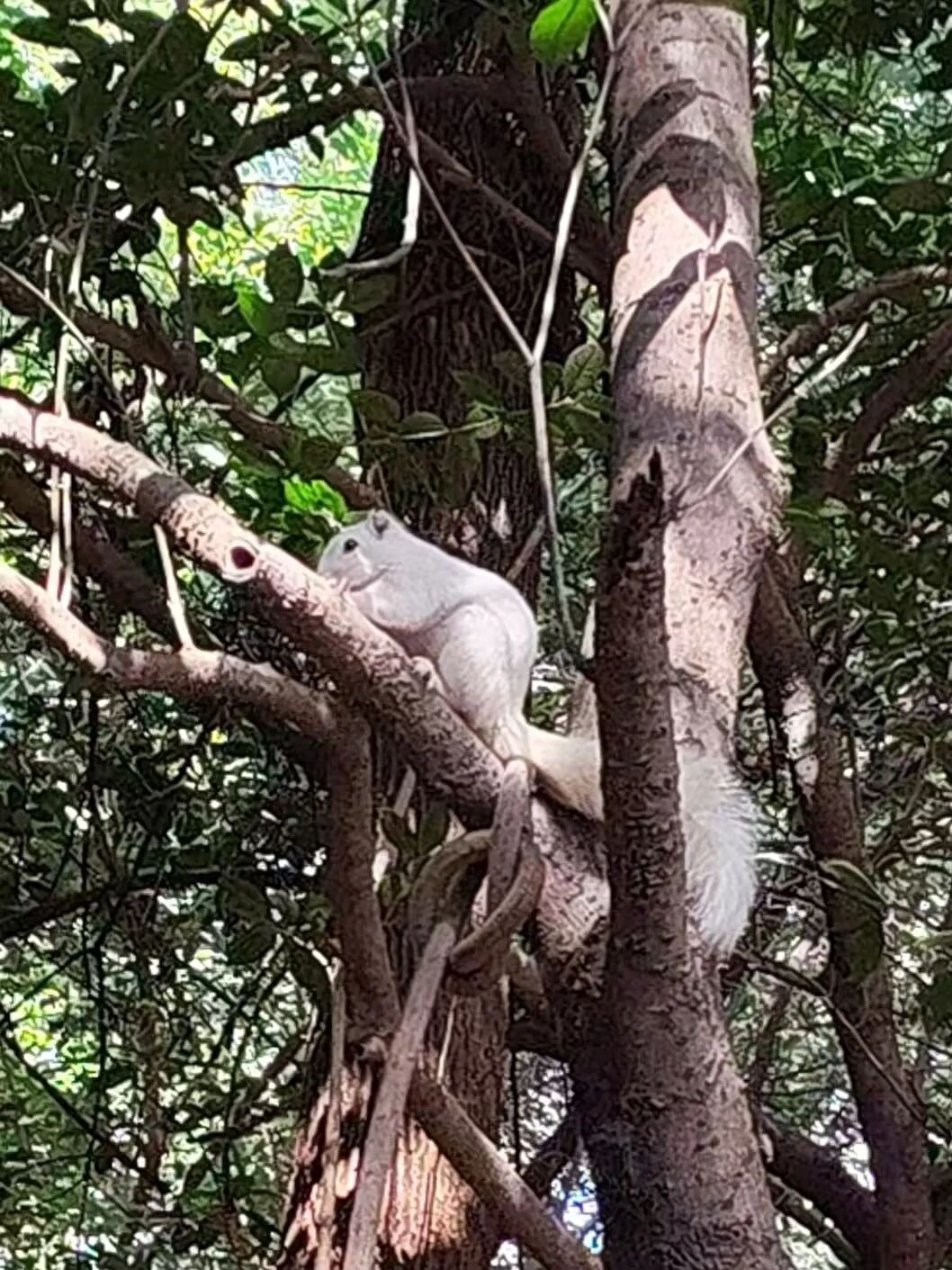
After leaving Panlong Airport in Guangyuan City, Sichuan Province, we headed northwest along the mountain road and arrived at the Tangjiahe area of the Giant Panda National Park in about two hours. On the other side of the river, several Sichuan takin, a national first-level protected wild animal, stood leisurely on the edge of the cliff looking for food.
This scene reminds people of the eye-catching signboard when they passed the boundary marker a few minutes ago – "You have entered the Giant Panda National Park, and the world is still the way it is here."
Upon arriving at Guozishugou, the reporter met Gu Xiaolin and Yu Changming, rangers of the Tangjiahe area of the Giant Panda National Park, who were sorting out equipment. "We can't relax during the Spring Festival holiday. Someone has to look after our 'neighbors' in the mountains." Gu Xiaolin smiled, put on his backpack, and led the group into the ravine.
Arriving at an intersection of "animal paths", Yu Changming skillfully turned on the infrared camera on the tree trunk, and vivid pictures appeared on the screen: a muntjac walking through the forest in the morning light, a wild boar mother and her cubs searching for pine cones, a tufted deer stopping to look at the camera…
"Look at how lively the Spring Festival is on the mountain! The more than 400 infrared cameras in the area are our 'eyes', guarding the animals 24 hours a day." Yu Changming said while changing the camera battery. "More than 3,800 species of wild animals and plants have settled here. Anti-poaching, forest fire prevention and epidemic prevention and control cannot stop for a moment."
After completing the 10-kilometer monitoring line, the rangers continued patrolling along the highway, and the mountains gradually became noisy.
In front of the glacier ruins, a group of children from the research group were looking at the Tibetan Emirates monkeys in the forest and marveled softly. "The Spring Festival is the peak tourist season in Tangjiahe. Many study groups and photography enthusiasts come here every day. I will be a nature lecturer for everyone in a few days," Gu Xiaolin said.
Walking to the Baiguoping Conservation Station, a blue-grey monument stood in the dim light of the end of the day. The mottled writing on the monument tells a little-known history: In 1978, in order to protect rare animals such as giant pandas, Sichuan golden monkeys, and Sichuan takin, the Qingchuan logging camp was closed, and the Tangjiahe forest area was designated as a nature reserve.
The mountain wind passed by, and the pines and cypresses in front of the monument rustled. From the roar of chain saws in logging camps, to the closure of mountains for forestation in nature reserves, to the sharing of national parks by all people, generations of forestry people have written a beautiful chapter of the harmonious coexistence between people and nature in Tangjiahe with their perseverance and dedication.
"Guangming Daily" (Page 02, February 17, 2026)

![[Netherlands] France Turns To The Netherlands To Support Its Military Operations-Lijin Finance](https://www.erbetc.com/wp-content/uploads/2026/03/1773277663261_0.webp)