
During my trip to South America at the end of last year, because the cruise ship had no internet connection at sea, I didn't receive the express delivery message until I landed in Mexico. It had been delayed for three days, so I hurriedly notified my wife to pick it up. My wife told me that there were three books and sent me photos. They were Ms. Yao Zhenghua's "The Scholar Is Forever" and Mr. Hu Hongxia's "Four Episodes in the Night Study: The Forest of Books and the Fun of Books" and "Five Episodes in the Night Study: My City and My Books". I can’t help but wonder what new plays Da Xia will direct on the stage of Night Study, and what new horizons Xiao Yao will open up for us in the ninth book of the Book Man series.
When I returned to Nanjing a month and a half later, the first thing I did was to read the new books of this virtuous couple. As expected, the spring breeze brought peaches and plums to life, each with its own new look.
"Night Study" was first the name of Hu Hongxia's newspaper column, and later became his public account on the Internet, and was gradually compiled into a book. The first thing I read was the imitation leather hardcover edition published by Yuelu Publishing House in 2011. On the title page was a message from the hero on December 24, 2012. In my mind, that was also the time when I first met him. There is a bookplate on the front of the book that says "Hong Xia hides beauties, three thousand volumes of beauties in the harem". Because this edition "only printed a thousand copies and was not widely sold", there was a new edition by Zhejiang University Press in 2018. At this time, there were plans to continue the book. The title was changed to "The First Collection of Night Study". As a matter of fact, one after another, not only is the "Night Study" series no longer "lonely", but the hero's study has also become a cultural landmark in Shenzhen.
The two new episodes of "Night Study" are different from the previous three episodes in that they have an additional book title and a clear theme. In fact, they are a transition from a general to a specialist. That is what the author said in "Night Study Room Four Episodes – Preface": "I tried to use 'bricks' that shine with different lights and glow with different colors to build a few more unique buildings. In other words, those scattered reading words were originally like stragglers. This time I organized them into different new formations to perform their own new tasks."
The episode "Book Forest and Book Fun" focuses on the beauty of books, "trying to establish your own 'overall view of books'" to cope with the new situation of the "winter of paper books", and "providing fellow book lovers with a few more reasons to love books even more." The so-called "whole book view" regards the beauty of books as a whole: "Books integrate writing, fonts, typesetting, illustrations, paper, bookplates, book seals, cover design, binding, printing and other arts into one. Even if their stylistic content can be moved to other carriers, their material form is irreplaceable as an artistic carrier. Moreover, sometimes books themselves are art." ("Why Books Will Not Die") as early as "Night" In "The First Episode of the Study", Daxia has already paid attention to the "death" issue of paper books: "Those 'industry insiders' are announcing the 'death date' of paper books again. So I guess what printed books will look like ten or twenty years from now. When e-readers all collect rows and cabinets of E-BOOKs, can we wait until the advent of another era that pays attention to the art of books?" ("The Era of the "Illustrated Collection"). After more than ten years, the author's thinking has become more in-depth, the discussion has become more systematic, and he has quoted from many sources, trying to clarify the artistic and aesthetic functions of books in addition to their function as text carriers, until they become independent works of art. "Time turns 'practical' into 'useless', and 'useless' makes 'objects' into 'art' – many phenomena can be explained clearly by this principle." He also "discovered an interesting and strange phenomenon", that is, "China's most beautiful books" and "Shenzhen Reading Month's top ten books of the year", and the best-selling books in major bookstores "the books in these three categories of lists basically do not overlap", that is, "the tearing of 'beautiful books' and 'good books'", so he proposed the vision of selecting "beautiful books of the year". The first 16 pages of color illustrations are the design work done by students from the School of Art and Design of Zhongyuan Institute of Technology for "The First Collection of Night Study", which can be regarded as a practice in pursuing the beauty of books.
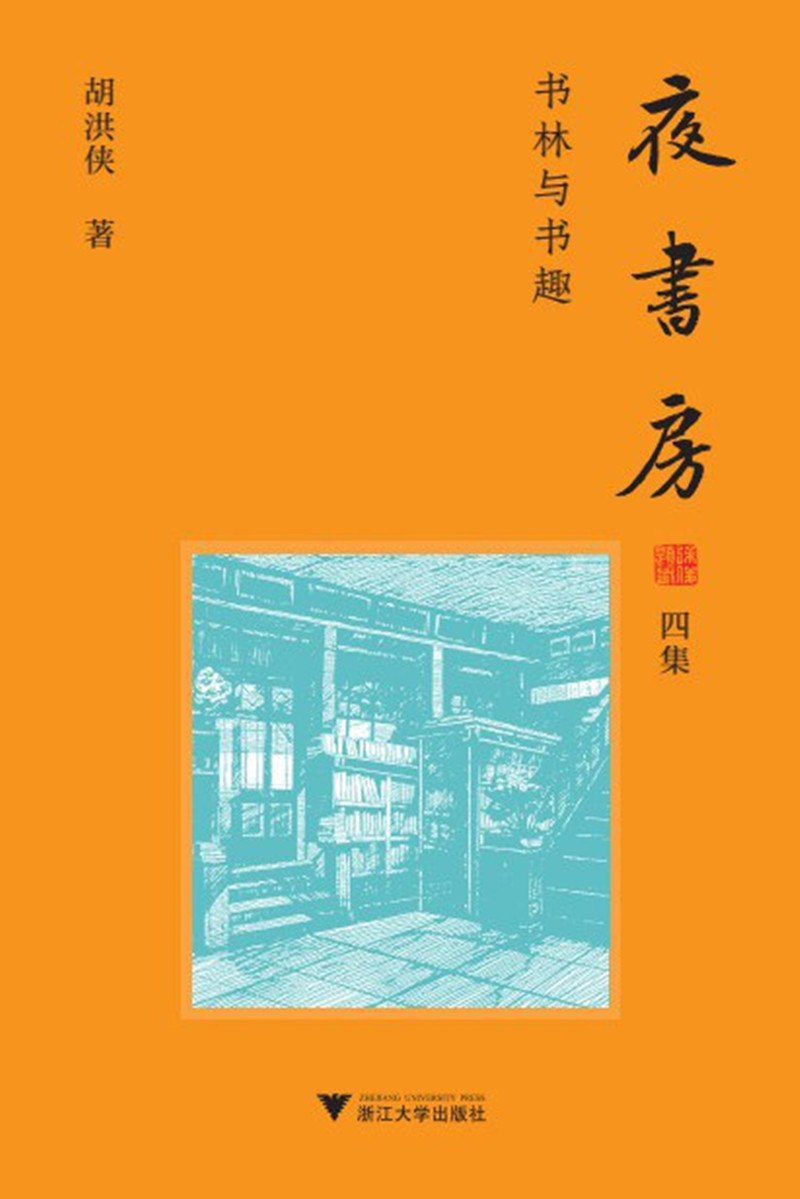
"Four Episodes of Night Study: Books and Interests in Books", written by Hu Hongxia, published by Zhejiang University Press in 2025
In the episode "My City and My Books", the author's "Preface" explains: "The collected articles are divided into three series: my city, books written by people in the city, and prefaces and postscripts written by me." "'My City' refers to books from the city of Shenzhen," which focuses on urban culture. My favorite part is the "My Book" part, which is the preface and postscript written by the hero for his own book. From it, we can clearly see his writing and ideological process, and it can be reflected in the urban cultural development of Shenzhen: "If you want to have a sense of 'my city', you may need to find a token that 'I' and the 'city' belong to each other and achieve each other. My token is the book." Books written by friends in Shenzhen, and the prefaces and postscripts written by heroes for these books are also such tokens. The colorful insert at the front of this book is the cover of "My Book". I have read most of his books, and I never expected that there would be so many editions.
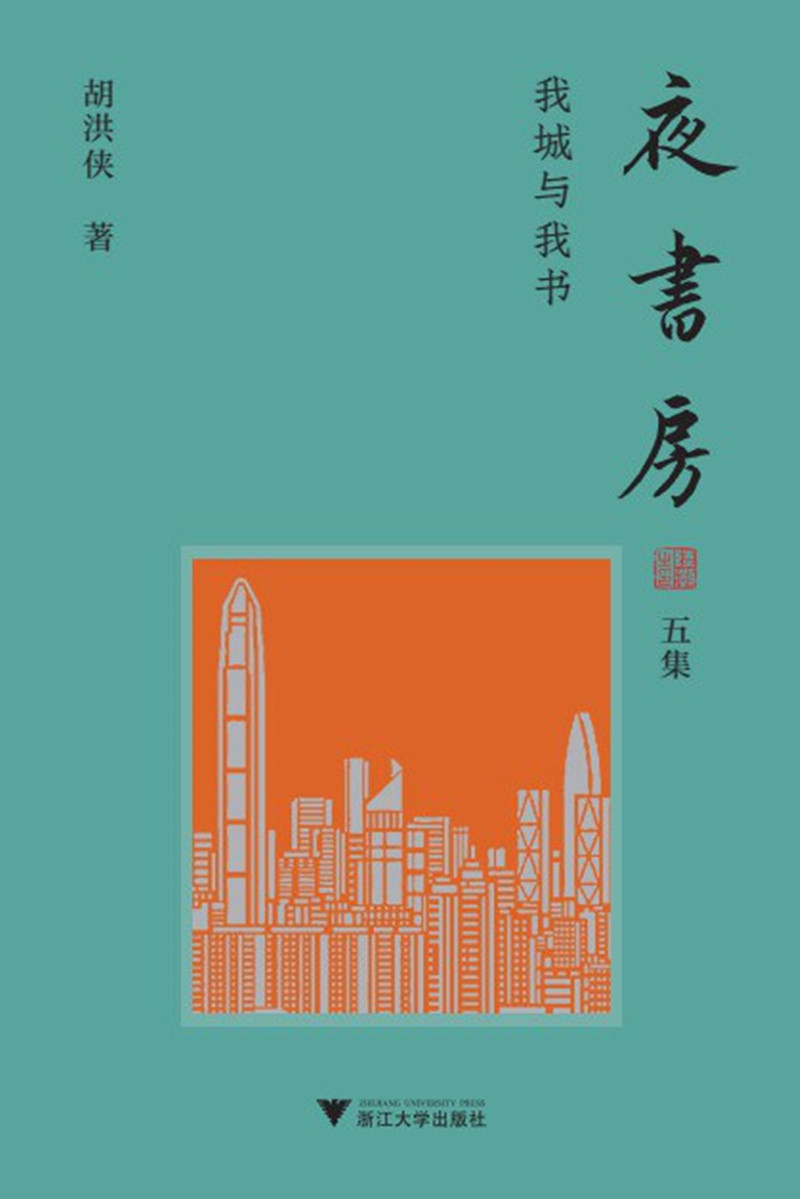
"Five Episodes of Night Study: My City and My Books", written by Hu Hongxia, published by Zhejiang University Press in 2025
In my impression, it was Xiao Yao who I was familiar with first. She hosts a weekly reading magazine at Shenzhen Evening News and can always choose topics that suit you, so friends are happy to be her authors. Later I discovered that I actually read Daxia's books earlier. His books "New Views on Old Illustrations" and "Moonlight in Old Times" he edited are both on the bookshelf, but I didn't remember the names. When I met him, he was already a famous hero in the world. Where the "bigness" of heroes comes from, I am afraid few people have delved into it. I saw in the preface to "So-called Middle Age, So-called Youth" that he quoted Paulo Coelho's "Destiny Theory" and wrote: "Think about it, after living for 50 years, you can be more ambitious. The so-called youth means being brave enough to add, and you must be bold; the so-called middle age means being good at subtraction, and you must be bold." He has indeed done a series of bold and courageous things: such as initiating and long-term hosting of the "Top Ten Best Book Selection of the Year" for Shenzhen Reading Month, which has had a profound impact on the national reading community. For example, he edited China's first "Private Reading History" to reflect the cultural changes in the era of reform and opening up with personalized reading. For example, "Contrast Notes @ 1963", "Three of Us @ 1963" and "Three Lives Three Worlds @ 1963" with Ma Jiahui and Yang Zhao, who "lived in the same age but in different places, and testified to each other's distant life journeys" (Zhang Dachun's "Three"), the casual and interesting "Wei Shuhua", and even the "Fei Diary" written on Xianxian Shuhua, are all pioneering works. Even if the Ye Shufang public account is updated every day, "burning a brick every day", it is very difficult for people to persist. I can't even check the public account that I follow every day. For example, "1984" collected various texts. It is known that there are more than 300 volumes. His "Taiwan's "1984"" has become an important document for studying the history of the Chinese translation and publication of the book. "It turns out that history and truth can be eliminated by simplifying and assembling language. When we no longer speak the language we are familiar with and no longer read the classic books of this nation, the values, life, and customs we once had will gradually drift away, disappear, and cannot be found again." How sad and profound. The hero is so great that he lives up to his reputation.
Xiao Yao's "little" is naturally because she was young back then, not because she was made smaller by the hero's "big". Just like a ship sailing in the rivers and lakes, the hero's bold and humorous words are like the bow of the ship fighting against the wind and waves, and the calm whispers of Xiao Yao are the rudder of the ship's stern. When reading Xiao Yao's book series, I can see great things in every aspect of his works, especially in sorting out the ideological context from a cross-cultural perspective. He can be said to be a white eyebrow in the current calligraphy circle.
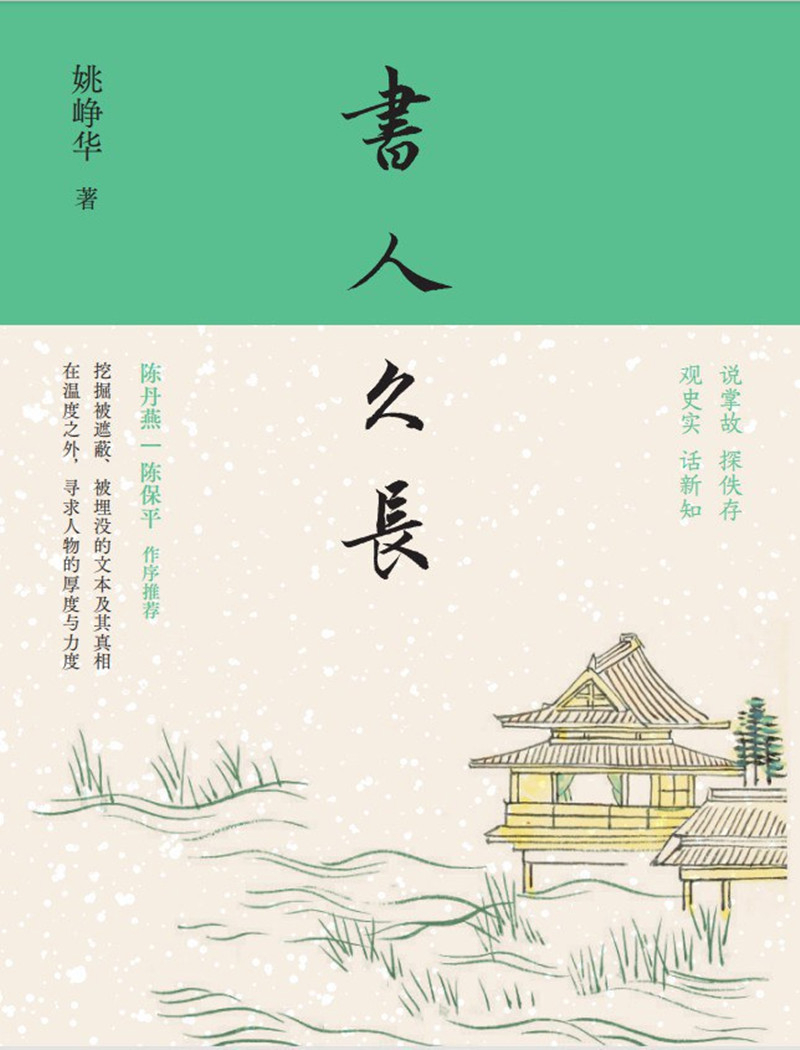
"Liu Ren Long", written by Yao Zhenghua, published by Zhejiang University Press in 2025
The writing style of the Book Man series is characterized by simplicity, just as Mr. Zhong Shuhe said in the inscription to her: "The redundant and complicated are trimmed away, leaving the thinness, and the painting is raw and mature." The titles of the books are becoming more and more subtle. I once talked about the double entendre of "The Book Man", and "The Book Man Lu Li" was my suggestion. Xiao Yao said in "Shu Ren Jiu Chang·Postscript" that "Shu Ren You Qi" and "Shu Ren Jiu Chang" were Mr. Yang Zhishui's destiny: "The ninth book "Shu Ren Jiu Chang" will be closed and start a new series. She also said that if nine is good, it can be long; if ten is full, there is no room." Xiao Yao obviously accepted this suggestion: "Because of the ending, 'Nine' 'It becomes even more grand." She quoted Helen Macdonald's discussion of "trying to see with eyes that are not your own, so as to understand that the way you see the world is not the only one" and Koji Iizuka's discussion of "making enemies of a group of preconceived notions or academic common sense that once got along well, breaking the 'established', and a new world will appear in front of you." : "China's social structure has changed rapidly. Until now, we have not understood many basic historical facts, let alone paid attention to them. Everyone has taken it for granted without realizing it. We have many confused understandings or biased cognitions. It is necessary to 'try to see with eyes that are not our own', fight against preconceived notions, get out of the cave, and go again." "Understanding." In this book, there are Luo Zhitian's new perspective on the "May Fourth Movement", Wang Mingke's "marginal writing" that is different from the Chinese central view of history, Yao Dali's vigilance against non-historicism, Ma Yong's review of the history of the late Qing Dynasty and the Republic of China, Wesson's "Rereading Hayek" and "Rereading Keynes"… all show the brilliance of breaking the "established". Xiao Yao Shu said that the vastness of the sea and sky is often astonishing, and we also know that only one-eighth of the iceberg is exposed to the sea. The breadth and depth of her reading can be gleaned from her public account "Yao Yan Shu Shi", which also makes us look forward to her new book series.
Literary couples are well-matched and have always been praised as good stories. As far as I know, the most well-matched couples who are still active in the reading world are Chen Pingyuan and Xia Xiaohong in the north, and Daxia and Xiao Yao in the south. Nowadays, under the guidance of the heroes, everyone has changed their name to Teacher Yao. Those who are accustomed to calling Xiao Yao are probably only old friends from the early years.