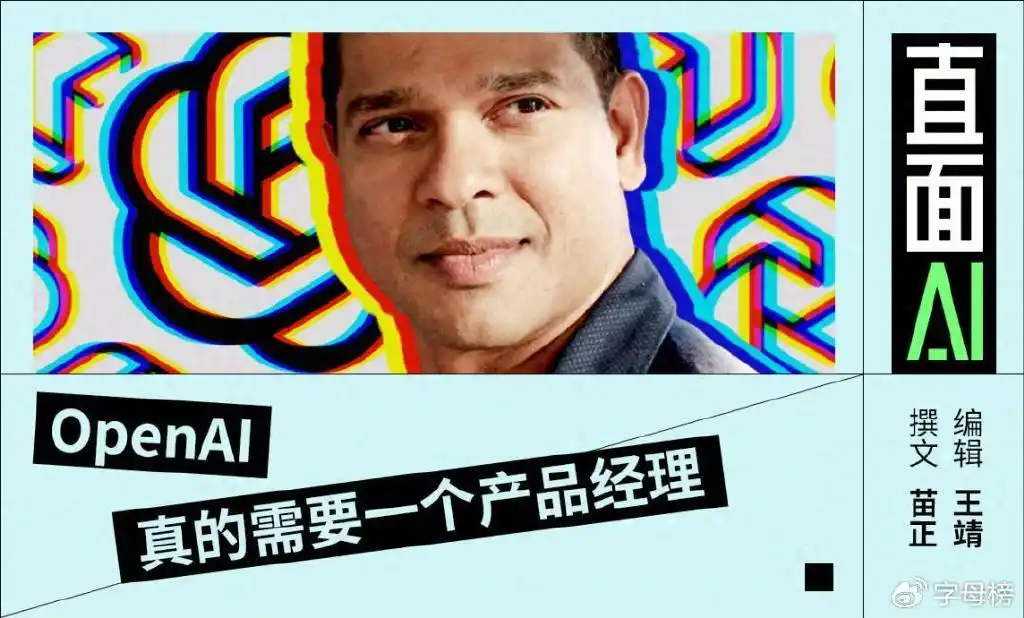
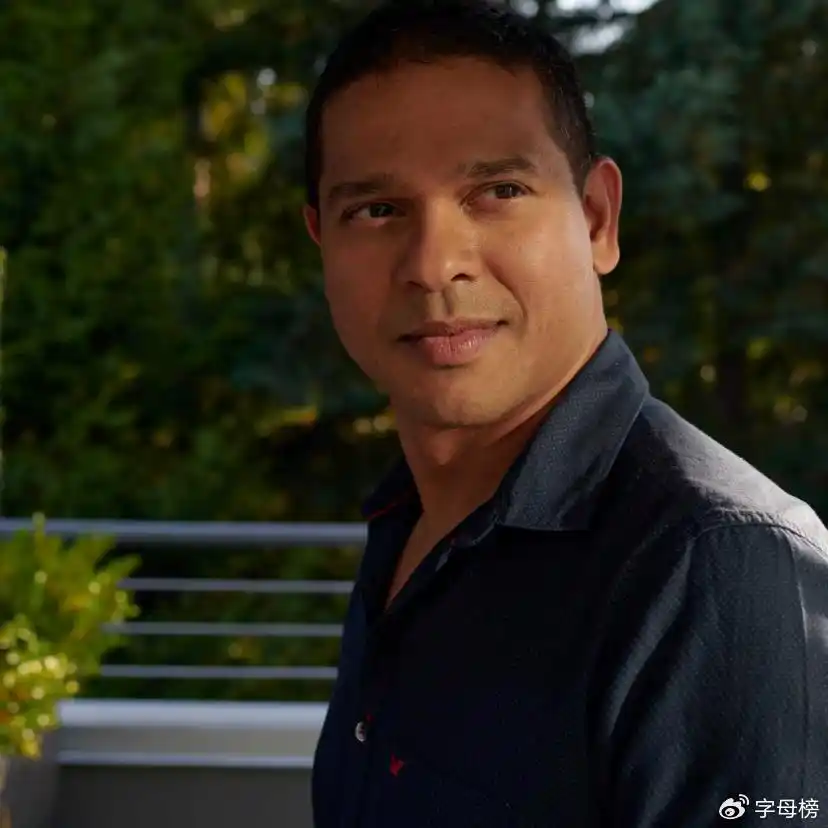
On September 3, 2025, OpenAI announced that it would acquire the product experiment platform Statsig in an all-stock transaction of approximately US$1.1 billion. Along with this acquisition, Statsig founder and CEO Vijaye Raji will join OpenAI as the newly created "CTO of Applications".
This move has attracted widespread attention in the industry. The high amount and the speed of the move indicate that this is not a simple expansion of business territory. Although this is not OpenAI’s first acquisition, why did OpenAI invest such huge resources at this point in time to acquire a company whose main business is product testing and experimentation, and also recruit a CTO for the application department?
01
To understand the fundamental motivations for this decision, we first need to understand the current business environment in which OpenAI operates. Since the release of ChatGPT, OpenAI’s revenue has achieved phenomenal growth. In June 2025, Altman publicly announced that OpenAI had achieved annual revenue of US$10 billion.
Its core profit model mainly relies on the ChatGPT Plus monthly membership subscription service for individual users and API interface calling fees for developers. These revenue sources prove the strong market appeal of its technology and provide financial support for its continued investment in research and development.
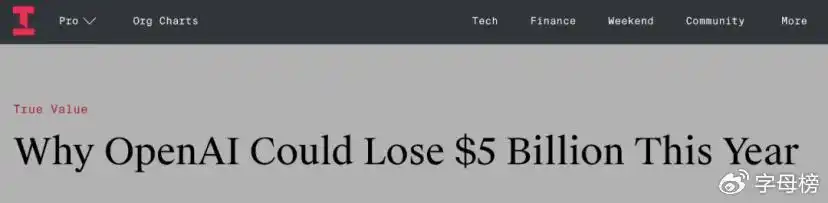
However, behind the revenue growth is more intense cost consumption. The training and inference of large-scale language models require huge computing resources, which means data center servers, high-performance chips, and related power and maintenance costs are astronomical. In August 2025, OpenAI was revealed to have an annual loss of more than US$5 billion.
At the same time, in order to maintain its leading position in the field of technological research, OpenAI must continue to recruit and retain the world's top artificial intelligence talents, and the labor cost of this part is also high. Altman, the company's CEO, has publicly expressed his willingness to lead OpenAI in an initial public offering (IPO) on many occasions. For any company planning to go public, establishing a clear, robust and sustainable profit model is a hard indicator for gaining recognition from the capital market.
Although it can maintain operations in the short term by relying solely on existing membership and API fees, its growth potential and profit margins are relatively limited, making it difficult to support a business story that is expected to become one of the companies with the highest market capitalization in the world.
Therefore, OpenAI urgently needs to find new and more scalable profit paths, and the basis of all this is to transform the advanced artificial intelligence models it has in hand into more, better, and more attractive specific products. This process of encapsulating underlying technical capabilities into mature applications that are market-oriented and solve users' practical problems is "productization." The acquisition of Statsig is a key step taken by OpenAI to strengthen its productization capabilities.
02
According to an official statement released by OpenAI, the goal of this acquisition is to "strengthen engineering systems, accelerate iteration, and transform cutting-edge AI research into intuitive, safe, and useful tools that people love." Every word mentioned in the statement directly points to the core link of product development and optimization.
To understand this in depth, we need to conduct a more detailed analysis of the target of the acquisition – Statsig and its founder Vijaye Raji. Statsig is not an ordinary startup. It is recognized as one of the top experimental platforms in the industry. Its core value is to provide a complete set of tools to help companies make efficient product development decisions.
This set of tools mainly includes A/B testing, feature flagging and real-time decision-making systems. A/B testing allows product teams to push slightly different versions of the same function to different user groups, and compare data to determine which version performs better, thereby making data-supported optimization decisions. The function switch allows the team to turn on or off a new function at any time. It can not only conduct small-scale grayscale testing, but also quickly roll back when problems arise, which greatly reduces the risk of new functions going online. Real-time decision-making systems can dynamically adjust product experience based on user behavior and other data.
All in all, Statsig provides a set of scientific methodology and supporting engineering infrastructure for "data-driven product development". The core problem it can solve is: how to quickly and low-risk verify new ideas in a complex software product, and ensure that every change can bring positive effects.
Vijaye Raji, who is about to serve as CTO of the OpenAI application department, has a personal resume that is highly consistent with this concept. Before founding Statsig, he spent ten years at Meta (formerly Facebook), leading engineering teams for large-scale consumer products. This experience allowed Raji to accumulate rich practical experience in rapid iteration and system optimization on products with hundreds of millions of users.
He then successfully built Statsig as founder and CEO, further demonstrating his entrepreneurial ability to translate this product development philosophy into successful commercial products. Therefore, OpenAI gets not only a tool platform, but also a product manager. Combining the Statsig platform with Vijaye Raji's experience, OpenAI's core appeal has emerged: it needs to improve its productization capabilities, and this person must be close to the C-side and know what the consumer market really needs.
03
To fully understand OpenAI’s sense of urgency in making this decision, it must be considered within the current fierce industry competition. Not long ago, its main competitor, Google, demonstrated its strong product execution capabilities to the entire industry through the "nano banana" project.
The project successfully transformed Google's own powerful Gemini model into a product that received positive feedback from the market in a relatively short period of time through an agile and efficient internal development process. According to podcast sharing and external analysis by relevant teams, the key to the success of "nano banana" lies in its development team's precise insight into user needs, a deep understanding of the underlying model capabilities, and the engineering practice ability to efficiently combine the two.
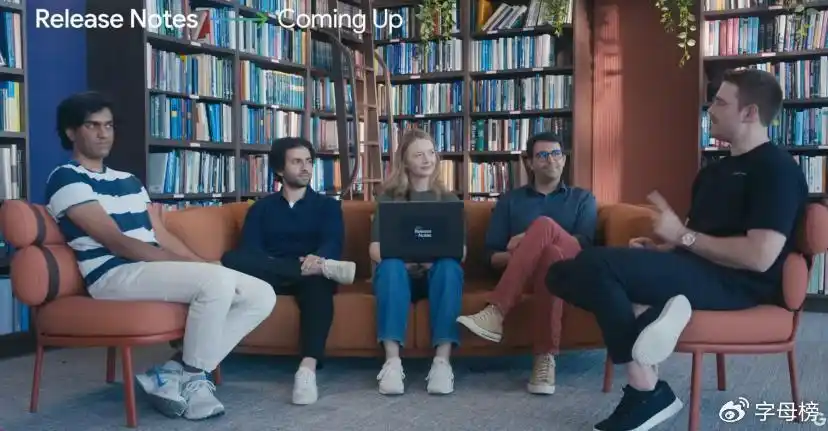
Team members repeatedly emphasized in a podcast released at the end of August that the team’s starting point is not “We have a powerful model, what can we do with it?”, but “What troubles do users encounter in a specific scenario, and how can our model technology help them in the lightest and most direct way?”. This kind of user-centered reverse thinking prompted them to give up the pursuit of large and comprehensive functions, and instead focused on creating a "minimum lovable product" (Minimum Lovable Product) and pushing it to the market at an extremely fast speed for verification.
This case clearly sends a signal to the market: In the current stage of artificial intelligence competition, the key to winning or losing is no longer just who has more model parameters and scores higher in benchmark tests, but also who can quickly transform these model capabilities into products that users really need and are willing to pay for.
The success of the “nano banana” project undoubtedly brought a huge warning to OpenAI. Through this operation, Google has proven that it not only has top-notch technology that can compete with the GPT series of models, but more importantly, it has a mature, large and experienced organizational system that can quickly "monetize" these technologies into products that users love.
In contrast, although OpenAI gained a first-mover advantage with the emergence of ChatGPT, its rhythm and strategy are relatively more prudent and conservative in subsequent product iterations and feature evolutions. Behind this difference, it reflects the difference in the organizational genes of the two companies: Google is a company with product and engineering as its core driving force, while OpenAI has long been more like a research-centered laboratory.
When the market gradually shifts from the initial surprise and curiosity to the pursuit of practical value and stable experience, this research-oriented gene may become an obstacle to its continued leadership. Google's quick follow-up and demonstration of productization capabilities made OpenAI realize that they really needed this kind of productization capability to strengthen the entire team.
04
Against this background, the underlying logic of acquiring Statsig becomes extremely clear. This is not only a replenishment of technology or talent, but also a positive response to the strategic pressure of competitors, and a "suck-away" operation aimed at changing the DNA of one's own organization.
The product development philosophy advocated and practiced by Statsig – building excellent products through a cycle of rapid experimentation, data collection, verification, and iterative optimization – is almost completely consistent with the successful methodology demonstrated by Google in the "nano banana" project.
Faced with the proven successful path of its competitors, OpenAI did not choose to start from scratch and slowly incubate and cultivate this culture and capabilities internally. Instead, it chose the most direct and efficient way: directly acquiring the best practitioners of this concept. This is a typical strategy of “exchanging money for time”. In the ever-changing artificial intelligence battlefield, time is often the most precious resource.
An important detail is that OpenAI itself was already a Statsig customer before the acquisition.
This means that OpenAI’s engineering and product teams have personally experienced its value in using the Statsig platform. They are well aware of the importance of this set of tools in improving development efficiency, reducing decision-making risks, and scientifically evaluating the effects of product changes. It is based on this in-depth understanding that OpenAI has made a strategic upgrade from "renting tools" to "owning DNA".
They realize that it is not enough to just use the platform as an external customer. This ability of rapid experimentation and data decision-making must be thoroughly integrated into their own blood and become the thinking habits and working methods of every product manager and engineer. Through the acquisition, OpenAI not only gained ownership of the platform, but more importantly, the entire team that built and maintained the platform.
The acquisition also marks an important shift in the competitive focus of the entire artificial intelligence industry. In the past few years, competition in the industry has mainly revolved around the "hard power" of models, with major companies and research institutions competing for larger model sizes, higher parameter quantities, and rankings on various academic evaluation lists. This can be called the "model parameter competition" stage.
However, as the performance of the head model gradually converges, the marginal benefits brought by simply relying on the improvement of model capabilities are diminishing. Users and the market are beginning to pay more attention to the actual experience of the product: Is the application stable and reliable? Does the function meet actual needs? Is the interaction smooth and natural? Can it solve specific problems in specific scenarios? The answers to these questions all depend on productization capabilities.
Therefore, the competition in the industry is entering the second half, that is, the "product experience competition" stage. In this new stage, whoever can establish a more agile development process, conduct effective experiments more frequently, collect and respond to user feedback more quickly, and polish product details more precisely will be more likely to stand out in the fierce market competition and win the favor and loyalty of users.
For OpenAI itself, the significance of this acquisition is extremely significant. OpenAI's management has a deep understanding of its shortcomings and is willing to pay a huge price to make up for them. It is foreseeable that after integrating Statsig, the update frequency and function optimization speed of OpenAI's core products such as ChatGPT are expected to be greatly improved.
In the past, experimental platforms like Statsig may have been regarded more as "standard equipment" for traditional Internet companies, but in the era of artificial intelligence, when the product itself (i.e., the model) has uncertainty and complexity, scientific experiment and verification systems have become more indispensable. This acquisition by OpenAI may cause other artificial intelligence giants to re-examine their own productization processes and increase investment in similar tools, platforms or teams. In the future, infrastructure surrounding the efficiency and quality of AI application development may become a new investment and competition hotspot.