At around 14:17 on February 28, Beijing time, the explosion in Tehran tore apart the superficial calm in the Middle East. The United States and Israel have joined forces to launch a large-scale military strike against Iran. The United States called it "Epic Fury" and Israel named it "Roaring Lion." A joint military operation, two names, the hegemonic alliance has different calculations, and the goal is directly to subvert the Iranian regime. The "progressive raid" – the first raid by Israel, followed by the full-scale intervention of the US military, and the escalation of the war from "small fight" to "big fight" not only allowed us to see the military muscle show of major powers, but also exposed the naked challenge of hegemonism and power politics to international law, international order and the "United Nations Charter".
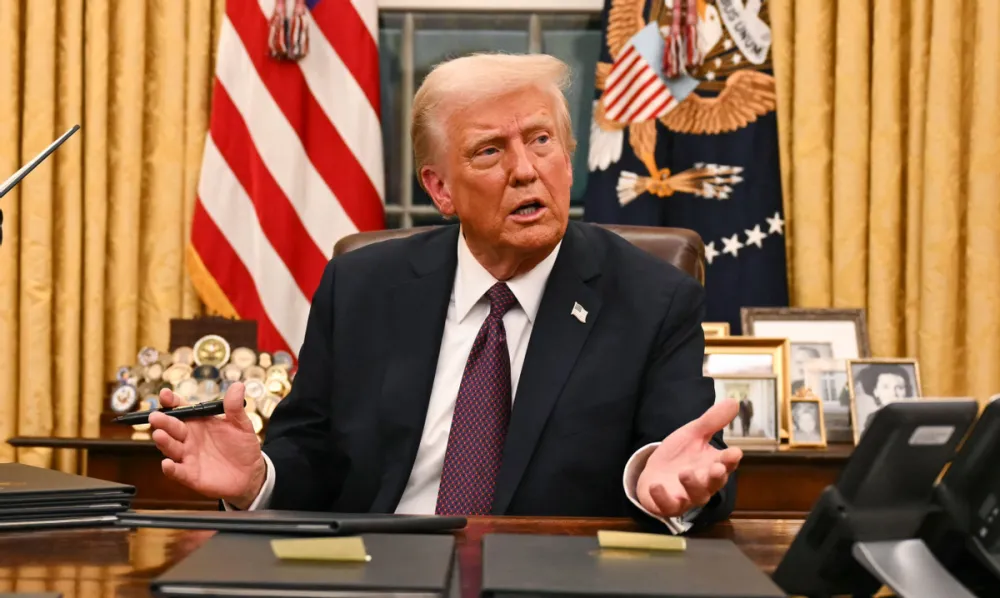
Why did you choose to take action at this time? The answer lies in the negotiation table and aircraft carrier dynamics. On the 26th, the United States and Iran just completed the third round of indirect negotiations in Geneva and "made significant progress." The Foreign Minister of Oman even said that "a peace agreement is within reach." However, at the same moment, Trump was receiving a briefing on the military strike plan. The USS Ford arrived in Israeli waters on the 27th. The dual-carrier strike group was in place, and 11 F-22 fighters and 20 aerial tankers (KC-46, KC-135) were deployed. The so-called negotiations are nothing but smoke and mirrors before the war machine starts. The United States and Israel assess that "there is no way out for negotiations," but a more accurate interpretation is that military preparations are ready and "regime change" operations can begin. On the 28th, Trump shouted, "When the operation is over, take over your government." Netanyahu even bluntly stated in the underground military fortress that the goal was to "overthrow the Iranian regime." The aggressive nature of this military operation was fully exposed. The so-called "daylight attack" and "pre-emptive strike" are obviously lies carefully packaged. According to Article 2, paragraph 4, of the Charter of the United Nations, member states shall not use threats or force to violate the territorial integrity or political independence of any country. The United States and Israel launched an attack without the authorization of the United Nations and without encountering an armed attack, which is a typical illegal use of force. Before February 28, the United States planned and executed the largest military buildup in the region since 2003 in the Middle East.
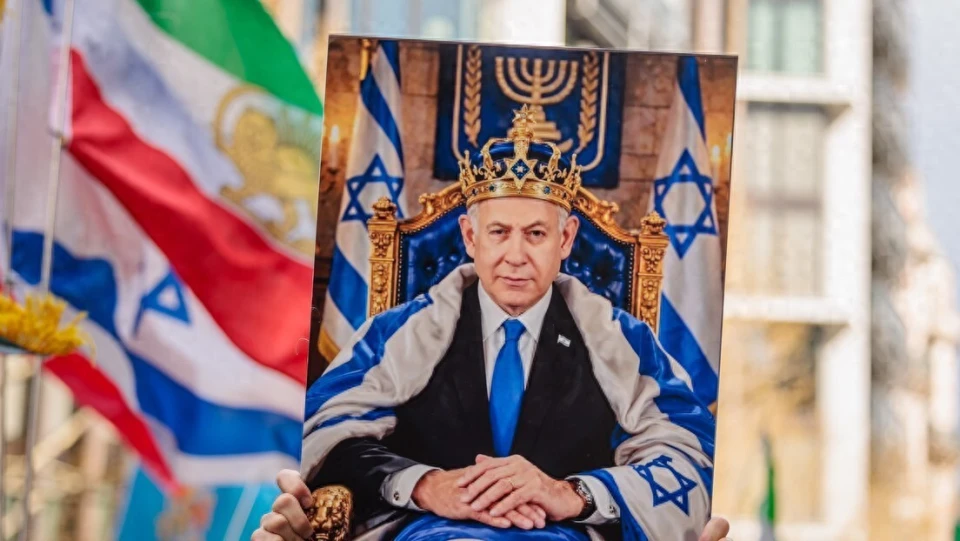
Why does Joint Action have two names? This just illustrates the essence of the alliance: different divisions of labor and each getting what it needs. The "Epic Fury" of the United States is a Hollywood-style hegemonic intimidation, with the goal of "completely destroying Iran's military power" and dismantling its security system; Israel's "Roaring Lion" is a survival metaphor in Jewish culture, trying to emphasize the logic of "preemptive strike" self-defense through its name. This "tacit understanding" of differences is just a deliberate division – the United States is fighting a "war for global hegemony", while Israel is fighting a "war of survival and self-defense" to eliminate threats and dominate the Middle East. When the two countries jointly attacked Iran in June last year, they also used different names – "Midnight Hammer" and "Rising Lion". This exposed the truth of the special relationship between the two countries: they are both allies, but they do not want to be involved in "subordination"; they must jointly act, but they must each explain the war narrative to the domestic people and affirm their justice.
War is raging across the Middle East. Iran's retaliatory action "Honesty Commitment 4" covered Bahrain, Iraq, Kuwait, Qatar, the United Arab Emirates, and Saudi Arabia. The US Fifth Fleet Service Center was attacked. There were three loud explosions in the capital of the United Arab Emirates and the airspace was closed. There were explosions in the capital of Saudi Arabia, and multiple missiles flew over Iraq. Alarms were sounded in Iraq, Kuwait, and Qatar. The Strait of Hormuz, the only passage through which 21% of the world’s seaborne crude oil and 20% of liquefied natural gas must pass, has been pushed into a powder keg. Far from being a bilateral conflict, this crisis is tearing apart the security architecture of the entire region. Regional countries are worried that if the conflict continues, the flow of refugees will flow to Turkey, Azerbaijan, and Armenia; if the strait is blocked, oil prices may soar above $100, and global economic recovery will be severely hit.
What is even more worrying is that the international nuclear non-proliferation system is suffering fatal corrosion from double standards. The United States itself has the world's largest nuclear arsenal. Israel is estimated to have 90 nuclear bombs but refuses to join the Non-Proliferation Treaty. Instead, it uses the excuse that "Iran may possess nuclear weapons" to launch military strikes against sovereign countries. This logic of nuclear hegemony is shaking the cornerstone of the international order through military operations of the US military around the world.
The impact of war on the Middle East structure and ordinary people will be disastrous. Following the previous two Gulf Wars, this action marked a complete shift in U.S. policy toward Iran—from "containment" to "regime change." The war will instantly cut off the financial resources of the Gulf Arab countries and directly impact the economic lifeline of U.S. allies such as Saudi Arabia, the United Arab Emirates, and Qatar. The United States itself is extremely dependent on the Strait of Hormuz (accounting for only 2% of its consumption in 2024), but allies such as Japan and South Korea are highly dependent on energy here. A blocked or highly volatile energy channel will severely damage the global economy – global financial markets will be violently shaken, soaring oil prices will intensify inflationary pressures; surges in shipping costs will impact the supply chain, and energy crises will threaten economic recovery. What many Arab countries, such as Egypt and Jordan, really want is a strategic balance between Israel and Iran, rather than the complete collapse of one side. If Iran is defeated, Israel's regional influence will be unrivaled. This "one-dominated" situation will also trigger collective anxiety and resistance in the Arab world. If Iran is defeated in this conflict, the situation in the Middle East will become more complicated. What is even more tragic is that it is always civilians who bear the cost of war. Tehran citizen Mohammad Javad Molavi's question was heartbreaking: "For more than 20 years, we have tried hard to prove that we keep our promises, but the other side always drops bombs during negotiations." On the afternoon of the 28th, the governor of Hormozgan Province in southern Iran revealed that a girls' school in Minab City was directly attacked. As of 14:45 local time, 51 students were killed and 60 students were injured in the fighting. Schools were bombed, network signals were interrupted, homes were destroyed, and people took refuge in the subway—this is the life of civilians under the "epic rage".
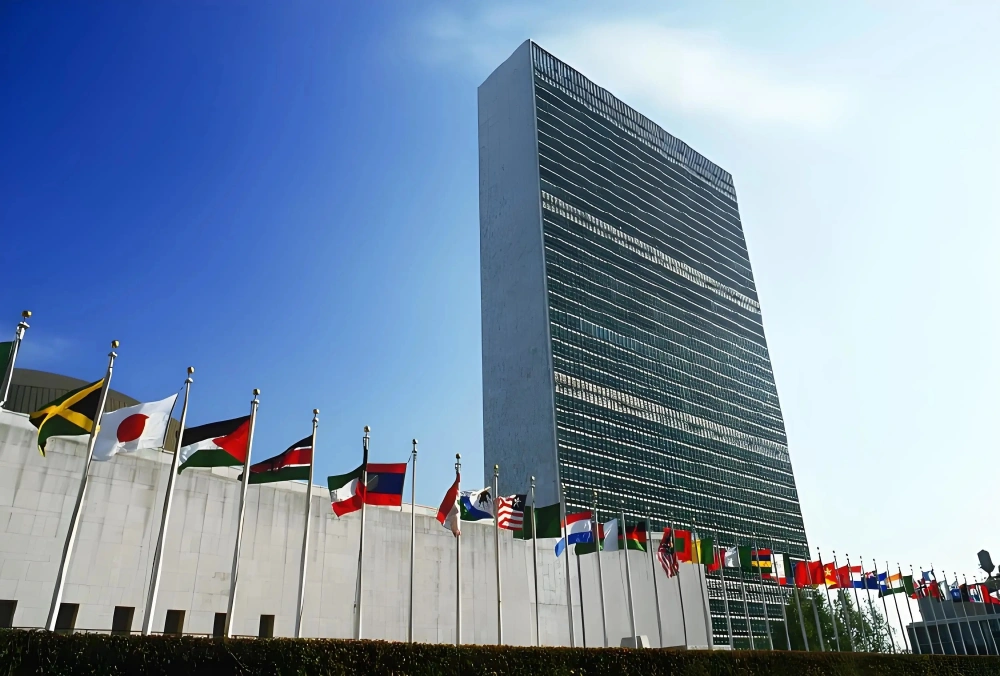
Viewed from the perspective of a community with a shared future for mankind, this war will be a disaster with no winner. When resources are used to create hatred and bring death, the wealth that should be used to combat climate change and eliminate poverty is reduced to ashes in the operation of aircraft carriers and missile explosions. The international community must be soberly aware that no one will be able to survive alone if the law of the jungle is allowed to prevail. Protecting the spirit of the United Nations Charter is not a choice, but the bottom line of human coexistence. The United Nations Security Council must fulfill its responsibilities and stop this aggressive war in the name of "anti-nuclear" but in reality "regime change". History will remember: On February 28, 2026, when peace was within reach, artillery shells flew into the sky.
Look at the news reporter: Chen Rui