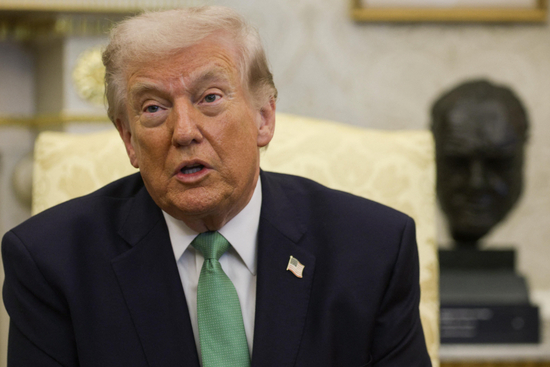
U.S. President Trump delivered a speech on the 1st, boasting of the "accomplishments" of military strikes against Iran, saying that Iran's missiles are "nearly exhausted or destroyed" and that the United States' core strategic goals are "close to completion."
However, the media later disclosed that the US intelligence agency assessed that Iran still retains about half of its missile launch and drone capabilities, and still has a large number of coastal defense missiles that can be used in the Strait of Hormuz. It will be difficult for the US military to complete its military strike targets in the short term.
U.S. intelligence agency: Iran still has a large number of missiles and drones
The Navy still has hundreds or thousands of small craft and unmanned craft
Three people familiar with the matter told CNN on the 2nd that based on intelligence assessments over the past few days, about half of Iran's missile launchers were not damaged in the strike, including launchers that were temporarily buried in underground tunnels due to air strikes. In addition, Iran still possesses a large number of missiles and thousands of drones, accounting for about 50% of the total number of drones before the war.
The above-mentioned people familiar with the matter said that Iran's successful use of underground tunnel networks to transfer missile launchers and launch missiles is the main reason why it is difficult for the US military to discover and destroy more launchers. When the US military previously carried out air strikes on the Houthi armed forces in Yemen supported by Iran, the latter also adopted this approach, which made it difficult for the US military to attack.
Annika Gonzavid, a Middle East expert at the American Enterprise Institute, said U.S. and Israeli forces have stepped up airstrikes at entrances to Iran's underground tunnels, as well as attacks on heavy machinery that could be used to dig out damaged tunnels.
U.S. intelligence assessments also show that a large proportion of Iran's coastal defense missiles were not damaged in U.S.-Israeli strikes. This is because previous U.S.-Israeli air strikes were mainly aimed at weakening Iran's ability to strike neighboring countries rather than coastal defense missiles. Iran's coastal defense missiles are also hidden underground, making them difficult to detect and target.
In addition, although the Iranian Navy was damaged by the US-Israeli attack, about 50% of the strength of the Iranian Islamic Revolutionary Guard Corps Navy has been preserved, and it is estimated that there are still hundreds or even thousands of small boats and unmanned boats.
CNN said that US officials such as Trump usually claim the "results" of military strikes in public speeches, but the above-mentioned "slap in the face" intelligence assessment revealed more details about Iran's remaining military strength.
The U.S. Central Command stated that as of April 1, the U.S. military had struck more than 12,300 targets in Iran. Trump claimed in a nationally televised speech on the 1st that the US military was "systematically destroying" Iran's military capabilities. "Iran's navy has been completely destroyed, and its air force and missile projects have also been severely damaged." Iran's missiles are "close to exhaustion or destroyed." This military operation achieved a "quick, decisive and overwhelming victory" and is expected to complete all military objectives in a "very short time" and will carry out an extremely violent attack on Iran "in the next two to three weeks".
One person familiar with the matter was dismissive of the "quick victory" theory: "I don't doubt that we will continue to give them a beating, but if we want to complete it in two weeks, that is fanciful."
Both the White House and the Pentagon denied the above-mentioned people familiar with the matter. White House spokesperson Anna Kelly said: "Anonymous sources have vigorously attempted to attack President Trump and belittle the glorious achievements of the United States military during Operation Epic Fury."
Japanese LNG ship passes through Strait of Hormuz
Britain, France, Germany, India and other countries did not invite the United States to the meeting
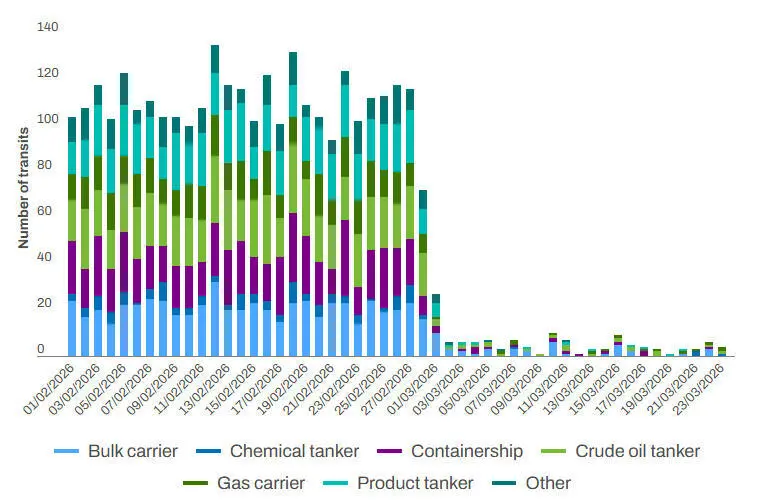
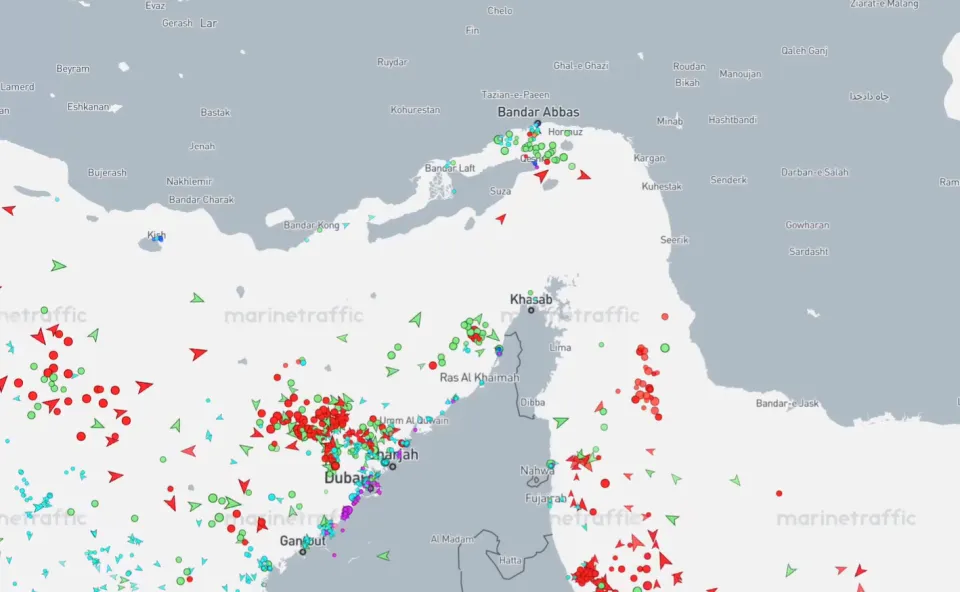
On April 3, local time, according to Mitsui Lines of Japan, a liquefied natural gas (LNG) carrier of the company passed through the Strait of Hormuz on the 3rd Japan time. Japanese Minister of Land, Infrastructure, Transport and Tourism Kaneko Yoshiyuki said at a press conference earlier on the 3rd that as of 7:00 local time on the 3rd, 45 Japanese-related ships were anchored in the Persian Gulf west of the Strait of Hormuz. This is the first time that a Japanese-related ship has sailed out of the Strait of Hormuz after the data was released.
The UK hosted an online meeting on the 2nd to discuss "reopening the Strait of Hormuz." Countries including France, Germany, Canada, the United Arab Emirates and India attended the meeting. It is worth noting that the United States was not invited.
British Foreign Secretary Cooper, who chaired the video conference, said at the beginning of the meeting: "We are focusing on diplomatic and international coordination plans, including the coordinated use of various diplomatic and economic means and pressure measures."
International Maritime Organization Secretary-General Dominguez said when attending the meeting that to restore navigation in the Strait of Hormuz, relying solely on military means will not work. Instead, it is necessary to ease the situation and adopt feasible maritime solutions.
President Trump has previously said that ensuring the safety of this waterway should be the responsibility of other countries, and he has also encouraged countries to "grab oil" in the Strait of Hormuz.
Niu Xinchun, dean of the China Institute of Arab Studies at Ningxia University, analyzed that the fact that the United Kingdom took the lead in convening this meeting but did not invite the United States reflects the increasingly obvious differences between Europe and the United States on the issue of the Middle East war.
At the same time, the Islamic Republic News Agency quoted Iranian Deputy Foreign Minister Gharib Abadi on the 3rd as saying that Iran is drafting an agreement with Oman to monitor passage in the Strait of Hormuz.
"Of course, these requirements do not constitute restrictions, but are intended to facilitate and ensure the safety of navigation and provide better services to ships passing through this route," Gharib Abadi said.
He also said that even in peacetime, ship traffic should be carried out under the supervision and coordination of the two littoral countries, Iran and Oman.