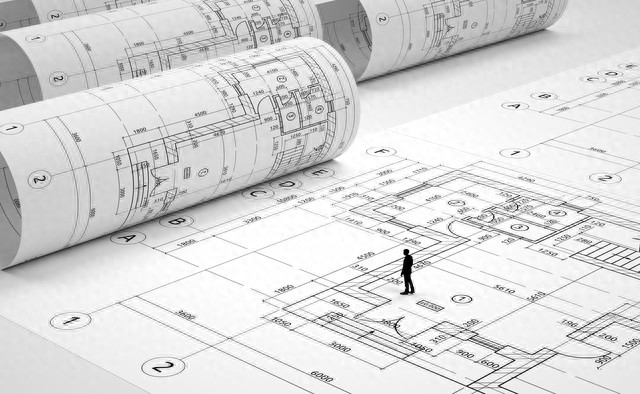
"Signing contracts depends on relationships, and making profits depends on claims" – this "motto" that has been circulated in the construction engineering circle for many years has accurately pointed out the pain points of the traditional model. In the era when design, construction, and procurement were contracted in stages, contract terms were mostly "framework agreements" and the boundaries of rights and responsibilities were just like words on paper: Party A's temporary design changes, Party B's delays in construction, and disputes over material price fluctuations can all become triggers for claims.
A set of latest data is enough to confirm the historical inertia of this hidden rule: Domestic construction claims have long accounted for 7%-8% of total project payments, but industry statistics in 2025 show that the average net profit margin of construction companies is only 1.8%, which means that claims in the past have almost become the "profit pillar" of some companies. From the perspective of judicial practice, from January 2023 to June 2025, a certain city court received 25,920 new cases of first instance involving construction project contract disputes, 52% of which involved claims for project price, which is basically the same proportion as in previous years. However, the success rate of claims has dropped to 28%-42%, and the subject amount of 61.3% of the cases is less than 500,000 yuan, and the main focus is on "small high-frequency" profit supplements. Data from a court in another province better reflect industry trends: 45,567 new construction project contract dispute cases were accepted from 2022 to 2024, and the number of cases accepted in 2024 reached 18,415, a year-on-year increase of 16.4%. However, the proportion of "claim disputes caused by contract loopholes" has dropped from 35% in 2022 to 22% in 2024, and the living space for unspoken rules is continuing to shrink.
In the industry ecology at that time, some companies even included the ability to claim compensation as a core assessment: they deliberately lowered the price when bidding, and after winning the bid, they "made up" the profits by digging for loopholes in the contract and creating change visas. This kind of "low quotation + high claim" game has grown wildly in the soil of ambiguous rights and responsibilities for decades.
With the advent of the EPC era, the claim space has been “accurately compressed”
The turning point occurred with the comprehensive popularization of integrated models such as EPC and general engineering contracting. In 2016, the Ministry of Housing and Urban-Rural Development clearly stated that "government-invested projects and prefabricated buildings should actively adopt the general engineering contracting model." This policy vane continues to exert force. The EPC model accounts for more than 60% of government-invested projects in 2024-2025, directly promoting the industry from "segmented fragmentation" to "full chain integration."
The changes are first reflected in the contract text. Compared with the "extensive and vague" nature of traditional contracts, the model text of the general engineering contracting contract has achieved "refinement of the entire process" – from design depth, material standards to construction period nodes and risk sharing, every clause is clear enough to be quantified and accountable. More importantly, under the EPC model, the contractor is responsible for all aspects of design, procurement, and construction. Traditional claims reasons such as "design defects leading to construction changes" and "procurement delays affecting the construction period" have become the contractor's own responsibility.
The strengthening of cost control throughout the entire process has further plugged claims loopholes. Data disclosed by a provincial finance department in 2025 show that EPC general contracting projects at the autonomous region level have passed standardized review, with a net review reduction rate of as high as 25.59%, effectively squeezing out the "claims water" in project submissions. Industry research shows that for EPC projects that adopt strategies such as contract refinement, cost index linkage, and target cost management, the cost overrun rate can be reduced to 3%-6%, which is significantly lower than the traditional model, and the transparency of cost management has been greatly improved. The previous fuzzy zone of "construction first and settling accounts later" has been compressed. Changes in visas need to be reported in advance, price adjustments have clear formulas, and construction delays have quantified penalties. The "operational space" for claims has been accurately squeezed.
2. How should enterprises transform from "claim dependence" to "lean management and control"?
The essence of the failure of "profit depends on claims" is not the thinning of industry profits, but the reconstruction of competitive logic: in the past, we focused on "the ability to exploit loopholes", and now we strive for "hard skills in cost control." The scale of the domestic construction market is expected to reach 32 trillion yuan in 2025, but material fees still account for 60%-70% of construction costs. The average price of main materials such as steel bars and cement will increase by up to 18% year-on-year in the first quarter of 2025. There is less and less window period left for enterprises to adjust prices, and extensive management is no longer sustainable. In this transformation, two types of companies are coming to the fore:
One type is the “integrator” who connects the entire chain. The core advantage of the EPC model lies in the deep integration of design, procurement, and construction. A municipal engineering general contracting company reduced the cross-cutting work of pipeline laying by 30% by optimizing the design plan. It locked the price of building materials through centralized procurement and avoided the risk of short-term fluctuations in raw materials. Through construction process innovation, it shortened the construction period by 15%, and the final cost was 8% lower than the industry average. This ability to "control costs from the source" is far more sustainable than claiming compensation after the fact.
The other type is “refined managers” who make good use of digitalization. With the help of BIM technology, AI measurement tools, and cost management systems, companies can achieve dynamic monitoring of costs. A prefabricated construction company simulates the entire construction process through BIM models, discovers design conflicts in advance and optimizes them, reducing rework losses; it tracks material consumption in real time through the cost system and controls the waste rate within 2%. The 2025 industry report shows that digital project management can reduce the engineering cost deviation rate from the traditional 10%-15% to 2%-4%, and the profit margin of projects with the implementation of AI measurement tools will increase by 3.6 percentage points on average. This is the core value of lean management.
For engineering companies, instead of struggling with the increasingly narrow claim space, it is better to invest their energy in technological innovation, management upgrades, and supply chain optimization. After all, the direct compensation for a minor safety accident plus the loss of work stoppage is about 1.2 million yuan, which is equivalent to 5% of the project profit; the blind compression of the construction period will increase the rush fee by 8% to 12%. The control of these hidden costs is far more valuable than claims.
Conclusion
The end of the era of "profits based on claims" is not a "cold winter" for the industry, but a "spring" for high-quality development. When the hidden rules fail, the true core competitiveness will be highlighted. Industry data in 2025 has proven that companies that rely on loopholes to survive are being eliminated by the market, while companies that are deeply involved in lean cost control and embracing digital transformation are increasing their net profit margins from the industry average of 1.8% to more than 3%.
For practitioners in the field of construction engineering, adapting to the restructuring of rights and responsibilities in the EPC model, using full-chain integration capabilities to resist risks, and using digital tools to accurately control costs are the keys to crossing industry cycles and achieving long-term profitability.
After all, making money by relying on loopholes will never last long, and only by making money by strength can you go far. Has your company already embarked on this transformation journey? Welcome to share your observations and practices in the comment area.