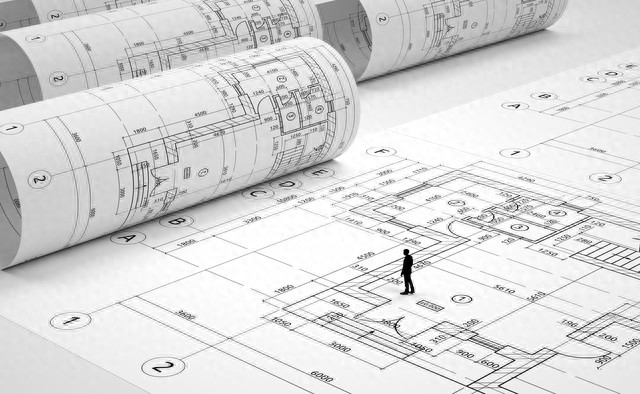
Anyone who works in engineering knows that they are most afraid of misreading drawings, fighting pipelines, and making mistakes in calculations. However, the BIM technology that can be seen everywhere on construction sites can eliminate these troubles at once – don’t think of it as a "tall flower shelf" anymore, it has long been a "life-saving artifact" for our front-line engineering workers!
complex graph
As a veteran construction engineer who has worked on site for 12 years, from the earliest days of using CAD to draw two-dimensional drawings and staying up all night to reconcile, to now relying on BIM models to handle complex nodes, I know very well how practical this technology is. Today I will not use official terminology, but use construction site vernacular to explain BIM clearly. Whether you are an apprentice who has just entered the industry or an experienced foreman who has been working for many years, you can use it after reading it.
Let me explain to you first: BIM is not some advanced software. To put it bluntly, it is "Building Information Modeling". The buildings, roads, and bridges to be built on our construction site are "built" on the computer first, and it is a 3D model with full information – as small as the specifications of a brick and the spacing of a steel bar, as well as the progress and cost of the entire project. You can clearly check it in the model.
1. The three most practical functions of BIM are all just needed on construction sites.
complex structure
When we work on site, we don’t look at the virtual, but only look at whether it can solve actual problems. Each of these three functions of BIM can help us save time, save costs, and reduce rework.
The first one is pipeline collision inspection, completely saying goodbye to "fighting and rework".
In the past, when doing electrical and mechanical installation, the most troublesome thing was that the drawings looked fine, but once the work was done on site, the water pipes and cable trays collided, and the pipes had to be cut into walls or re-arranged, which was labor-intensive and material-intensive. I worked on a grand theater project in Nanchang last year, with more than 40 majors, and the optical, mechanical, and electrical pipelines were densely packed. If I relied on traditional drawings to reconcile the accounts, it would take at least half a month, and it would be easy to miss inspections.
Later, BIM was used to integrate the civil engineering, electromechanical, and fire protection models, and the computer could directly mark the collision points. It was clear at a glance where the water pipes blocked the air ducts, and where the bridges and beams conflicted. We adjusted the height and direction of the pipeline in advance. During on-site construction, the workers followed the model without rework, saving hundreds of thousands in labor and materials alone.
Second, with visual explanation, newbies can get started quickly.
Anyone who has worked on site knows that when explaining to workers, it is impossible for novices to understand just by talking or referring to drawings. Especially for complex nodes, such as steel columns tilted at 41 degrees and hyperboloid curtain walls, no matter how detailed the lines on the drawings are, workers cannot imagine how to set up the formwork or install them on site.
Now with BIM, you can open the 3D model, zoom in or out, and it will be clear where the beams and columns are, how to tie the steel bars, and how to build the formwork. Last year, several apprentices came to our construction site and taught them how to read traditional drawings. After half a month of learning, they were still confused. Later, I brought out the BIM model and talked to the model on the spot. They learned it in half a day and made fewer mistakes while working.
The third is to calculate accurately and reconcile accounts without wrangling.
Calculation is a basic skill for engineers, and it is also the easiest place to argue. In the past, calculations were done by hand or CAD, and it was inevitable that there would be omissions and miscalculations. When reconciling accounts with Party A, I would often get angry over a number.
The BIM model is different. As long as you input the drawing information, the software will automatically calculate the number of tons of steel bars, the number of cubic meters of concrete, and the number of square meters of ceramic tiles, accurate to two decimal places, and each item has a basis. When checking with Party A, you can directly call up the model and understand at a glance where there is too much and where there is too little. You no longer have to stay up late to reconcile and argue with each other.
2. Don’t step into the trap! BIM is not “one-size-fits-all”, these two points should be kept in mind
Many colleagues think that as long as BIM is used, all problems on the construction site can be solved. In fact, this is not the case. Based on my years of experience, I would like to remind everyone of two key points to avoid detours.
First, BIM is not about “drawing a model and done”, the core is “accurate information”. If the input drawing information is wrong, it will be useless no matter how beautiful the model is, and it will mislead the construction. For example, if you enter the wrong size of a beam, it looks fine in the model, but you find out after the on-site construction that you have to dismantle the heavy beam, which is not worth the loss.
Second, BIM is not “only for technicians”, front-line workers must also understand it. Nowadays, in many construction sites, BIM is only used by the technical department, and on-site workers still work according to traditional drawings, which cannot play the role of BIM at all. In fact, workers do not need to be proficient in software. As long as they can understand the model and construct according to the model, a lot of rework can be reduced.
project
3. Summary reminder: Engineers who do not learn BIM will be eliminated sooner or later.
Nowadays, almost all large projects, whether they are residences, hospitals, roads, bridges, or grand theaters, require the use of BIM technology. In the past, you could do a good job relying on experience and calculations by hand, but now you can no longer do it. If you cannot keep up with the pace of technology, you will be eliminated by the industry sooner or later.
Moreover, BIM is not difficult to learn. You do not need to be proficient in complicated operations. As long as you master the basic viewing and application, you can play a big role on the construction site. At the beginning, you can learn from the people in the technical department, look at the models more, and compare them with actual on-site situations. It won't take long to get started.
Finally, I want to ask you a practical question: Are you using BIM technology on your construction site? Do you think it can really improve efficiency, or is it just a "show" to cope with inspections? Tell us about your real experiences in the comment area and learn from each other!