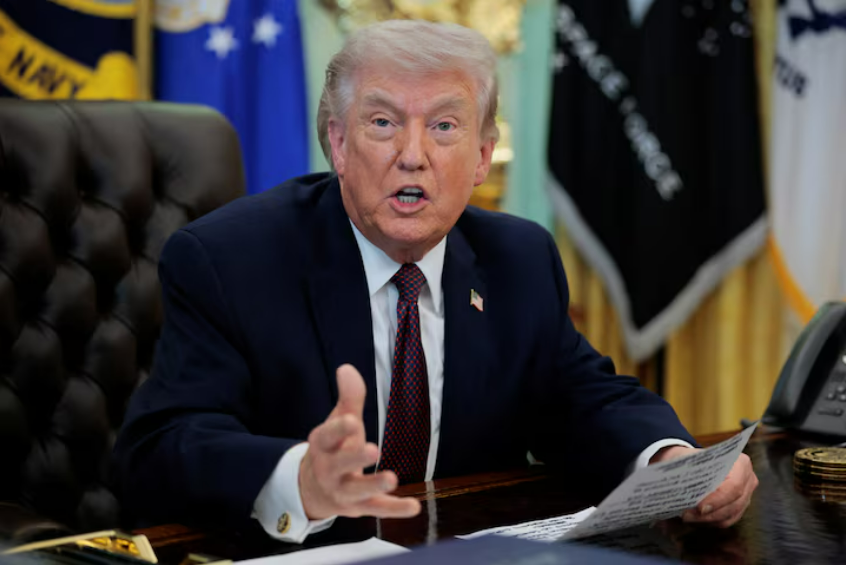
According to a report by CNN on April 1, the Trump administration has given a clear turning signal in the direction of the war with Iran. He seems to be ready to withdraw directly from this conflict that has attracted global attention, but leaves the subsequent costs and turmoil of the war to the entire world. This war, initiated unilaterally by the Trump administration, has been full of controversy from the beginning, and its hasty ending will not only profoundly affect the international status of the United States, but will also have immeasurable ripple effects on the global economy, geopolitical landscape, and the U.S. alliance system.
At the beginning of the war, the United States' European allies chose to stay out of the war. The core reason was that the Trump administration did not provide any advance notice to the allies before launching the war, and the allies generally believed that the war lacked a reasonable basis and seriously violated international law. Faced with the uncooperation of his allies, Trump showed strong dissatisfaction and publicly put pressure on these allies. He even made a strong statement on the "Real Social" platform: "Go and get oil yourself." He bluntly dumped the consequences of the war on those allies who were not involved in the war.
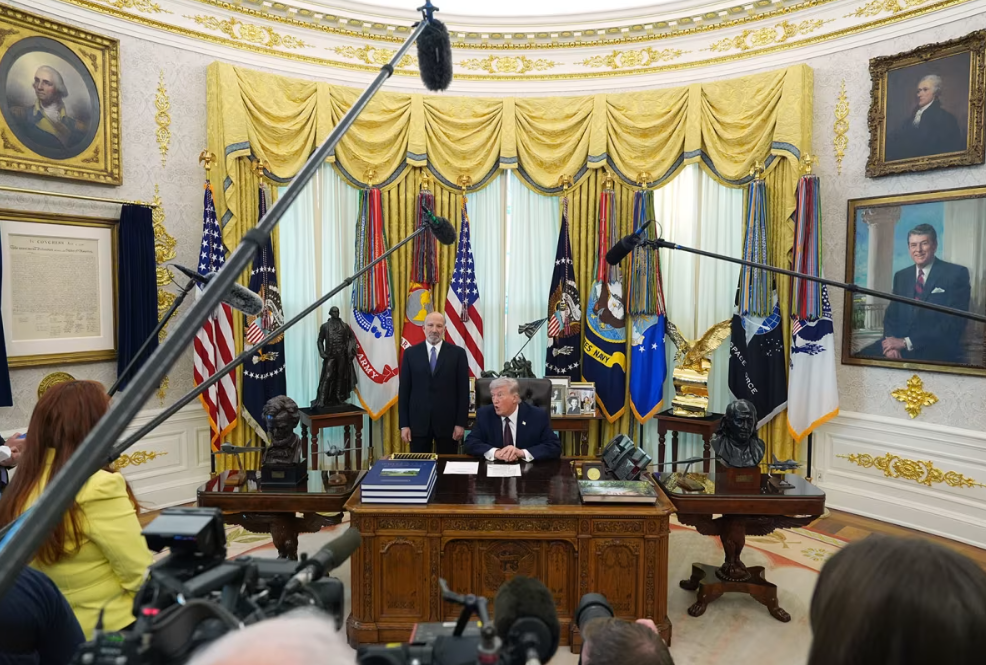
What is even more noteworthy is that the Trump administration began to release “troop withdrawal” signals when the direction of the war was not yet clear and the core issues were not resolved. It is reported that the US government plans to declare "mission accomplished" without committing to restoring free navigation in the Strait of Hormuz. Trump himself has publicly predicted that the war will end in "two to three weeks" and even made it clear that "what happens in the Strait of Hormuz has nothing to do with us." Behind this eagerness to withdraw is the Trump administration's consideration of domestic political and economic pressures, but it completely ignores the far-reaching impact that the war may have on the world.
According to reports, the Strait of Hormuz, as the chokepoint at the entrance to the Persian Gulf, controls about one-third of the world's oil shipping channels, and its strategic position is crucial. Since the outbreak of the war, Iran has made full use of this geographical advantage to cut off key oil supplies and put the global economy under its control as an important bargaining chip against the United States. If the Trump administration really withdraws its troops hastily without resolving the issue of control of the Strait, leading to Iran finally taking full control of the Strait of Hormuz, Iran will gain a major strategic victory, and this will undoubtedly be a public strategic defeat for the United States.
Reports say that once Iran controls the Strait of Hormuz, it will definitely take the opportunity to consolidate its position and expand its influence. On the one hand, Iran will declare victory in the war in a high-profile manner to further strengthen domestic cohesion. At the same time, it will also believe that it has rebuilt its deterrence against future external attacks and may boldly advance its military, missile and even nuclear programs in the future. After all, related facilities destroyed by US-Israeli air strikes during the war require a lot of money to rebuild, and control of the Strait of Hormuz will provide Iran with a stable source of income. Iran is very likely to turn control of the strait into economic benefits by imposing tolls on oil tankers passing through this route, thereby providing financial support for its various military plans. This will undoubtedly bring new threats to regional security and the global nuclear non-proliferation system.
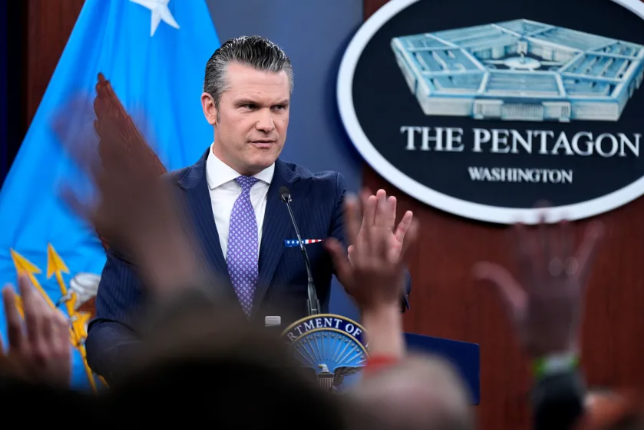
In order to find reasonable excuses for Trump's hasty troop withdrawal, U.S. government officials began to deliberately redefine the criteria for "war victory" in an attempt to create cover for public opinion. U.S. Defense Secretary Hegseth publicly declared on Tuesday that the United States has achieved "regime change" in Iran. However, this statement is obviously seriously inconsistent with the facts. Iran is still ruled by Islamic radical forces hostile to the United States, and the regime structure has not undergone any substantive changes. Behind this self-deceptive statement is the helplessness and passivity of the Trump administration after the war reached a stalemate: more than a month since the war broke out, the United States has not only failed to achieve its expected goals, but has faced increasing internal and external pressure. The initial four-to-six-week war deadline set by officials has also made the Trump administration's decision to withdraw troops more urgent.
Previously, Trump claimed that the United States was conducting "productive" negotiations with Iran, trying to send a signal to the outside world that "the war is about to be resolved peacefully." However, this statement was quickly denied by Tehran officials, and there is no public evidence to prove that there is effective diplomatic communication or any diplomatic progress between the United States and Iran. Obviously, Trump's statement is more of a political rhetoric to appease the American people and ease political pressure. It cannot change the reality that the war has reached a stalemate and subsequent problems are difficult to solve.
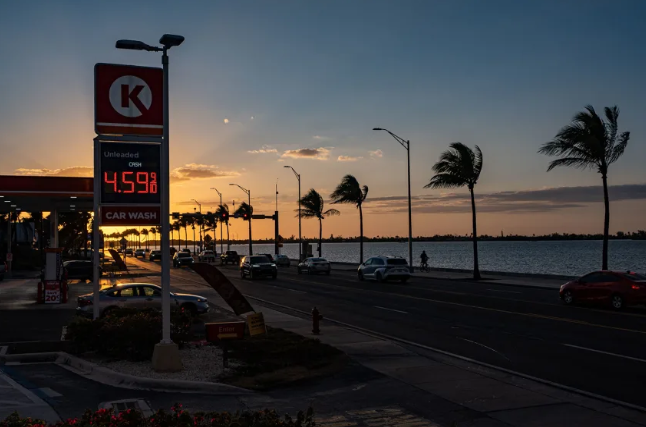
The report believes that the core reason why Trump is eager to end the war with Iraq is that domestic economic and political pressure has reached an unbearable level. Currently, the American people are tired of the continued high prices, and the continuation of the war has further intensified the economic pain. Data on Wednesday showed that the average price of gasoline across the United States has risen to US$4.06 per gallon (approximately 7.4 yuan/liter), setting a new single-month high. At the same time, the latest polls show that Trump’s economic support rate has dropped to 31%. This low support rate has made Trump passive in domestic politics. For him, a ceasefire as soon as possible to avoid further deterioration of the economic situation is the key to safeguarding his own political interests, and it is also the core driving force behind his hasty withdrawal.
Although a hasty withdrawal of troops can temporarily relieve domestic pressure in the United States, the Trump administration is clearly aware that this approach of "withdrawing without cleaning up the mess" will bring serious strategic consequences to the United States. After all, if Iran controls the Strait of Hormuz, the international community will generally regard it as a strategic failure of the United States, which will severely weaken the United States' influence in the Middle East and even shake its global hegemony. But for Trump, this may be the most desirable outcome at present – because if he chooses to use force to reopen the Strait of Hormuz, it may not only cause heavy casualties to the US military, but also prolong the war cycle, further aggravate the dissatisfaction of the domestic people, and ultimately completely destroy his already damaged political authority. This choice of the lesser of two evils is essentially a reflection of Trump prioritizing his own political interests while ignoring the long-term national interests and global responsibilities of the United States.
In fact, Trump's hasty withdrawal may seem like an attempt to "get out of the quagmire of war," but in fact he is passing on the consequences of his own decisions to the entire world, and he himself cannot truly escape the backlash brought about by his decisions. Judging from Trump's usual style of acting, he is better at destroying the existing international order than establishing a new stable system. The hasty ending of the war with Iraq is a concentrated expression of this style. At the same time, this further extends the "America First" principle he has always adhered to. In his logic, all actions of the United States should be centered around its own core interests. As for the interests of its allies and global stability, they are only secondary considerations and can even be sacrificed. In addition, this decision also vented Trump's long-term dissatisfaction with NATO allies. In his view, these allies have been "squeezing" the United States' security guarantees but are unwilling to provide support to the United States at critical moments. Therefore, letting them bear the consequences of the war on their own is "natural" in his eyes.
The article stated that the reality is that the United States is not isolated from the world, and the Trump administration’s decisions will inevitably trigger a series of unavoidable economic and political chain reactions. As Rosemary Kelanik, director of the Middle East Studies Project at the Defense Priority Think Tank, said: "Although the United States is the world's largest oil producer, this cannot protect American consumers from the impact of oil prices, because oil prices are global. Therefore, the American people and everyone in the world will be affected by this supply shock." The obstruction of navigation in the Strait of Hormuz has led to a serious gap in global oil supply, and oil prices have continued to soar. If Iran controls the strait for a long time, this supply shock will be further intensified and may even trigger a global economic recession.
What is even more alarming is that once the wave of global economic recession forms, it will eventually spread to the United States. This time point is likely to coincide with the eve of the U.S. mid-term elections. The Democrats are hoping to use the opportunity of the mid-term elections to win a big victory and thereby restrict Trump's power in his second term. If the economic situation deteriorates further, Trump's political situation will become more difficult and may even affect his re-election prospects. This also means that Trump’s attempt to ease domestic pressure through a hasty withdrawal of troops may ultimately backfire and put him in greater political trouble.
In addition to its impact on the global economy, Trump's decision will also have a profound impact on the global geopolitical landscape, the most obvious of which is the further fragmentation of the transatlantic alliance. The transatlantic alliance has long been an important pillar of U.S. global strategy, but a series of actions by the Trump administration have already caused cracks in this alliance. The hasty withdrawal of troops from the war with Iran has pushed these cracks deeper. As one of the most pro-NATO figures in Trump's inner circle, US Secretary of State Rubio's statement on Al Jazeera this week has even sounded the alarm. He made it clear that the response of U.S. allies to the war was "very disappointing" and suggested that after the war is over, Trump will "reevaluate" security commitments to these allies.
This statement made European allies deeply aware that in the unpredictable era of Trump's administration, they can no longer rely unconditionally on U.S. security guarantees. The U.S. president has clearly linked the U.S.'s security commitments to "unconditional support for its actions." Once allies fail to cooperate, they may be abandoned. This uncertainty has forced European allies to re-examine their security strategies, and has also put the future of the transatlantic alliance in jeopardy. In fact, European allies have been dissatisfied with the Trump administration for a long time: In the past year, Trump has continuously rebuked allies, demanded that Denmark cede Greenland, launched tariff attacks on Europe, and despised the sacrifices made by European allies for the United States after 9/11. These behaviors have chilled European allies and made them gradually lose trust in the United States.
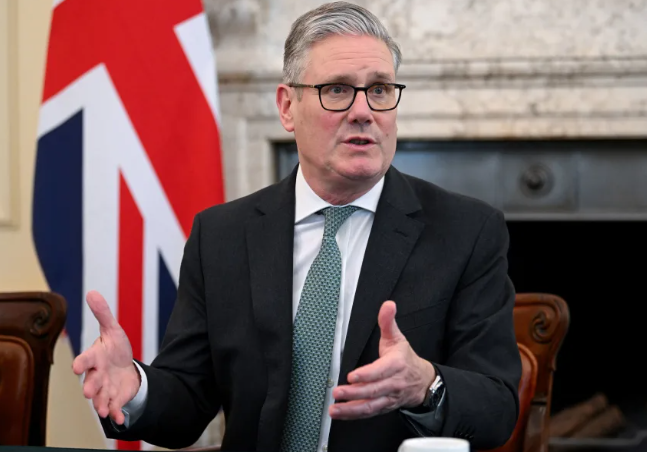
The report said that in this war with Iraq, the attitudes of European allies fully reflected this distrust and dissatisfaction. As a traditional ally of the United States, the United Kingdom initially refused to let the United States use its air bases to carry out offensive missions in Iraq. Spain took a tougher stance and directly refused to participate in any war-related operations. Faced with the lack of cooperation from European allies, Trump showed strong anger. He not only criticized the "special relationship" between Britain and the United States, but also threatened to cut off all trade with Spain. He even said that he was considering withdrawing from NATO and called the alliance a "paper tiger." He also added that Russian President Vladimir Putin agreed with him. These remarks and actions by Trump have further aggravated conflicts with European allies and made it difficult to heal the rift in the transatlantic alliance.
For Europe, Trump's hasty withdrawal means that they will have to bear a series of costs of the war alone, even if they are not involved in the war. First, high energy prices and rising inflation will deal a heavy blow to Europe's fragile economies. Currently, the economies of many European countries are still in the recovery stage, and the surge in energy prices will directly push up production costs, suppress consumer demand, and may even lead to economic recession in some countries. At the same time, the intensification of inflationary pressure will also trigger dissatisfaction among voters, causing political backlash against the already weak European centrist governments, and may even trigger social unrest. At present, some EU countries have begun to discuss the rationing of gasoline and diesel, which also reflects the seriousness of the energy crisis.
Secondly, Europe is also facing the potential threat of the refugee crisis. If Iran's central government collapses due to the war and the domestic situation becomes turbulent, it is likely to trigger another large-scale refugee flow, and most of these refugees will flock to European borders. This will further test the financial strength and social tolerance of European countries, and intensify cultural and political differences within Europe. The previous refugee crisis has caused serious divisions within Europe, and the new refugee flow will undoubtedly make this problem worse.
The more realistic problem is that European countries simply cannot "get oil on their own" as Trump requires. For a long time, European countries have been committed to reducing military expenditures, resulting in a significant shrinkage of military strength. This war with Iraq has also fully exposed the shortcomings of European military strength. It took the British Royal Navy several weeks to deploy an anti-missile destroyer off the coast of Cyprus to protect its assets in the Middle East. Although France managed to dispatch an aircraft carrier battle group to protect its own interests and those of its allies in the Middle East, it was impossible to open and maintain navigation in the Strait of Hormuz with the strength of European countries alone. Even the powerful U.S. Navy currently considers it too dangerous to enter the range of Iranian drones and missiles, let alone European countries with shrinking military strength. This also means that Europe will be subject to Iran’s control of the Strait of Hormuz for a long time and face continued energy security threats.
It should be noted that Trump's remarks should never be taken at face value. His public statements are often highly strategic and even a means to force his opponents to compromise. Just the day before the United States released a signal to withdraw its troops, Trump also issued a tough warning: If Iran does not meet its peace conditions, he will take extreme measures to escalate the war, destroy Iran's power plants and even desalination facilities, and carry out a devastating blow to Iran. This inconsistent statement exactly reflects Trump's style of doing things: exerting pressure through extreme remarks, and then seeking the most beneficial results for himself through compromise and concessions.
Rubio's statement also confirmed this from the side. He said last Friday: "All countries in Asia and the world have a stake and should make significant contributions to the reopening of the Strait of Hormuz." This statement seems to be calling on all countries to participate together, but in fact it is a strategy of the Trump administration trying to shift the responsibility for solving the Strait issue to other countries, while itself taking the opportunity to withdraw. After all, the Trump administration knows that it is difficult for the United States alone to resolve the issue of control of the Strait of Hormuz, and involving other countries can not only share the pressure but also find reasonable excuses for its own withdrawal.
At present, neither the United States nor Iran seems to have a clear "exit path", and the follow-up direction of the war is still full of uncertainty. However, there may be a glimmer of hope for the United States' European allies in their confrontation with Trump. In fact, Europe is not without its role. Some European countries have mine clearance capabilities that the United States lacks, which is crucial in the process of opening the Strait of Hormuz. France has made it clear that it is willing to form an international mission with the navies of other countries after the armistice to jointly protect shipping safety in the Strait of Hormuz. This statement not only reflects Europe's desire to maintain its own energy security, but also leaves a little room for the repair of transatlantic relations.
Stephen Flanagan, former senior director for defense policy and strategy at the National Security Council, said at a Middle East Institute briefing on Tuesday: "I think they are still trying to avoid the U.S.-Iran disagreements from causing a permanent rupture in the transatlantic relationship, but it is getting harder every day in the face of Trump's fierce attacks on Europe's response so far." This statement accurately summarizes the current situation of European allies: On the one hand, they want to maintain the stability of the transatlantic alliance and avoid a complete breakdown of relations; on the other hand, they cannot accept Trump's unreasonable demands and are unwilling to be dragged into a meaningless war.
However, the Trump administration seems not to be satisfied with Europe's stance and is still putting pressure on European allies. U.S. Defense Secretary Hegseth publicly stated on Tuesday: "(Trump) pointed out that the usage rate of this international waterway by the United States is much lower than that of most countries, in fact much lower. So the world should pay attention and be prepared to stand up." The subtext of these words is very clear: The Trump administration believes that the safety of navigation in the Strait of Hormuz is closely related to all countries around the world, and the maintenance responsibility should not be solely shouldered by the United States. European allies and other countries should also assume more obligations and contribute to re-opening the strait.
However, European countries are generally opposed to Trump's request, and they have no intention of being dragged into another Middle East war initiated by the United States. In the eyes of European critics, not only is the reason for this war with Iraq questionable, but it also lacks any clear post-war planning. Even participating in it will not bring about a better situation, but will instead plunge Europe into a deeper crisis. German Defense Minister Pistorius’ question last month expressed the aspirations of European countries: “What does Trump expect a few European frigates to do in the Strait of Hormuz? Do they do something that even the powerful U.S. navy cannot do?”