Guangdong's bank card industry is relatively developed. According to data, Guangdong's bank card consumption currently accounts for 67.56% of the province's retail sales of social goods. Bank card crimes have also increased significantly, especially the high incidence of counterfeit card crimes, with hidden methods and large amounts of money involved, causing large economic losses to cardholders.
Not long ago, after 10 months of close cooperation, the police of Shenzhen, Hong Kong and Macao, under the direct command of the Ministry of Public Security and the Provincial Public Security Department, destroyed a large cross-border credit card fraud criminal gang in one fell swoop, arresting 19 gang members and confiscating more than 10,000 counterfeit credit cards of various types. It is currently estimated that the amount involved in the case is tens of millions of yuan. This is the largest credit card fraud criminal gang in history with the largest scale, the highest amount, and the most extensive cross-border crimes that the Shenzhen police participated in destroying. The gang members are mainly Malaysian and Hong Kong nationals. They all use fake names. They are well-organized and have a fine division of labor. By stealing bank card information from people in Europe and the United States, they create counterfeit cards in Shenzhen and spend money in Hong Kong.
Important case fax
The police investigation in three places lasted 10 months.
In June 2012, Hong Kong police caught two Malaysian men using fake credit cards in Hong Kong and found that they traveled between Shenzhen and Hong Kong many times. Thanks to the mature intelligence cooperation mechanism between the Shenzhen and Hong Kong police, the Shenzhen police learned of the news immediately. After careful investigation and analysis, they discovered that behind it was a cross-border credit card fraud criminal gang involving the United States, Europe, Malaysia, Hong Kong and other countries and regions.
In January 2013, based on the preliminary investigation, the Shenzhen police, the Hong Kong Police Force, and the Macau Judicial Police formally established a joint task force. After long-term research and tracking, the police of the task force captured Zheng Moumou, a member of the gang, in Hong Kong in November 2012, and seized more than 8,000 fake credit cards from his residence. After nearly 10 months of investigation, the Shenzhen police finally identified the den where counterfeit cards were produced and mastered all the activities of the criminal gang leader.
On June 3 this year, the police from Shenzhen, Hong Kong and Macau joined forces to destroy the gang in one fell swoop, capturing 14 suspects in Shenzhen, 3 suspects in Hong Kong, and 2 suspects in Macau. A large number of counterfeit credit cards seized by the police were modeled on internationally accepted credit cards such as VISA, MasterCard, American Express, Diners Club, etc. The imitations were so high that they almost looked like the real ones. A total of more than 10,000 counterfeit credit cards of various types were seized before and after this case, and it is currently estimated that the amount involved in the case is tens of millions of yuan.
The criminal members only use code names among themselves
This is a huge credit card fraud criminal gang with foreigners as the main criminals, operating in Shenzhen, Hong Kong and Macao. Among the 19 main suspects, 8 are Malaysian, 6 are Hong Kong, and 5 are Mainland, all have been arrested. There are many levels among gang members, forming a huge criminal network and interest chain. A Hong Kong woman, Lin Moumou, and a Hong Kong man, Guan Moumou, gave orders and commanded in Hong Kong; the Malaysian man "Shaoyu", the Hong Kong man Wang Moumou, and the mainland man Zhu Moumou were responsible for making fake cards in Shenzhen; the Hong Kong woman Bo Mou and the Hong Kong man You Mou communicated Between Shenzhen and Hong Kong, he was responsible for bringing many Malaysians living in Shenzhen to Hong Kong to commit fraud. At the same time, You was also responsible for handing over the proceeds from the fraud to Zheng, a Hong Kong man, to sell the stolen goods. After Zheng collected the stolen goods in Hong Kong, he took some of the stolen goods to Shenzhen and sold them to convenience stores for cash.
The gang controllers Lin Moumou and Guan Moumou separated the various links of credit card skimming: placing the stealing of bank card information in countries and regions such as the United States, Europe, and Arabia, placing the making of counterfeit cards in Shenzhen, and placing the theft of credit cards in Hong Kong and Macau, and all the key elements involved were foreigners, making it easier to avoid the risk of being caught. At the same time, in order to avoid the consequences of "catching one person and the whole gang", the criminal gang requires members to only use code names and nicknames with each other, and no two-way contact, only one-way contact, and they also have "three cunning rabbit holes" and constantly change their places of stay.
Foreigners make up their own code words to communicate
Although the Malaysian man nicknamed "Shaoyu" lives in Luohu with his girlfriend, he goes alone to a secluded rental house in Longgang Buji every day to make fake cards and travels between Luohu and Buji. After the card production was completed, "Shaoyu" took the counterfeit card to a high-end hotel in Luohu and placed it in a hidden place such as a water tank in the bathroom. Then he contacted Mr. D in Malaysia, who assigned a "rider" (i.e., a thief) who was completely unknown to "Shaoyu" to pick up the card at the designated location. During this process, the "roasted fish" and the "rider" do not meet, talk, or contact each other.
In order not to arouse suspicion, "drivers" will use various means to evade police investigation: on the one hand, they avoid surveillance videos of large shopping malls and choose small supermarkets to swipe their cards. The amount of one swipe will not exceed 10,000 yuan; on the other hand, they do not swipe their cards more than twice in one place and change places immediately after swiping their cards.
In addition, when Lin and Guan were looking for a suitable informant and card maker, they deliberately selected a Malaysian person as the card user, and only told them to swipe the card "according to regulations". At the same time, they placed the source of the card information in Malaysia, and the informant was also a Malaysian. They "smartly" believed that since foreigners were the main perpetrators of the crime, and the content of the exchanges were all their own code words, they should not attract the attention of the police. However, the police cleverly "attacked them unprepared" and seized on the characteristic of language to identify gang members, and made significant progress.
Buy gold jewelry and cash out the stolen goods
According to the Shenzhen police who investigated the case, the crime of counterfeiting cards is a crime committed by a professional gang. The criminals have a clear division of labor and have outstanding characteristics of intelligence and cross-regional movement. The main crime mode is skimming → card production → theft → disposal of stolen goods. First of all, criminals responsible for skimming (that is, stealing cardholders' bank card information and passwords) will go to restaurants, hotels, karaoke bars and other places to apply for waiters. When the guests are paying the bill, they will take advantage of the guests' carelessness and use a micro-skimming device the size of a cigarette box to copy the magnetic stripe information of the cardholder's bank card and spy on the guest entering the password of the bank card.
Then, the stolen bank card magnetic stripe information and password are sent to the card-making criminals, and special software tools are used to burn the skimmed bank card information onto another bank card or a blank card. The card-making process is like copying a CD. Then the criminals use the forged bank cards to make cash withdrawals and go shopping in other places. When committing fraud, they usually choose items that are more expensive, easy to carry, and easy to sell, such as gold jewelry and other valuable items. Finally, the criminals sell the stolen valuables at low prices and obtain cash to divide the loot. Throughout the entire criminal process, there is a clear division of labor among personnel, and the divisions and cooperation are interlocking, showing the characteristics of family-style, family-friend-style, group-style, and cross-regional crimes.
Take the credit card fraud gang busted by the police in Shenzhen, Hong Kong and Macao as an example. It includes three levels of gang members: providers of credit card information; producers of cards created by trading information organizations; and fraudsters who collect stolen goods from counterfeit cards. Among these three levels, almost all are overseas personnel (mainly Malaysians and Hong Kong residents). The bank card information obtained by this gang came from hackers intruding into overseas bank computer systems. The thefts occurred in Hong Kong and Macau, and the counterfeit card production point was in Shenzhen. This cross-border crime model brings great difficulties to investigation and evidence collection.
The investigator said
Li Yanping, deputy captain of the First Team of the Economic Investigation Detachment of the Shenzhen Municipal Public Security Bureau:
Counterfeit card crime mainly
Cash out via POS machine
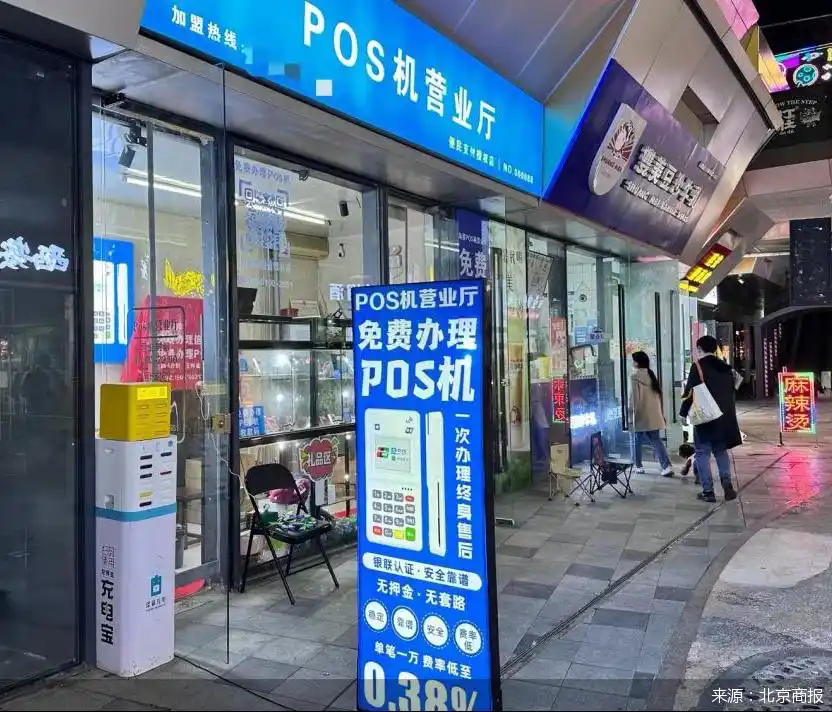
Reasons for the high incidence of counterfeit card crimes include: low technology and poor security of magnetic stripe cards; lack of regulatory measures; in addition, there are loopholes in the issuance and use of POS machines. Since teller machines are not allowed to withdraw more than 20,000 yuan per day, counterfeit card crimes mainly use POS machines to cash out. Now some criminals set up fake merchants to defraud POS machines to commit crimes.
Counterfeit card crime is a professional crime. The prevention and control of counterfeit card crime cannot rely on the public security organs alone. It requires the leadership of relevant government regulatory departments, the linkage of other government departments, and the close cooperation of various commercial banks to establish and improve relevant long-term mechanisms. Only by "focusing on combat, combining prevention with prevention, and comprehensive management" can we curb the high incidence of counterfeit card crime. At the same time, the technological upgrade of chip cards in Guangdong should be accelerated and supervision of POS machines should be strengthened.
Police reminder
Keep the card out of sight when swiping it for consumption
In response to this criminal method, the police reminded the general public that cardholders should protect their bank card information and passwords, and keep their cards out of sight when swiping their cards for daily purchases, so as not to give criminals the opportunity to skim information. When entering the password, be careful to cover it with your hands to prevent others from prying and to prevent the leakage of personal identity information. When conducting fund operations online, you must log in to a regular bank website and do not accidentally enter a phishing website where bank card information and passwords may be stolen, resulting in property losses. When applying for a bank card, you must leave your valid mobile phone number, so that you will receive a text message every time you make a purchase. Once you find that you did not make the purchase by yourself, call the bank immediately to report the loss and suspend the transaction. At the same time, quickly go to a nearby bank teller machine to inquire or withdraw small amounts of cash, and keep the receipt (this is important evidence that the card has been stolen by others with counterfeit cards).