Author | "Financial" new media editor Wang Baiyun | Jiang Shizhou
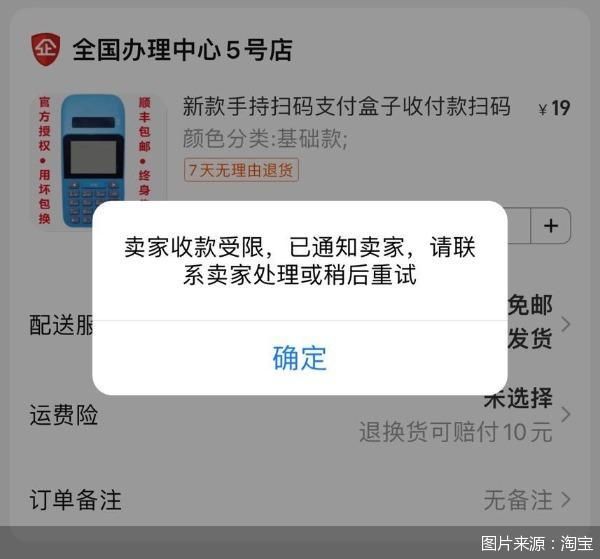
Recently, many users said that the rates of the POS machines they use have increased. "In the past, a handling fee of 60 yuan was charged for 10,000 yuan. After the increase, the handling fee exceeded 100 yuan." The "rate" here refers to the proportion of handling fees that users need to pay when using POS machines and other products to trade.
A payment practitioner revealed to Caijing New Media that some payment companies have indeed increased customer credit card rates. For example, a payment company notified that "the price of 4G products will increase to 10,000+3 from January 1, 2023" (that is, in addition to charging a 1% rate for each transaction, there is also an additional 3 yuan withdrawal fee). The practitioner said that the decline in credit card cash-out transactions was one of the important reasons for the rate increase. In fact, the credit card cash-out business is being suppressed by regulators, banks and large payment institutions.
At the regulatory level, on February 24, Fu Linmen Payment had its illegal income of 119,500 yuan confiscated and a fine of 5.04 million yuan by the Shanghai Branch of the Central Bank for "violating liquidation management regulations, violating real-name management regulations for special merchants, and violating reserve management regulations." The two relevant responsible persons were given warnings and fined 100,000 yuan and 200,000 yuan respectively.
Yu Baicheng, a special researcher at Lingyi Think Tank, said that in the past two years, violations in the payment field have mostly involved violations of merchant management regulations, violations of acquiring business management regulations, violations of payment and settlement management regulations, violations of anti-money laundering regulations, etc. Moreover, when violations are serious, the relevant person in charge of the payment institution will also be punished, and the "double penalty system" will serve as a certain warning.
As the industry becomes more and more standardized, simply providing payment channels can no longer bring increment to corporate development, so the B-side has increasingly become a "must compete" for payment companies.
Cash out by credit card
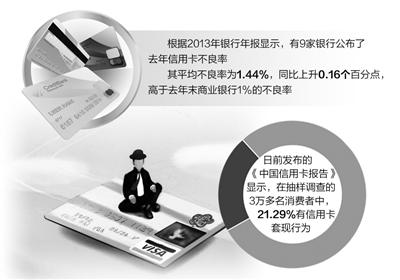
For some payment companies, credit card cash-out business is a "hidden rule" for survival. Cashing out of a credit card means withdrawing the credit limit on a credit card in cash through POS machines and other means. Lu Yu, a practitioner in the payment field, said that this business is very important. “In fact, more than 90% of the revenue of some payment companies comes from credit card cash-out business.”
In the "Interpretation on Several Issues Concerning the Specific Application of Laws in Criminal Cases Obstructing Credit Card Management", "cash-out" refers to violating national regulations and using point-of-sale terminals (POS machines) and other methods to directly pay cash to credit card holders through fictitious transactions, false prices, cash returns, etc.
This is not an emerging field. The credit card cash-out business has a long history and the market size is huge. In 2018, "21st Century Business Herald" stated that "according to industry conservative estimates, the annual cash-out scale of the entire industry (in 2018) exceeded one trillion yuan."
It should be noted that the entire credit card cash-out business is facing unprecedented suppression.
On the one hand, it comes from supervision. In the past two years, there have been multiple regulatory documents involving the credit card cash-out business.
In March 2022, the "Notice on Strengthening the Management of Payment Acceptance Terminals and Related Businesses" officially came into effect. This document was called "Document No. 259" in the industry and was released in 2021. The notice clearly stipulates that "one bank card acceptance terminal can only correspond to one acceptance terminal serial number" and "one bank card acceptance terminal can only correspond to one special merchant."
As soon as "Document No. 259" came out, the industry was shocked.
Lu Yu said that in the past, one POS terminal could apply to many merchant numbers, and could match merchants and scenarios according to changes in the amount, disguising the cash-out behavior as normal transactions, such as matching small shops for purchases within 100 yuan, and luxury goods for purchases above 10,000 yuan. However, after the implementation of "Document No. 259", due to regulatory restrictions such as "one machine, one merchant", the old method of "one machine, multiple merchants" is basically unworkable.
On the other hand, large payment institutions, such as Alipay and WeChat Pay, have recently introduced measures to strictly control credit card cash-out. In February, WeChat Pay opened credit card acquiring transaction limits for some merchants in order to prevent large-value credit card transaction risks and combat credit card cash-out. Alipay has also previously announced that it will adopt full life cycle risk prevention and control measures to strengthen the management of illegal transactions such as credit card cash-out from merchant access, transaction monitoring and other aspects.
Third, banks have also issued measures to address issues such as credit card cash-out. According to incomplete statistics from China Banking and Insurance News, in the past six months, more than 20 commercial banks, including China Construction Bank, China Merchants Bank, Industrial Bank, and Everbright Bank, have issued notices to continue to deepen business rectification in terms of restricting the scope of credit card use, controlling credit card installment business, and cleaning up sleep cards.
Under layers of containment, the current cash-out market is facing contraction. Lu Yu revealed that since the implementation of Document No. 259, the overall transaction volume in the cash-out field has declined. “Some payment institutions have even seen their cash-out transaction volume shrink by more than 80%.” At the same time, the POS machine rates of some payment institutions have quietly increased. A person familiar with the matter said, "There are many institutions that have tripled or even tripled their price increases."
Despite this, there are still many payment industry practitioners making excuses for the "cash out" behavior. "It is similar to a cash loan, but has a lower interest rate than a cash loan, and it does meet the capital turnover needs of some users."
Payment supervision
The competitive landscape in payments is changing.
Zhu Anjun, COO of Baofu Payment, analyzed the new media of Caijing. Under the regulatory background, the industry has undergone a slight reshuffle. The first and second echelon institutions are still the same, but the echelons may be adjusted. In his view, the payment industry relies on the development of the Internet and has been in the process of development and change. Products range from card payment, Internet payment, mobile payment, scan code payment to face payment, and the policy level has become more complete and standardized.
Yu Baicheng said that in 2022, the payment industry will still maintain the strict supervision trend of the past two years, punishing violations and reducing fees and profits. According to incomplete statistics from Caijing New Media, in 2022 alone, there will be 6 regulatory documents related to the payment industry, including the "Notice on Supporting Cross-border RMB Settlement of New Foreign Trade Business Forms", "Strengthening the Supervision of Large Payment Platform Enterprises to Promote the Standardized and Healthy Development of Payment and Financial Technology", "Notice on Further Promoting the Standardized and Healthy Development of Credit Card Business", etc.
Looking back at the supervision in the payment field, we can find that since 2015, the scope of supervision has continued to expand and the intensity has increased, from deposits to gambling, money laundering, and credit card cash-out business.
Yu Baicheng said that third-party payment is a channel for some online fraud and money laundering violations. In response to various chaos in the payment market, in 2015, the central bank began to strictly control the market access of payment institutions.
In 2017, regulatory scrutiny came to the "reservation funds" of payment companies. This year was also called the "strictest supervision" in the payment industry. According to regulatory requirements, starting from 2018, the centralized deposit ratio of customer reserve funds of payment institutions will increase from the current 20% to about 50%.
The so-called "reserve" refers to the deposit of funds due to time differences in the payment account during the transaction process. Payment companies can use this capital to increase revenue by earning interest, investing, etc. Some payment practitioners said that the income generated by reserve funds is huge, even supporting 50% of the income of small payment companies.
Immediately afterwards, supervision focused on gambling, money laundering and other dark and gray industries. “The profits from these black and gray products account for more than 30% of the profits of some payment companies.” A payment practitioner said at the time. In March 2019, the supervision department issued the "Notice on Further Strengthening Payment and Settlement Management to Prevent New Illegal Crimes in Telecommunications Networks", known in the industry as "Document No. 85", which mainly involves six aspects: improving the emergency stop payment and quick freezing mechanism, strengthening the real-name account management, strengthening transfer management, strengthening the management of special merchants and acceptance terminals, and implementing the accountability mechanism.
At the same time, the decline of cash loans has also cast a shadow over the development of the payment industry. "When cash loans are booming, there can be trillions of yuan in turnover a year, and there is a long queue of cash loan companies to take over the payment channel, and the payment companies have to cooperate." Lu Yu said. But now there are few of these collaborations left.
In addition, Yu Baicheng also said that recently, the central bank has proposed to speed up the legislation of the "Regulations on Non-bank Payment Institutions" and will adopt hierarchical management measures for payment licenses. Repeated fines will reduce the classification rating results, and even suspend business until the "Payment Business License" is revoked.
Strengthen the B-side
Clearly, compliance issues are one of the major issues in the payments space right now. Against this background, it has become a consensus in the payment industry to focus on the B-side.
Yu Baicheng believes that the business focus of the payment industry is not only to increase scale and handling fees, but also includes two aspects: first, continuously integrating with scenarios, expanding the number of customers, and forming synergy with the ecosystem; second, expanding from payment to segmented services, such as digital comprehensive services for merchants.
In other words, the payment company's efforts on the B-side are not just to provide mobile payment services, but to cover "payment + digital operations + digital management" and other aspects, thereby helping the B-side achieve digital transformation.
In Zhu Anjun's view, compared with the past when many payment institutions only provided payment channels, payment institutions now need to have a better understanding of the industry and industry chain, and help companies reduce transaction costs and improve capital utilization efficiency through product innovation.
But it is undeniable that every industry has its own industry barriers. Many payment companies have focused on the B-side since their establishment and now have certain advantages. In order to expand new merchants, late payment companies “can only eat one by one.” "From the perspective of customer acquisition costs, almost every cooperation between payment companies and B-ends, especially large B-ends, takes half a year, and may even be impossible to negotiate," a payment practitioner said frankly.
In addition, Chen Hao, a relevant person in charge of a payment company, told Caijing New Media: "In the process of digital transformation, there are a large number of historical issues within the enterprise. These issues may be related to the interests of all parties, making it difficult to achieve truly interconnected digitalization. Therefore, compared with retail digitalization, industrial digitalization is, to a certain extent, much more complex and difficult."
Overall, even though ToB requires a lot of time and labor costs, no one will give up. In addition, compliance is ultimately the lifeblood of the long-term development of payment companies.
(Some interviewees have pseudonyms)