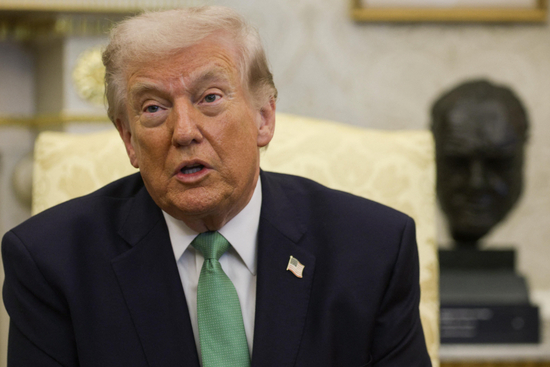
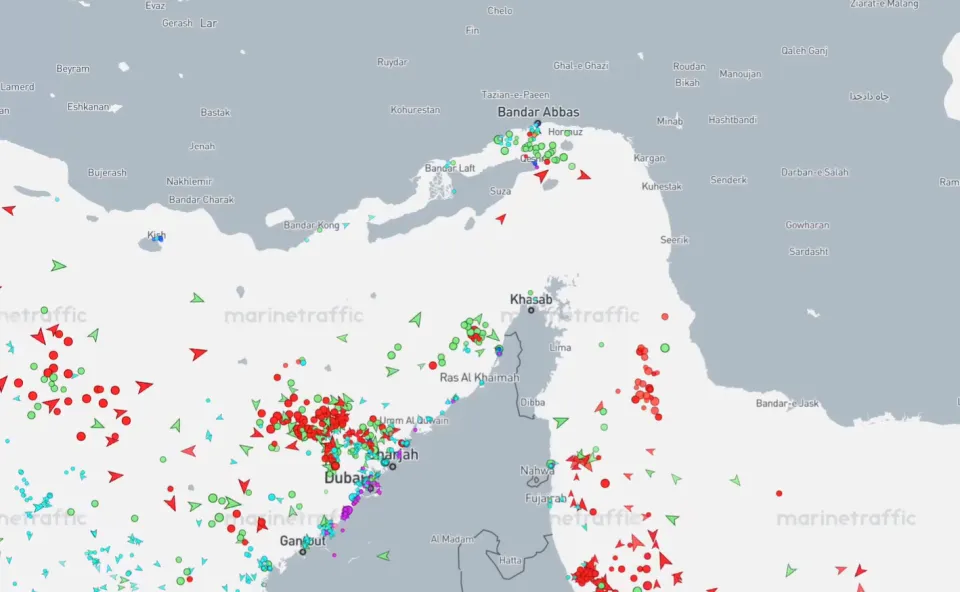
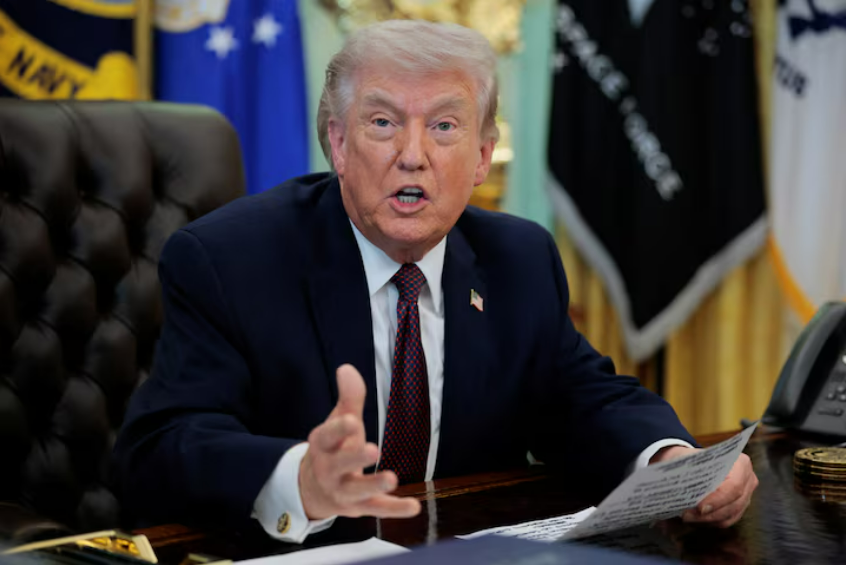
Trump's latest post on Wednesday night, Beijing time, claimed that "the president of Iran's new regime is much more rational and less extreme than his predecessors. He has just requested a ceasefire from the United States! And we will not consider it until the Strait of Hormuz is reopened and unobstructed. Before that, we will bomb Iran into rubble, or as they say, bomb it back to the Stone Age."
This is the latest twist in Trump's recent signals. However, almost at the same time as Trump posted, Reuters published an interview with him. He told the agency that the United States will "withdraw from Iran soon" and may return to Iran for "sporadic strikes" if necessary. Trump is often inconsistent, but it is unusual for him to express almost diametrically opposed attitudes at the same time.
Prior to this, a large number of signs collected by public opinion pointed to Trump's desire to declare "victory in the war" and run away. Some people even predict that Trump will "declare victory" when he delivers a national address at 9 a.m. Beijing time on Thursday. Affected by this optimism, Asian stock markets soared on Wednesday, and European stock markets continued to surge after the opening, continuing the momentum of U.S. stock markets' surge on Tuesday. U.S. stocks continued to rise after opening on Wednesday.
In his post, Trump did not explain who the so-called "President of the new Iranian regime" is. The current president of Iran is still Pezhichiyan, who was elected in July 2024. Pezeshchiyan said in a statement on Tuesday that Iran has the "necessary will" to end the war, provided that the other side meets Iran's demands, especially the necessary guarantees that it will no longer invade. There is no difference between his statement and his previous statement.
Iranian Foreign Ministry spokesperson Bagaei said that Trump’s so-called statement on social media that “the president of Iran’s new regime requested a ceasefire” is purely false news.
After Trump posted, Iran's Islamic Revolutionary Guard Corps quickly responded on social media, saying, "The situation in the Strait of Hormuz is completely under the control of the Iranian Islamic Revolutionary Guard Corps Navy and will not reopen the door to Iran's enemies just because of the US president's show."
Just on Wednesday, the Iranian parliament issued a statement that the Strait of Hormuz will not be opened, we have not held any negotiations, and we will not hold any negotiations in the future. Ali Nikzadeh, deputy speaker of Iran's parliament, said on Wednesday that "the supreme leader has not approved any negotiations at this time."
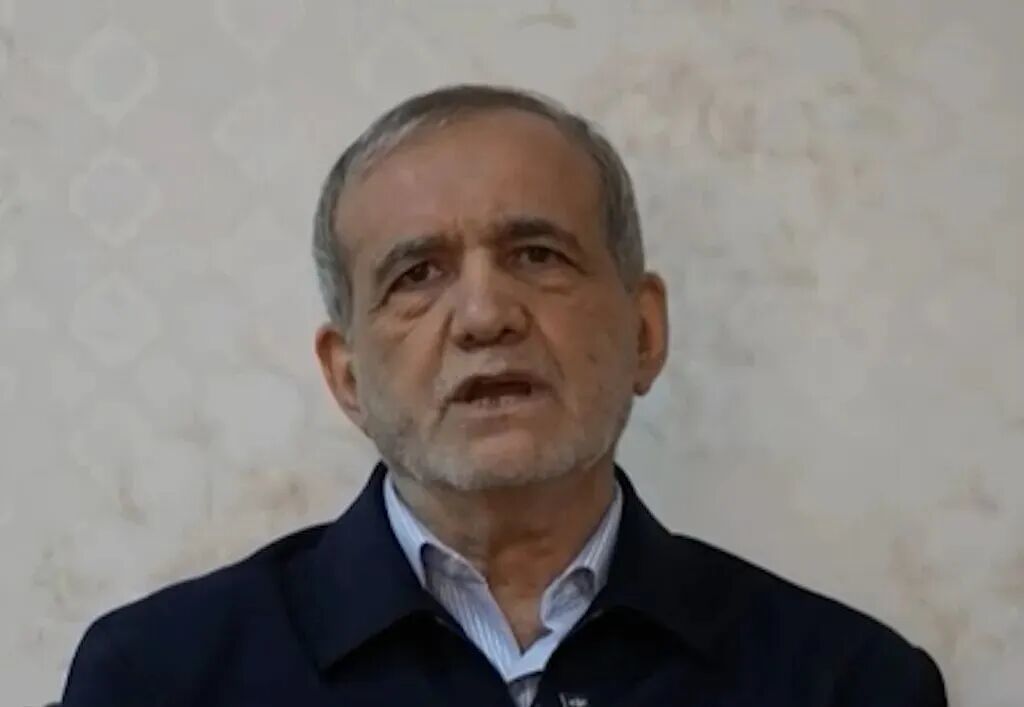
Iranian President Pezhiziyan
Many analysts believe that because many Iranian leaders were killed in bombings and most current senior officials do not use mobile phones and basically do not hold meetings, it is difficult to form a unified authoritative attitude. What is certain is that the United States and Iran have not had direct communication so far.
A senior Iranian official told CNN that Trump's latest posts did not reliably reflect what was going on. "This trait reflects an unstable and eccentric personality."
Trump's contradictory remarks on Wednesday lowered expectations for his speech on Thursday morning. Maybe whatever Trump says or decides he announces on Thursday morning is not that important. Because he has made too many "heavyweight" statements before, but his words are contradictory, and he may overturn any important decision on his own.
The most important thing is that this war fell into a stalemate rare in the history of human war. As President of the United States, Trump is in a serious dilemma and does not know what to do. In fact, after he muddle-headedly fought the war for nearly five weeks, the entire U.S. strategic community was also trapped. It can be said that even the top figures in the U.S. strategic community have no idea what to do now.
A few days ago, public opinion focused on criticizing Trump for wanting to escalate the war and open up a ground battlefield. But in the past two days, after Trump clearly expressed his intention to withdraw, another voice came out again. Suzanne Maloney, an Iran expert at the Brookings Institution in Washington, said it would be "extremely irresponsible" to end military operations before the Strait of Hormuz opens. Maloney said that the United States and Israel jointly launched this war and cannot escape the consequences of the war. "Energy markets are global in nature, and the United States is not immune to the economic damage that has been caused, which will worsen exponentially if the strait remains closed."
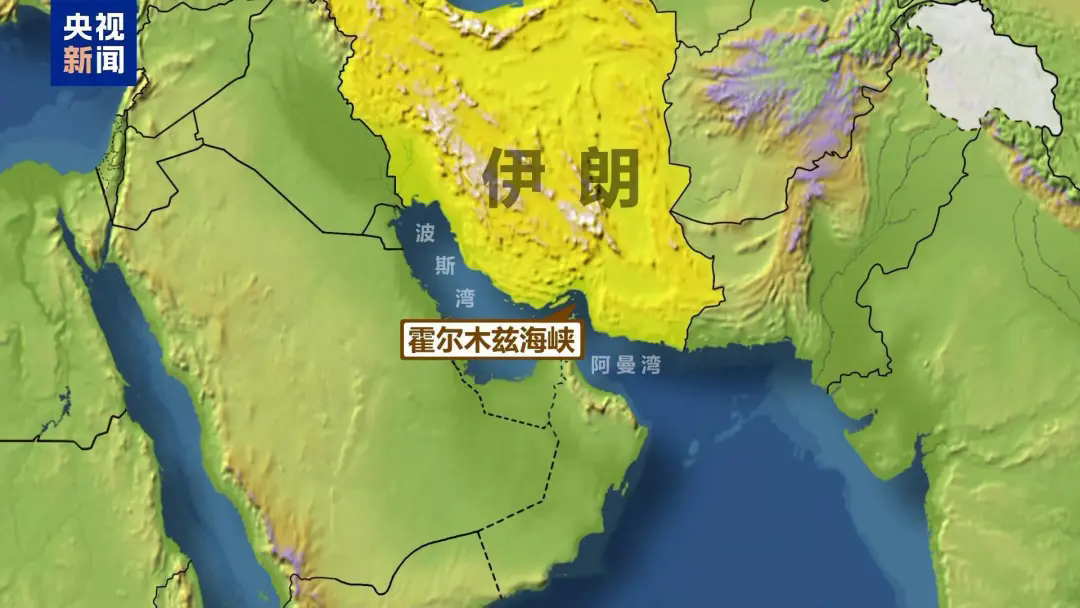
CNN stated that if the war ends with Iran controlling the Strait of Hormuz, the international community will regard the United States as a strategic failure. Iran is sure to claim victory and may believe it has rebuilt its deterrent against future attacks. Iran is likely to try to profit from its new controlling position by imposing tolls on transit tankers. This would provide funds to rebuild military, missile and even nuclear programs destroyed in US-Israeli air strikes.
But what can we do if we don’t retreat? If the war continues, it will become a ground war. As CNN said, any attempt to reopen the Strait by force will cause heavy casualties to the US military and prolong the war, further weakening Trump's already precarious political authority at home.
CNN analyzed that withdrawal may cause turmoil, but it is in line with Trump's way of doing things. Withdrawing would also perpetuate the "America First" principle, which states that the United States should always act within its exclusive national interests. In addition, withdrawing would vent Trump's anger at NATO allies, who he believes are parasitic on U.S. security guarantees.
But CNN writes that the United States does not exist in a vacuum defined by Trump's remarks. If a rejuvenated Iran is allowed to retain control of the Strait of Hormuz, it will be hard-pressed to escape the economic and political fallout. Trump may be able to concoct a political rhetoric to explain his exit, but markets may not be easily persuaded.
In the past two days, Trump has continuously criticized NATO. "The Daily Telegraph" published an interview with Trump on Wednesday. When asked whether he would reconsider the United States remaining in NATO after the war, Trump said: "Oh, yes, I would say (this) there is no room for reconsideration… I have never been swayed by NATO. I have always known that they are paper tigers, and by the way, Putin also knows that."
NATO allies refused to support Trump's Iran war, opposed the US military's use of bases in Europe to bomb Iran, and even closed their airspace to US military combat aircraft, which made Trump very angry. Even Secretary of State Rubio, one of the most pro-NATO members of Trump’s team, has fired shots at NATO. "NATO is a one-way street," Rubio said, complaining that Europe was eager for the United States to defend it but was failing to provide the help the United States sought. "After this conflict is over, we're going to have to reexamine this relationship," Rubio said.
On Tuesday, Trump again blasted European allies, accusing them of refusing to become more involved in Iran's war. He accused France of refusing to allow U.S. warplanes to fly through its airspace and sneered that Britain should show some "belated courage" to get "its own oil" from the Gulf.
British Prime Minister Starmer said on Wednesday that Britain would turn to the European Union after being taunted by Trump. He also defended NATO as "the most effective military alliance the world has ever seen." Starmer also said on Wednesday: "No matter how much pressure I and others face, no matter how much noise is made from the outside world, I will safeguard Britain's national interests in all the decisions I make, which is why I have been very clear that this is not our war and we will not be involved in it."
During a visit to Japan on Wednesday, Macron praised Europe's "predictability" and contrasted it with countries that "could harm you without even informing you." French media said that this was obviously a subtle mockery of Trump.
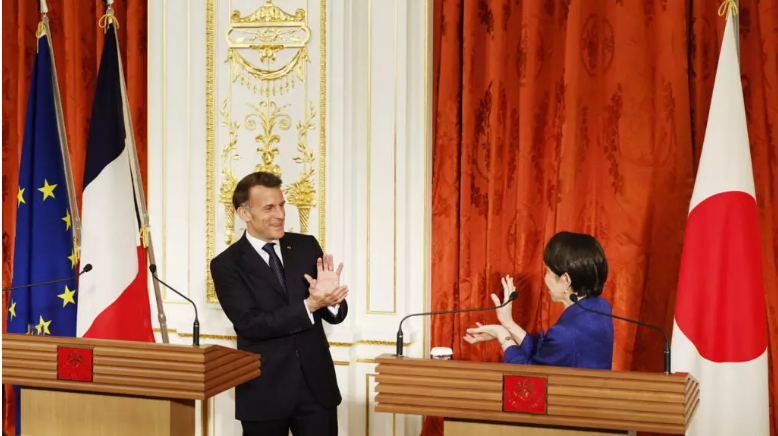
On April 1, Macron and Sanae Takaichi held a joint press conference in Tokyo. (Source: Associated Press)
The conflict between Trump and NATO is a renewed outbreak of the conflicts between the two sides that have accumulated since last year's trade war. It also reflects Trump's anxiety about being unable to extricate himself from the quagmire of Iran. If the United States really wants to withdraw from NATO, it is not a trivial matter, and it cannot be done by Trump's willful decision. It will encounter a huge backlash in US domestic strategic circles.
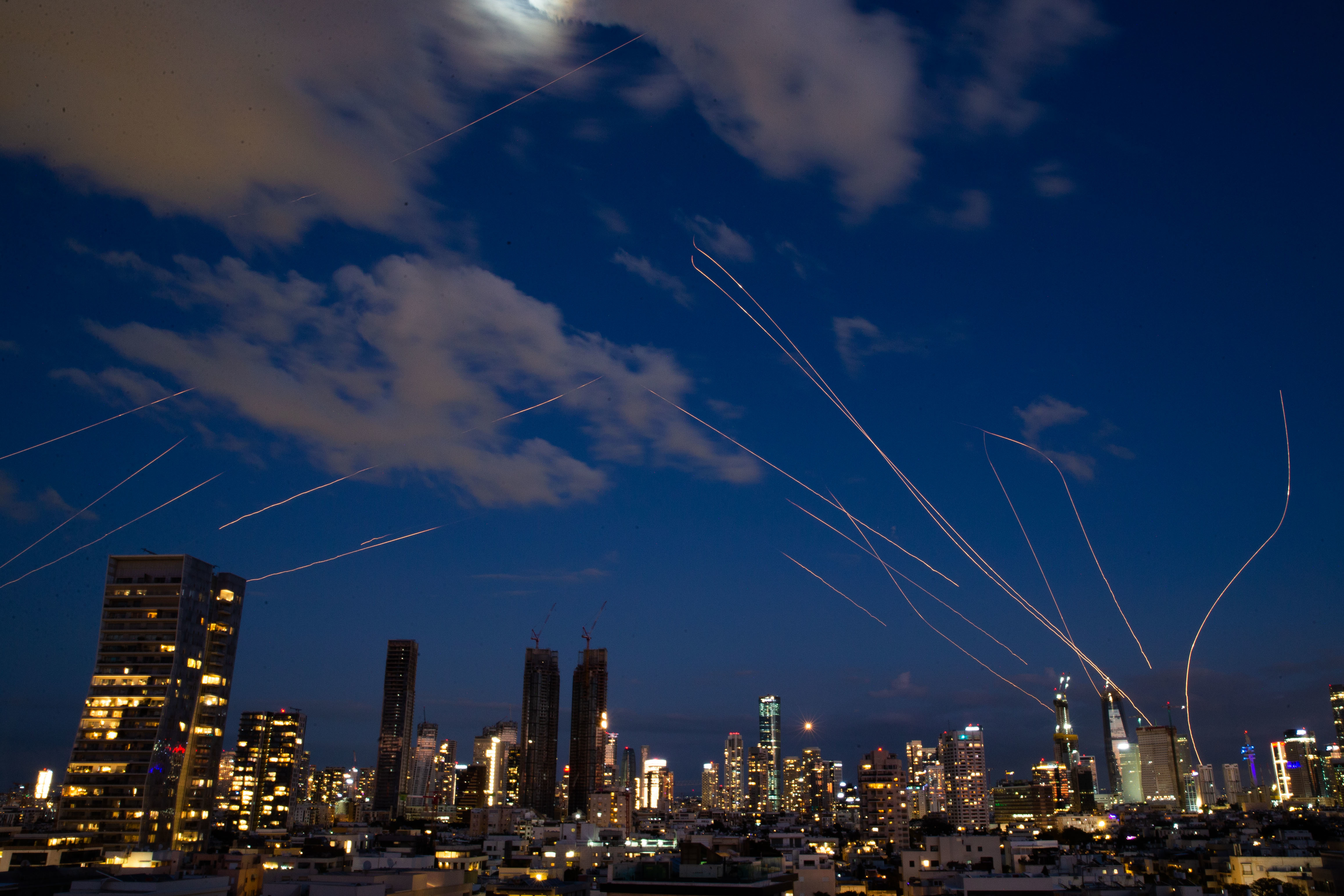
But the signs that Trump wants to run away are the first to stimulate America's Gulf allies such as the United Arab Emirates. Gulf countries have become increasingly clear in their opposition to negotiations between the United States and Iran, advocating for a military solution to the problem to ensure that Iran can no longer control the straits and can no longer carry out strikes against the Gulf countries in retaliation for the United States. According to the Wall Street Journal, since the outbreak of the war, the UAE has been attacked by about 2,500 Iranian missiles and drones, making it the most attacked among the Gulf countries. The UAE said it was ready to join the war and help the United States fight Iran.
The summary is that Trump has begun to intend to withdraw, and it seems that he has decided to withdraw. The whole world saw this, and found that he had no good retreat at all and could only use sophistry to promote this war as a comprehensive victory for the United States. He's really hard.
People see at least two major contradictions in Trump's statements: First, Trump once said that the war would be ended soon, and whether to open the strait was secondary. On another occasion, he said that Iran must open the strait first, otherwise he would bomb Iran back to the Stone Age. The second contradiction is that he said that the United States has "bombed Iran to pieces" and the most important thing has been done. It is the allies' own business to open the strait. On another occasion, he said that Iran's opening of the strait is a prerequisite for the US ceasefire, and he took the job back.
In short, Trump wants to run away now, but he probably can’t. As for what he will do next, the reality is that he cannot control the situation, and the situation cannot control him. Chaos will be inevitable.