“Conflict in the Middle East is derailing the auto industry.”
An analysis recently published by "Forbes" magazine said that this conflict is a "disaster" for the automobile industry.
Among them, aluminum is the latest victim of the conflict.
Iran's Islamic Revolutionary Guard Corps issued a statement on March 29 stating that the Revolutionary Guards used missiles and drones to attack two aluminum factories in the United Arab Emirates and Bahrain related to the U.S. military and aerospace industry.
Subsequently, the production capacity of the three major aluminum giants in the Gulf region, Emirates Global Aluminum, Bahrain Aluminum, and Qatar Aluminum, was blocked. Among them, Bahrain Aluminum operates the world's largest single aluminum smelter, with an annual production capacity of 1.6 million tons.
ANZ data shows that the Middle East accounts for 9% of global aluminum production, and due to supply constraints in specific regions, the region can meet 18% of global demand. Currently, 4 million to 5 million tons of exports are at risk.
According to data from the German automotive professional publication AMS, 70% of the processed aluminum of Japanese automakers comes from the Middle East, and 20% of the aluminum imports of U.S. manufacturers come from the region. South Korea and other automotive industries also rely on the Middle East for aluminum.
Aluminum is the most critical but most underestimated link in the automotive industry chain.
According to AMS analysis, an ordinary family car uses more than 200 kilograms of aluminum. Body, suspension, power system, everything is inseparable.
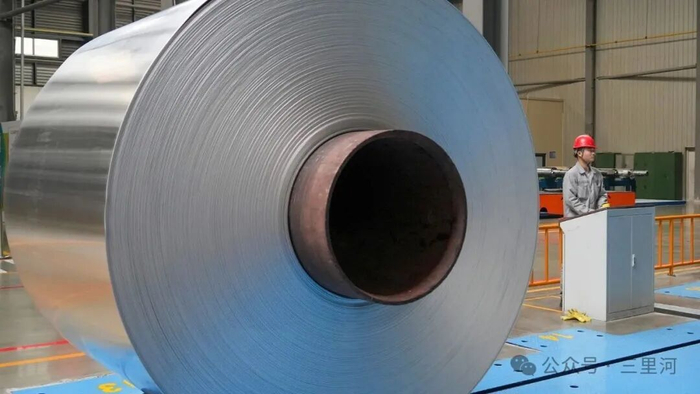
New energy vehicles are even worse. Lin Boqiang, director of the China Energy Policy Research Institute at Xiamen University, told Sanlihe that aluminum is the skeleton material of new energy vehicles. A shortage of aluminum may lead to a shortage of raw materials, and high aluminum prices will push up vehicle manufacturing costs. Both factors may affect production.
According to Bloomberg, on March 30, aluminum prices on the London Metal Exchange (LME) jumped 5.5% to hit $3,492 per ton, setting a new high since April 2022. Since the outbreak of the conflict, the cumulative increase in aluminum prices has reached 10%, and the "war premium" continues to spread.
Ross Strokan, head of raw materials at analyst firm CRU Group, warned that supply disruptions could cause aluminum prices to soar to the $4,000 per ton mark given current inventory levels.
For car companies, this means that the cost of every body panel and every suspension arm will go up.
According to the latest data from market agency MarketsandMarkets, affected by the conflict, the global light vehicle growth rate is expected to slow down from the previously predicted 3.8% to 0-2%.
So, can we not use aluminum?
"At present, it is difficult." Lin Boqiang admitted that relevant research is indeed ongoing, and magnesium-aluminum synergy and other methods may appear in the near future, but the starting point is to find cheaper and more practical materials.
The energy crisis is still raging at this moment.
Cars are undoubtedly large energy users. According to AMS's calculations, companies with oil prices lower than US$70 will barely have profit margins, but they are no longer profitable in today's oil price environment of US$110.
This is just the tip of the iceberg.
Analysts say cars typically contain 150 to 200 kilograms of plastic and polymer parts. About 40% of the supply of naphtha, the basic raw material for these chemicals, comes from the Gulf region.
A more hidden danger is helium.
Qatar produces about a third of the world's helium, which is essential in semiconductor manufacturing.
At present, the supply of helium is facing interruption. At a time when the demand for automotive chips is soaring due to electronics and intelligence, the rise in semiconductor manufacturing costs is almost a foregone conclusion.
Without chips, cars cannot be built, which will directly affect car production plans.
The most direct impact occurred on the Middle East automobile market.
Toyota has announced that it will cut production of nearly 40,000 vehicles for the Middle East market. Nissan is also adjusting its production plans.
Volkswagen Group CEO Oliver Blume said the conflict could lead to weaker demand for high-end cars in the region, with particular concerns about the Porsche and Audi brands.
Why? Because the Middle East is the profit cow for high-end cars.
According to analysis by Metzler Research Analyst Pal Skirta, annual vehicle sales in the Middle East are approximately 3 million vehicles. Sales in the United Arab Emirates alone exceed 300,000 vehicles a year, of which about 20% are high-end imports.
Now, the war is burning directly at the tail of this "cash cow".
Those who ultimately bear the risk premium may be workers who lose their jobs due to production line shutdowns, and more likely, every consumer who drives on the road.
"Sanlihe" Studio