On March 31, local time, U.S. President Trump stated that the United States will end the war with Iran within two to three weeks, saying that this move will help reduce the current high energy prices.
Trump stated that the current goal of the United States is to "completely destroy Iran's remaining military capabilities," including missile facilities and related infrastructure. He also said that the United States may leave Iran "within two to three weeks," but he did not rule out the possibility of reaching an agreement through negotiations before then.
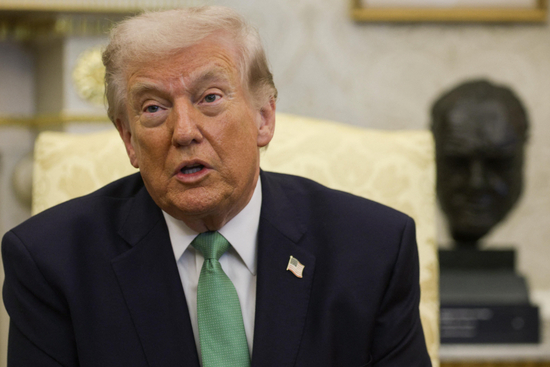
On the issue of the Strait of Hormuz, Trump stated that the United States does not intend to continue to assume primary security responsibility in the future, believing that shipping safety should be the responsibility of countries using the waterway, including France.
Trump also said that the United States has caused "significant weakening" of Iran and said that its military system, communication capabilities and air defense systems have been severely hit. At the same time, he once again emphasized that its core goal is to prevent Iran from acquiring nuclear weapons, saying that this goal has "already been achieved."
Trump also claimed that a "new leadership" has emerged in Iran and described it as "more accessible and rational." He also said that if Iran re-develops nuclear capabilities in the future, the United States will still use military means to strike.
Iranian President: To end the war, the other side must promise not to invade again
Iranian President Pezeshizyan stated on March 31 that Iran has the "necessary will" to end the war, provided that the other party meets Iran's demands, especially the necessary guarantees that it will no longer invade.
According to Iran's Guangming News Agency, Pezeshizyan said in a phone call with European Council President Costa that day that the solution to normalizing the situation is to stop the aggressive attacks by the United States and Israel. He reiterated that Iran is not seeking tension or war at any stage and "has the necessary will to end this war."
Pezeshchiyan pointed out that Iran entered negotiations with the United States with sincerity and a constructive attitude, but was illegally attacked midway through the negotiations. This issue proves that the United States does not believe in diplomacy, but only "seeks to impose orders to achieve its greedy intentions."
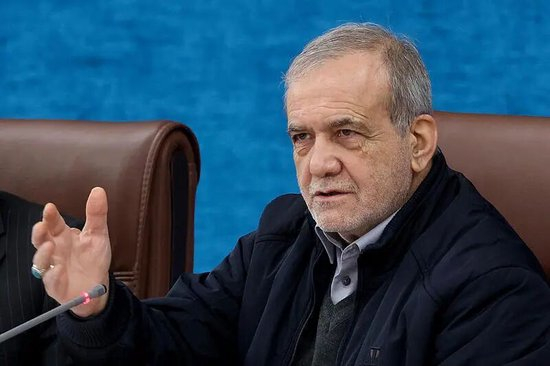
Pezeshchiyan also said: "We respect the sovereignty of our neighboring countries and have no intention to attack them. But unfortunately, the United States has set up military bases in these countries and launched attacks against us from the territories of these countries. These countries have failed to fulfill their international responsibilities to prevent their territories from being used to attack Iran."
According to reports, Costa emphasized the need to stop the current fighting and tension during the call. He said that European countries will never support this kind of aggression against Iran and believe that it violates international law and international rules.
Netanyahu: Israel is forming a "regional alliance" to deal with Iran
Israeli Prime Minister Netanyahu delivered a video speech on the evening of March 31, saying that Israel had "struck a heavy blow" to Iran and that Israel was establishing some "new regional alliances" to deal with the "Iranian threat."
Netanyahu listed the results of Israel's war against Iran, namely weakening Iran's nuclear program, ballistic missile program, infrastructure, internal security forces and leadership. He also mentioned Israel’s military operations against the Palestinian Islamic Resistance Movement, Lebanese Hezbollah, Yemen’s Houthi armed groups and Palestinian armed groups in the West Bank, saying that Israel has established extensive “buffer zones” in the Gaza Strip, Syria and Lebanon.
Netanyahu said that in addition to deepening the Israeli-US alliance, "we are creating some new alliances with important countries in the region to deal with the common Iranian threat." He did not elaborate on this.
According to an analysis by The Times of Israel, Netanyahu’s speech may be preparation for a propaganda strategy once the United States decides to end the war with Iran.