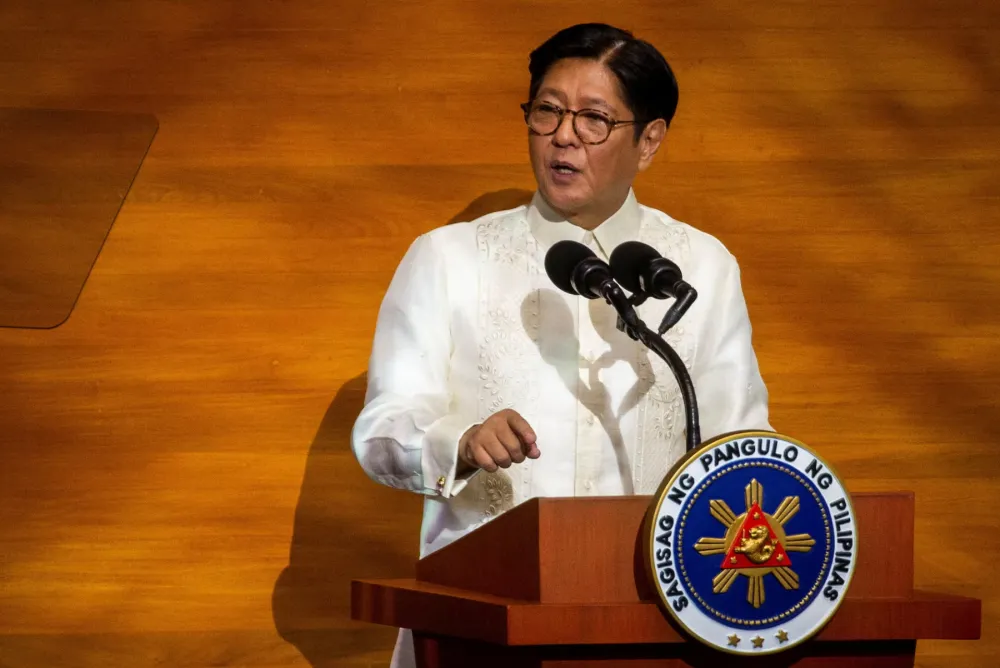
On March 31, Foreign Ministry Spokesperson Mao Ning hosted a regular press conference. A reporter asked: According to reports, the Self-Defense Forces officer who broke into the Chinese Embassy in Japan armed with a knife has been sent for inspection by the Japanese police. What is China’s comment on this?
Mao Ning presided over the regular press conference of the Ministry of Foreign Affairs
Mao Ning pointed out that this incident exposed the depth and harm of Japan's right-wing ideology and distorted view of history. According to reports, Japan’s National Defense University has a so-called practice of collectively visiting the Yasukuni Shrine every year. In 2024, a former senior Maritime Self-Defense Force official actually served as the Palace Secretary of the Yasukuni Shrine. This is the first time that a retired Self-Defense Force general has held the highest position of the Yasukuni Shrine.
Mao Ning said that the Self-Defense Forces have long invited far-right elements who are extremely anti-China to participate in teaching, and the training materials are full of content that distorts and beautifies the history of World War II aggression.
"The parents of the Self-Defense Forces official who illegally broke into the Chinese Embassy said that he did not behave in extreme ways when he was growing up and studying in his hometown, and they had no idea why he did what he did. This person received a nine-month reserve cadre training course in the Self-Defense Forces. During this process, what thoughts and education the Self-Defense Forces instilled in him deserve attention, investigation and deep thought." Mao Ning said.
Mao Ning reiterated that the Japanese Self-Defense Forces have shifted to the right and Japan's "remilitarization" deserves high vigilance from the international community. China once again urges Japan to thoroughly investigate the incident and fundamentally prevent such incidents from happening again.
Related news
Chills down my spine! Murata Akira's sly smile and the "military song" behind him…
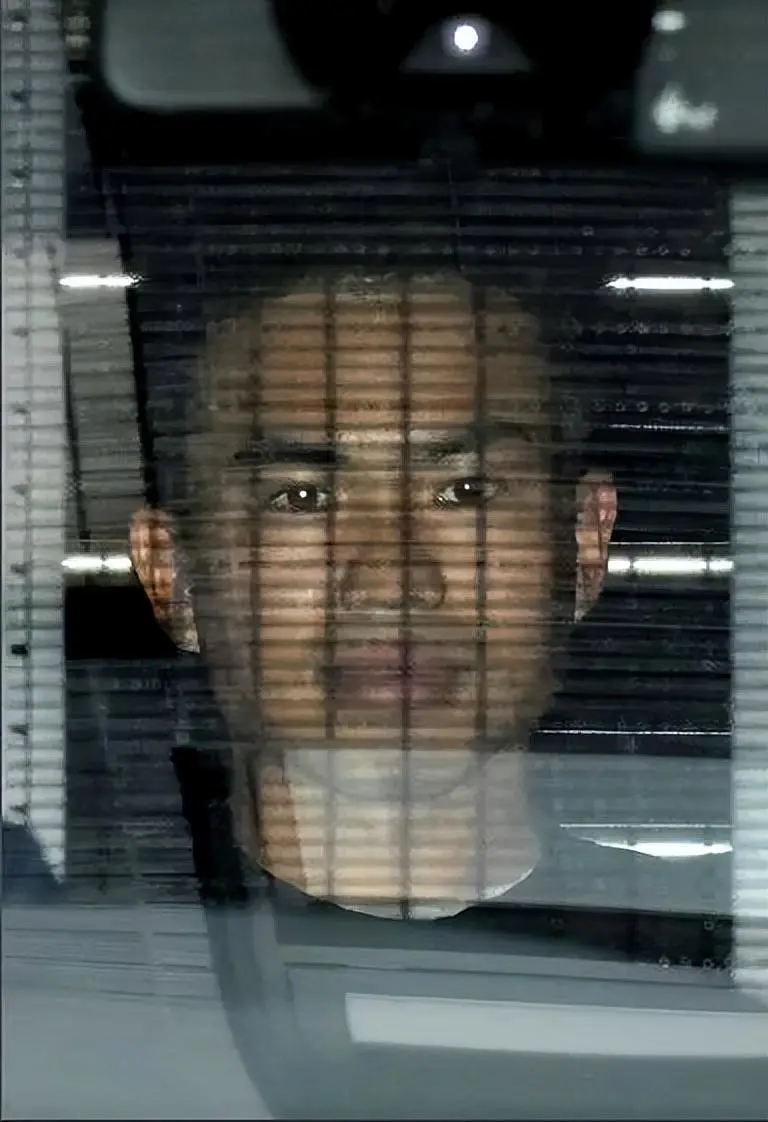
On March 26, 2026 local time, the Tokyo Metropolitan Police Department handed over the suspect Kodai Murata to the prosecutors for forcing his way into the Chinese Embassy in Japan. His frontal photo was publicly exposed by many Japanese media.
The exposed footage showed that during the transfer, 23-year-old Murata Kodai was wearing dark casual clothes. Facing the camera, there was no trace of regret, panic or fear on his face.
Instead, he smiled.
Kodai Murata smiled in front of the camera
What is even more chilling than this weird smile is the faint background sound that can be heard at the transfer site. The video showed that someone at the scene was singing the song of the Showa Restoration, and the slogan "Fight bloody to the end, long live long live" was particularly harsh.
The Song of the Showa Restoration is the iconic poison song of Japanese militarism. The lyricist, Taku Mikami, was one of the masterminds of the "May 15th Incident" in 1932. In 1936, young officers of the Japanese Army sang this song and launched the "226 Mutiny".
It is no coincidence that such a song, which is deeply associated with militarism, subjugation of superiors, and violent coups, sounded at the transfer site of the perpetrators suspected of attacking Chinese diplomatic missions.
Echoing the suspect's arrogance, Japanese officials are talking about him.
On March 27, Japanese Defense Minister Shinjiro Koizumi finally responded, but he did not apologize to China and only called the incident "regrettable."
Shinjiro Koizumi only called the incident "regrettable"
Japanese Prime Minister Sanae Takaichi and Foreign Minister Toshimitsu Motegi remained silent.
If we push back the time to March 24, the day when Murata Akira broke into the museum, some details that deserve more attention have emerged.
That morning, Murata broke into the museum.
At the press conference of the Chinese Ministry of Foreign Affairs in the afternoon, China took the lead in disclosing this vicious incident.
Prior to this, the Japanese media, which has always been known as "well-informed", had no voice at all.
Also that afternoon, at the press conference of the Ministry of Foreign Affairs of Japan, Toshimitsu Motegi said nothing about this. What's even more ironic is that at the Ministry of Defense press conference that morning, Shinjiro Koizumi was still talking about the so-called "China's cognitive war."
It wasn't until China disclosed the case that Japan slowly and reluctantly said a few words of regret and that it would investigate the case strictly. The Ministry of Defense even argued that the murderer's "words and deeds were normal."
In order to cool down the incident, the Sankei Shimbun specifically interviewed Kohiro Murata's parents, emphasizing that his parents are ordinary people with a stable family environment and that there are no posts on social media that suggest crime or "anti-China ideas."
Someone has noticed that there was a similar case in history.
Coincidentally, on the same month and day as this incident, on March 24, 1964, the U.S. Ambassador to Japan Edwin Reischauer was stabbed in the thigh by a 19-year-old boy (who had been hospitalized for schizophrenia) in front of the U.S. Embassy in Tokyo, and was seriously injured.
The Japanese government at the time demonstrated an "extraordinary" response speed.
Immediately after the incident, Foreign Minister Masayoshi Ohira went to visit, and Prime Minister Yuto Ikeda also tried to visit, but Toranomon Hospital where Reischauer was hospitalized was so overcrowded that reporters and other personnel crowded the hospital and they could not even enter.
The picture shows a screenshot of relevant reports
Before the United States could launch an attack, then-Prime Minister Ikeda Hayato personally called U.S. President Johnson to express his deep regret and apologized to the American people on behalf of the Japanese people via satellite broadcast.
The day after the incident, Takaya Hayakawa, then chairman of the National Public Security Commission, immediately announced his resignation to show his responsibility.
Takaya Hayakawa, then chairman of the National Public Security Commission, immediately announced his resignation to show his responsibility. The picture is a screenshot of the report.
Strengthening the security of foreign dignitaries also became an important issue, which led to the establishment of the Metropolitan Police Department Security Section (later renamed the Metropolitan Police Department Security Police).
However, on the same day 62 years later, the Chinese Embassy in Japan was violently attacked by active Japanese Self-Defense Forces officers with knives. In the face of more serious foreign-related incidents involving active self-defense officers, the Japanese government's attitude has completely changed.
As we all know, the act of "apologizing" is deeply rooted in Japan's social and cultural system.
Someone described the importance of apology in Japanese society this way: The skill that must be mastered in Japan is "apology." If you make a serious mistake, you must bow deeply at 90 degrees. If you still can't solve it, kneel down and kowtow to "apologise." This is usually forgiven.
The act of “apologizing” is deeply ingrained in Japanese society and cultural system
Therefore, "apologizing" is a particularly easy gesture for Japanese people to make.
Of course, "apology" actions such as bowing and kneeling do not really mean reflection and repentance in Japan.
In recent years, decades-long fraud scandals involving major Japanese companies have been exposed one after another. For this reason, spokespeople from these companies have repeatedly bowed to "apologize" at press conferences. After the earthquake in Japan, the government was slow to provide disaster relief, and the relevant "responsible person" also publicly "apologized".
Toyota Motor Chairman bows to "apologize"
The bowing is over, the "apology" is over, what next? There is no more. The problem that should be solved remains unresolved.
If the above examples are not convincing enough, then the remarks of Japanese Congressman Yaichi Tanigawa are very direct.
The Japanese Liberal Democratic Party congressman who was suspected of accepting more than 40 million yen in "kickbacks" announced his resignation and apologized at a press conference. But then he was asked by reporters anxiously, and he made the following remarks:
"Isn't it okay that I was wrong? Can't you understand? Do you want me to die?"
It can be seen that in Japan, "apology" does not mean admitting a mistake, but is more often just a formality. I "apologized", then you should forgive me and stop blaming me.
But after members of the Japanese Self-Defense Forces broke into the Chinese Embassy, even this form of "apology" has not been made by Japan so far.
From Sanae Takaichi to Kodai Murata himself, no one has any intention of apologizing.
On the one hand, there is a social culture that is accustomed to "apology", and on the other hand, there is a rigid attitude of never "apologizing" on certain issues.
The most prominent one is the historical issue.
The late former Japanese Prime Minister Shinzo Abe once expressed this view: People born after the war in Japan have exceeded 80% of the total population. These Japanese and their descendants who "have nothing to do with that war" "can no longer bear the fate of continuing to apologize." This view is embraced by many right-wingers.
Regarding the embassy matter, Japanese public opinion and the government also did the same. The Japanese government and Self-Defense Forces organizations talk about "regret", and Japanese public opinion generally exaggerates that this is a "personal behavior" and does not think it is a problem of its own social system at all.
In other words, until now, from the individual who carried out this incident to the system that should be responsible for the occurrence of this kind of thing, no one even feels that they have done something wrong and need to be responsible for it.
This is the most infuriating and the most alarming thing.
In the matter of breaking into the museum, the real problem is not a "Murata Kodai", but the soil where "Murata Kodai" are allowed to breed.
Historically, incidents of "rage" by Japanese soldiers occurred frequently. From the "May 15th Incident" and "February 26th Mutiny" in Japan, to the September 18th Incident and the July 7th Incident carried out by the Japanese invaders, all were initiated by the Japanese military "alone" by adhering to the concept of "lower to overcome the upper", which eventually led to the entire Japan being kidnapped by militarism.
Incidents of "rage" by Japanese soldiers occurred frequently
Decades later, active-duty officers of the Japan Ground Self-Defense Force broke into the Chinese Embassy with weapons, and a Maritime Self-Defense Force frigate ignored China’s warning and broke into China’s territorial waters…
What's more serious is that Japan's political arena has been shifting to the right in recent years. Article 9 of the Peace Constitution has been constantly being ignored. The role of the Self-Defense Forces has changed from "defense" to "offensive". More offensive weapons are being installed in the Self-Defense Forces through various channels.
Needless to say, it goes without saying how serious the consequences will be if the Japanese Self-Defense Forces, which possesses offensive weapons, "go alone" in the future.
The Japanese government's passive attitude is sending a signal: extreme hostility towards China is allowed. It will inspire more far-right elements to take more radical action, creating a vicious cycle.
China's position on this incident is clear and firm: Japan must give China an explanation.
This is not only the responsibility and obligation that Japan must fulfill to China in accordance with the basic norms of international relations, international law and relevant international treaties, but also a reasonable explanation on behalf of Japan to Asian countries that have been deeply harmed by militaristic colonial expansion, and to countries around the world that have been deeply harmed by fascism.
Perhaps some Japanese people feel that if this matter is delayed, the story will be over.
But no. Just like historical issues, until a day of thorough reflection comes, Japan will never be relieved of its guilt.