The military strike launched by the United States and Israel against Iran entered its 31st day on the 30th.
U.S. Secretary of State Rubio said in an interview broadcast by Qatar's Al Jazeera on the 30th that if Iran blocks the Strait of Hormuz after the war is over, it will "face serious consequences." Rubio said that once the U.S. military operation in Iran ends, the Strait of Hormuz will be reopened in any case, "either with the consent of Iran or through an international military alliance that includes the United States." Rubio said that the goals of the U.S. military operation against Iraq are very clear and "will be achieved in weeks, not months." He also said Iran must not acquire nuclear weapons.
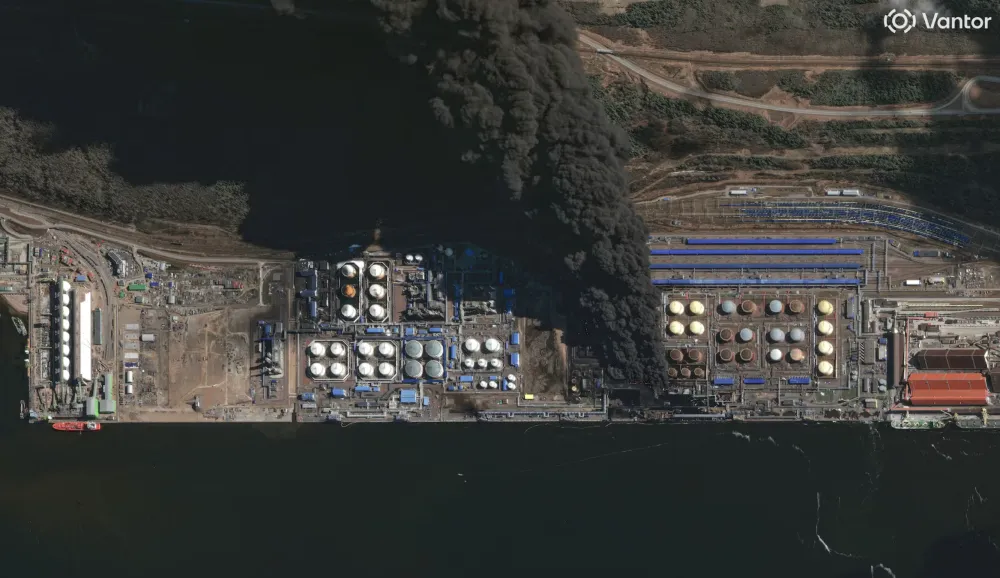
In an interview with the New York Post on the 30th, U.S. President Trump said that his response to Iran’s attack on an oil refinery in Haifa, Israel, is “coming soon.” Israeli media reported on the 30th that an oil refinery in the northern city of Haifa caught fire in a missile attack that day.
On March 30, local time, Iranian President Pezeshizyan stated at a cabinet meeting that any decision to end the war will be based on meeting all the conditions that have been proposed and made within the framework of safeguarding national dignity, security and interests.
US Secretary of State: Iran will never be allowed to permanently control Strait of Hormuz
On March 30, local time, U.S. Secretary of State Rubio stated that Iran would never be allowed to permanently control the Strait of Hormuz, establish a toll collection system, etc.
Rubio said in an interview with the media that day that the United States aims to achieve its military action goals against Iran "within weeks, not months." He said: "He (US President Trump) prefers diplomatic approaches. These (negotiation) efforts are in their infancy. Some negotiations are ongoing, including through intermediaries."
Rubio said: "But we must also be prepared for the possibility that this effort (negotiations) may fail," and that Iran "is making threats to permanently control the Strait of Hormuz, to establish a toll system, etc. This must not be allowed to happen."
The UK Maritime Trade Operations Office (UKMTO) issued a safety notice on March 30, local time, stating that during the statistical period from February 28 to March 30 at 15:00 (UTC), the agency received a total of 24 incident reports involving vessel safety. Relevant incidents mainly occurred in the Persian Gulf, Strait of Hormuz and Gulf of Oman.
Iranian Foreign Minister: Will continue to target
"Invaders" conduct "defensive operations"
According to a report by the Islamic Republic of Iran Radio and Television on the 30th, Iranian Foreign Minister Araghchi said in a phone call with French Foreign Minister Barrow that Iran will continue to carry out "defensive operations" against "aggressors". Barrow expressed concern about the escalation of tensions in the Middle East and stressed the need to strengthen political and diplomatic efforts.
Araghchi said that Iran will continue to carry out "defensive operations" against "aggressors", including its military bases and facilities deployed on the territory of regional countries. The reason for Iran's "defensive operations" in the region is that the United States uses the territories, bases and facilities of these countries to launch illegal wars against Iran.
Araghchi said that the main source of tension in the Strait of Hormuz lies in the military aggression of the United States and Israel against Iran. The Strait of Hormuz is closed to ships from all parties participating in the aggression against Iran to "prevent aggressors from using the Strait of Hormuz to carry out illegal attacks on Iran." At the same time, relevant Iranian authorities are coordinating the passage of ships from other countries.
Barrow said France opposes war imposed on Iran and attacks on civilian targets. Barrow stressed the need to intensify political and diplomatic efforts to find solutions to end the war and restore regional stability and security.
Iran accuses Ukraine of participating in military action against Iran
On the 30th local time, Iran’s Permanent Representative to the United Nations Iravani wrote to the United Nations Secretary-General and the Security Council, accusing Ukraine of participating in military operations against Iran by sending personnel to the region.
Iravani stated in the letter that Ukraine admitted to sending "hundreds of experts" to relevant areas. This move was regarded by Iran as "supporting" the US-Israeli military action against Iran and a direct participation in a country's illegal use of force.
Iran also refuted the relevant accusations previously made by Ukrainian representatives, saying they lacked basis and stated that these claims were intended to divert the international community's attention from the current US-Israeli military operations against Iran's sovereignty and territorial integrity, and to defend attacks against civilians and civilian infrastructure.
Iravani pointed out that by providing technical and operational support, Ukraine has objectively facilitated military operations against Iran's sovereignty and territorial integrity, and therefore should bear international responsibilities arising from assisting in the commission of internationally wrongful acts in accordance with international law.
Iravani emphasized that Ukraine's actions constituted participation in "acts of aggression" and violated the prohibition of the use of force in the United Nations Charter. At the same time, Ukraine’s attempt to legalize or normalize attacks on critical infrastructure is deeply worrying and violates the basic principles of international humanitarian law.
Israeli government exposed as trying to use negotiation window to weaken Iran
At 18:50 local time on the 30th, an explosion occurred in the east of Tehran, the capital of Iran, and Iran's air defense system was subsequently activated. As can be seen in the video, explosions occurred in three locations in eastern Tehran.
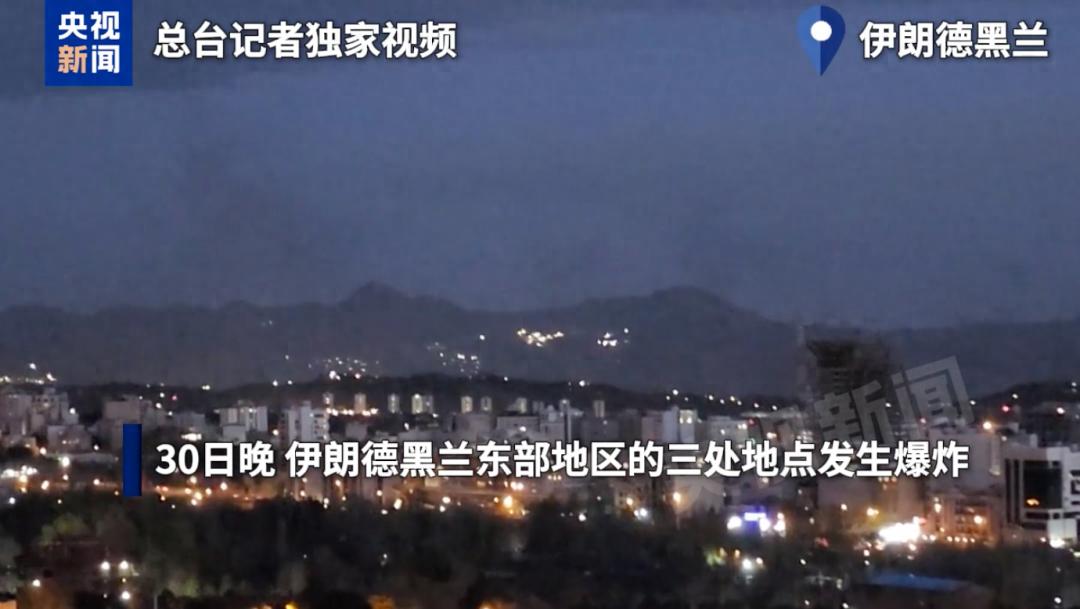
In the past 24 hours, the Israeli military's strikes against Iran have been characterized by high intensity and persistence. According to the Israeli military battle report, it dispatched a total of more than 150 fighter sorties and carried out repeated bombings on Tehran. Especially in a round of attacks on the morning of the 29th, the Israeli army dropped more than 120 bombs in a short period of time. The Israeli military claimed that its targets include multiple key components of Iran's ballistic missiles and research and development sites for satellite launches, missile storage and launch facilities, and multiple air defense facilities. The Israeli military said in a statement that its goal is to "further weaken Iran's core military system and combat capabilities."
Iran responded forcefully.
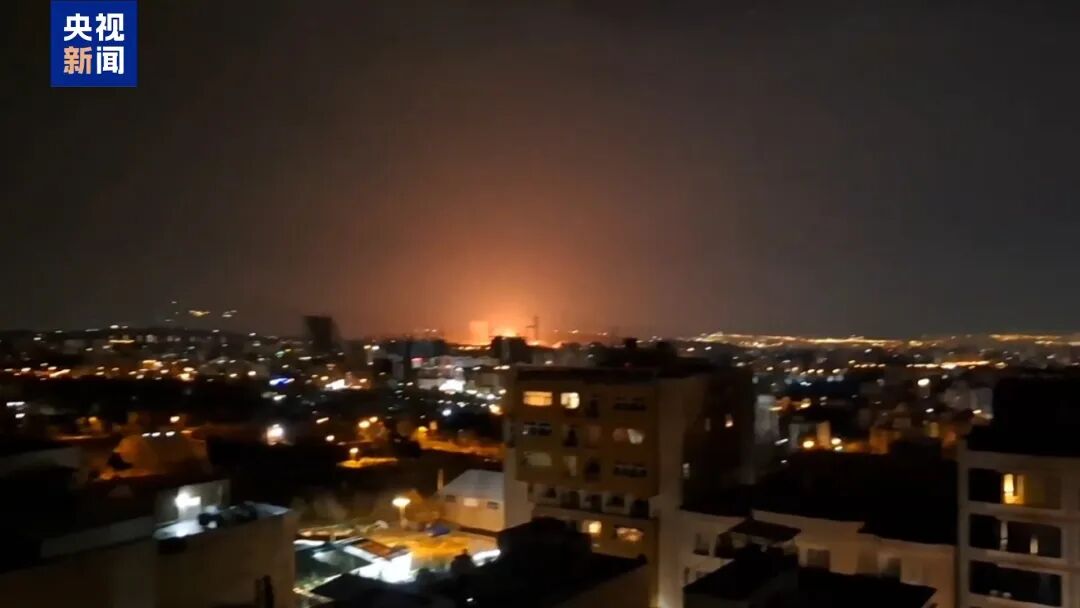
CCTV reporter Zhao Bing said that the Israeli side pointed out that the Israeli government obviously hopes to use the current window period of unclear prospects for US-Iran negotiations to weaken Iran's strategic assets to the greatest extent. The Israeli military also revealed that it destroyed many of Iran’s temporary movable command centers in air strikes. This shows that Iran has begun to move more of its military command to mobile facilities following previous attacks on its military command chain.
A quick overview of the US-Israeli military strike against Iran
–Iran
Iran's Islamic Revolutionary Guard Corps issued a statement to mourn Alireza Tangesili, commander of the Islamic Revolutionary Guard Corps Navy. The statement said that Tangesili died of his injuries and that the Islamic Revolutionary Guards will "never stop fighting until the enemy is completely eliminated."
Iranian Foreign Ministry spokesperson Bagaei said that Iran has not conducted any direct negotiations with the United States so far, and Iran has received information about the United States’ willingness to negotiate through some intermediaries. The so-called "15-point plan" of the US ceasefire mentioned by the outside world is "excessive and unreasonable".
Bagaei also said that the Iranian parliament is considering whether to withdraw from the Treaty on the Non-Proliferation of Nuclear Weapons. Iran has never sought nuclear weapons and will never seek nuclear weapons. Iran's position has always been to ban any weapons of mass destruction.
Iranian Acting Defense Minister Ibn Reza said in a phone call with the Turkish Defense Minister that Iran will continue to "make every effort to punish the aggressors, form effective deterrence, and ensure that wars and acts of aggression will not be repeated again."
Officials in Iran's Alborz province said that an orphanage in the province was attacked by the United States and Israel, killing two people and injuring five others.
Iran's ministers of science and health issued a joint statement condemning the attacks by the United States and Israel on many universities and scientific research institutions in Iran, saying that relevant actions severely damaged education and scientific research facilities and caused casualties among scientific researchers.
Iran's Ministry of Cultural Heritage, Tourism and Handicrafts said that recent US-Israeli attacks have caused damage to 131 historical monuments in Iran.
On March 30, local time, Ahmed-Reza Laden, commander of the Iranian Security Forces, said that since the outbreak of the current round of military conflicts between the United States and Israel, Iran has arrested a total of 48 core members of anti-government organizations, spy networks and related groups. At the same time, Iranian police arrested 46 people suspected of participating in the sales of "Starlink" equipment during operations in 19 provinces, and seized 139 sets of "Starlink" equipment and related routers.
–USA
U.S. President Trump said that the United States is having serious discussions with a "new, more rational regime" and that if an agreement cannot be reached with Iran, all the country's power plants, oil wells and Khark Island will be "totally destroyed."
In an interview with British media, Trump said that indirect negotiations between the United States and Iran through the "intermediary" Pakistan were "going very well." Trump said Iran allowed 10 Pakistani-flagged oil tankers to pass through the Strait of Hormuz last week, and this has now increased to 20.
CNN reported that Trump said that Iran had agreed to "most elements" of the "15-point plan" for a ceasefire.
According to the US "New York Times" report, hundreds of US special forces soldiers have arrived in the Middle East, which will provide more options for US military operations against Iran.
–Israel
The Israel Defense Forces issued a statement saying that the Israeli army launched multiple rounds of air strikes on Tehran, the capital of Iran, and hit about 40 weapons production and research and development facilities.
According to Israeli Channel 12 television, an oil refinery in the northern city of Haifa caught fire in a missile attack.
The Israel Defense Forces said in a statement that a soldier was killed after being shelled by Hezbollah in southern Lebanon. The attack also caused one soldier to be seriously injured, and the injured has been sent to hospital for treatment.
According to the Times of Israel, the Israeli Knesset approved the 2026 budget, which is the largest budget in Israel’s history. Among them, the budget of the Ministry of Defense has reached a record high, estimated to exceed NIS 142 billion (approximately US$45.3 billion).
–Syria
According to the Syrian National News Agency, citing information from the Syrian Transitional Government Forces, multiple drones launched attacks on multiple military bases in Syria from near the Iraqi border, and most of the drones were intercepted.
——Lebanon
The United Nations Interim Force in Lebanon (UNIFIL) issued a statement saying that a shell landed on a UNIFIL position, killing one peacekeeper and seriously injuring another.
——Kuwait
The Kuwaiti military said that a military base was hit by multiple missiles, injuring 10 soldiers.
Kuwait's Ministry of Electricity, Water and Renewable Energy said an Indian worker was killed in an attack on a power and desalination facility in the country.
–Iraq
The Iraqi Ministry of Defense issued a statement saying that the country's "Mohammed Allah Martyrs" air base was attacked by rockets and an Iraqi Air Force An-132 transport aircraft was destroyed.
–Spain
According to multiple Spanish media reports, the Spanish government has decided to close its airspace to relevant aircraft participating in the US and Israeli military operations against Iran, including prohibiting relevant US military aircraft deployed in other European countries from flying through Spanish airspace. At the same time, Spain does not allow the United States to use its Rota and Moron de la Frontera military bases. This measure only applies to military aircraft and not commercial flights.
–Turkey
The Turkish Ministry of Defense said on the 30th that a missile launched from Iran was intercepted by NATO's air defense and missile defense systems in the Eastern Mediterranean after entering Turkish airspace. The Turkish Ministry of Defense issued a statement on social media saying that Turkey is "firmly taking necessary measures" to protect the security of the country's territory and airspace and is paying close attention to the development of the regional situation. At present, Turkey has not released details such as the specific type and target of the missile. The Turkish Defense Ministry stated that since March, a number of ballistic missiles entering Turkish airspace have been intercepted by NATO defense systems.