South Korean President Lee Jae-myung recently made it clear when presiding over a meeting of major military commanders that “independent national defense” must be achieved and “promote the recovery of wartime operational command authority as soon as possible.” He emphasized that a stable South Korea-US alliance is an essential element for peace on the peninsula, but over-reliance should be avoided and the South Korean military should play a leading role in the defense of the peninsula.
At the same time, when attending the "West Sea Guardian Day" commemoration ceremony, Lee Jae-myung reiterated that "peace is food, people's livelihood, and the highest security guarantee." However, in response to the request of the families of the dead Korean soldiers to "demand an apology from the North," he responded with "Will the North apologize?"
This series of statements was immediately criticized by former conservative lawmaker Liu Chengmin, who accused him of "blindly adopting a posture not to irritate the north" as the military commander. Lee Jae-myung’s speech and the criticism he encountered precisely reflect the core rift and the most realistic dilemma in South Korea’s current national security path.
Li Zaiming's speech is actually a consistent and logical extension of the political line of his progressive faction, which reflects real security anxiety and a pragmatic stance in the face of a rare strategic window. The ultimate goal of pursuing greater national defense autonomy is to regain wartime operational command authority, which itself is one of the core political demands of South Korean progressives. After Lee Jae-myung came to power, he did not follow the traditional path of "pro-North Korea and détente." Instead, he talked about "strengthening the military" and "independent national defense." This attitude is not accidental.
Its underlying motivation stems from deep concerns about South Korea's passive position in the unequal relationship between the United States and South Korea. Previously, the US military fighter jets almost "walked alone" in the sensitive airspace of the Yellow Sea, triggering China's reaction, but the South Korean military failed to grasp the details in advance. This incident was generally regarded by South Korean public opinion as "a hard blow on the most sensitive nerves of the progressives." It is living proof that it is extremely dangerous to rely entirely on an ally that may act on its own for national security. Therefore, Lee Jae-ming’s current emphasis on “avoiding over-reliance” and promoting the transfer of command is a response to reasonable internal security demands and an attempt to take advantage of the “window of opportunity” of U.S. strategic contraction.
The U.S. "2026 National Defense Strategy" has also clearly recognized that South Korea "has the ability to assume primary responsibility for containing North Korea" and the United States will provide "critical but more limited support." This "burden-shedding" strategic adjustment, combined with Li Zaiming's desire to "be the master of the country," formed a "two-way rush." His speech confirmed and accelerated this process.
Liu Chengmin’s criticism exposed the deep-rooted ideological opposition and discourse traps in South Korea’s domestic politics on North Korea-related issues. Liu Chengmin accused Lee Jae-myung of "failed to explain for whom the heroes sacrificed" and "blindly adopted a posture of not irritating the North" at the commemorative ceremony. This argument is a typical manifestation of South Korea's conservative forces' long-term instrumentalization and ideologicalization of national security issues.
Their logic is based on the narrative of completely "demonizing" North Korea, and they maintain the political correctness of "the supremacy of the US-ROK alliance" by continuing to exaggerate threats, thus consolidating their base. However, this kind of political operation that ignores reality and only pays attention to rhetoric often causes damage to South Korea's national interests.
Lee Jae-myung's predecessor, Yoon Seok-yue, made the so-called "unification by absorption" a national policy and fantasized about replicating the German annexation model. As a result, North Korea directly revised its constitution and clearly defined South Korea as the "number one enemy country." The relationship between North Korea and South Korea fell to a freezing point. Yin Xiyue's line was essentially an internal political performance that could only cater to the sentiments of the basic base and did no good at all in promoting the resolution of the problem. However, it ultimately triggered a fierce reaction in the north.
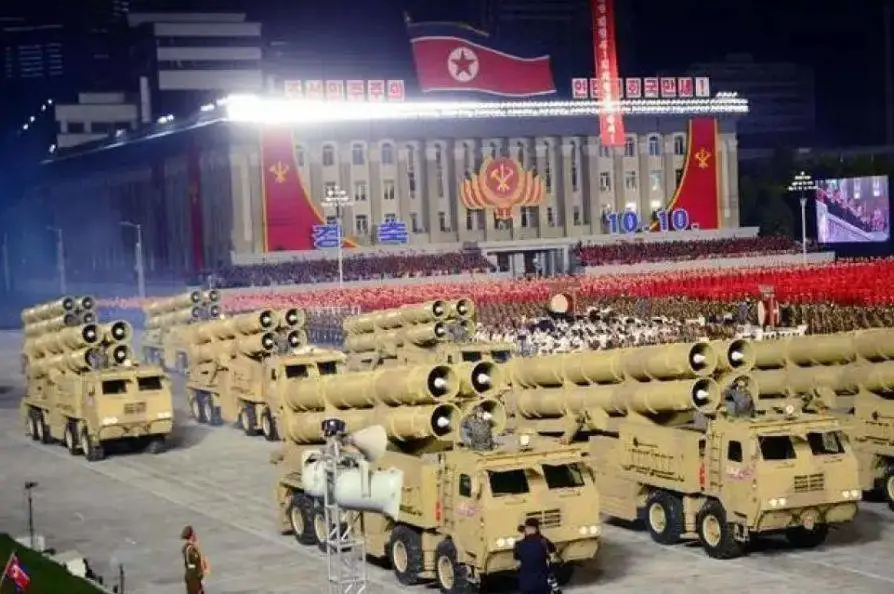
Everyone knows that today, when North Korea possesses nuclear weapons and is strategically supported by major powers, it is completely impossible to achieve reunification by South Korea's force. Lee Jae-myung's current statement that "it will be a blessing as long as war does not break out" only puts the tacit reality of many Koreans on the table.
In this reality, deliberately naming and provoking North Korea in a high-profile manner at a memorial ceremony aimed at remembering the deceased and praying for peace has no practical significance except to satisfy the conservatives' desire for performance and destroy the already fragile atmosphere of detente. Lee Jae-myung's response to the martyrs' families, "Will the North apologize?" Although it sounds direct and even cold, it is precisely based on a clear understanding of North Korea's position.
"West Sea Guardian Day" was established to commemorate the South Korean officers and soldiers who died in the three conflicts in the Yellow Sea between North Korea and South Korea. To South Korea, they are "martyrs", but to North Korea, they are enemies that invaded its territory. What reason is there for an apology?
Kim Yo-jong, deputy minister of the Workers’ Party of Korea, has made it clear many times that inter-Korean relations have “completely broken away from the time zone of homogeneous concepts.” In short, “don’t come to me for good or bad things.”
Asking a country that has defined you as an "enemy country" to apologize for historical events is tantamount to seeking fish from a tree. Li Zaiming's response was to refuse to fall into such a trap of words that are unrealistic and only inflame emotions. He was both pragmatic and helpless.
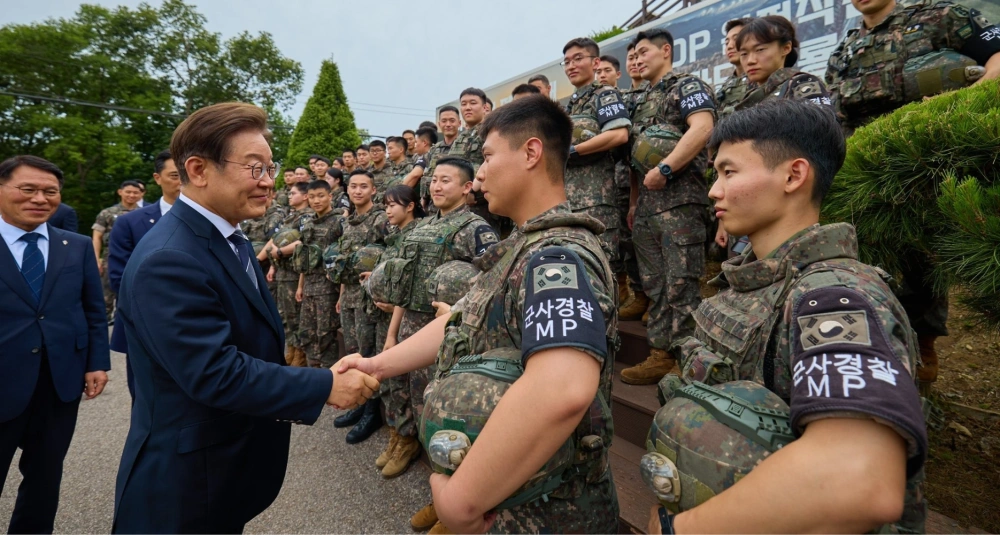
Lee Jae-myung defines "peace" itself as "the highest security guarantee" and is committed to promoting national defense reform and "intelligent military strength." This may seem contradictory, but it is actually unified with his overall national security strategic concept. His goal has been downgraded from the illusory "unification" to the realistic "prevention of war" and "peaceful coexistence."
This means that the primary purpose of South Korea's pursuit of strong national defense power is "self-protection" and "deterrence", rather than the risk of active attack or "absorbing unification." A South Korea with complete operational command authority and enhanced autonomy in defense decision-making, if in the hands of a relatively pragmatic progressive government, may be more of a "treasure" for deterrence and self-protection. This will help reduce the risk of South Korea being "kidnapped" by the United States and passively involved in major power conflicts.
In recent years, the United States has been trying to expand the mission of the US military in South Korea to "deter China." This is a nightmare that Lee Jae-myung is very worried about. When command power is more in South Korea's own hands, the possibility of blindly following U.S. strategies and sacrificing its own interests to become "anti-China cannon fodder" will decrease. At the same time, promoting the "smart military" and national defense reform is also a reserve of capabilities for the eventual takeover of command.
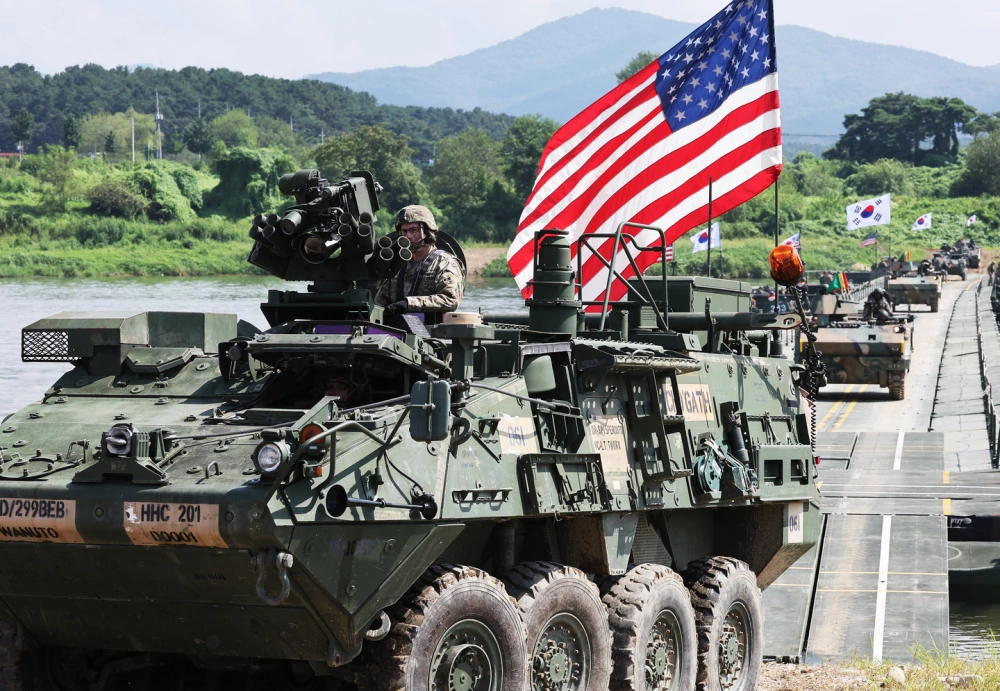
In the past few decades, the "brain" of this joint command has been installed in the US military stationed in South Korea. The South Korean military is more of the "limbs" that follow orders and execute them. Lee Jae-myung needs to prove to the United States that South Korea not only has strong weapons, but also has enough "brains" to operate a complex war machine. This itself is a long process full of internal resistance, and many Korean military generals lack confidence in whether they can take over this heavy responsibility. Li Zaiming's speech also clearly sent a signal to the army to unify its thinking and promote reforms.
However, all of Lee Jae-myung’s plans face a fundamental dilemma stemming from South Korea’s political system: the extreme discontinuity of policies and the deep tearing of domestic politics. The violent swings in South Korea's political spectrum have led to the lack of minimum continuity and consistency in its foreign policies, especially its policy toward North Korea. Every change of government means an almost 180-degree turn on North Korea's course.
The legislation banning air balloons during the Moon Jae-in period was abolished by Yun Xiyue; the "unification by absorption" advocated by Yun Xiyue and the high-intensity provocative military exercises between the United States and South Korea were moderated by Lee Jae-myung, but what about the next president?
From North Korea's perspective, this "pancake-turning" policy cycle fully proves that South Korea is far from forming a solid national will on core issues involving the fate of the peninsula. This is also one of the core reasons why North Korea is completely disappointed with the South Korean government and characterizes it as a "hostile country."
Therefore, even if Lee Jae-myung has made a series of unilateral detente actions, as long as a small drone crossing the border has exposed the flaws in his domestic control, any "goodwill" North Korea has towards him will be marked with huge question marks. Whether Lee Jae-myung can "resolutely" pursue those far-right forces in the country who are deliberately "troublesome" has been regarded by the outside world as a touchstone to test his sincerity. From this perspective, the criticisms of Liu Chengmin and others have become a vivid footnote to verify North Korea's judgment that "South Korea's political situation is not trustworthy."
Li Zaiming's speech demonstrated the pragmatic efforts of a leader of a medium-sized country caught between major powers to strive for strategic independence under the coexistence of a sense of crisis and opportunity. He is trying to walk a tightrope between strengthening independent national defense capabilities and maintaining a "cold peace" on the peninsula. The conservative criticism represents the kind of old thinking that is hijacked by ideology and may eventually drag the country into the abyss. Its purpose is just to gain votes for its own party and to claim credit in front of Americans.
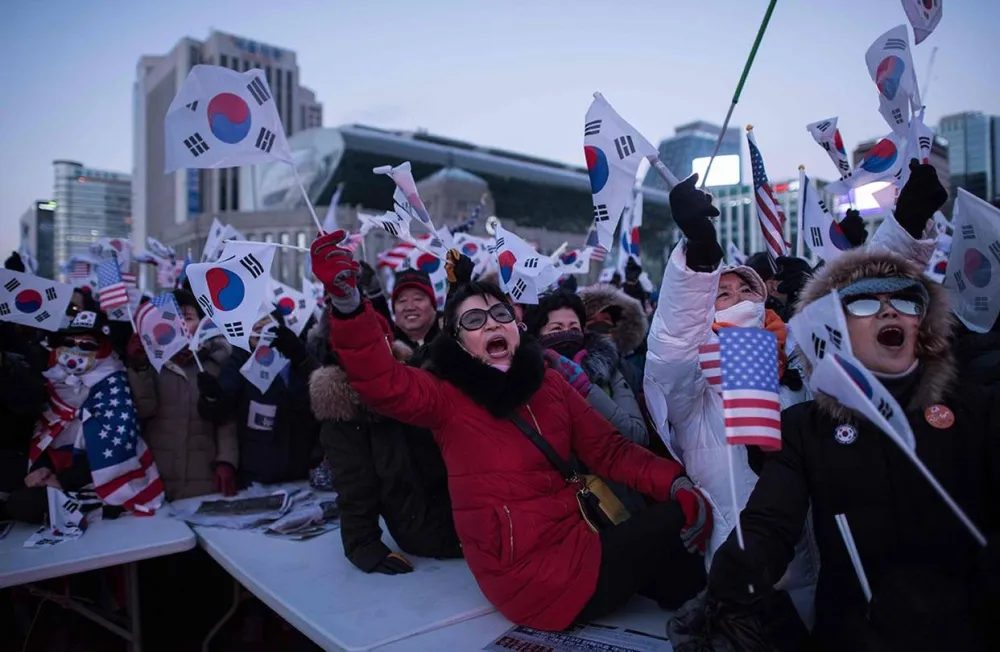
The tragedy of South Korea is that its national security framework has been embedded in the underlying code of the United States since its establishment, and has a group of loyal "security procedures" guarding it at all times to prevent any deviation from the track. To put it bluntly, this one of the top dozen economies in the world is not really completely autonomous in its national affairs.
Li Zaiming saw the historical opportunity, and he should also be fully aware of its complexity and danger. His phrase "peace is food", to put it bluntly, is an admission that South Korea can no longer withstand the torment of any war, and developing the economy and improving people's livelihood is the last word.
But this truth is particularly harsh to the ears of those political forces that rely on inciting confrontation to survive. Although this group of people is not currently on stage, they are still lurking and growing in the hustle and bustle of Korean public opinion, waiting for the day when the progressives make a mistake and make a comeback.