Typesetting | Su Mo
In recent years, long-form dramas, in order to compete with short dramas, seem to have fallen into a self-evident vortex, either creating counterattack myths or peddling anxiety about success.
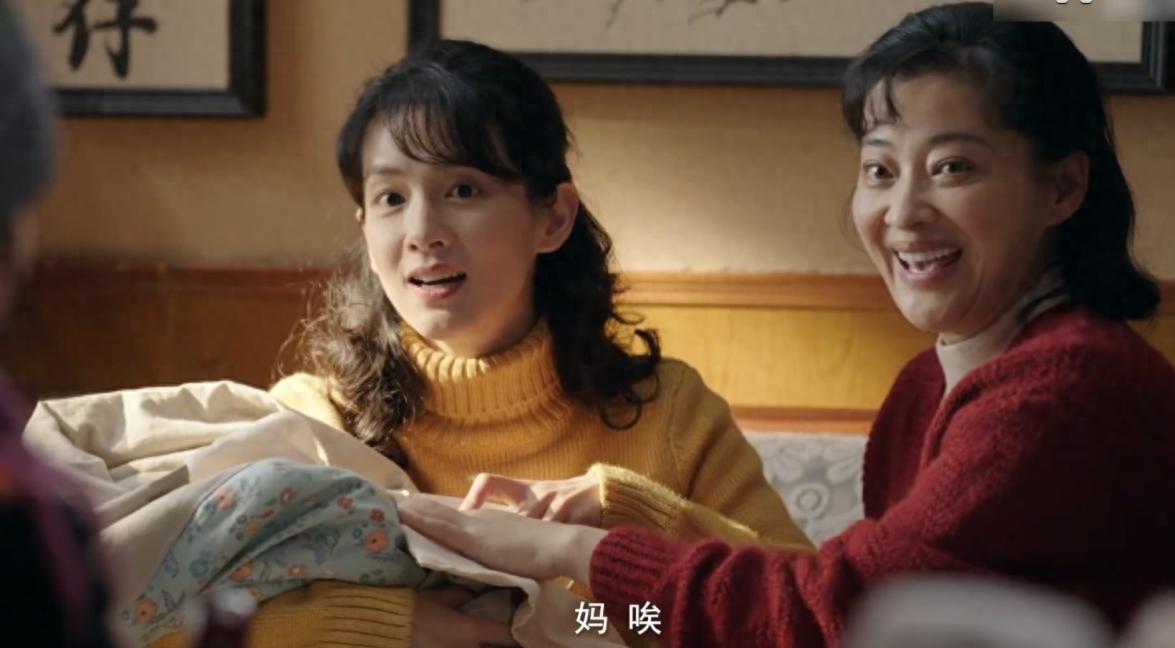
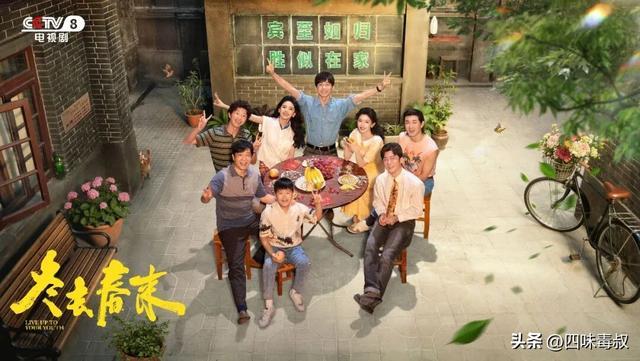
The period drama "Winter Goes and Spring Comes", produced by Drama World, will be launched on March 22 by CCTV8, iQiyi, and Migu. However, it escaped from the whirlpool and chose to "look inward." It does not inject adrenaline into the audience, but focuses the camera on an alley in the 1990s, using the ups and downs of half a life in a shabby small hotel to contrast with the changes in the times in the past thirty years. This creative gesture is a return to nature with realistic themes.
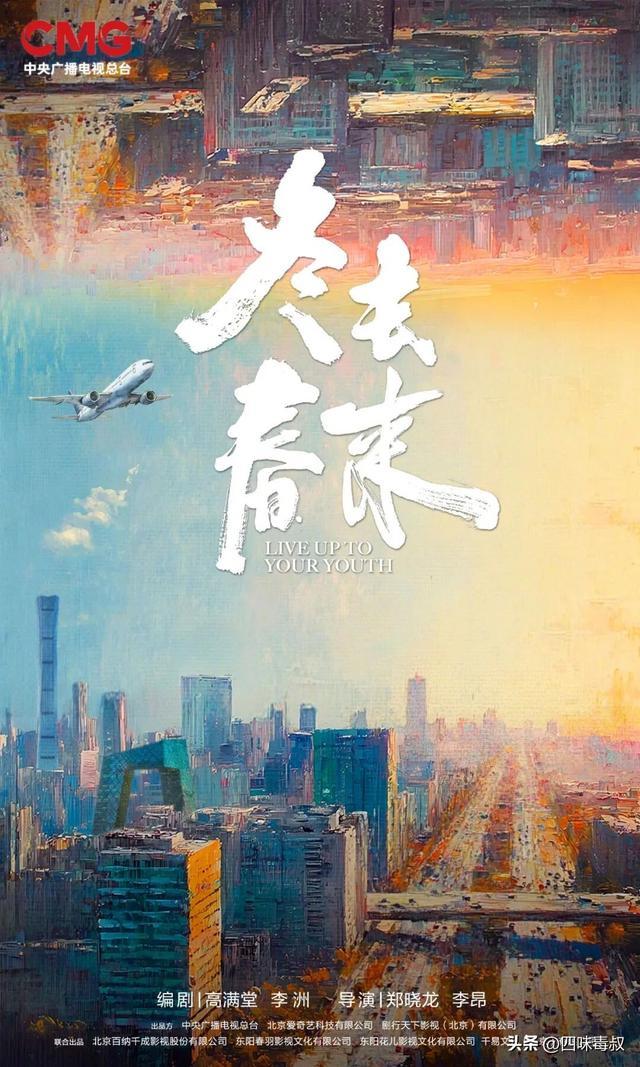
The seven protagonists in the play have one thing in common: they all have a fire in their hearts. But the smart thing about this show is that it doesn't intend to boil this fire into inspirational chicken soup. What it wants to talk about is that the train of the times is whizzing by. Are the lives of those who chase, fall, or even miss the bus on the platform still worth living?
This is destined to be a period drama that "goes against the current".
01
We don’t sell anxiety, nor do we deify success.
In the past, when it came to such period dramas, we seemed to be accustomed to two filters. One was the "bitter love drama", which squeezed tears out of the difficulties of life; the other was "successful learning", stepping on the drums of the times and finally reaching the pinnacle of life. Both of these perspectives are actually a bit arrogant, either looking down on suffering or admiring glory, but forgetting to look at "people" themselves.
The value of "Winter Goes and Spring Comes" is that it places the camera very low, low enough to sit at the same dining table with these young people and share a bowl of instant noodles without oil or water.
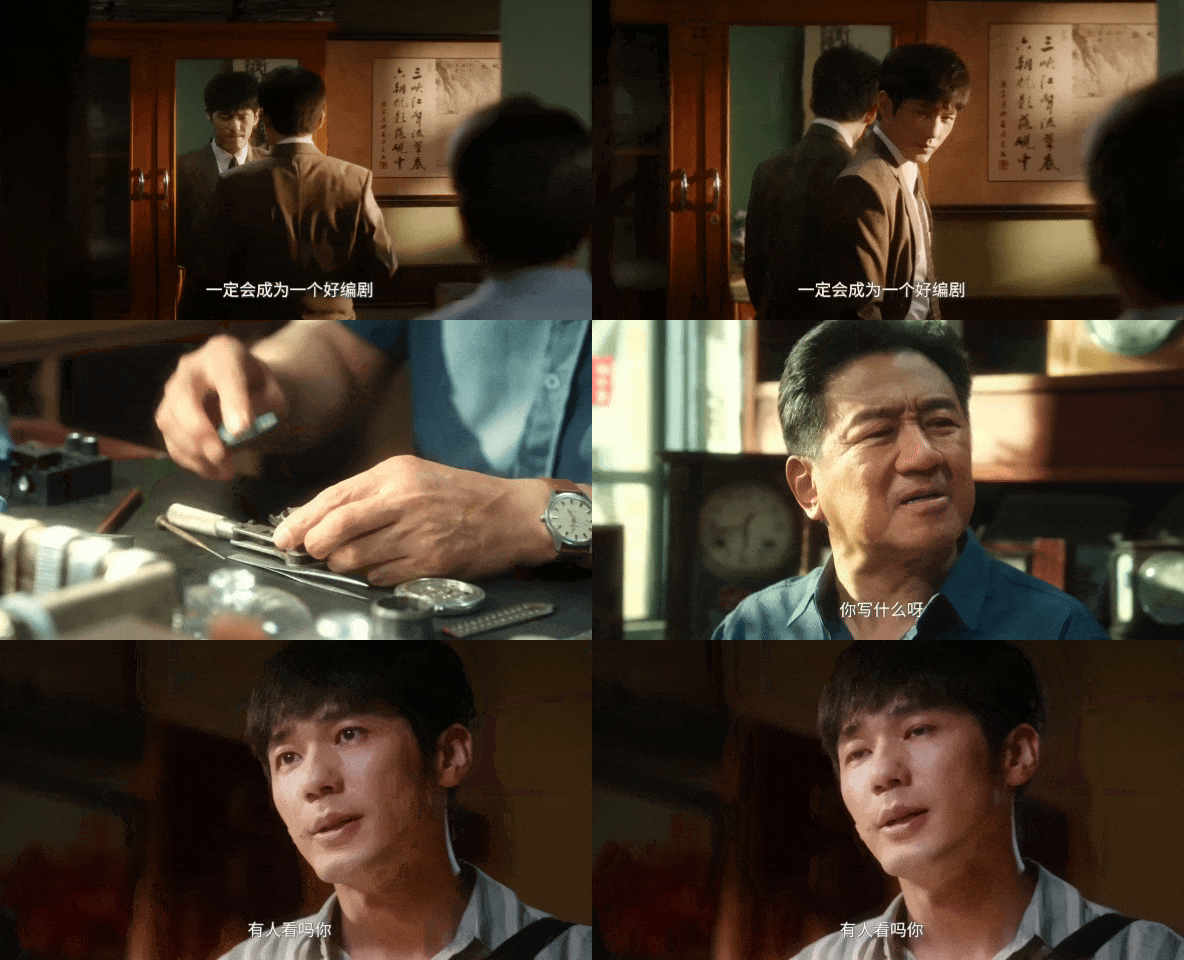
Xu Shengli (played by Bai Yu), who writes the script, is not just in trouble. His greatest pain was watching the hot words he wrote being rejected time and time again. This kind of pain is the common dilemma of countless creators caught between ideals and reality. Should you write what you want to write, or write what others want? This question, thirty years later, is still on the mind of every content practitioner today.
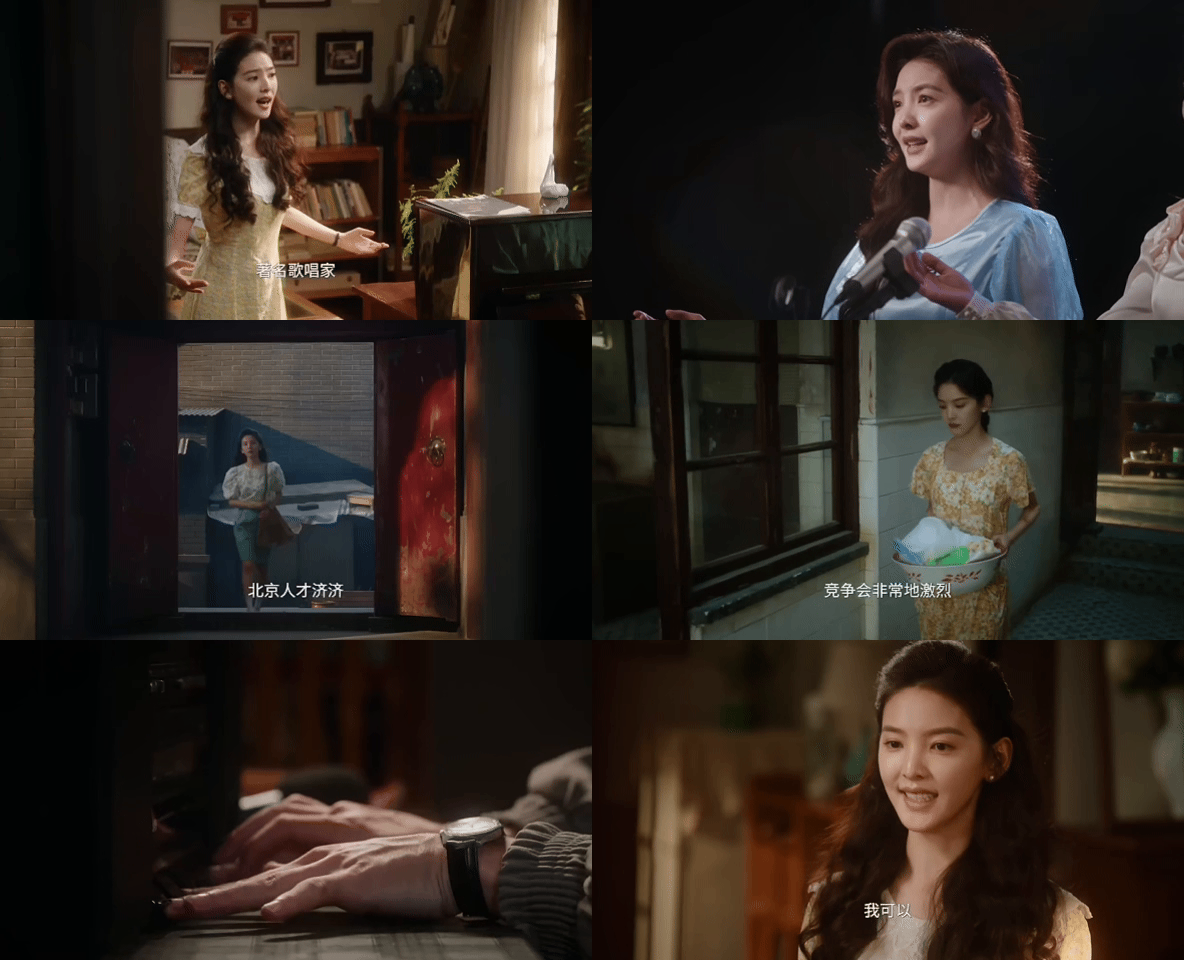
In comparison, Zhuang Zhuang (played by Zhang Ruonan), who sings, is not so sad. She sets up a stall next to the university during the day and takes vocal lessons in her spare time. Her choice is not to simply give up or persist, but a compromise between advancement and retreat. In order to survive and sing, sometimes she has to bend down first.
There is also Guo Zongbao (played by Tian Yu) who plays a small role in the crew but repairs range hoods in private. He shouldered the debt of treating his wife, and his dream was too extravagant for him. He put those thoughts away in the cabinet like an old cotton-padded jacket, and lowered his head to shoulder the life in front of him. What’s touching about his story is that when life takes away all your energy to pursue your dreams, does the passion buried deep in your heart still count?
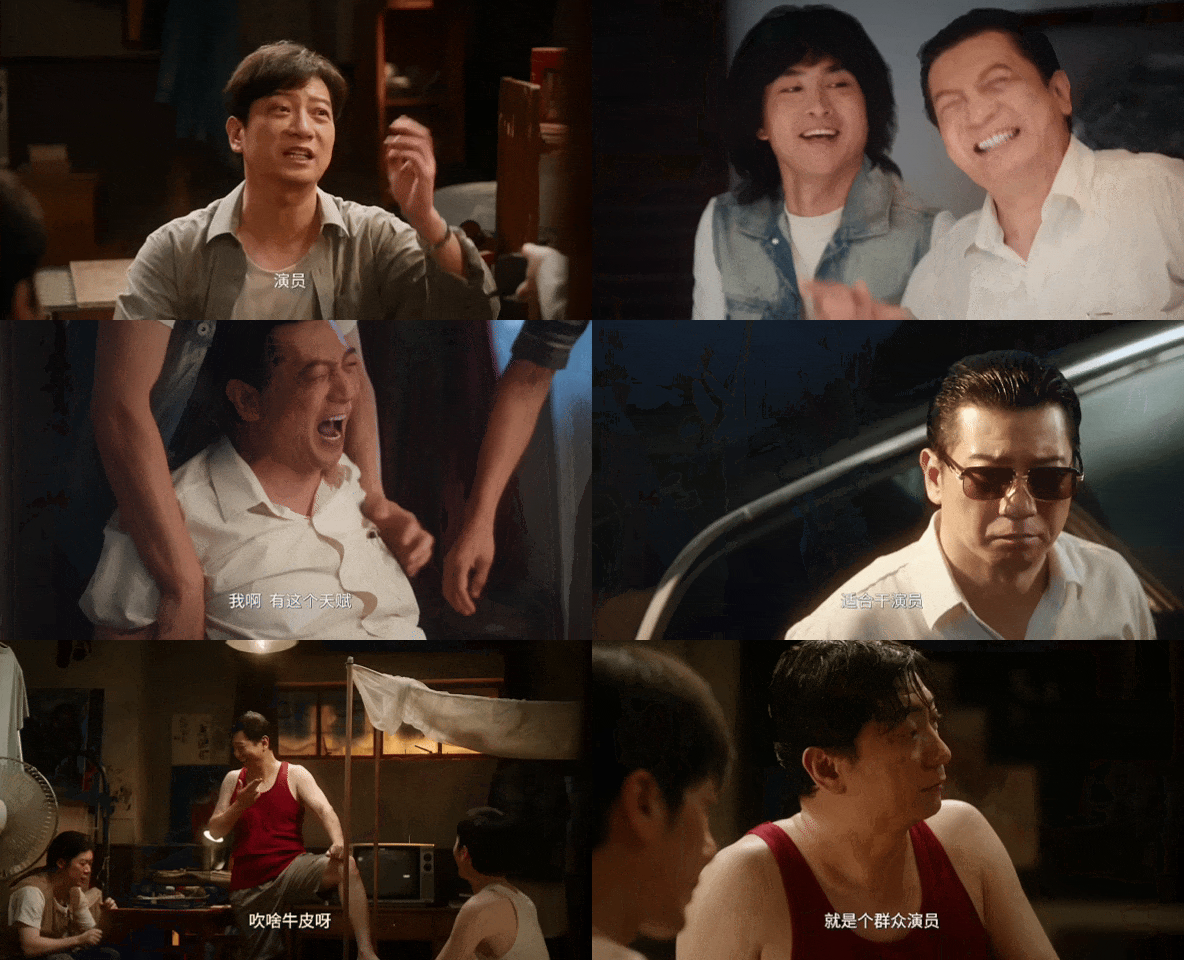
"Winter is gone and spring is coming" does not let dreams take precedence over daily necessities, nor does it let life crush ideals. It presents an ambiguous and real symbiosis. The dream is the phone number you secretly dialed late at night, and reality is the survival bill you have to face when you wake up the next day. This group of people clumsily find a balance between the two, even if this posture is not elegant enough and even a bit embarrassing. But this is what humans are.
02
"The Storm of the Times" in Fangcun Hotel
Gao Mantang + Zheng Xiaolong, once this combination is released, it is not just about the love and hatred of a few young people. Although the camera only looks at this small hotel where "winter passes and spring comes", the spring, summer, autumn and winter outside the window actually never stop for a moment.
Just like the period drama "South to North", also directed by Zheng Xiaolong, written by Gao Mantang, and produced by Drama World, the camera focuses on each carriage, where there are people's warmth and warmth, as well as the forty years of changes in Chinese society from steam locomotives to the high-speed rail era. This creative concept of "realistic themes flying close to the ground" is similar to "Winter Goes and Spring Comes".
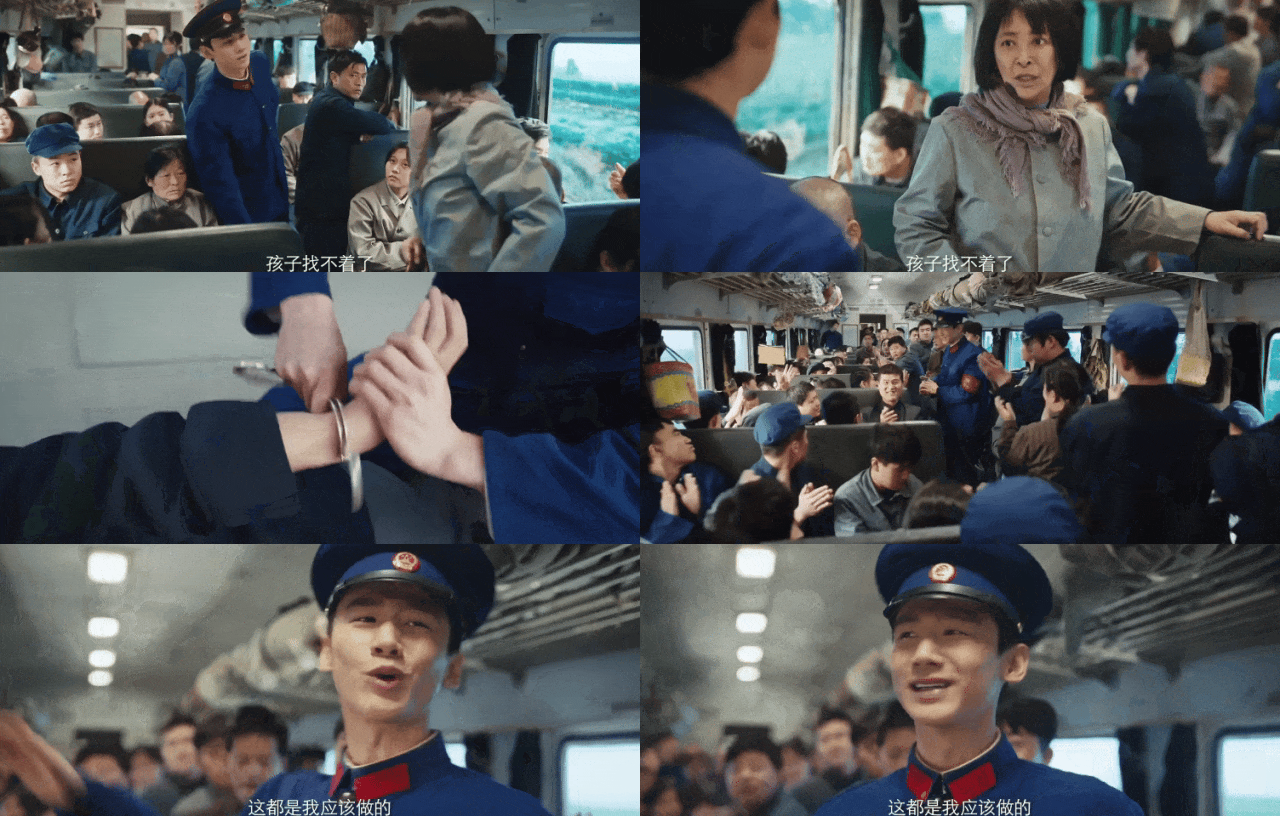
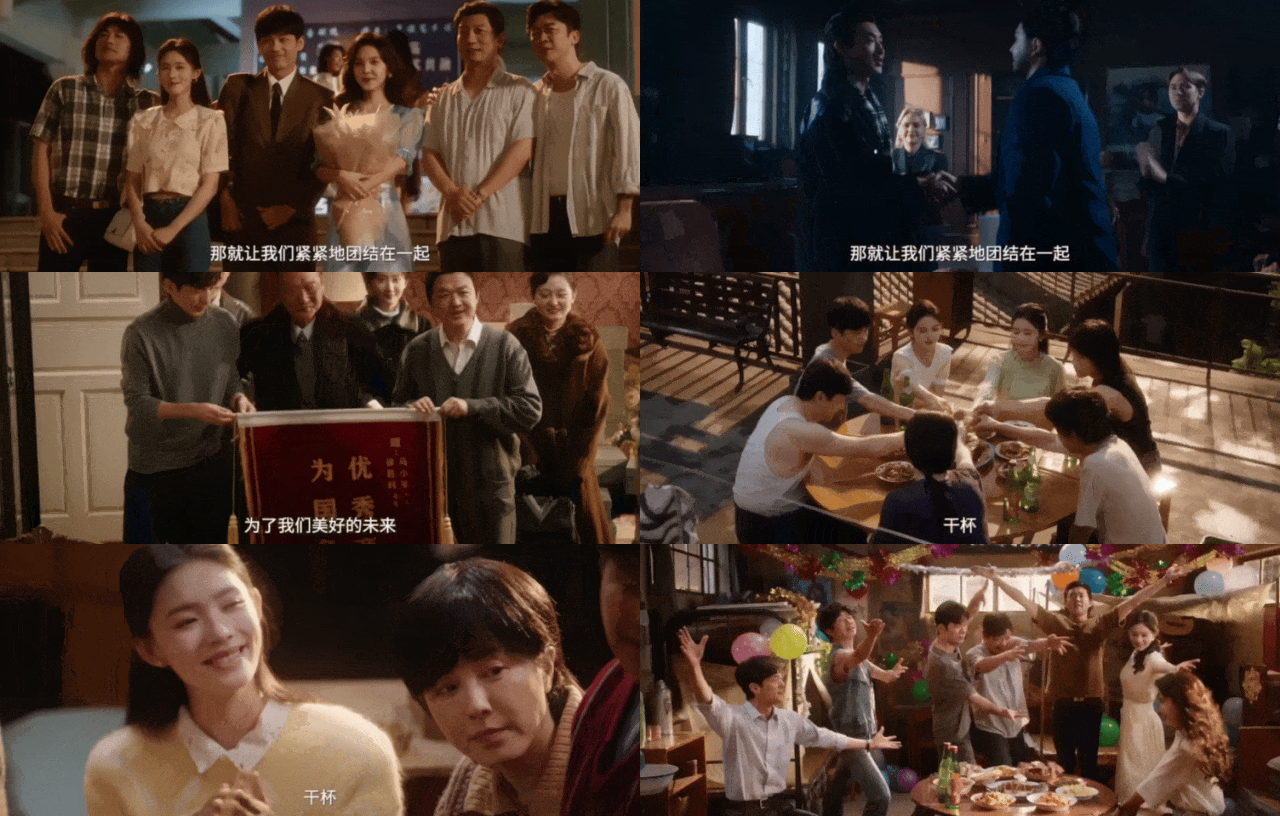
This narrative ambition of "seeing the big from the small" is also the real confidence of "Winter Goes and Spring Comes". Through the bumpy fortunes of seven ordinary young people, it reflects the vicissitudes of Chinese society in the past thirty years from the 1990s to the present.
When the audience sees this group of people worrying about their livelihood, they will be reminded of the unique pain of that era. The great wave of market economy has "pushed" groups of young people into unknown distances. They came to Beijing not only for some illusory dream, but also to find their own place in the great carousel of the times.
The characters in the play may not know it, but each of their choices actually follows the pulse of the times.
When Xu Shengli was obsessed with the script, it was the budding period of China's film and television industry moving from the centralized purchase and sales of the planned economy to marketization and commercialization. His perseverance is not only the nobleness of content creators, but also an early defense of the original value of content. In an era when piracy was rampant and intellectual property awareness was weak, Xu Shengli's "axis" was precisely the backbone for the rise of China's cultural industry.

Zhuangzhuang has worked hard in setting up stalls and has also stood on the commercial performance stage. He is the epitome of Chinese pop music moving from "within the system" to the market. What she faced was not only the establishment of her personal style, but also how to maintain the dignity of a singer in a barbaric entertainment arena.
None of the people in "Winter Goes and Spring Comes" is a pig in the spotlight. They are more like children who remain on the beach to collect shells after the tide recedes. They didn't want to change the world, they just wanted to remain unchanged by the world in this ever-changing city.
This drama also allows us to see another interpretation of the integrity of Chinese businessmen. Xiao Dongbei (played by Song Jiateng), the owner of a small hotel, goes to great lengths to make a small space for these young people who cannot afford the high rent. His loyalty is the most authentic business credit in the Chinese market. Since he opens the door to welcome guests, he will protect you. This kind of warm human touch that underlay the contract was the unique business background of that era.
03
"The Moon and Sixpence" for Ordinary People
Many people read Maugham and think it is tragic that Strickland abandoned his wife and children to paint because he was a genius. But "Winter Goes and Spring Comes" raises a gentler and more cruel question: If we are not geniuses, but just ordinary people with a bit of stubbornness, then is our "moon" still worth looking up to?
None of the seven protagonists in the play has a cheating finger. They may have some talent, but not enough to stand out from the crowd; they may have some luck, but not enough to make it to the top in one fell swoop. Because of this, their stories are even more powerful, because it is a life that thousands of little people may experience.
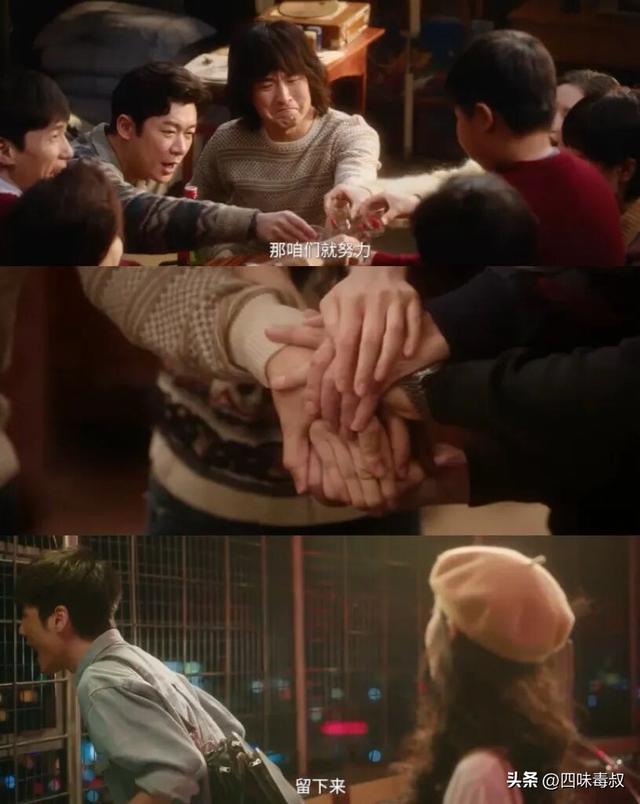
Their pursuit of dreams may not be for success or fame, but to light a lamp for themselves and warm their hands in the long cold winter.
"Winter goes and spring comes" is not only the hotel's signboard, but also a simple belief. Hidden in these four words are the Chinese people’s survival wisdom: no matter how difficult the days are, as long as you endure, live, and hold on, the ice and snow will melt one day.
These people were crowded together in this small hotel, like a few matches, weakly gathered together to keep each other warm. Zhuang Zhuang boiled a hot spring egg in warm water for Xu Shengli. No matter how difficult the life was, he had to eat well and told him to live a "hot life." The small hotel was troubled by local snakes. Xu Shengli, who usually only writes scripts, dared to stand in front of the car with his bare hands. This kind of goodwill to stick together for warmth in difficult times is a "spring" more precious than any successful learning.
Many years later, some of these people may have returned to their hometowns, some may have changed careers, and some may still be struggling in this industry. But those days when "winter passes and spring comes" will become the eternal warm winter in their lives. Because they learned the most important lesson there, the process of chasing dreams itself is the answer to their dreams.
Just like in the long winter, the piece of land you guard has not sprouted yet, but as long as the land is not barren, spring will always come as promised.
04
The cold is gone, the spring breeze is promising
"Winter Goes and Spring Comes" does not paint a picture of "where there is a will, there is a way" for the audience. It paints a group portrait about "keeping" – keeping an original intention, a bottom line, and a glimmer of hope.
It is a love letter to all ordinary people. It tells us that those seemingly useless persistence, those sighs after bending the waist for five buckets of rice, and the thoughts that are temporarily put away are all worthy of respect. In this season of renewal, this show comes at the right time. It allows us to see that no matter how small or ordinary, everyone deserves to be recorded by the times.

"South to North" uses a carriage to contain the silhouette of an era, while "Winter Goes and Spring Comes" uses a small hotel to capture the spring, summer, autumn and winter of a generation. Everyone goes north and south in the journey of life, and each generation will eventually usher in its own spring.
So, you might as well find a time to open the wooden door of the small hotel where "winter is over and spring is coming". Go have a cup of tea they brew in an enamel vat and listen to the singing coming from the house. You will find that what you see in the play is actually the person who was or is still clumsily guarding something, waiting for your own spring to come – yourself.