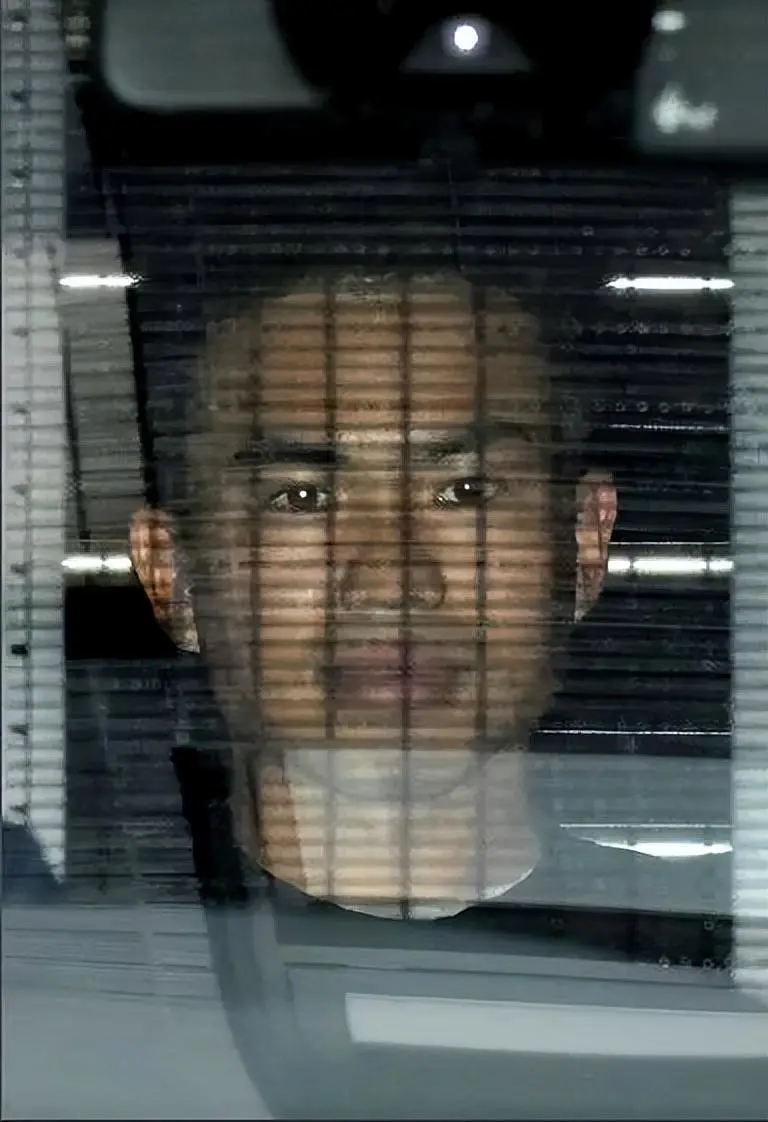
Can you believe it? An active-duty Japanese officer bought a knife in advance, took leave and ran to Tokyo. He climbed over the wall and broke into the Chinese Embassy in Japan. He also squatted and hid in the bushes inside the embassy for a long time. This matter would be a huge diplomatic incident for any country, but Japanese officials have been pretending to be dead since the incident happened. The Chinese side has been asking questions for several days, but they can't even get an accurate answer. It was not until the fourth day that the Japanese Defense Minister finally came out to speak publicly. What did he say? What other tricks are hidden?
The officer who broke in was named Kodai Murata. He was a newly promoted third-class land lieutenant in the Japan Ground Self-Defense Force. This incident was really not a random break-in. He took leave from the army in advance and rushed to Tokyo from the station. He first bought a knife and then walked around the Chinese Embassy for a long time, exploring all the surrounding terrain. Even though there was a barbed wire fence on the top of the outer wall of the embassy, he did not stop. After climbing in, he went straight into the bushes and squatted there for a long time.
The whole process was well-prepared and equipped with tools, and every step was clearly arranged. If he said he got lost in passing and lost control of his emotions, would you believe it? After the incident, the right wing in Japan immediately jumped out to clear the air, saying that Murata was not an active member of the Self-Defense Forces at all and wanted to wipe out the relationship completely. As a result, his military status was clearly there, with irrefutable evidence, and the group quickly shut up.
Anyone who understands diplomatic rules knows that an embassy is a symbol of a country's sovereignty, equivalent to its mobile territory. Anyone who forcibly breaks in without permission is a direct violation of the country's sovereignty. An active-duty officer with a knife broke in and lurked. The nature of this matter was so bad that it could not be fooled by an understatement.
After the incident, the whole world was staring at Japan, waiting for him to give an explanation to China. As a result, the wait lasted four full days. On March 27, Japan’s Defense Minister finally formally responded to this matter at a press conference. He only said three things. First, discipline management within the Self-Defense Forces must be strengthened. Second, this matter is considered an ordinary "building trespassing crime" according to Japanese law. Third, he feels "regret" about this.
After saying these three sentences, it was gone, not even a formal apology. It neither made it clear why the officer was preparing to break into the embassy in advance, nor admitted that there were management loopholes within the Self-Defense Forces. It also did not respond to China’s request for a thorough investigation of the entire incident. It did not even mention that this incident violated China’s sovereignty.
Before Koizumi spoke, Japan's Chief Cabinet Secretary Minoru Kihara had already spoken, and his caliber was highly consistent with Koizumi's. He was almost carved from the same template. Over and over again, I just use the word "regret" to deal with things, and don't say anything else. Anyone with a discerning eye can see that this is the unified caliber discussed in advance by the Japanese cabinet and has been checked for a long time.
Forcibly characterizing a serious diplomatic incident in which active-duty soldiers broke into a foreign embassy as an ordinary domestic criminal case is full of problems. To put it bluntly, Japan wants to reduce this matter to an ordinary criminal case, bypassing the core issue of diplomatic sovereignty and the sensitive topic of the right-wing shift of the Self-Defense Forces, so that the incident can sink as quickly as possible and completely disappear from public view.
As Defense Minister, Shinjiro Koizumi originally had direct management responsibility for the Self-Defense Forces. An active-duty military officer caused such a big incident, and the Minister of Defense did not mention his management negligence in his speech. This attitude is unjustifiable even for many ordinary Japanese people.
After the incident, thousands of Japanese citizens walked directly to the square in front of the National Assembly to protest, shouting in unison for Shinjiro Koizumi to resign. Many of those protesting directly called out "terrorist attack" and believed that Murata's behavior was essentially a terrorist act against foreign embassies.
The spokesperson of the Chinese Ministry of Foreign Affairs expressed his position for many days in a row after the incident, and his words became clearer and tougher each time. Japan dismissed the incident with a word of "regret," and Chinese spokesperson Lin Jian responded directly. "Regret" alone is simply not enough. What China wants is Japan's formal apology.
It is not the kind of verbal apology that sounds official, nor is it ambiguous diplomatic rhetoric. What is needed is a formal, clear and sincere apology. At the same time, China also requires the Japanese side to thoroughly investigate the entire incident. Murata visited the spot in advance to buy the knife, what exactly he wanted to do after entering the embassy, what was his motive, what was his purpose, and whether anyone else knew or participated. These questions must be investigated clearly and an answer that can withstand testing be given.
China has full legal basis for making these demands. The Vienna Convention on Diplomatic Relations clearly stipulates that the host country has the obligation to protect the security of foreign embassies in its country and that the embassy shall be free from any form of intrusion or damage. Since Japan has ratified this convention, it must assume corresponding international obligations.
In this incident, a Japanese active-duty officer climbed over the wall and entered the Chinese Embassy with a knife. Japan not only failed to stop it beforehand, but also tried every means to downplay it afterwards. This clearly failed to fulfill its obligations. The reason why China has such a tough attitude is not just to gain a breath.
If Japan were to let this matter go by "regret", wouldn't it be equivalent to sending a signal to the outside world? Invading the Chinese Embassy would only cost Japan "regret" and it would not have to bear any other responsibilities. This precedent cannot be set by China at any time.
After the incident, the international community is also staring at Japan's handling of the incident. The inviolability of diplomatic missions is the foundation of the international order that countries around the world have long adhered to. Japan's performance this time has caused many countries to re-examine Japan's attitude towards international obligations. It has also brought the continuous expansion of the Japanese Self-Defense Forces in recent years and the continued rise of right-wing influence into the eyes of analysts from various countries.
Japan wants this matter to go away quickly and turn the page quickly, but China's position has long been made clear. Trying to get over this matter with just a random sentence won't work at all.
References:
Lin Jian, Spokesperson of the Ministry of Foreign Affairs of the People's Republic of China, responded to reporters' questions on the incident of Japanese Self-Defense Force officers illegally breaking into the Chinese Embassy in Japan.
Kyodo News Japanese Ground Self-Defense Force officer was arrested after climbing over the wall to enter the Chinese Embassy
United Nations Treaty Database Full text of the Vienna Convention on Diplomatic Relations and obligations of contracting states
Asahi Shimbun Japanese people gathered in front of the National Assembly to demand the resignation of Defense Minister Shinjiro Koizumi