"Everyone is a unique code, and this life is the process of deciphering it."
This is a very important clue in "Decryption", which was released on August 3, and is also the core of the entire story. The movie market in August this year kicked off with this "Decryption Journey".
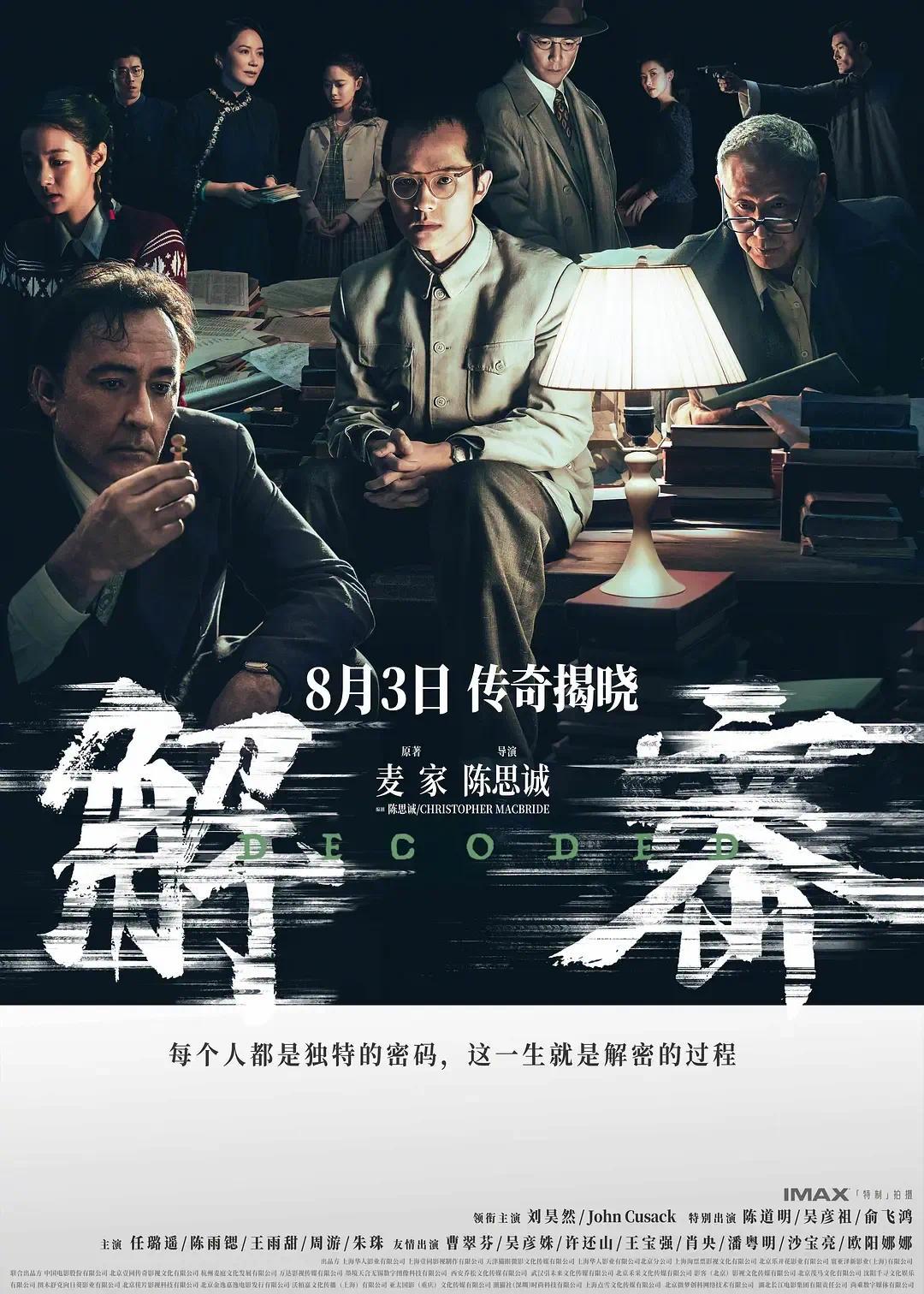
This time, Chen Sicheng's new film "Decryption" meets this expectation, whether it is the construction of the cast or the choice of the story. After watching the film, our feeling is: People say that movies are the art of dreaming, but Chen Sicheng is serious about using "Decryption" this time to return the movie to the "dream world".

When familiar faces fall asleep together
For the audience, the most intuitive recognition of a movie is the creators. Last year, Chen Sicheng's team successively released films such as "The Disappearance of Her" and "The Three Brigades". As a producer, Chen Sicheng demonstrated the vision and ability of a commercial film helm.
This time in "Decryption", Chen Sicheng returned to the role of director and screenwriter, and challenged themes and types that he had never tried on the big screen. It can be regarded as a concentrated test of creative ability.

If you pay close attention to the end of the film, we will find that the main creators in front and behind the scenes of "Decryption" are very "familiar". Whether it is Liu Haoran, who has collaborated with Chen Sicheng many times, or powerful movie stars such as John Cusack, Chen Daoming, Daniel Wu, Yu Feihong, or technical talents such as director of photography Cao Yu, they are all subverting and upgrading in "Decryption".
Liu Haoran, a handsome young boy in the hearts of the audience, lost 20 pounds this time to play the role of code cracking expert Rong Jinzhen. He plucked his eyebrows and shaved his hairline. He weighed less than 120 pounds during filming. Especially for the sacrifice scene at the end, he hardly ate or slept for three days before filming, just to show the state that the character should have.
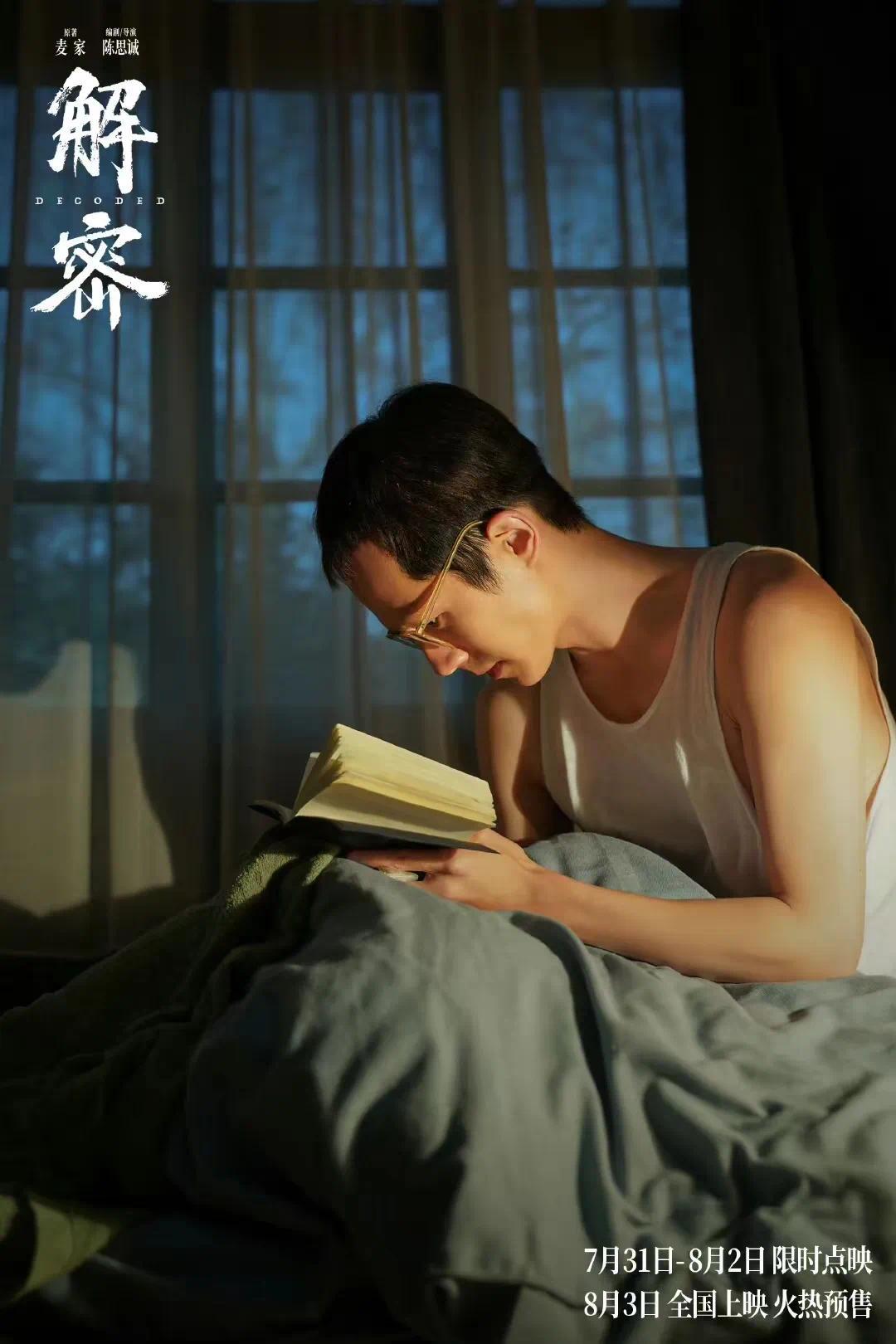
Rong Jinzhen may be the most difficult character Liu Haoran has ever come into contact with. The difficulty is not only reflected in the makeup and character preparation, but also in how to get into the heart of this lonely genius. At the premiere, Liu Haoran also talked about his understanding of Rong Jinzhen. He said that this genius mathematician has superior intelligence, but is also full of loneliness, delicate and vulnerable emotions. Deep down in his heart, he longed for a simple and peaceful life, but the torrent of reality pushed him to another extraordinary path. Judging from the effect of the finished film, Liu Haoran's understanding of the character is still very accurate.
At the same time, he must exercise a high degree of restraint in his performance, because Rong Jinzhen is not good at expressing emotions at all. He always avoids his eyes when talking to people. Only in the process of deciphering will he show more confidence. The performance is very difficult. His breakthrough spirit and interpretation effect this time are worthy of praise.
The entire story of "Decryption" is intertwined between Rong Jinzhen's real life and dreams. The dream gave Rong Jinzhen the inspiration for deciphering. The film uses ten dreams to connect the entire film, which is not only a creative difficulty, but also the biggest differentiating feature of the film. This is an area that has not been explored in Chinese films before. The construction of these ten dreams requires all-round cooperation between actors and art sound effects. We might as well choose two impressive dreams as examples for analysis.
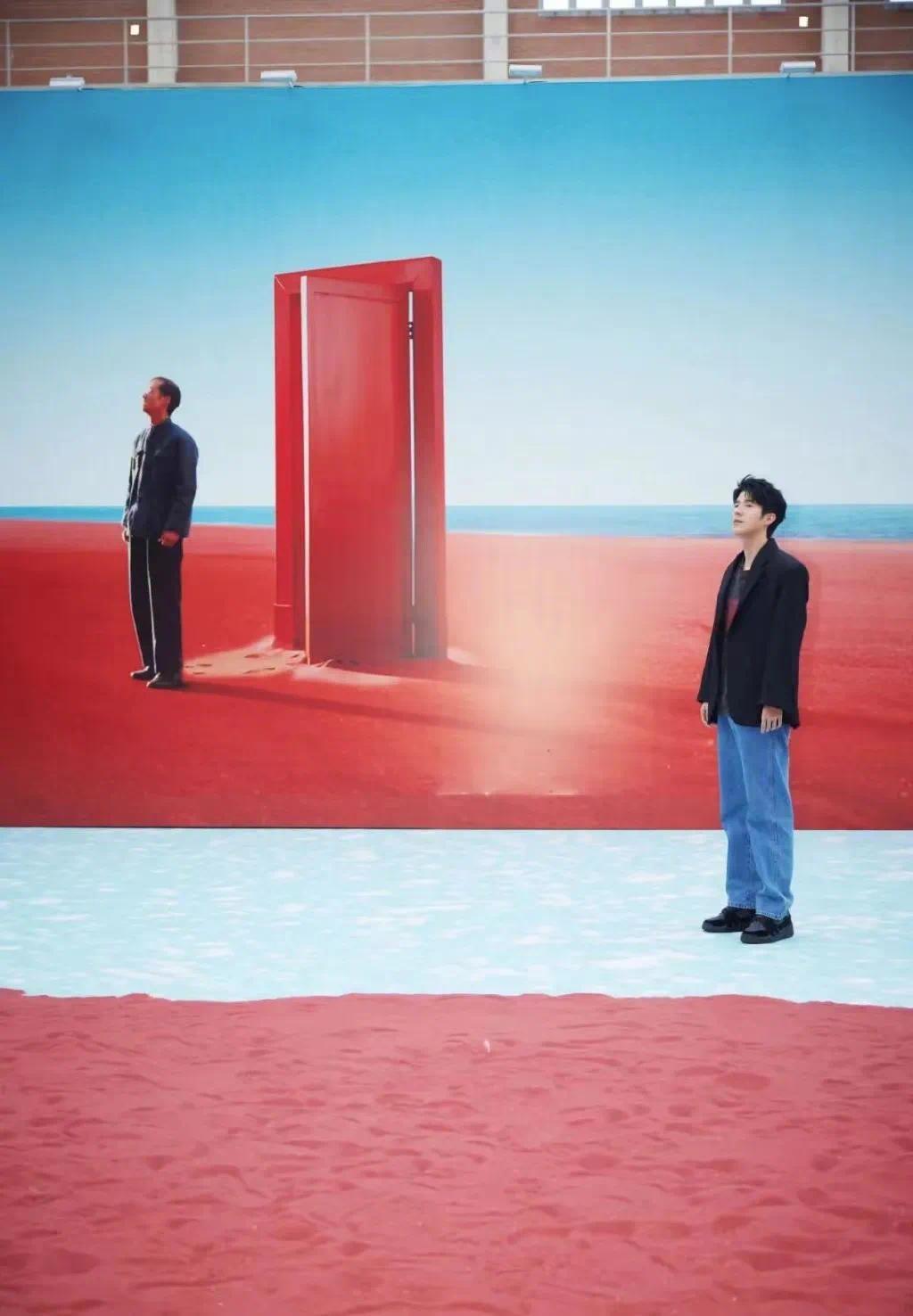
The first scene is Rong Jinzhen entering the red beach. The image of "red beach" appears twice in the movie. Once when the teacher Heath took the initiative to mention it during the chess game, Rong Jinzhen interpreted his dream; the other time was when Rong Jinzhen cracked the black secret, opened the door and saw the red beach again, and sat down to play chess with Heath again.
The visually stunning red beach was actually very difficult to build. The artificial beach covers an area of over 2,000 square meters, and more than 105 tons of dyed and solidified red sand were laid. It was also necessary to dig out a two-meter slope in the studio, and use a wave machine to simulate the waves hitting the beach, and restore the details of the interaction between the waves and the sand, which is difficult to achieve with visual effects.
Photography director Cao Yu is one of the leading photographers in China. According to him, balancing dreams and reality is a major challenge in photography. In order to create a realistic sense of dream, the photography team used the ALEXA 65 IMAX camera with high definition and high color reproduction. It can not only capture the real texture of the characters' skin, but also use a wide-angle lens to shoot the characters at close range without deformation, just like 65mm film, giving the audience a sense of psychological closeness and amplification.
Therefore, when the audience follows Rong Jinzhen's perspective and enters this red beach, they will have a strong sense of immersion. The meaning of entering the red beach twice is also different. The first time Xiez took the initiative to invite Rong Jinzhen into his world, but in this world, Rong Jinzhen could feel a kind of unknown and fear. The seemingly beautiful scene was destroyed by an unknown behemoth (walrus). Xiyisi, who was in a foreign country, had a complicated heart, and Rong Jinzhen's future was filled with too many unknowns because of the "hidden chess pieces".
When Rong Jinzhen came to the red beach again, he had solved the biggest mystery in his heart, Zi Mi, and finally found the "lost chess piece". He could sit in front of Xi Yis again with consistency, and Xi Yis also knew that Rong Jinzhen "saved" him and was able to live happily. At this moment, the relationship between the two finally changed from confrontation to master-disciple. They both understood each other and completed their own redemption in the process.
In the second scene, Rong Jinzhen came to the amusement park to ride the Ferris wheel with Xiaomei in her dream. Unexpectedly, the person in the Ferris wheel suddenly changed from Xiaomei to Xi Yis. Then the Ferris wheel began to collapse. Rong Jinzhen panicked and chose the way, but was helpless. This is a large scene with great visual impact in "Decryption". Combined with the powerful music, the hearts of the audience outside the screen are also in suspense.
It is worth mentioning that Chen Sicheng also had high requirements for the music of "Decryption". Not only did he spend a lot of money to obtain the first authorization of the Beatles' works in Asia, he integrated the classic song "I Am the Walrus" with anti-war consciousness into Rong Jinzhen's dream. He also invited famous composers Lone Balfi and Kevin Ripple to compose and produce the original music.
The first half of this dream was full of beautiful things in Rong Jinzhen's past life, such as chess, teacups, etc., which he wanted to share with his beloved, but all these began to collapse after entering the Ferris wheel. The Ferris wheel is a symbol of the wheel code. The pursuit of the purple secret truth has seriously affected Rong Jinzhen's mental state. When the Ferris wheel begins to collapse, it seems to mean that Rong Jinzhen is saying goodbye to the most precious things in life.
There are many more unforgettable dreams like this on both the visual and textual levels in movies. This time, "Dream Maker" Chen Sicheng and a group of familiar faces jointly constructed layers of illusory and real dreams for the audience.

A new attempt to adapt Mai’s works into films
In terms of story, this time "Decryption" has a solid foundation in literary works. As a winner of the Mao Dun Literature Award, Mai Jia's works have been adapted to the screen and on screen many times. His past works may have amplified the suspense and espionage elements in his works, but "Decryption" puts the characters first, establishing a complex and three-dimensional character like Rong Jinzhen.
Rong Jinzhen showed amazing talent in mathematics since she was a child, and was raised by Xiao Lili, then president of the university, and his wife Ye Xiaoning. When she entered the university, Rong Jinzhen attracted more people's attention because she solved the difficult problem assigned by the teacher of the mathematics department, Xiez. Among them was Zheng, the director of the mysterious department 701. From then on, Rong Jinzhen entered the door of code deciphering.
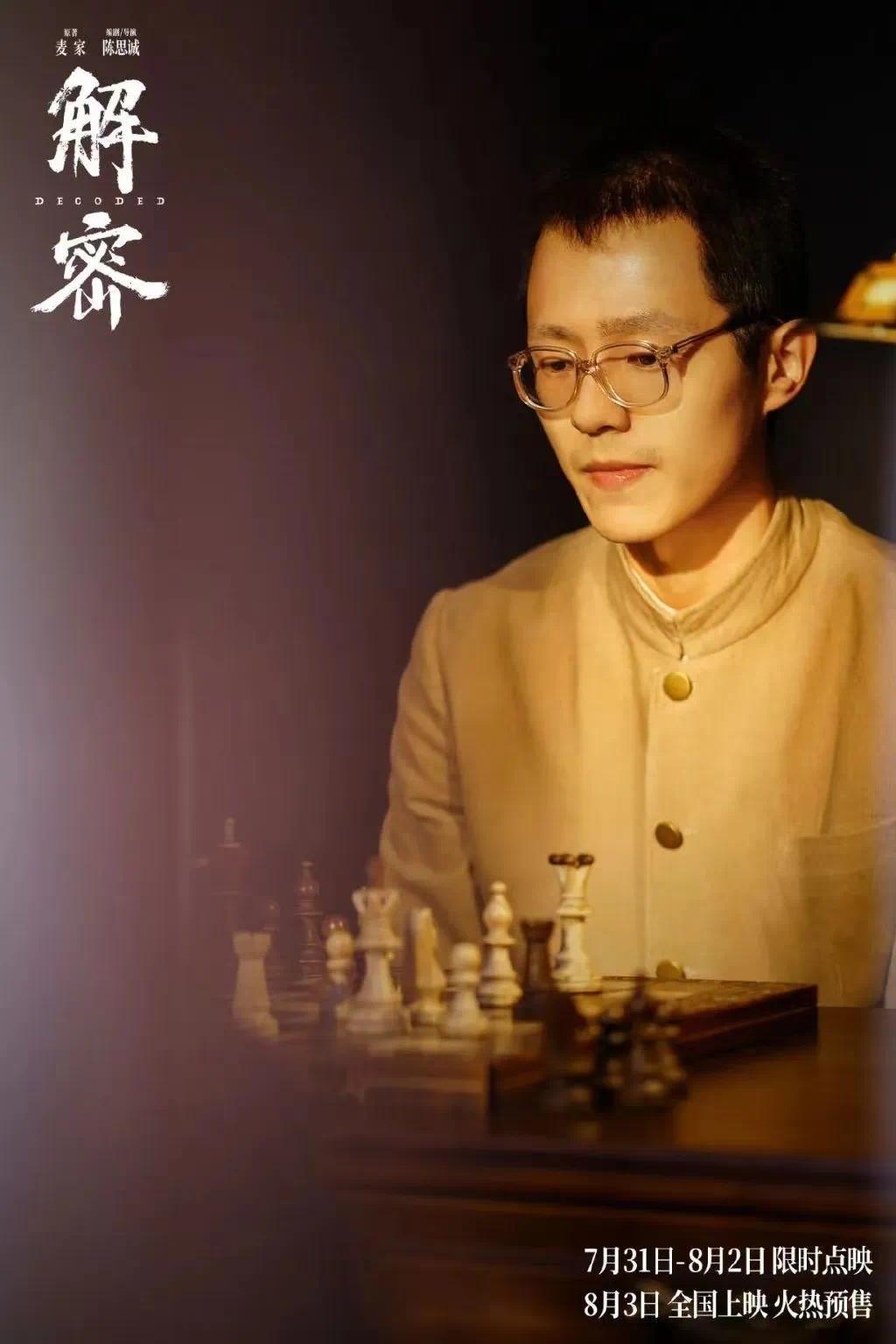
"Decryption" is Mai Jia's first full-length novel, which is of extraordinary significance to him. He once commented on this work: "I have a special liking for "Decryption". It is almost all of my youth and part of my destiny; it is the pain and joy of my true nature, and it is also my immortal memory." Of course, because of the particularity of magical realism in the narrative of "Decryption", the difficulty of its film and television adaptation has been greatly increased.
The entry point chosen by Chen Sicheng is Rong Jinzhen's world of consciousness. In the process of cracking the digital code, he cracks the code of life. At the same time, he shows that under the torrent of the times, even the fate of genius is passive. However, Rong Jinzhen's choice of family and country and self-sacrifice are all well-founded. The first half of the movie uses a relatively large space to show the relationship between Rong Jinzhen and Xiao Lili, played by Daniel Wu. Xiao Lili not only brings warmth to Rong Jinzhen's family, but also makes him realize that only a country can have a family, and a country and a family are never independent individuals.

Compared with the previous adaptations of Mai's novels, "Decryption" is undoubtedly a new attempt to adapt Mai's works into film and television, and it has also been highly recognized by the writer himself. In an interview, he said that this is the film and television adaptation that he is most satisfied with, bar none.
If you want to find the password to success, then Mai's summary may be the best explanation: whether it is a novel or a movie, what they have in common is the consistent pursuit of truth, goodness and beauty. The character Rong Jinzhen is fictional. He and his story are recognized, moved, and inspired by people through literary and artistic works. Ultimately, this is because this story carries real history, real love, and real dedication.

Chinese commercial blockbusters need more explorers
Although Chen Sicheng and his films have always been accompanied by controversy, it cannot be denied that from the "Detective Chinatown" series to the subsequent works he directed and produced, he has been making multi-dimensional attempts in the field of commercial films. "Detective Chinatown" is an attempt at suspense + comedy, "Mozart from Outer Space" is an attempt at science fiction + children's themes, "Manslaughter" is an attempt at crime + family themes, "The Vanishing Her" is an attempt at suspense + realistic themes, "Third Squad" is an attempt to adapt realism themes from reportage, and this time "Decryption" is a more diverse collision.
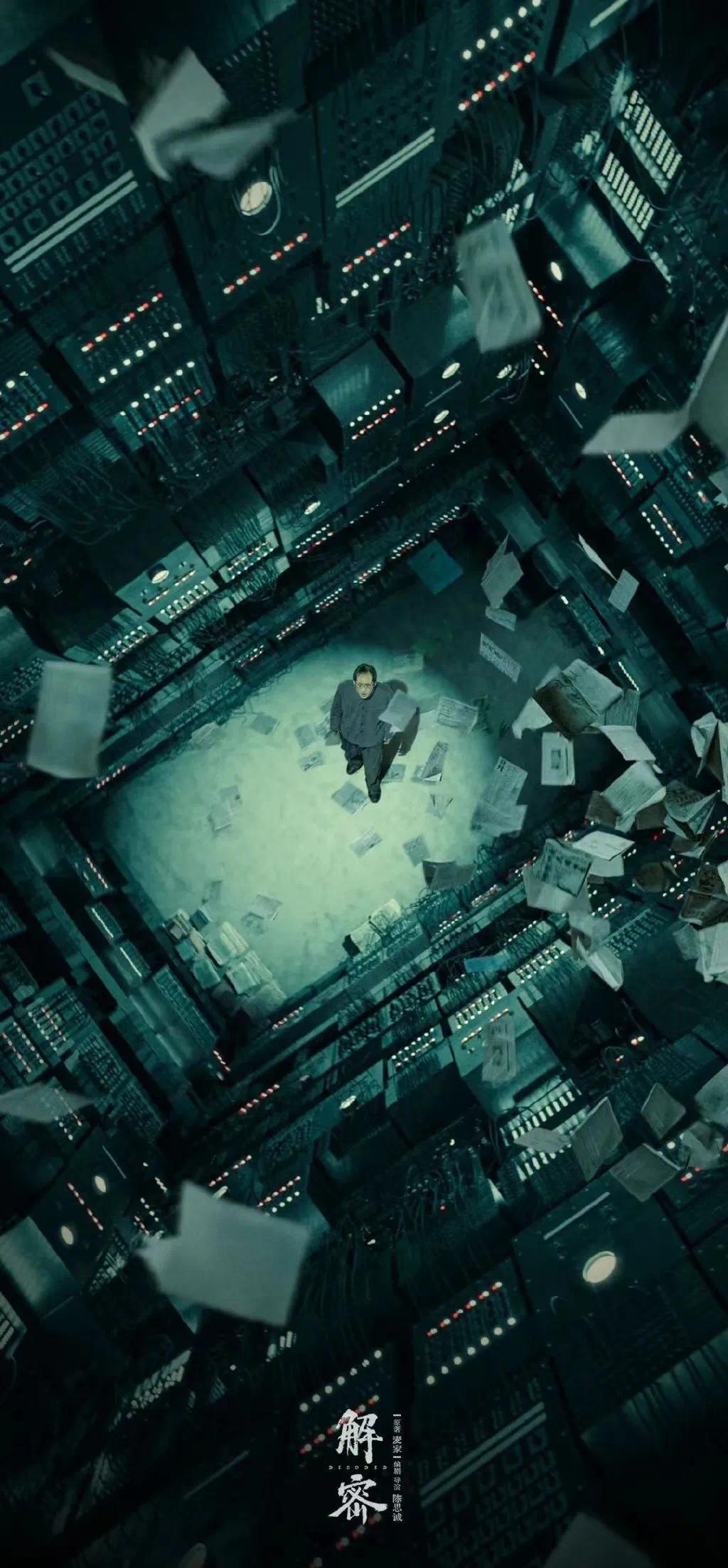
The production and emotion of "Decryption" have an international perspective. This is an important step in the industrialization of Chinese films. It must not only have international standards in terms of technology, but also convey stories and emotions with Chinese characteristics. For example, at the end of the film, the reconciliation between Rong Jinzhen and her teacher Heiss, forced by the current situation, the two people changed from teachers and friends to rivals, but the two genius minds always cherish each other. In the end, when Rong Jinzhen deciphered the secret, in order to protect the teacher, he handed over the deciphering ideas to his colleagues to prevent the teacher from being harmed. This has a unique Chinese gentlemanly demeanor, and "benevolence" is the foundation of one's life.
The two separations between Rong Jinzhen and her family in the movie also resonated with the audience, especially the detailed design of drinking water from a bowl. This was the first step for Xiao Lili to accept Rong Jinzhen as a family member. After Xiao Lili's death, Rong Jinzhen reunited with her weather-beaten cousin Biyu and Rong's wife Xiao Ning, and several people would still make this move. It shows that during the years when Rong Jinzhen worked in 701, Xiao Lili's family has always remembered Rong Jinzhen and never stopped missing him. Rong Jinzhen also repaid the family's kindness with his own practical actions. These are emotional expressions with oriental colors and the beauty of human nature.
Now that the film has been presented to the audience, the success of Chen Sicheng's attempt will naturally be tested by word of mouth and the market. However, what is worthy of recognition is that Chen Sicheng has never stayed in his comfort zone. Chinese commercial blockbusters need more explorers like this to achieve self-transcendence again and again. Only in this way will our film industrialization path lead to a more dazzling future.