As a Zhongguancun science and technology innovation enterprise cross-incubated by the medical staff of Beihang University and Beijing Jishuitan Hospital, Rosenbot has always promoted innovation around the actual diagnosis and treatment needs of complex orthopedic fractures such as pelvis. At the 2026 Zhongguancun Forum Annual Meeting, Wang Yu, founder, chairman and CEO of Rosenbot, accepted an exclusive interview with a reporter from Beijing Business Daily. The core value of medical robots lies in empowering medical scenarios, focusing on improving patients’ diagnosis and treatment experience while optimizing doctors’ working modes. In the context of the development of embodied intelligence technology, domestic medical robots continue to form their own characteristics in the segmented track. Rosenbot's fracture reduction robot also provides new clinical options for minimally invasive treatment of complex fractures.
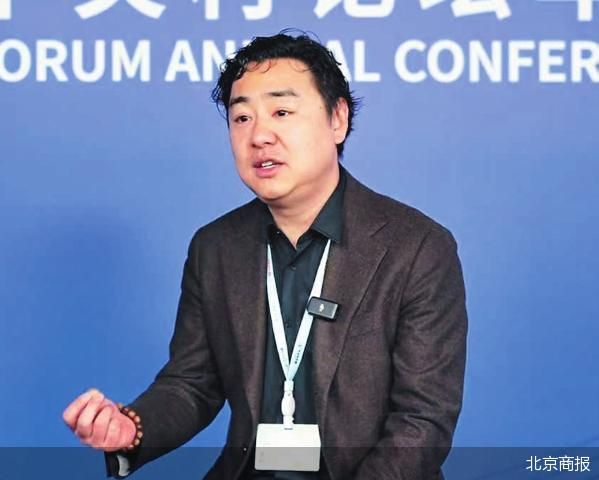
Q: The company has completed Series C financing. Why are investors optimistic about Rosenbot in the surgical robot segment?
A: Investors recognize us mainly for two reasons. First, the clinical value of the product is clearly visible, it can truly improve the treatment of patients, and it also has the basis for market popularization, making it easy to gain recognition from doctors, hospitals and patients. Second, our innovation is a breakthrough at the source. We have created the world's first fracture reduction surgical robot. We have achieved unique functional breakthroughs in this segment, and many technologies have reached the international advanced level. This also means that China's high-end medical devices are moving from follow-up innovation to original breakthroughs. Such products are not only based in China, but also have the opportunity to enter the international market, with broader commercialization space.
Q: Rosenbolt was the first to launch a fracture reduction surgical robot, focusing on the difficult pelvic surgery track. What are the technical thresholds in this field and the company's "moat"?
A: There are two main technical difficulties in this track. The first is the "invisible" problem. The pelvic structure is complex and large, and it is difficult to show a clear three-dimensional structure in intraoperative images. We use a marker-free registration algorithm to fuse preoperative and intraoperative images to achieve sub-millimeter level registration accuracy, solving the problem of accurate intraoperative visualization. Secondly, there is the issue of "force". Pelvic repositioning requires overcoming the strong resistance of muscles and soft tissues while completing fine three-dimensional posture adjustments, which is difficult to achieve stably by humans.
We use auxiliary elastic traction technology to reduce the load by 50%, combined with force and position closed-loop control, so that the robotic arm can flexibly adjust operations according to real-time force. These technological breakthroughs have resulted in more than 200 patents, which constitute our core technical barriers.
Q: You once mentioned that "robots will not replace doctors, but will make doctors' work more dignified." How do you understand this?
A: After the rise of embodied intelligence, many people are worried about "machine replacement". However, in the medical field, surgical robots will not replace doctors, but reshape doctors' working mode. Nowadays, surgeons not only have to perform delicate operations, but also undertake a lot of physically demanding work. Long-term operations and radiation exposure all bring pressure to practice.
In the future, robots will undertake tedious, heavy, and risky basic operations, liberating doctors from manual labor and allowing them to devote more to core tasks such as exploring treatment options and medical research. This will allow doctors' careers to focus more on professional values and alleviate the hardship of clinical practice to a certain extent.
Q: Can medical robots achieve nearly full-process surgical operations in the future? Is it feasible from a technical perspective?
A: In the long run, surgery will develop in a fully autonomous and intelligent direction, but this is a long-term evolution process. At this stage, robots and doctors each have their own advantages. Robots are good at fine reset operations under large loads, but doctors still have an advantage in the short term for fine operations that require extreme dexterity. Regardless of the time dimension, future surgeries will form a full-process automated solution. From patient entry, intraoperative inspection, operation to suturing and disinfection, an integrated closed loop will be implemented. The product form will be very different from current surgical robots.
Beijing Business Daily reporter Tao Feng and Wang Tianyi