1. Senior sister introduces herself
Hello, dear fellow students! I am a 2022 full-time MPAcc student at Inner Mongolia University of Finance and Economics. I am very honored to share my MPAcc postgraduate entrance examination experience with you today. I would like to share my experience here. I hope you can get a little bit of direction through this article when you are confused and searching for information on Zhihu Weibo Xiaohongshu Douban.
First of all, let me introduce myself. I graduated from Taiyuan University with a bachelor's degree in financial management. There are many people who majored in accounting. As a second-level undergraduate, I don't have any advantages in going out to find a job. Although my grades have always been excellent during school, and I have passed CET-4 and CET-6, junior accounting certificate, and securities practitioner, it is not easy to find a good job. So when I was a junior in college, I decided to take the postgraduate entrance examination to change my poor academic qualifications. After many considerations, combined with factors such as region, personal preference, accounting major ranking, job recognition, etc., I finally chose Inner Mongolia University of Finance and Economics, a financial university in the Inner Mongolia Autonomous Region.
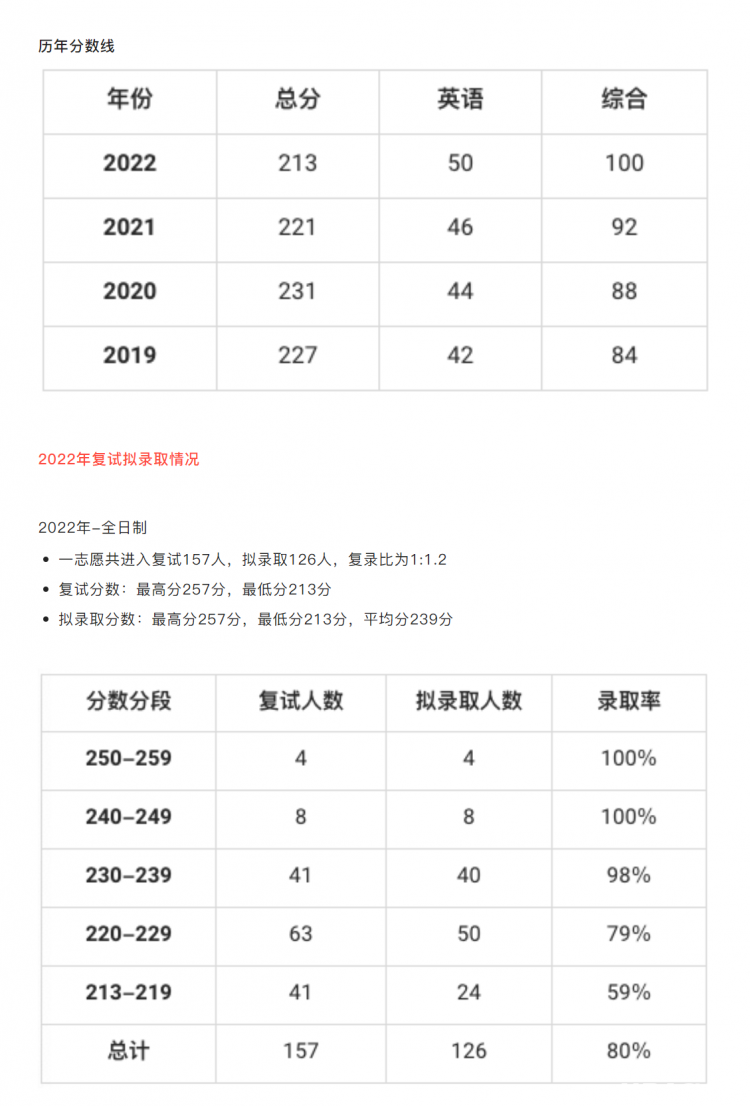
Let me tell you that my score in the preliminary examination this year was 209. The number of people who entered the re-examination was 127. I ranked 113th in the preliminary examination. The enrollment brochure plans to recruit 90 people, and the final plan is to admit 100 people. I believe you have also checked the score line of internal finance in recent years on the Internet. The score line of internal finance in 2022 is 208, which is one point higher than the previous year. As I was only one point higher than the score line, I ranked relatively low in the initial test. I knew that I could only counterattack through the retest. I put a lot of effort into the retest and made full preparations. Due to my proper preparation for the retest, my final total score for the retest was 84.6 points. I successfully counterattacked, so my retest experience is relatively rich.
2. Introduction to professional disciplines
The professional master's degree in accounting, also known as the master of professional accounting (MPAcc), is a professional degree approved by the Ministry of Education and the Academic Degrees Office of the State Council. The professional code is 125300. The Master of Accounting aims to cultivate a group of accounting talents for the country who understand both Chinese accounting and international accounting practices. The prospects are very promising for cultivating accounting and financial management professionals with good ideological quality and professional ethics, solid foundation, strong business ability, strong foreign language proficiency and creative qualities for enterprises, institutions, government agencies and accounting firms.
From the perspective of postgraduate entrance examinations, the master's degree in accounting is also quite special. The examination for the master's degree in accounting consists of two parts: a preliminary examination and a re-examination. Among them, the initial test subjects are the management comprehensive ability test and English (II). The management comprehensive is composed of three parts: mathematics, logic and writing, while English II is composed of four parts: cloze, reading comprehension, English translation and English writing. The retest subjects are mainly ideological and political, professional foundation, and English proficiency. The preliminary examination does not examine the content of professional courses. The preliminary examination is less difficult and contains less content. Therefore, it also attracts a large number of non-accounting major students to apply for mpacc. Every year, a large number of people apply for MPACC majors. In the past few years, there may have been some transfer places. However, due to the impact of the general environment in recent years, more and more people have flocked to the postgraduate entrance examination. Now there are almost no full-time transfer places after the re-examination, or it is competition between "high scores", because every year there are 250 and 260 high-scoring postgraduate entrance examination parties. Because the re-examination is brushed off, this invisibly increases the difficulty of landing. So choosing a school is very important! !
Looking specifically at Inner Mongolia University of Finance and Economics, Inner Mongolia University of Finance and Economics is a financial institution in the Inner Mongolia Autonomous Region. It is relatively well-known in the Inner Mongolia Autonomous Region, and it is also very cost-effective. Its re-examination line has increased steadily in the past three years. Anyone who can score 205 or above will have the opportunity to enter. If you enter the re-examination, if you are more stable, you will get a score of 215 or above. Therefore, compared with other financial institutions, Inner Mongolia University of Finance and Economics is a relatively easy financial institution to take the exam. At the same time, its accounting major is also relatively good, it has a good teaching team, and it also pays more attention to the students of the accounting school. Therefore, it is still recommended that you apply for the MPAcc major of Inner Mongolia University of Finance and Economics. You can take a look at the past re-examination and scores of Inner Mongolia University of Finance and Economics.
3. Exam syllabus and subjects
The preliminary examination subjects for the MPAcc postgraduate entrance examination are comprehensive management joint examination and English II.
The comprehensive ability of the management joint examination includes three parts: mathematics, logic and writing, with a total score of 200 points. (Duration: 3h)
Mathematics: 25 multiple choice questions, 3 points/question
Logic: 30 multiple choice questions. 2 points/channel
Writing: Validity argument analysis (about 600 words) 30 points; argumentative essay (about 700 words); 35 points
English II includes four parts: application of English knowledge, reading comprehension, English-Chinese translation and writing, totaling 100 points. (Duration: 3h); Cloze: 20 questions, 10 points; Reading comprehension: 20 choices in 4 articles, 40 points; New question type: 5 choices, 10 points; Translation: 15 points; Small essay: 10 points; Large essay 15 points
English (II) is less difficult than English (I) and is more suitable for most candidates to learn. However, the management joint examination is large in size, involves many knowledge points, and the test questions are flexible and changeable. Many candidates will be nervous during the test and may not be able to complete the test paper. Therefore, candidates should pay attention to the order of completing the questions and ensure that the essay is completed, and avoid detours when encountering difficulties.
4. Preparation experience for the preliminary examination
(1) Mathematics
① "Mathematics Volume": For students with weak foundation, you can first follow Teacher Chen Jian's mathematics volume to consolidate the foundation.
② "High Score Guide", take notes carefully, follow the teacher through the book first, don't worry too much about the accuracy. Take notes while listening to the lecture, and review and reflect after listening to form a knowledge system for each chapter. Then read the high score guide a second time, focusing only on wrong questions to deepen your impression.
③ "Han Chao's 72 Strategies" recommends everyone to listen to Han Chao's 72 Strategies. There are many questions that are difficult, but very important. They explain the key points and difficulties that are often tested in the exam. The teacher's explanation is very easy to understand. You will greatly improve your mathematics after listening to it.
④Real question stage: "Chen Jian talks about real questions", Zhang Zichao's real questions, etc. If you have enough time, you can listen to them all. Different teachers have different problem-solving methods. Master the method of multiple solutions to one question to improve the accuracy. Practice the real questions at least three times
⑤Sprint stage: "Take two questions for me", highly recommended! ! The questions are consistent with the real questions, which subtly improves the efficiency of problem solving. Two questions will be updated every day on the official account 100 days before the exam, so be sure to follow them.
(2) Logic
I studied logic and writing with Teacher Wang Cheng. I studied it completely with the video, and I did the exercises in each chapter in time and corrected the wrong questions. Teacher Wang Cheng has been a great help to me. Following his study, I have avoided many detours.
In the study of logic, the teacher does not recommend that we focus on studying simulation questions and give up the study of real questions. The real questions are the most important. Because the real questions can reflect the question-setting rules of the teacher, we can only do it over and over again, find out why we are wrong over and over again, and follow the teacher to clarify the correct way of doing the questions, so that we can do the questions efficiently. It is necessary to practice the real questions repeatedly, at least 3-5 times. It is far more effective to grasp the thinking of the question maker than to be a question maker all the time. Of course, many simulation questions and practice questions on the market can be used as daily practice questions. For example, doing 15 questions every day is not only fresh, but also allows you to apply your own problem-solving skills to questions you have never seen before. However, it is best not to focus on the simulation questions and ignore the importance of the real questions.
Also, in the last month, I attended the life-saving logic writing class taught by Teacher Wang Cheng. Teacher Wang is good at thinking about problems from the perspective of the person who asked the question, repeatedly pondering the real questions, and combined with the training of previous questions, it is like the finishing touch. The speed and efficiency of logic writing have been greatly improved. If students have trouble learning logic writing, they can listen to teacher Wang Cheng's class, and they will definitely gain a lot.
(3) Writing
In terms of writing, some students choose to enroll in some "correction classes". Many students, including on the Internet, asked me, how did I learn writing at that time? Do you need to sign up for a "correction class"? Judging from my postgraduate entrance examination experience, I feel that "correction classes" are not necessary. The first and most important thing is to "write it yourself". You must write it yourself. I know that some people will definitely ask, "I don't know how to write at the beginning, can't start writing or something?" These problems are common to everyone. I have two suggestions: first, watch yourself write the skills, universal sentences, and universal beginning and ending sentences learned in the writing class, and then follow the requirements of the question to practice them; the second is to "write whatever you think." It doesn't matter even if you feel that what you are writing is "flowing prose". As long as you can persist in writing, you have taken a big step. As the saying goes, "Everything is difficult at the beginning." Once you have a head start, the rest will not be difficult. Then the most important thing is to "revise it yourself", because you are the only one who is most familiar with the written ideas. Take the "Analysis of Real Questions" and compare it with your own article to see what is different. Then revise it yourself. After the revision, write it again yourself. At this time, you are like "a new village has a bright future" because you have found the direction of writing. As for writing, I have to complete one year's real writing, that is, two essays, in one week. I think everyone should be able to take time out on their own. After all, there is still time to practice writing in one week. To form your own writing system, practice more and read more materials. You can recite some paragraphs and then transform them into writing.
Recommended books: "Writing Volume", "Lao Lu's 33 Chapters"
(4) English (2)
Vocabulary: Master a large amount of vocabulary to lay the foundation for reading. You cannot just remember one meaning, but every meaning. If you prepare late and feel you don't have enough time to memorize the words, then take the "real questions" and memorize them. Memorize every unknown word (including familiar words with unfamiliar meanings) that appears in the past ten years of real questions. This must be memorized! !
Reading: If you do well in reading, you will be more than half successful in the English test. The key to reading lies in vocabulary and long and difficult sentences. If you master these two well, you can translate the full text and your accuracy will increase. Recommended: Teacher Tian Jing’s analysis of long and difficult sentences.