Know how to seize "certainty" investment opportunities in the stock market
The essence of stock market investment is a game of risks and opportunities. Avoiding "certainty" risks and looking for "certainty" opportunities is one of the magic weapons for smart investors to win repeatedly.
One of the characteristics and charm of the stock market lies in its "uncertainty". As long as the transaction is not completed, no one can be sure whether the market and individual stocks will ultimately rise or fall.
Precisely because of this "uncertainty" in the stock market, most investors will be prepared with both hands in actual operations and will not easily fill or short positions. However, many years of investment practice have shown that in the "uncertain" stock market, there are often "certain" investment opportunities.
Most of the stocks with "certainty" opportunities have good quality, low valuations, modest growth, and have not been speculated. Some people are "broken" at the wrong time. However, as the market conditions for most stocks improve in the future, there is a chance that the stock price will return to above the issue price. The increase from the breaking price to the issuance price is the "certainty" opportunity for this type of stock. Some promise "minimum reduction price."
Some major shareholders of listed companies are quite confident in the stocks they hold. They not only voluntarily lock their shares that have been released from sales restrictions, but also make clear commitments to the lowest price for reducing their holdings in the secondary market. The premium between the market price and the promised minimum reduction price is the "certainty" opportunity for such stocks. Some powerful institutions continue to increase their holdings.
When the stock prices of some companies with great potential fall to a certain low, investment opportunities gradually emerge. At this time, powerful institutions will often seize this rare opportunity to build a position and increase their holdings of such stocks in the secondary market. After increasing their holdings, some stocks fell sharply in a short period of time. The difference between the market price after the decline and the holding price is the "certainty" opportunity for this type of stock.
In addition to the above three types of "certainty" opportunities in the stock market, there are many more. It should be noted that these "certain" opportunities are relative opportunities rather than absolute opportunities. In actual investment, you need to respond rationally and be prepared with both hands.
Generally speaking, for companies that have "price-limited shareholding reductions", companies that broke their shares when they should not have done so, and companies whose major shareholders continue to increase their holdings, their secondary market prices will eventually have the chance to exceed the shareholding reduction price, issue price, and shareholding increase price. As long as the price in the secondary market is below the shareholding reduction price, issue price, and shareholding increase price, this "certainty" opportunity will more or less exist.
The key to finding, discovering, and seizing “certainty” opportunities is to be thoughtful. When investing in stocks, don't expect that pie will fall from the sky. No one will give you all the "certainty" opportunities in vain.
The only way to discover "certainty" opportunities is to search, identify and discover them yourself in the face of a large amount of disorganized information. Pay more attention and think frequently when reading newspapers, surfing the Internet, and watching TV. Once you find a "certain" investment opportunity, don't let it slip away easily.
The investment operation of "certainty" opportunities and the search for discovery are two completely different things. There is no inevitable connection between the size of the opportunity and whether it is profitable or not. To turn "certainty" opportunities into real profits, investors need to strengthen their training in actual investment and continuously improve their operating skills and abilities. The main issues that need attention are the following aspects.

(1) Good news is easy to buy.
Different from the "knowledge of buying is more important than selling" in daily transactions, the operation of seizing "certainty" opportunities is "buying is more important than selling." Generally speaking, the selling point of stocks with "certainty" opportunities is relatively certain. The key to winning is that the buying point is good and the cost is low.
When news about a "certainty" opportunity is announced, the stock price has often been driven up, and coupled with the high market attention, the possibility of opening higher immediately is very high. At this time, the cost of opening a position will be very high and the profit margin will be very limited. If you don't do it right, you will get trapped or even deep trapped when the dealer washes your hands.
(2) The abandoned child should give up.
After a period of silence, many stocks with "certain" opportunities will return to "calm" and gradually be forgotten by the market. As popularity declines and stock prices fall, stocks with "certainty" opportunities begin to be abandoned by everyone. At this time, it provides investors with a rare opportunity to build a position, and the chances and room for profit after buying are greatly increased.
(3) When someone is robbed, the pie falls away.
The purpose of investing in stocks with "certain" opportunities is to obtain "certain" returns. Under normal circumstances, investors can adopt the strategy of "not letting the hawk know the rabbit". As long as the "certainty" theme does not materialize and the stock price does not reach the reduction price, issuance price and increase price, just hold it all the way and be more patient with the banker.
When the stock price touches the reduction price, issuance price and increase price, no matter whether it is profitable or not and how much the profit is, you must leave the market unconditionally before the theme materializes and the dealer reduces the holding. After leaving the market, no matter whether it is rising or falling, do not cover it easily, because at this time the "certainty" theme has been realized and the opportunity has been lost. This is also a major difference between operating stocks with "certainty" opportunities and daily trading.
How to operate the stock trading method – 3 to 5 at the opening, 7 horizontally and 8 vertically is a tiger
What does "opening at 3 to 5 points, horizontal 7 and vertical 8 being tigers" mean? It is the target stock chosen by investors. If the market opens at 3 to 5 points, the time-sharing average price line will follow up. After the stock price adjusts slightly, it will be pulled in by a big buy order. It then goes up to a higher level for more than 8 points, then drops down and a sideways change of hands occurs between 7 and 8 points. At this time, it does not break the time-sharing average price line, and the trading volume is in a stable and balanced state, forming a horizontal and vertical trend. Once this trend is formed, it will definitely be supported by the strength of hitting the daily limit.
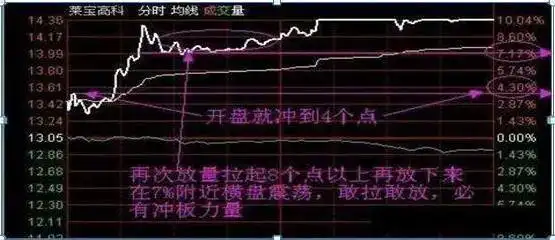
What is the operating technique of "rush 3 to 5 at the opening, 7 horizontally and 8 vertically is a tiger"? The detailed introduction is as follows.
First: the stock price must open at 3 to 5 points.
Why does the stock price have to open at 3 to 5 points? Because if it is less than 3 points, it means that the strength is not enough, but if it is more than 5 points, it means that the pull is too strong, and the main force is suspected of pumping up and selling. Therefore, it is safest for the stock price to open at 3 to 5 points.
Second: After the stock price reaches a higher level, it must steadily change hands in the area of 7 to 8 points.
Why? This is because if it is lower than 7 to 8 points, it means that the desire to push higher is not strong, and it may not be able to hit the daily limit later. If it pauses and consolidates around 7 to 8 points, it will directly hit the daily limit. Although it looks very strong, there is actually a lie in it. It cannot be ruled out that the main force is a bullish behavior.
Third: Be sure to understand the significance of "horizontal 7 and vertical 8".
The meaning of "horizontal 7 and vertical 8" is that the main force wants to conduct a trial market before the daily limit in this area. From the perspective of investors' psychology, those who bought the stock on the first day have already made profits at the level of 3 to 5 points. In order to capture new targets, short-term investors will throw chips in this area. As the sideways market continues, some timid investors will also have the urge to sell, but they also want to see if they can sell at a higher position. As the stock price reaches a higher level, these would-be sellers have increased their impulse to sell.
Classic stock trading tips in the stock market:
Internal reference formula 1: Don’t sell if you don’t rush high, don’t buy if you don’t dive, and don’t trade sideways.
"Don't trade in sideways trading" is something you should pay special attention to when operating stocks. When trading in sideways trading, once the market changes in the opposite direction, you will inevitably stop the loss or chase the increase, both of which are undesirable. The price difference is not big during sideways trading, and if you are impatient, multiple transactions will inevitably result in a loss in handling fees.
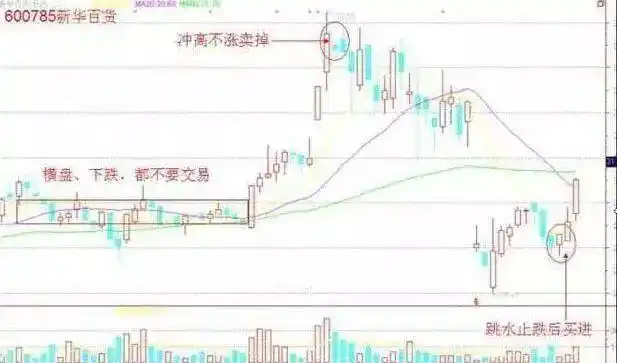
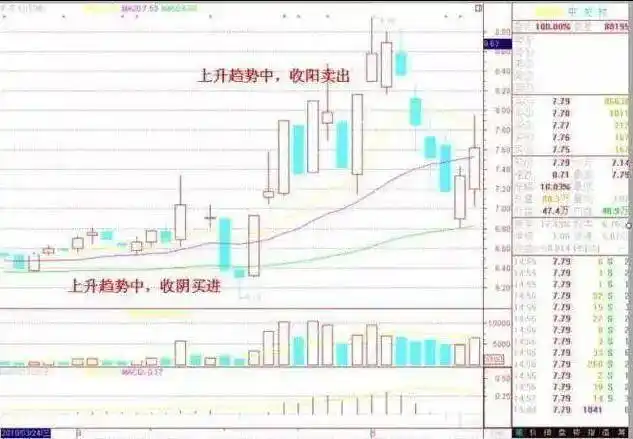
Internal Reference Tip 2: Buy yin but not yang, sell yang but not yin, only those who go against the market trend are heroes.
This formula is somewhat similar to the first formula, which is about moving against the market. The first formula is about short-term, and the second formula is about mid-term. That is, when buying, choose to buy when the K line closes the negative line; when selling, choose to sell when the K line closes the positive line.
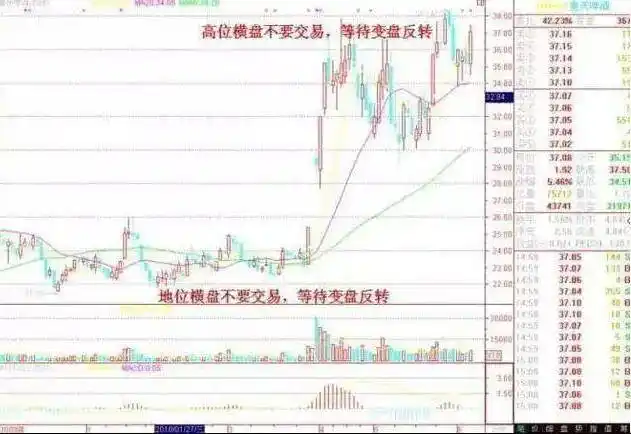
Internal Reference Tip 3: Consolidate highs and lows, wait a moment
The content of this formula includes the content of "No trading in sideways" in Tip 1, but the main meaning is that when a stock continues to rise or falls for a period of time and then enters a sideways state, there is no need to sell the entire position at a high level or buy the entire position at a low level, because the market will change after consolidation, so you cannot subjectively decide to open or clear a position during the consolidation period. If the price changes from a high position to a downward trend, you can clear your position in time and there will be no loss; if the price changes from a low position to a high price, you can catch up in time and you will not be short.
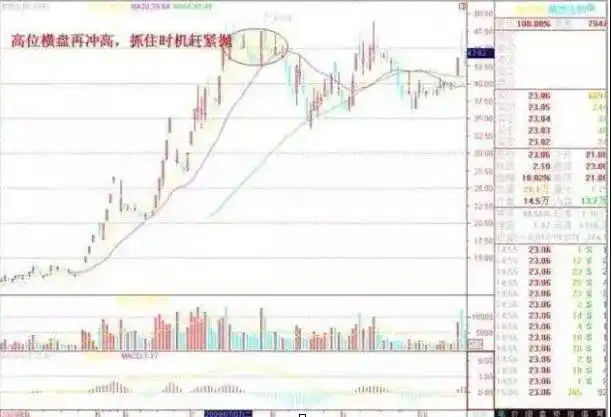
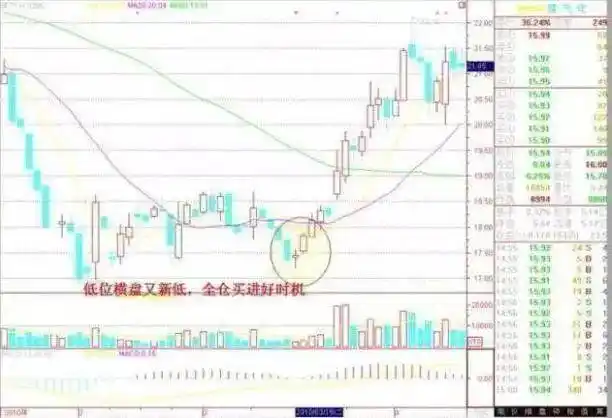
Internal reference tip 4: When the price goes sideways at a high level and then surges higher, seize the opportunity to sell quickly; when the price goes sideways at a low level and reaches a new low, it is a good time to buy a full position.
This formula is a further concrete explanation of formula three and is the best time to describe one of formula three. Stock prices and the broader market often reach new highs after consolidating at high levels, and reach new lows after consolidating at low levels. Therefore, it is said that one should wait for the direction of market changes to become clear before starting. If the price goes sideways at a high level and then changes upward, reaching a new high, this is the best time to sell; while at a low price, it goes sideways and then changes downward, this will be the best time to buy with a full position.
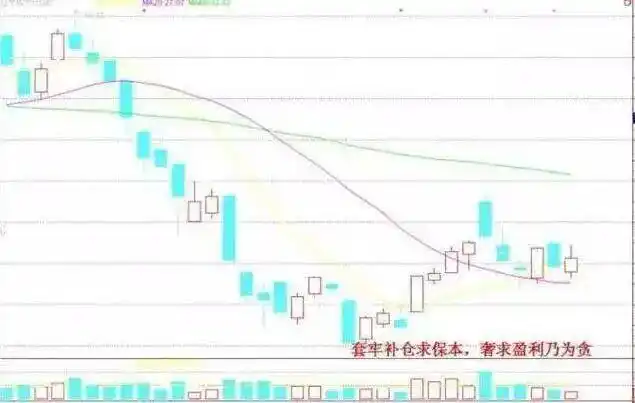
Internal reference tip five: Hold on to cover positions to protect capital, and extravagantly seeking profits is greed.
This trick talks about a common mistake people make. When you are trapped, you fill a position at the technical support level, or increase the amount to fill a position, but you must clearly realize that your purpose in doing so is just to get your capital back. When the stock price rebounds and you are not losing money, you should sell in time. But when many people see the stock price rising, they think that if it rises again, I will make a profit, and I will make as much profit as possible. As a result, it falls back again, and I am trapped in a heavy position again. This time, I don’t even have the funds to save myself, and I can only wait and die. Therefore, they are listed here to show everyone.
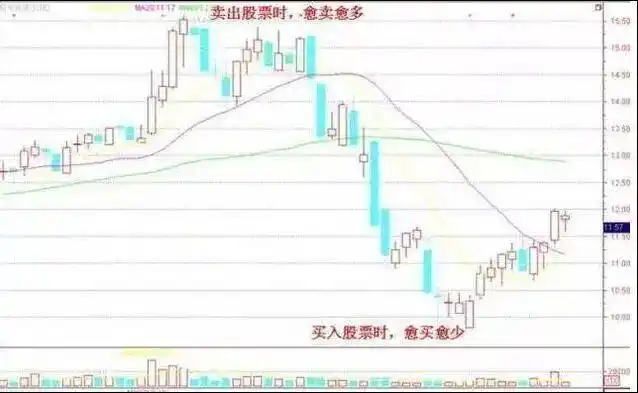
Tip six for internal reference: admit your mistake before you make a move, and it is better to buy less than to buy too much.
Internal Reference Tip 7: There is a ray of red in the green shade, buy quickly and don’t relax
Tip 8 for internal reference: One recommendation and two recommendations will not make the stock go up, so you have to move down and then shake the position.
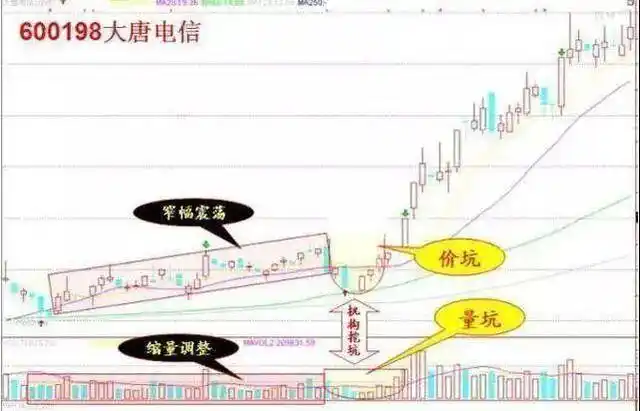
This tip is very important and is an unspoken rule of the stock market. Mainly talking about stocks. This situation is generally as follows: a stock has been correcting for a long time and is coming to an end. Most of the stocks are in a platform consolidation state. People start recommending them one after another. You can see that the fundamentals are indeed good, but after you buy it, it just doesn't move. That's how you get left behind. Everyone was optimistic about it, but it just didn't rise. After the 20th, it suddenly broke down. After making a standard pit, the K line easily broke through the early platform and reached a new high.
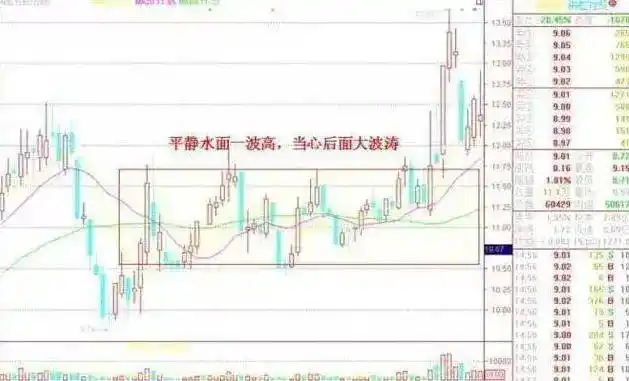
Tip 9 for internal reference: A wave will rise in calm water, but beware of big waves behind it.
Look for strong stocks with main players
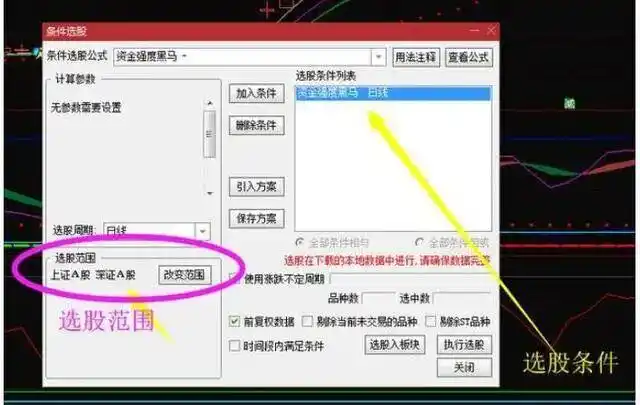
If you have been in the market for many years and still don't know how to pick stocks, you might as well try the "Capital Strength Dark Horse Stock Picker". The selected results are all stocks with main players and dark horse potential. The next thing we have to do is to find the entry position, how to sell high and buy low, and how to find the peak and leave the market in time. Copying the formula code will inevitably cause some format errors. If it cannot be imported successfully, you can ask me to get the source code!
ZLCM:=EMA(WINNER(CLOSE)*70,3);
SHCM:=EMA((WINNER(CLOSE*1.1)-WINNER(CLOSE*0.9))*80,3);
ZZLKP:=ZLCM/(ZLCM+SHCM)*100;
ZZLJJ:=EMA(ZZLKP,89);
ZJLRQD:=INTPART(ZZLKP-ZZLJJ);
Main control coefficient:=INTPART(ZZLKP);
Capital inflow intensity:=ZJLRQD;
K1:=LLV(LOW,5);
K2:=HHV(HIGH,5);
K3:=EMA((((C-K1)/(K2-K1))*100),4);
K5:=((HIGH+LOW)/2);
K6:=DMA(K5,(VOL/SUM(VOL,5)));
K7:=DMA(K5,(VOL/SUM(VOL,13)));
K8:=DMA(K5,(VOL/SUM(VOL,34)));
K9:=DMA(K5,(VOL/SUM(VOL,75)));
KA:=EMA(WINNER((0.9*C)),5);
KDY:=((100*(C-K6))/K6);
KE:=((100*(C-K7))/K7);
KF:=((100*(MIN(C,O)-K8))/K8);
KG:=BARSLAST(((K8>K9) AND (REF(K8,1)=0.8)
AND (WINNER(C)0)) AND (COUNT((KF0));
K12:=(((COUNT((KDY0) AND (COUNT((KE0)) AND (COUNT((KF0)) AND (COUNT((KA>0.8),KG)=0));
K13:=(((COUNT((KH OR K12),2)>0) AND (K3>REF(K3,1))) AND (((1-WINNER((1.15*CLOSE)))*100)>80));
K14:=IF((K13 AND (COUNT(K13,3)10 AND capital inflow intensity>-10;
XG:BARSSINCEN(K14,10) AND ZVF>3 AND control panel;
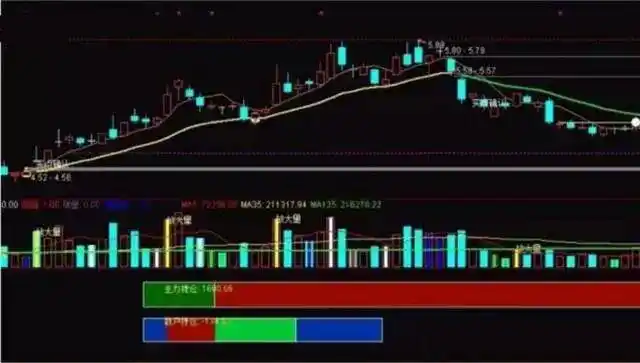
Decryption of the most complete escape techniques in history:
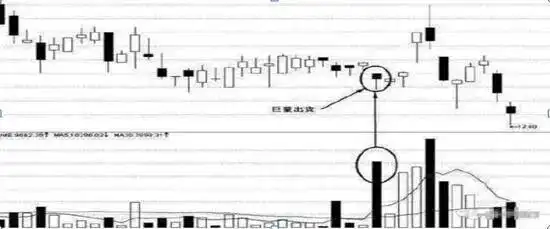
1. Accurate selling signal – abnormally large volume at relatively low level
When the stock price begins to trade sideways after a round of decline, although the stock price is at a relatively low level, it is still inconsistent with the value of the listed company. For example, if suddenly there is a huge amount of transactions the next day, and the turnover rate reaches an astonishing 20% or more, we should pay attention! This is very likely that the main force is preparing to flee. Let's take a look at the picture below:
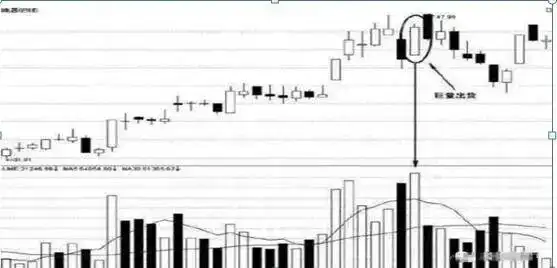
2. Accurate sell signal – huge volume appears at the high point of the band
When the stock price has increased by an astonishing 20% or more after a round of rising prices, the stock price will generally enter an adjustment period at this time, and at this time, the main force is likely to ship here. Therefore, when the stock price shows a weak rise, we should be wary of the huge volume that appears in the market, especially when the turnover rate reaches more than 20%, we should sell decisively!
As shown below:
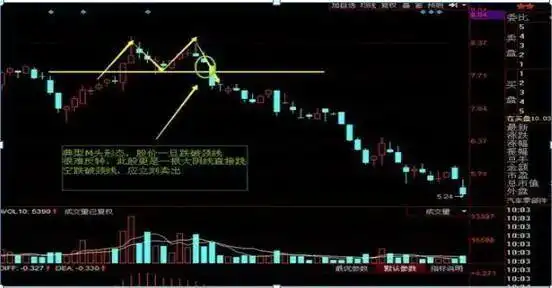
3. Accurate selling signal – "M" head
Although the bulls counterattacked when they were suppressed by the shorts in the high price area, they were unable to continue to push the stock price higher, forming an "M" head under the pressure of the shorts. If the stock price falls below the neckline by more than 3%, it means that the shorts have taken advantage and the stock price is about to plummet. The minimum metric decline is calculated as the height of the double top pattern starting from the distance between the peak and the neckline.
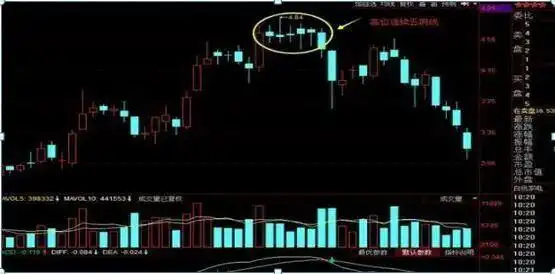
4. Accurate selling signal – combination of five high negative lines
Five consecutive negative lines appeared in the high price area, accompanied by shrinking trading volume, indicating that selling increased and bulls were no longer able to push up the stock price. The energy accumulated by shorts was about to explode, and the market outlook was bound to fall.
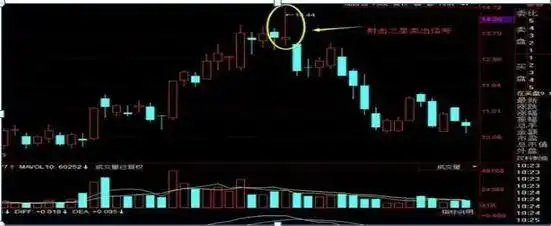
5. Accurate selling signal – a shooting star appears in the high area
In a rising market, a positive or negative line with an upper shadow line that is twice or more than twice the length of the entity and a very short lower shadow line is called a shooting star. This is a highly reliable peaking and falling signal.
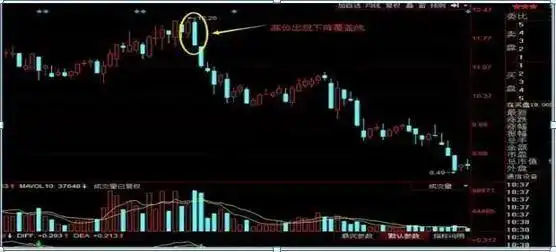
6. Accurate selling signal – high falling coverage line
After rising for several days, the stock price suddenly opened high and closed low. The large negative line covered the previous day's positive line, indicating that the bulls had exhausted their strength, the bears had begun to counterattack, a large number of selling orders poured out, and the stock price was about to plummet.
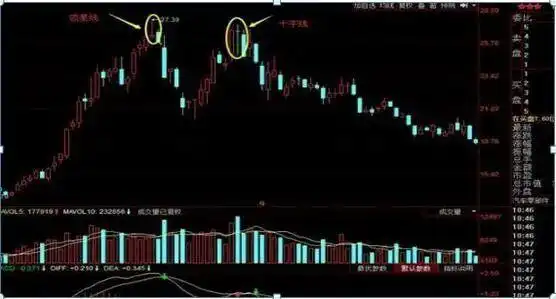
7. Accurate selling signal-long doji
When the long cross star appears at the top of the rising market and is accompanied by huge trading volume, it means that the upward momentum of many parties has been greatly consumed and they are no longer able to continue to push up the stock price. Therefore, the long cross star with large trading volume is a signal that the stock price is weak in rising and has peaked and fallen.
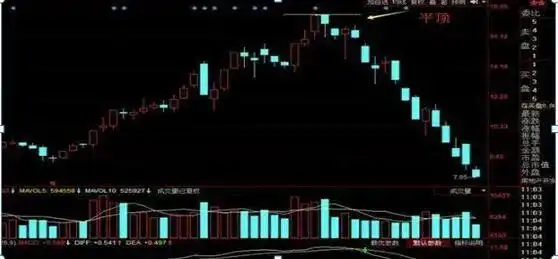
8. Accurate sell signal – flat top
The emergence of a flat top means that the stock price is blocked from attacking a certain high point, and the multi-party attack is weak, and has no choice but to retreat. In terms of technical form, a flat top can be composed of more than two K lines. It does not matter whether the K lines are yin or yang, as long as they form a flush head.
Seven taboos in stock trading
The biggest taboo in stock trading – full time
The so-called full time refers to investors operating non-stop throughout the year. The most important thing in stock trading is to study and judge the general trend. When the general trend is improving, we should actively go long; when the general trend turns weak, we should take short positions and rest. Some investors do not do this. They work non-stop regardless of whether the stock market is hot or cold, like hard-working bees, busy for small profits. In doing so, they will not only be in vain, but they will also encounter more risks. Investors in the stock market must learn to assess the situation, take timely rest according to changes in trends, so that they can accurately grasp the opportunities they should participate in in the stock market.
The second biggest taboo in stock trading – rushing to recover losses
In a plummeting market, investors are often severely trapped and suffer huge book losses. Some investors are eager to recover losses and arbitrarily increase the frequency of operations or invest more funds. This approach is not only futile, but also aggravates the degree of losses. When the general trend is weak, investors should operate less or not at all, and wait patiently for the general trend to improve and the trend to become clear before intervening.
The third biggest taboo in stock trading – full profits
Full profit means that investors always want to buy at the lowest price and sell at the highest price, blindly pursuing profit maximization. Some investors like to pursue huge profits and always want to take all the profits from a stock. As a result, they often go back and forth in the elevator. Striving for the most possible profits and growing steadily is the right way to make money.
The fourth taboo in stock trading – rushing to rebound
Especially in a market where the downtrend has not ended, rushing to rebound is like "taking chestnuts from the fire". If you are not careful, you may get into trouble. In the recent market environment, there is no possibility of going short. Investors must not take the risk of being trapped just because they are greedy for small profits in the rebound.
The fifth taboo in stock trading – full position
Among the first-generation large investors in the Chinese stock market, most of them were punctured due to excessive full positions (overdrafts), and eventually ended up being forced out of the market by the exchange. Stock trading is the same as being a human being. You must leave room for maneuver in everything so that you can advance and retreat freely. For retail investors, if the money invested in the stock market is to support their families, once the positions are full, the anxiety caused by the huge psychological pressure will definitely affect the analysis and judgment of the market outlook, and the final result is self-evident.
The sixth taboo in stock trading—too much panic
Panic is the most common emotion among investors in a crashing market. In the stock market, when there is a rise, there will be a fall, and when there is slowness, there will be fast. In fact, this is a natural law. As long as the stock market always exists, it will not fall forever. There will eventually be a rise. Investors should take advantage of the downturn in the stock market to study and research carefully, actively select stocks, and prepare for the bull market as early as possible, so as to avoid the old habit of chasing the rise and killing the fall when the market improves.
The seventh taboo in stock trading – complacency
Some investors often make gains when they first enter the stock market. After they become old investors, because they have made some money, learned some indicators, and read a few books, they gradually become blindly confident, chasing ups and downs, and entering and exiting quickly. As a result, they lose more than they win and suffer serious losses. Pride and complacency will prevent investors from improving their operational level and bias their understanding of the stock market. The development of the stock market is changing with each passing day. If anyone is complacent, he will stagnate and will eventually be eliminated by the stock market.