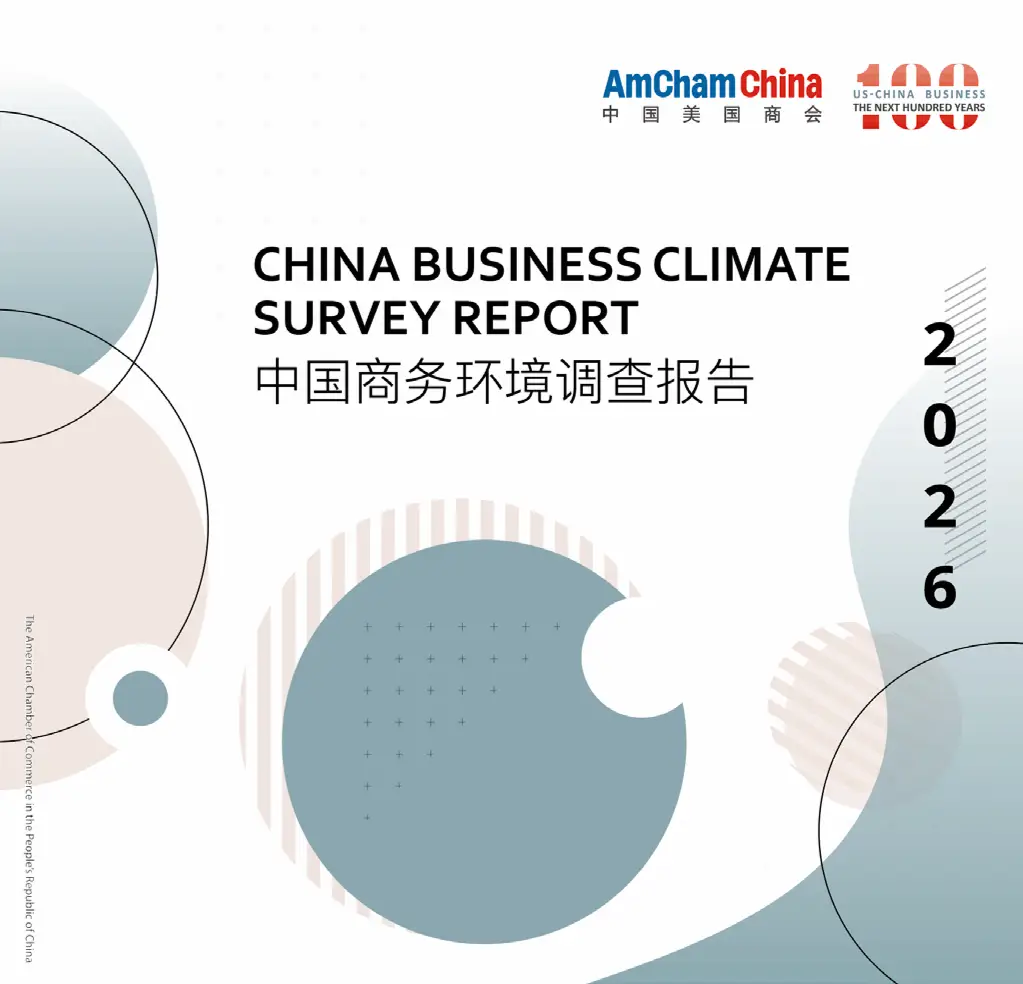
Core interpretation of China Business Environment Survey Report 2026
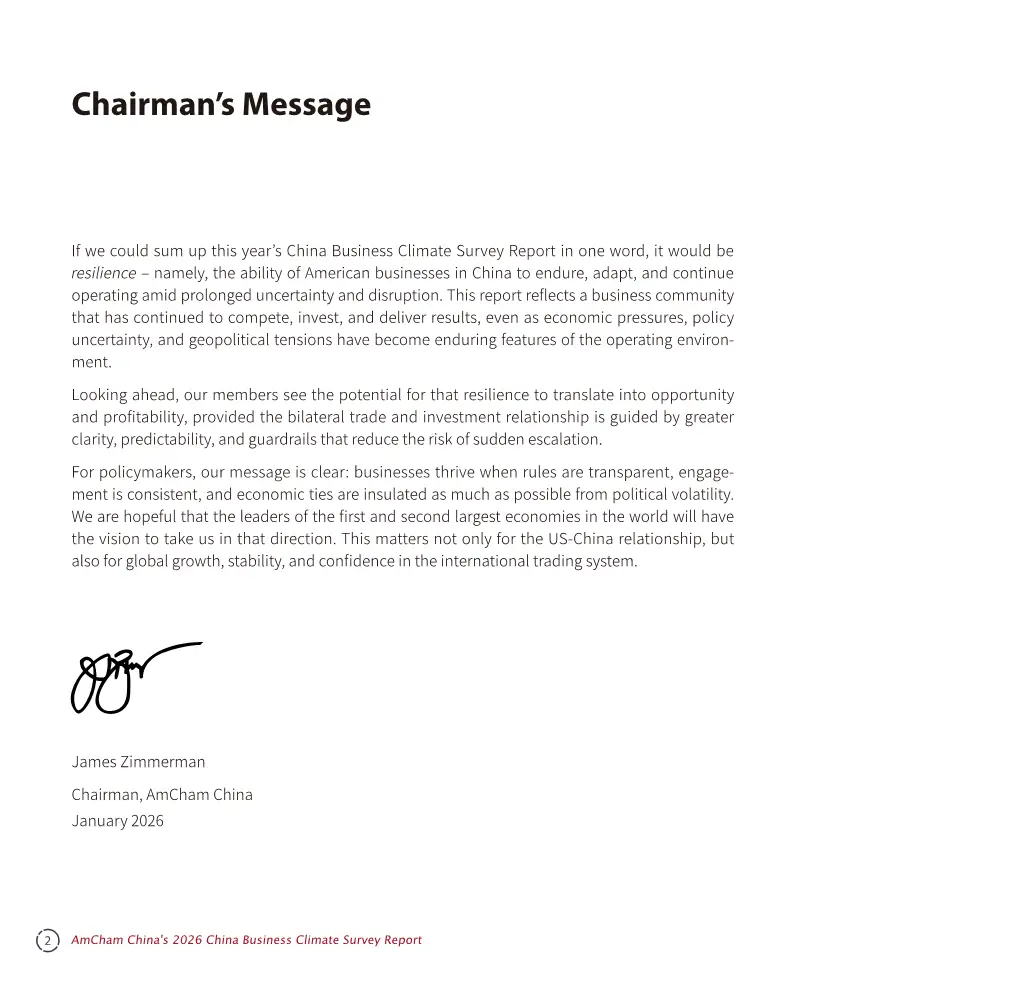
1. Core Theme: Resilience Becomes the New Normal
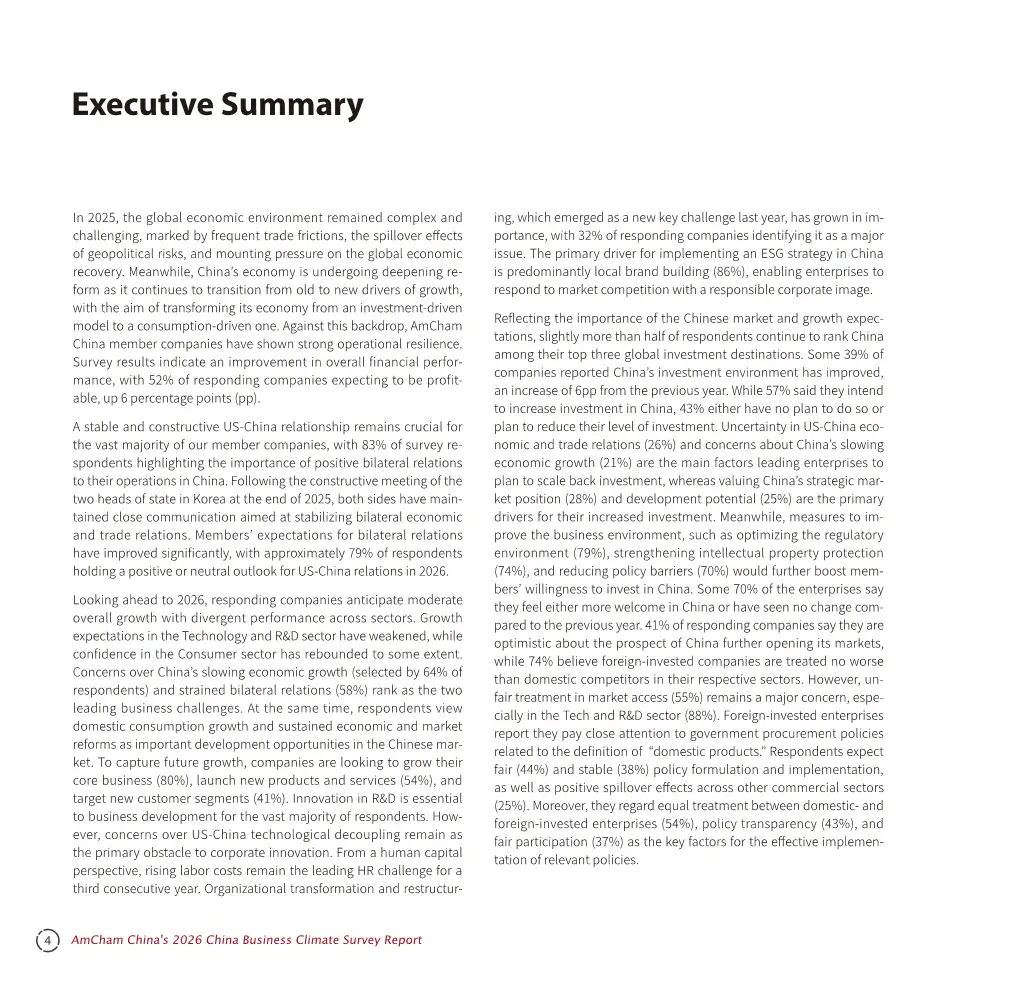
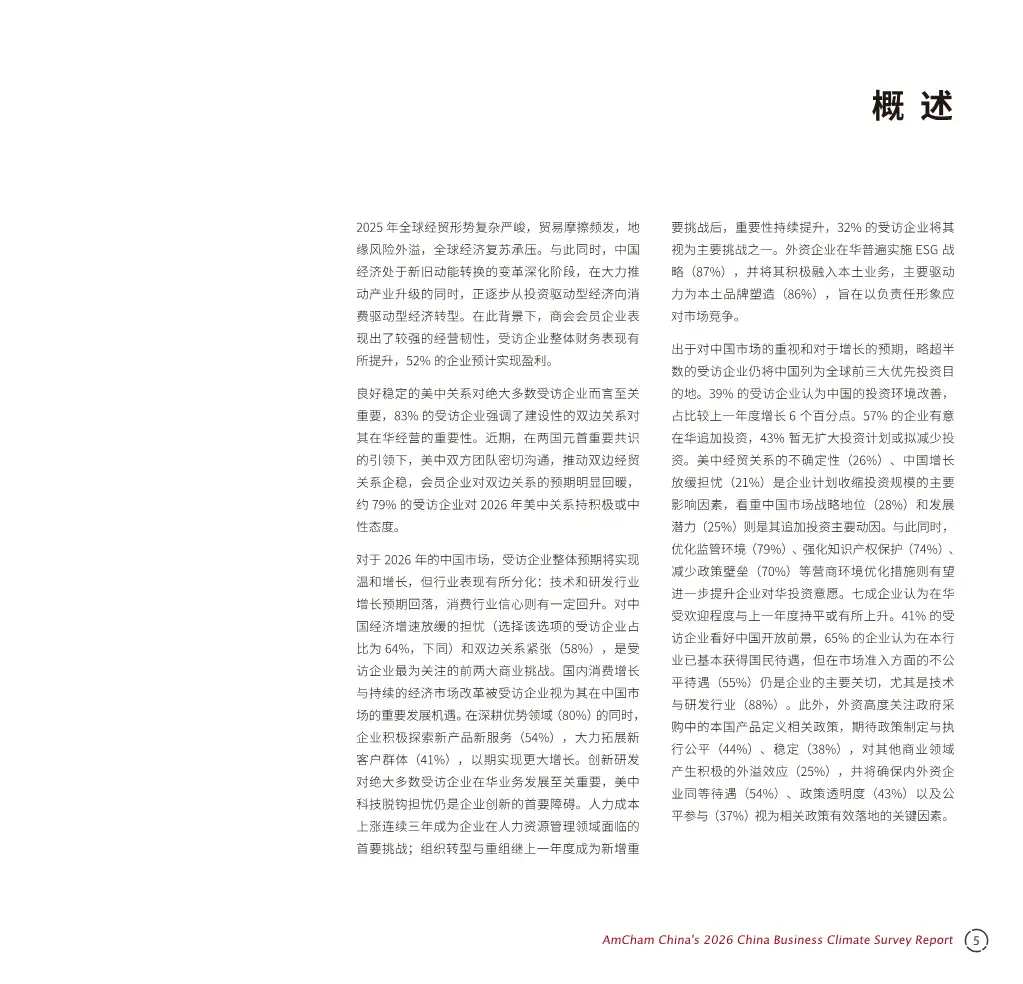
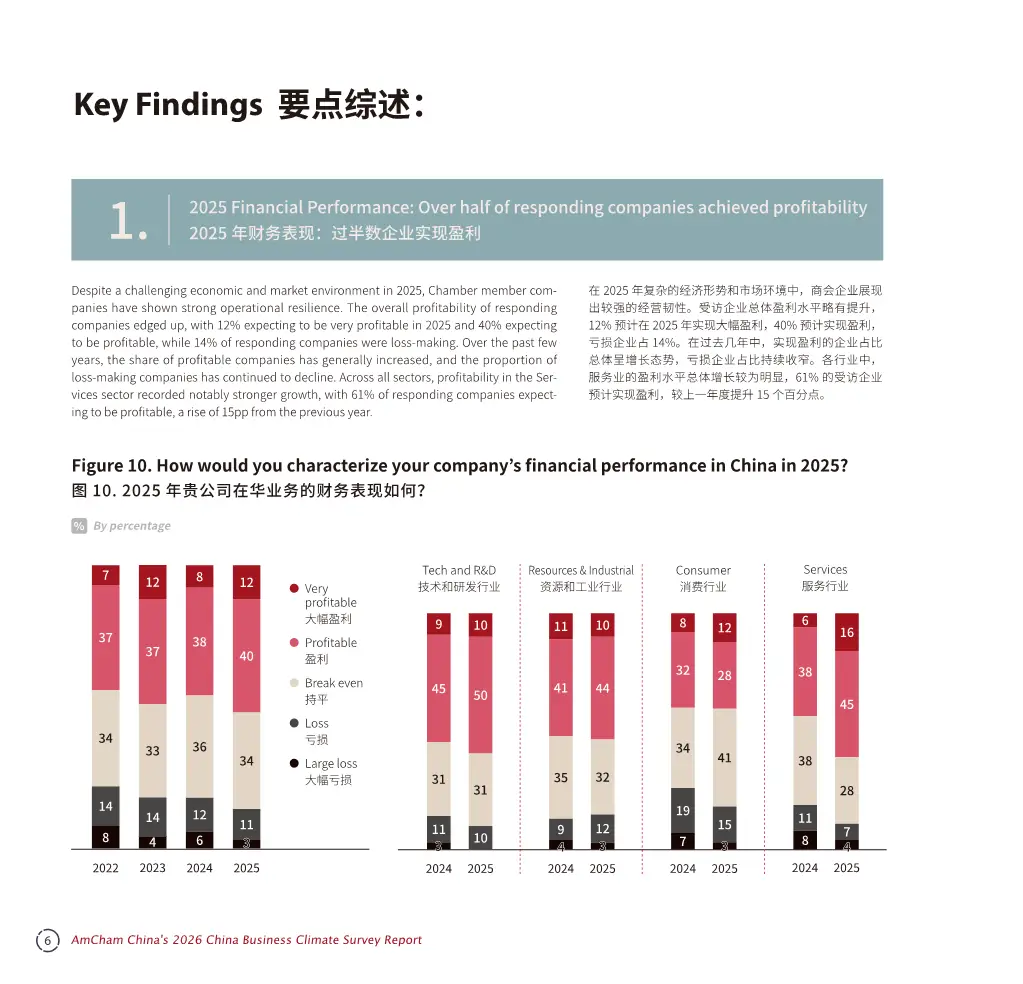
In 2025, despite the complex and volatile global economy and spillover of geopolitical risks, US-funded companies in China have demonstrated strong operational resilience. 52% of the companies surveyed are expected to achieve profitability, an increase of 6 percentage points from 2024. Among them, the service industry performs particularly well, with 61% of companies expecting profits, a significant increase of 15 percentage points year-on-year. This "resilience" quality is reflected in a company's overall ability to continue to compete in the market, maintain investment and create value.
2. Investment intention: strategic emphasis and cautious optimism coexist
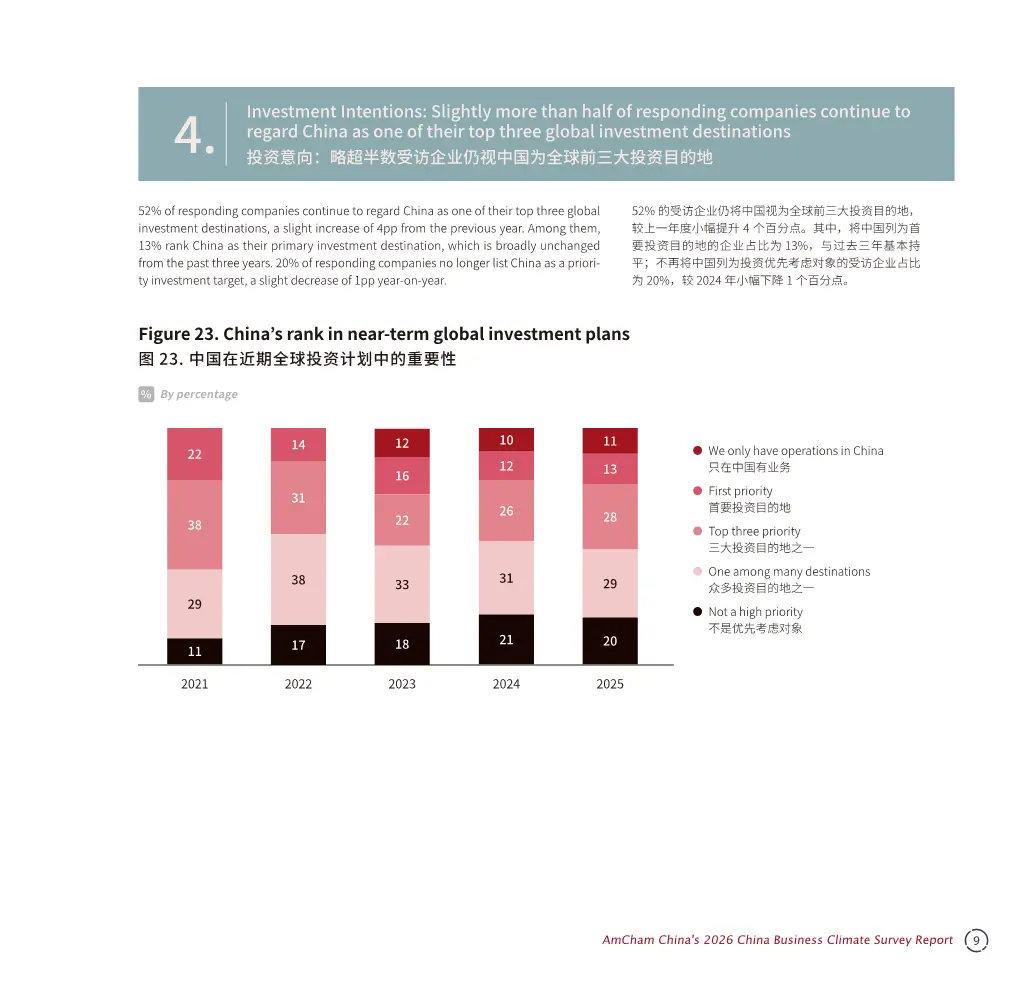
The status of investment destinations is stable: 52% of companies still rank China as the top three investment destinations in the world, with the proportion increasing by 4 percentage points. 13% of companies regard China as their primary investment destination, which is basically the same as in previous years.
Perception of investment environment has improved: 39% of companies believe that China’s investment environment has improved, an increase of 6 percentage points year-on-year, and an upward trend for three consecutive years. The proportion of companies that believe the investment environment has deteriorated dropped to 23%, a year-on-year decrease of 5 percentage points.
The trend of investment differentiation is obvious: 57% of enterprises plan to increase investment, of which 18% expect the increase to exceed 20%. However, 43% of the companies have no plans to expand investment or plan to reduce investment, which reflects that the company's layout in China presents a dual strategy of "enhancing the core" and "risk aversion".
Investment drivers: 28% of companies listed the strategic importance of the Chinese market as the primary motivation for expanding investment, and 25% were optimistic about the growth potential of the Chinese market. Policy incentives and talent reserves are also important considerations.
3. Business challenges: Economic slowdown replaces bilateral relations as primary concern
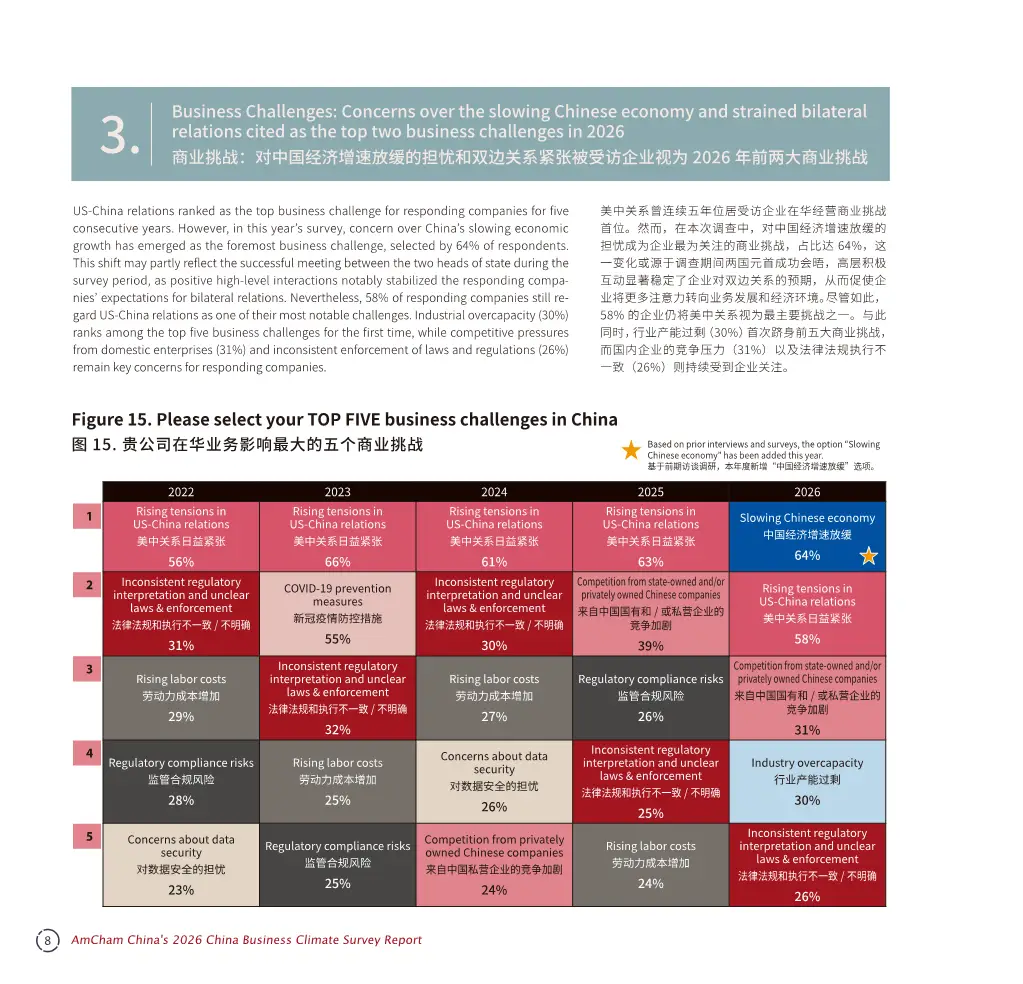
A major change in the challenge landscape: 64% of companies listed "China's economic slowdown" as their primary business challenge in 2026. This is the first time this option has topped the list. Although 58% of companies still regard tense relations between the United States and China as a major challenge, intensity has dropped significantly, with the proportion of companies holding a pessimistic attitude falling from 65% to 52%.
Emerging challenges emerged: industry overcapacity entered the top five challenges for the first time, with 30% of companies expressing concern. This is particularly prominent in the resources and industrial industries, where 54% of companies believe that overcapacity poses a major challenge. The technology and R&D industry is more worried about U.S.-China relations than the economic slowdown, with 63% naming it as their top challenge.
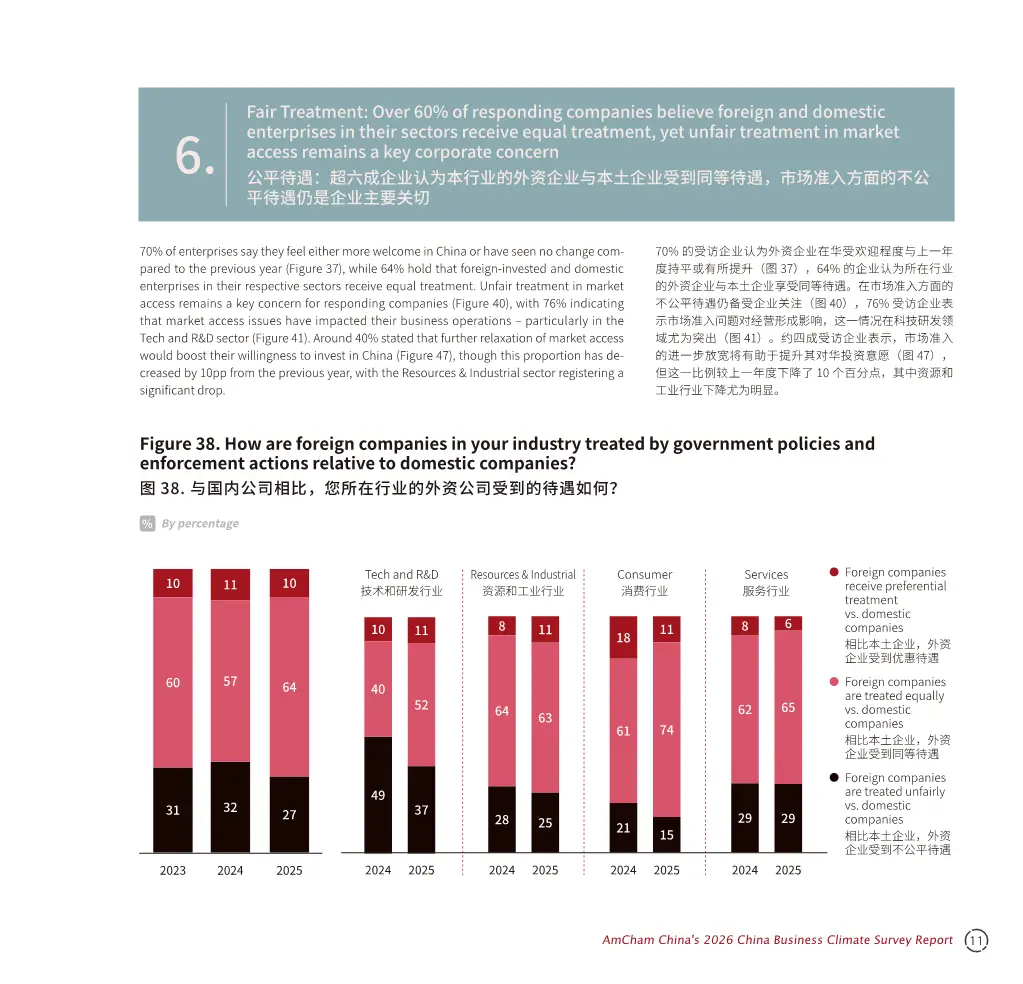
Ongoing obstacles: Competitive pressure from local companies (31%) and inconsistent enforcement of laws and regulations (26%) are still long-term problems. The technology and R&D industry feels the most about market access, with 88% believing there is unfair treatment.
4. Operation Strategy: Deepening of Localization and Adjustment of Supply Chain
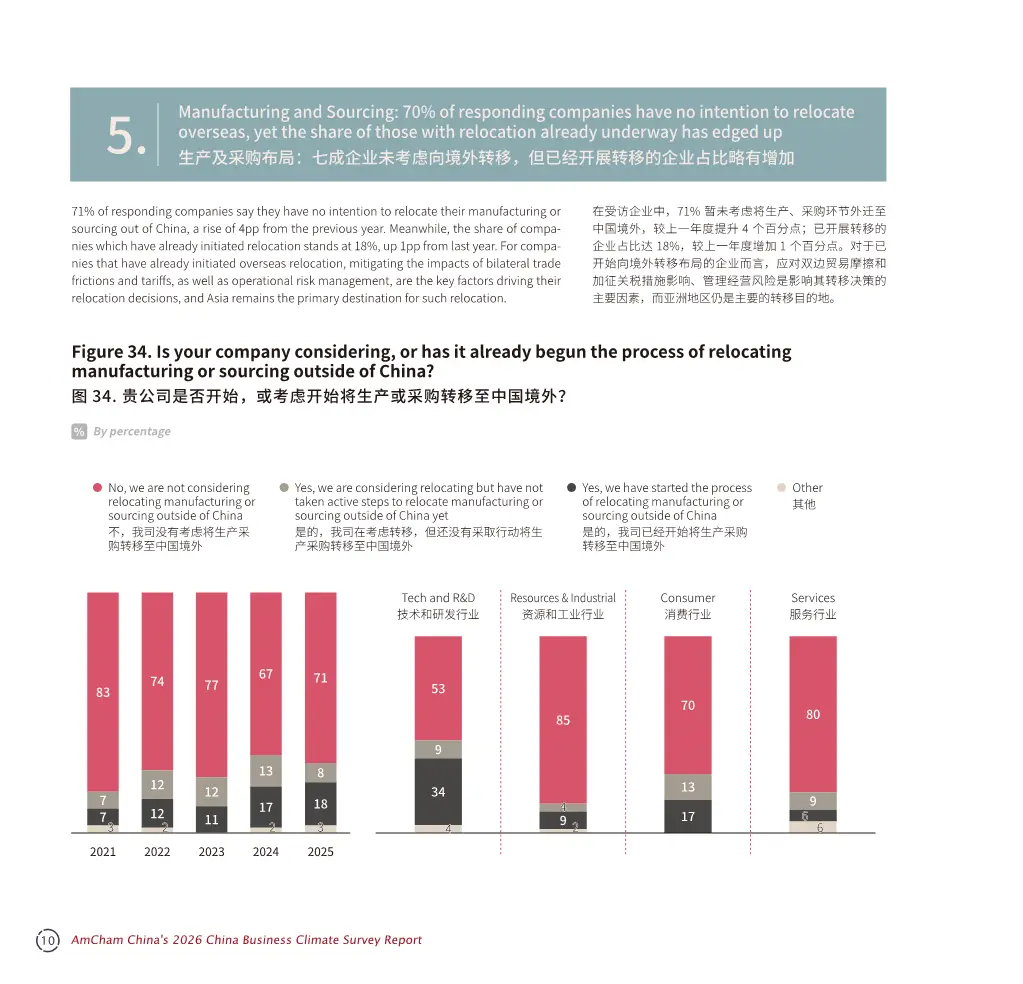
Willingness to transfer production capacity remains low: 71% of companies clearly stated that they would not consider moving production or procurement out of China, an increase of 4 percentage points. 18% of companies have started to transfer, with the main motivations being bilateral trade frictions, risk management and tariff avoidance. Asia remains the preferred destination, with 38% planning to move to developing Asian countries.
Deepening of localization strategy: 21% of companies choose to deepen the localization of products and services in China to cope with trade frictions, and 19% plan to purchase or assemble more parts and components in the Chinese market.
The impact of tariffs has become chronic: 47% of companies affected by U.S. tariffs said profitability has declined but they can still maintain operations, and 43% are facing rising import costs. Compared with May 2025, the tariff impact has changed from an "acute impact" to a "chronic squeeze". The adaptability of enterprises has improved but profit margins continue to be under pressure.
5. Human resources: Pay equal attention to cost pressure and structural adjustment
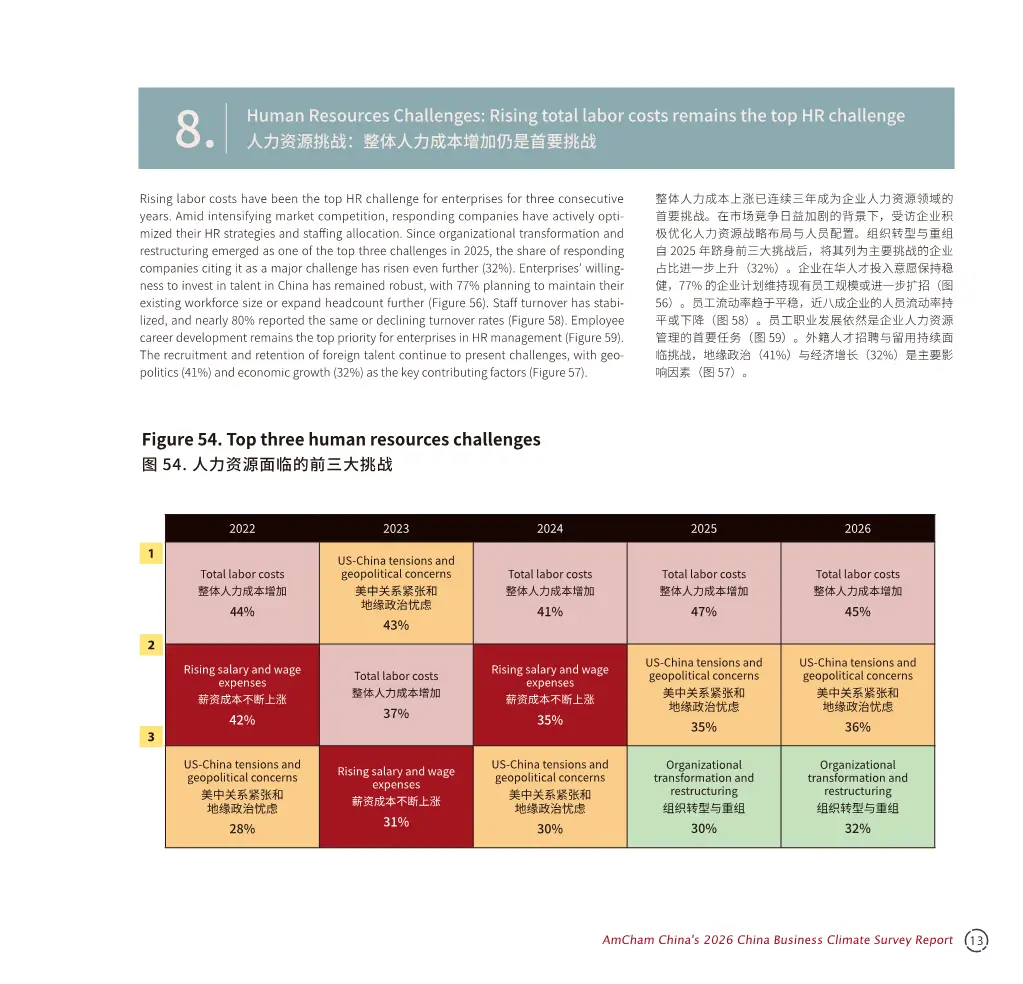
Labor cost challenges continue: The increase in overall labor costs has become the top human resources challenge for the third consecutive year, with 45% of companies expressing concern. However, the proportion of companies that expect costs to rise has dropped for three consecutive years, and 45% of companies in the service industry expect labor costs to remain flat or fall.
The pressure on organizational transformation is highlighted: 32% of companies listed organizational transformation and reorganization as a major challenge, reflecting that companies are actively adjusting their structures to respond to market changes.
Talent strategies remain stable: 77% of companies plan to maintain or expand their staff in China, of which 25% plan to increase staff. However, the technology and R&D industry is expected to reduce staff at a higher rate. About 30% of companies expect to reduce staff, and 9% predict that the staff reduction rate will exceed 10%.
The focus of talent recruitment has shifted: 46% of companies listed "finding suitable talents" as the top priority of human resources, a year-on-year increase of 14 percentage points, surpassing "employee career development" (48%). Geopolitics (41%) and economic slowdown (32%) are the top two barriers to recruiting and retaining foreign talent.
Changes in the composition of management: the proportion of non-Mainland Chinese executives decreased, and the proportion of companies with more than 25% non-Mainland Chinese executives decreased by 4 percentage points. The proportion of female executives also declined. The proportion of companies with less than 25% female executives increased by 4 percentage points, and the service industry dropped by 15 percentage points.
6. ESG strategy: localized integration and pragmatic orientation
Popularization of ESG implementation: 87% of companies have implemented ESG strategies in China, with the highest implementation rate in the service industry being 92%.
Profound changes in driving forces: 86% of companies' primary motivation for implementing ESG is "establishing a responsible business brand in the Chinese market", a significant increase from the previous year. The driving effect of headquarters requirements dropped by 4 percentage points to 44%, showing that ESG is shifting from "external compliance" to "endogenous demand."
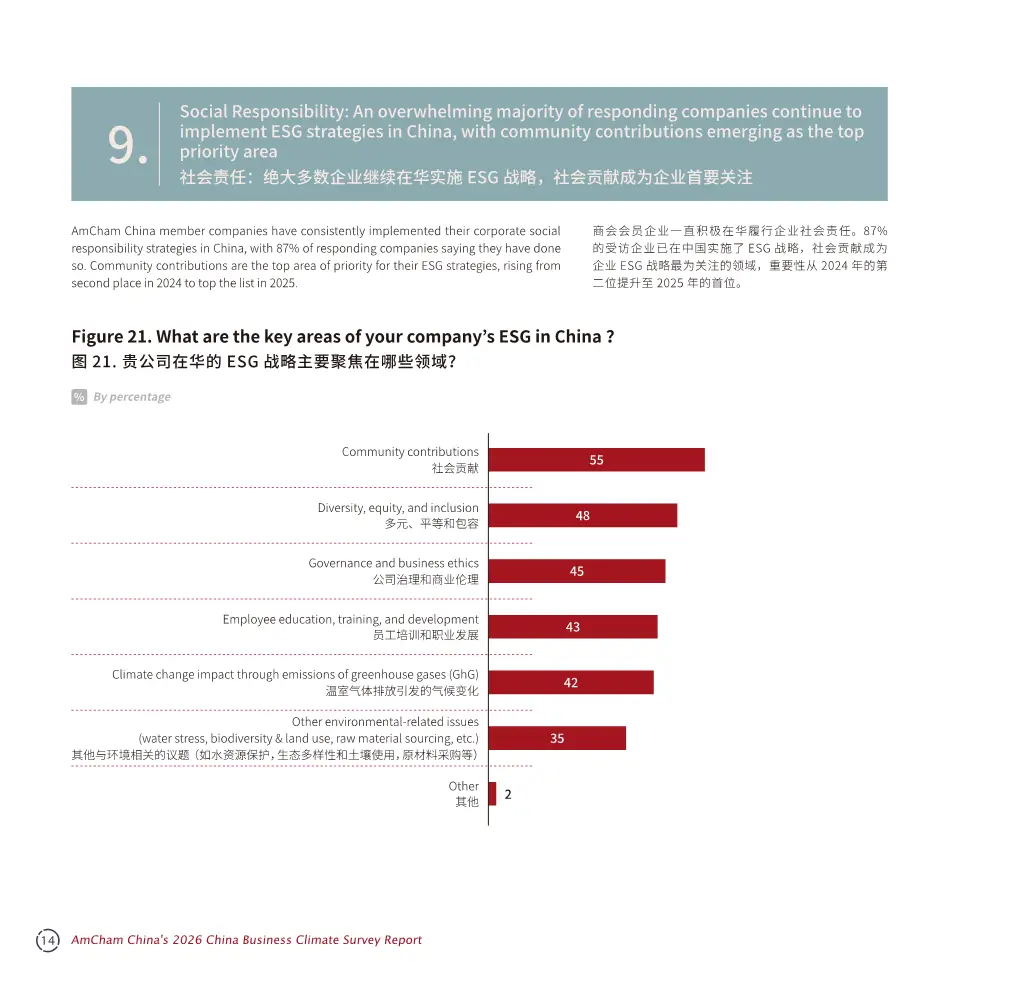
Social contribution jumps to the top: Social contribution has surpassed diversity and inclusion to become the primary area of ESG concern, with 55% of companies listing it as a priority.
There are three major barriers to implementation: insufficient customer or public awareness (38%), lack of industry standards (34%), and insufficient government support (26%) are the main challenges.
7. Intellectual property protection: awareness has improved but rights protection is still difficult
Risk perception is relatively optimistic: 73% of companies believe that intellectual property and data security risks in China are the same as or lower than those in other regions around the world, and the proportion who believe that risks are lower increased by 4 percentage points to 11%.
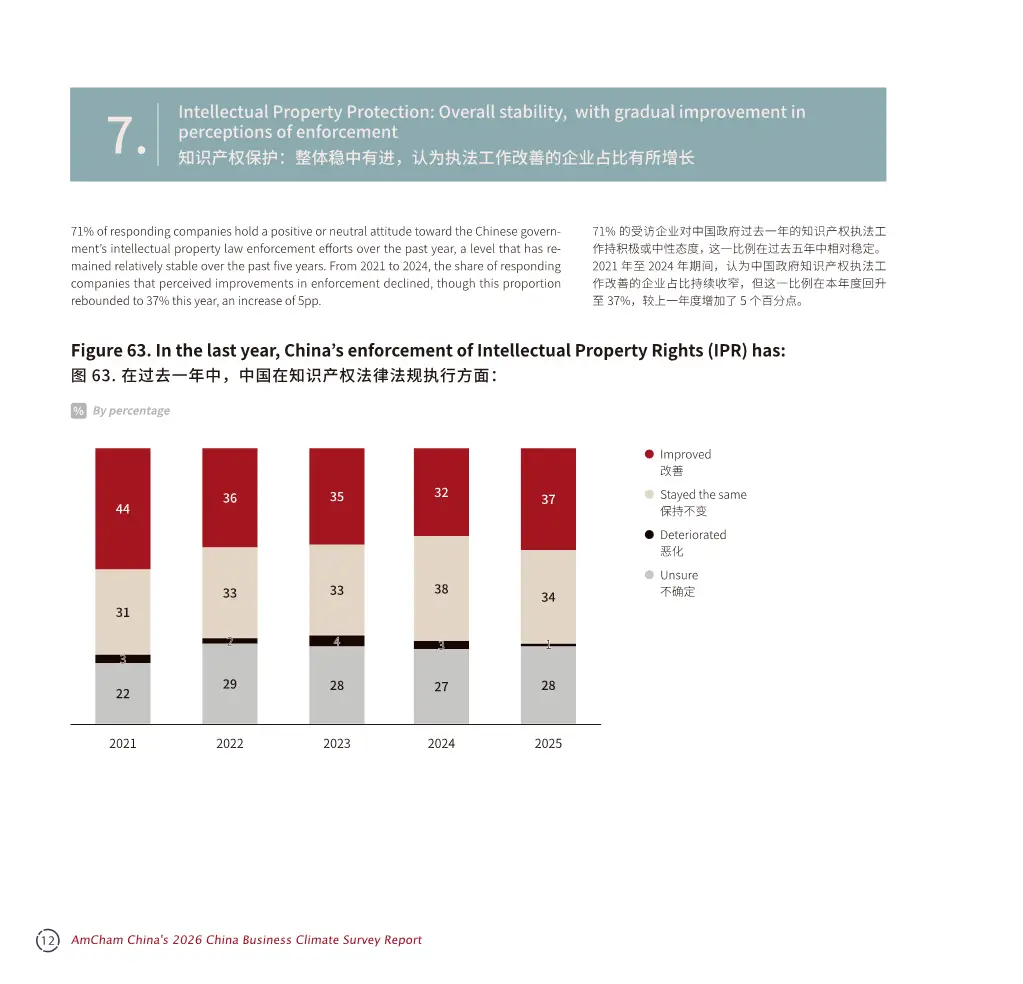
Improvements in law enforcement are recognized: 37% of companies said that China's intellectual property law enforcement has improved in the past year, a year-on-year increase of 5 percentage points.
The core challenges have not changed: 29% of companies believe that "difficulty in safeguarding rights through legal means" is the most significant challenge, and 25% believe that "laws and regulations provide insufficient protection", with the latter's proportion increasing by 6 percentage points.
Willingness to share technology has rebounded: 11% of companies are willing to share more technology patent knowledge with Chinese business partners, and the proportion of technology and R&D industries that are unwilling to share has dropped by 9 percentage points. 67% of companies make voluntary decisions to share technology mainly for business interests.
8. U.S.-China relations: Looking forward to stable and pragmatic dialogue
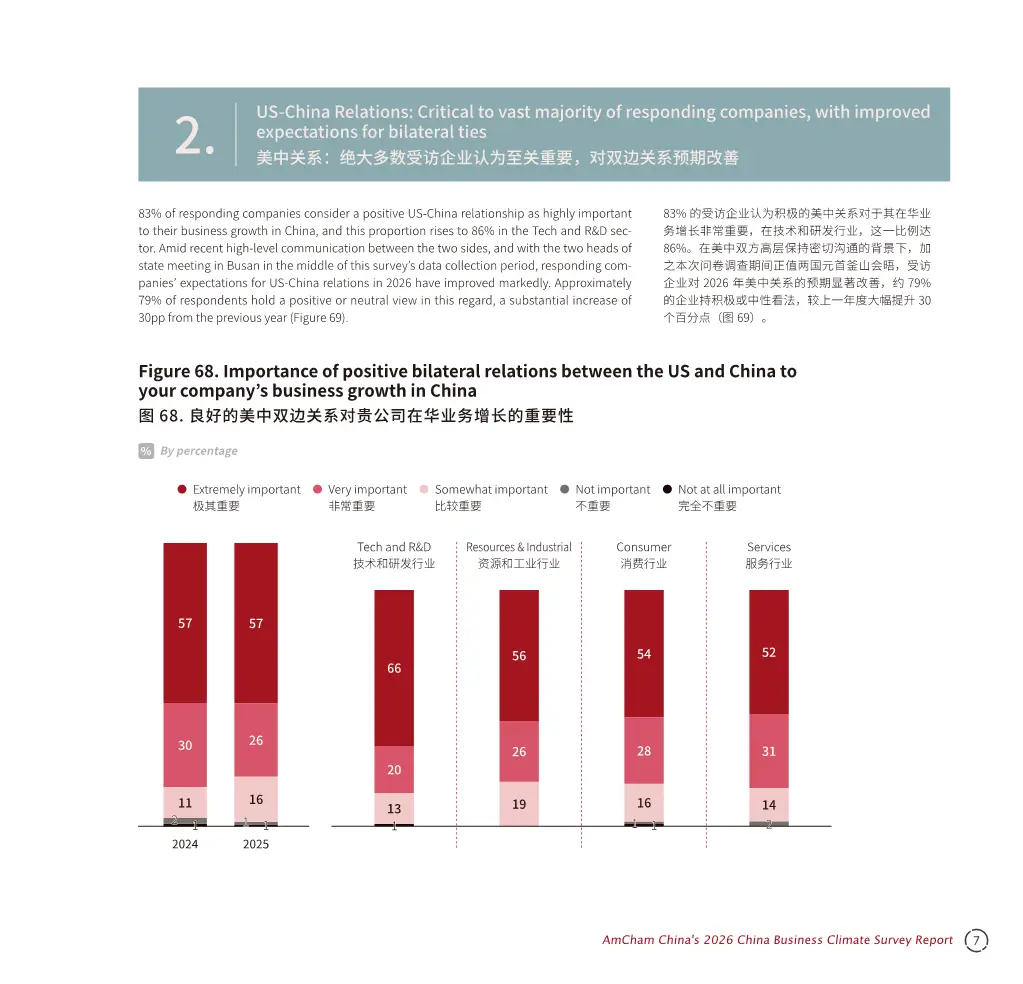
The importance of relationships remains unchanged: 83% of companies emphasize that positive U.S.-China relations are crucial to their business in China, with 86% of the technology and R&D industries paying attention.
Significant improvement is expected: 79% of companies hold a positive or neutral attitude toward U.S.-China relations in 2026, a year-on-year increase of 30 percentage points, the most significant improvement in recent years.
The top five expectations for trade negotiations: 59% of companies most hope to see further reductions in tariffs; 50% look forward to expanding foreign investment market access; 26% hope to strengthen intellectual property protection; 19% hope to narrow the scope of export controls; 17% are concerned about improving cross-border data transmission policies.
Expectations for the U.S. government: 37% of companies hope that the U.S. will avoid fierce rhetoric and actions; 36% hope to reduce tariffs on China; 33% hope to establish a normalized, result-oriented high-level communication mechanism.
Expectations for the Chinese government: 24% hope to ensure a level playing field; 21% hope to reduce tariffs on U.S. goods and expand tariff exemptions; 21% hope to strengthen exchanges with foreign business circles.
9. Core demands of policy recommendations
Enterprises expect policy formulation and implementation to be more fair and transparent, and regard "equal treatment for domestic and foreign-funded enterprises" (54%), "policy transparency" (43%) and "fair participation opportunities" (37%) as the keys to effective policy implementation. 70% of companies believe that improving the regulatory environment, strengthening intellectual property protection and reducing industry policy barriers will effectively boost investment willingness.
overall assessment
In 2025, US-funded companies in China have demonstrated strong resilience in adapting to uncertainties, with improved profit expectations and divergent investment intentions, but their strategic focus has not diminished. Enterprises are shifting from passive responses to proactive adjustments, building long-term competitiveness by deepening localization, optimizing supply chains, strengthening compliance and promoting ESG integration. While the economic slowdown emerged as the primary challenge, significant improvement in expectations for bilateral relations has instilled confidence in businesses. The key to the future lies in the predictability and fairness of the policy environment and whether a stable high-level dialogue mechanism can be established, which will directly affect whether companies can transform "resilience" into sustainable growth opportunities.
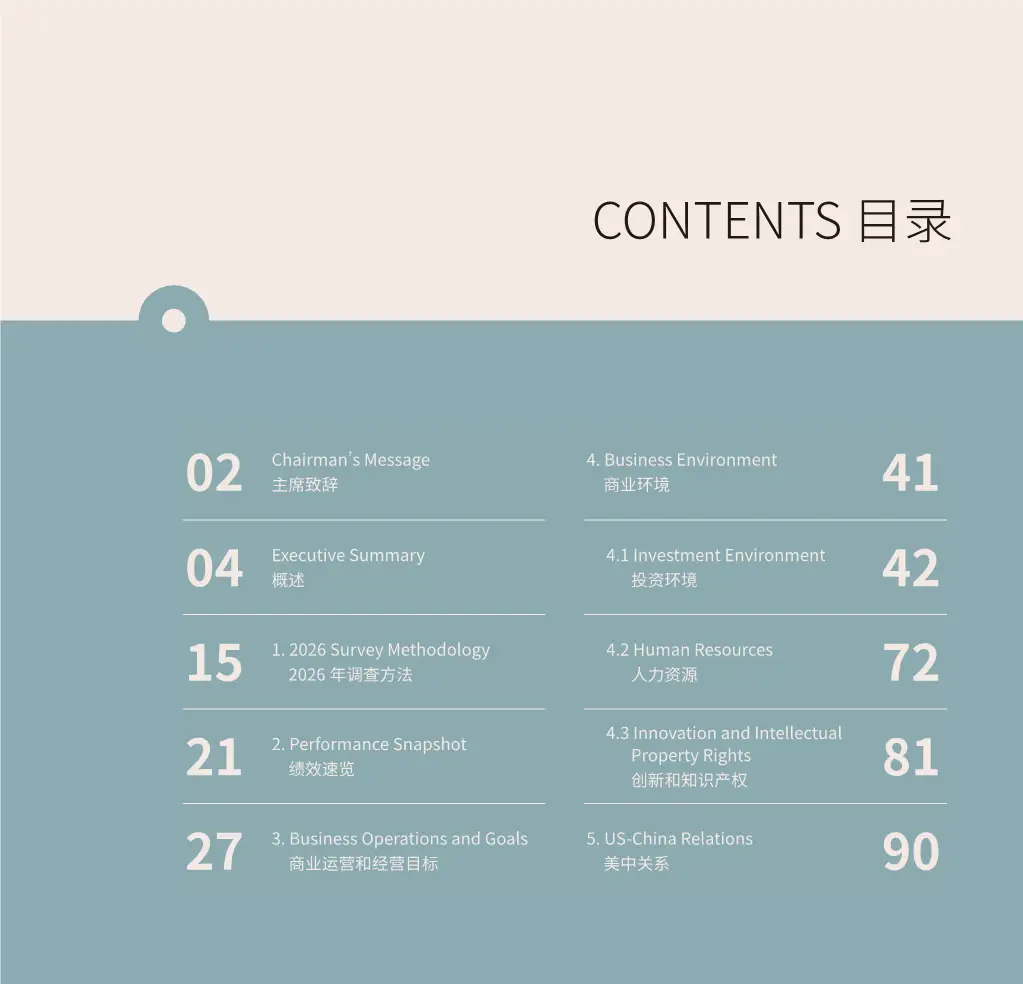
Partial content preview
How to obtain information efficiently