CCTV News (Focus Interview): When it comes to logistics, many people’s impression is transportation plus warehousing. In the just-released “15th Five-Year Plan” outline, logistics was mentioned as many as seven times, which shows that its importance is not ordinary. Behind this number reflects a profound strategic shift. Logistics is being upgraded from the network that supports the real economy to the "nerve center" that drives high-quality development.
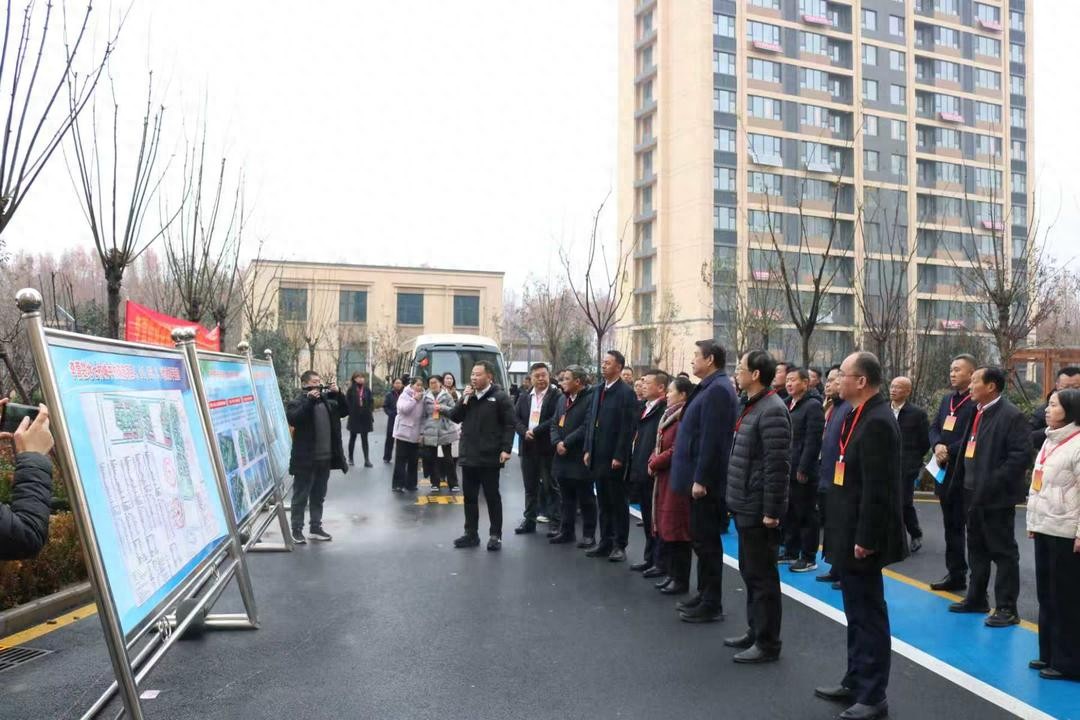
On December 24 last year, the first phase of the central operation area of Zhoukou Port Central Port Area officially opened for operation. It has 13 2,000-ton automated container berths with an annual throughput capacity of 1.075 million TEUs. With this core strength, Zhoukou Port ranks among the top ten inland river ports in the country.
Zhoukou Port is close to the Shaying River, which was once closed to navigation. After the resumption of navigation, the waterways in the province have been upgraded from Level 4 to Level 3. Large ships of 3,000 tons can reach the Yangtze River directly and then go out to sea through three outlets. Currently, a total of 43 domestic and foreign container routes have been opened, making Zhoukou Port the largest inland shipping port in Henan Province.
Xingang District is not only smart but also green. At present, photovoltaic power generation can solve part of the electricity consumption. In the future, wind energy generation will be added to solve all the electricity needs of the port area, making it the first zero-carbon terminal in Henan. Everyone is very motivated to work in this modern port area.
So, why does Zhoukou, which is deep in the hinterland, need to open up a channel to the sea?
Wei Surong, deputy director of the Development and Reform Commission of Zhoukou City, Henan Province: "Zhoukou is a large agricultural city with a relatively weak industrial base, especially heavy industry."
In order to achieve better development, Zhoukou Central Port has planned and constructed two operating areas in the east and west. In recent years, the western operating area has developed rapidly. The throughput will exceed 55 million tons in 2025, an increase of nearly 2 times in 5 years, accounting for about 80% of the province's total port cargo throughput. In order to achieve greater development, a new operating area was built in the east. In May last year, Zhoukou Port was included in the construction list of "port-type national logistics hub". So, what does it mean to upgrade from a port to a hub?
Wei Surong: "This upgrade has achieved three fundamental changes. First, it has transformed from a transportation node serving local areas to a network core that connects major channels across the country and integrates into a unified market; second, it has transformed from a simple loading and unloading terminal economy to a hub economy that gathers industries to create value; third, it has transformed from an inland hinterland to an open frontier with rivers and seas, opening up a new channel for the central and western regions to go to sea."
The national logistics hub is a key node in my country's logistics infrastructure network. It is an important logistics resource allocation center and logistics activity organization center. Its main tasks include: reducing the logistics cost of the whole society, improving the stability and competitiveness of the supply chain, promoting coordinated regional development and industrial agglomeration, and supporting the new "dual cycle" development pattern. There are six major types of national logistics hubs, and Zhoukou Port is a port-type national logistics hub. Therefore, it is not only an important terminal for handling cargo, but also plays an important role in promoting the opening up of inland areas and assisting the coordinated development of regional economies.
The latest "15th Five-Year Plan" outline points out that it is necessary to "improve an efficient and smooth modern circulation system, improve the national logistics hub network" and "reduce the logistics costs of the whole society." As a city carrying a port-type national logistics hub, Zhoukou is implementing this national strategy and actively integrating into the national logistics hub network. Since the cost of water transportation is 1/3 of railway and 1/5 of road, this advantage has attracted many leading companies to settle in.
Yihai Kerry (Zhoukou) Modern Food Industrial Park is a large enterprise developed close to the port area with an investment of more than 20 billion yuan.
In order to minimize logistics costs, the company obtained government permission to build an exclusive terminal next to Zhoukou Port.
Reporter: "After the cargo ship docks, the grain suction machine will suck raw materials such as soybeans and corn out of the ship, and then send them directly to the factory for processing through a nearly 2-kilometer-long closed pipeline. This can not only greatly improve logistics efficiency, but also reduce logistics costs and improve the competitiveness of enterprises."
The dividends of logistics have also attracted leading companies in different industries such as Wahaha, Luhua and Anyang Iron and Steel to settle in Zhoukou. Driven by them, Zhoukou has formed four leading industrial clusters: food processing, biomedicine, equipment manufacturing, and modern logistics. Zhoukou, which once had a weak industrial base, is growing by relying on the "gravitational field" of its logistics hub.
The story of Zhoukou tells us that when there is a type of national logistics hub, it will have a great impact on the regional economy. So, what happens if there are multiple types of national logistics hubs at the same time? Let’s turn our attention to Nanjing. Nanjing integrates five major types of land port, airport type, port type, production service type and business service type, and is called a "five-type hub" city.
There are only three generalists like this in the country, which has attracted many powerful companies like SAIC Maxus to settle in Nanjing.
SAIC Maxus' Nanjing plant is the first "lighthouse factory" of a Chinese automobile company. As soon as you step into the workshop, you can feel the tense and orderly production rhythm.
The so-called flexible production means that the same production line can be customized according to the different needs of customers.
Here, every production of a commercial vehicle requires at least 1,200 parts and components, with hundreds of suppliers, so both smart manufacturing and smart logistics are needed. This requires extremely high coordination between the two.
Outside the company, they give full play to the logistics advantages of Nanjing's "five-type hub" and use water, land, air and other channels to make goods "come in, go out and travel smoothly".
Within the company, logistics and manufacturing processes are deeply coupled. The production line is almost running out, and materials are delivered just in time. There is neither a backlog nor a shortage of goods. The two are "in lockstep."
This year's government work report lists logistics as a producer service industry for the first time. In layman's terms, it is an industry that "provides supporting facilities and services" for enterprises. This marks that logistics companies are transforming from traditional "porters" to "supply chain service providers" and are deeply embedded in the entire production and circulation process of enterprises, forming a new ecology of "you have me, and I have you".
At present, Nanjing is constantly leveraging its advantages as a "five-type hub" to develop various industrial clusters, promote regional economic transformation and upgrading, and contribute to the high-quality development of the Yangtze River Delta.
Jia Shangbin, deputy director of the Development and Reform Commission of Nanjing, Jiangsu Province: "Currently, our city is focusing on the development of advanced manufacturing clusters such as artificial intelligence, robotics, biomedicine, and new generation information and communications, and promotes the transformation and upgrading of our city's industrial chain from a channel economy that relies on transportation costs to a hub economy with high value-added services as its core."
As of 2025, 229 national logistics hubs have been deployed in 152 carrying cities across the country, covering the "four horizontal, five vertical, two along and ten corridors" logistics corridors, achieving basic coverage or effective radiation for cities with a GDP of more than 400 billion yuan. This means that all major economic growth poles in the country are included in this efficient logistics network. With the further advancement of the construction of a modern circulation system in the "15th Five-Year Plan", these hub nodes scattered across the land of China will also inject stronger impetus into the high-quality development of our country's economy.
From Zhoukou to Nanjing, from inland rivers to the Yangtze River, we see that our country’s economic bloodline is undergoing a systematic upgrade. This is not only a "good start" for the logistics industry, but also a concentrated display of the resilience, potential and direction of my country's economic development. The pulse of our country's economy is beating strongly in a more efficient, intelligent, and connected logistics network. It is foreseeable that a new logistics era characterized by "hub economy" and "channel economy" is coming, helping to accelerate the construction of a new development pattern and promote high-quality development.