On March 24, JD.com announced phased progress in some AI R&D applications, including model open source, digital human, embodied intelligence, and “lobster”.
In terms of large models, JD.com has open sourced the Instruct version of the basic large model JoyAI-LLM Flash for the first time, and said that the model is suitable for code development, agent construction, terminal applications and other fields, especially for the recently popular "lobster".
JD Cloud said that in response to the "lobster" intelligent agent that developers are concerned about and the high token cost behind it, it has launched multiple product forms such as one-click deployment of lightweight cloud hosts, all-in-one machines, and cloud SaaS versions through the open source OpenClaw architecture based on the JoyAI large model. According to statistics, after the launch of JD Cloud's "Lobster" series of products, the number of token calls increased by as much as 455% month-on-month in the past week.
In addition to "lobster" related products, JD.com has once again updated its digital human technology. JD Digital JoyStreamer uses dual-teacher DMD post-training technology, dynamic CFG modulation strategy, and historical frame + pseudo-last frame structure to solve technical problems such as industry audio and video out-of-synchronization, multi-modal control incoordination, and long video identity distortion. At the same time, a new function of "free digital human" was launched, targeting industries such as home appliances and fashion apparel.
JD.com has made multiple layouts for digital people in the past year. In December last year, JD.com announced that digital human live streaming is free and open to all merchants. According to China Business News, cost reduction and efficiency improvement are important reasons for merchants to choose digital live broadcasts. The current cost is as low as 1/10 of live broadcasts. In 2025, digital live broadcasts will drive a cumulative GMV of tens of billions of yuan.
In an interview with China Business News, the person in charge of JD.com’s digital people and AIGC products revealed that so far, more than 70,000 merchants have used JD.com’s digital people. In addition to the basic requirements of cost reduction and efficiency improvement, merchants' requirements for digital people are gradually increasing, getting closer and closer to real live anchors, such as increasing the sense of interaction and improving the audience stickiness in the live broadcast room. The improvement of this type of experience not only requires technical support, but also relies on database updates. For example, merchants need to upload more after-sales knowledge, enrich Q&A details, and improve the quality of interaction.
In addition, some digital human anchors in live broadcast rooms still have problems such as dull voices and unoptimized clothing details. The person in charge explained that existing technology can solve the above problems. Some of the flaws that viewers see in the live broadcast rooms are not backward in technology, but in application, that is, the digital human anchors used by merchants have not been updated. Therefore, one of the directions of the industry's efforts is the self-iteration of technology, which is similar to the current "shrimp farming" concept.
From the perspective of industry hot spots, digital human IP has attracted attention. The person in charge said that the most critical issue in creating digital human IP is not technology, but whether it is worth building this IP. On the basis of technical clearance, building IP requires investment in other aspects, such as streaming, design, etc.
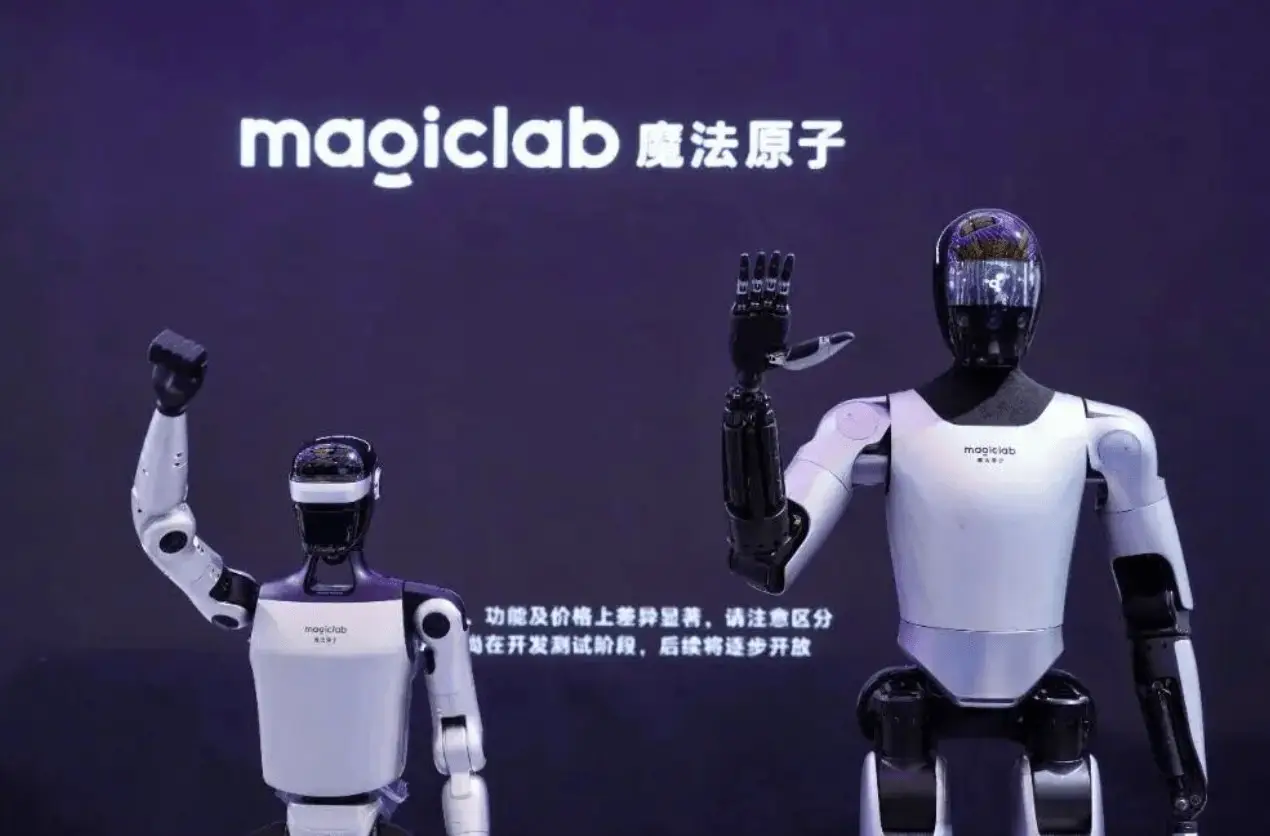
In addition to the above-mentioned progress, JD.com announced data collection goals in the field of embodied intelligence. In the field of embodied intelligence, JD.com launched JoyInside embodied intelligence. Up to now, JoyInside has in-depth cooperation with nearly 100 home appliance brands and more than 40 robot and AI toy brands.
The lack of real scene data is a major pain point in the field of embodied intelligence. During the data collection process, JD.com plans to leverage its advantages in rich scenarios such as retail, logistics, industry, takeout, and housekeeping to build the world's largest embodied intelligent data collection center with the most complete scenarios. According to the plan, JD.com will mobilize more than 100,000 internal employees of various professions and up to 500,000 external personnel from various industries. Among them, more than 100,000 citizens will be mobilized in Suqian to carry out "the largest data collection operation in mankind."
In the next year, JD.com plans to accumulate 5 million hours of real-life human scene video data, which will exceed 10 million hours in two years, and simultaneously collect 1 million hours of robot body data.