In early March, consumer Wang Lan took a fancy to a pony necklace at a Chow Tai Fook store: the plain gold model was priced by the gram, about 27,000 yuan; the diamond-encrusted model was slightly heavier, with a fixed price of about 34,000 yuan.
She originally tended to buy the inlaid model. "The premium is not high. The cost of a few thousand yuan is just for the craftsmanship." Wang Lan was ready to wait and see, but did not place an order immediately.
In just a few weeks, gold prices turned around. Last weekend, the price of Chow Tai Fook pure gold jewelry dropped from 1,652 yuan/gram at the beginning of the month to 1,397 yuan/gram, and the price of the plain gold pony necklace subsequently dropped to about 23,000 yuan. "The gap suddenly widened." Wang Lan said that the counter sister told her that the new labels had arrived in the store, and the new price of the diamond-encrusted model was about 6,000 yuan. Wang Lan hesitated, "If the price of gold continues to fall, I will buy the plain gold one."
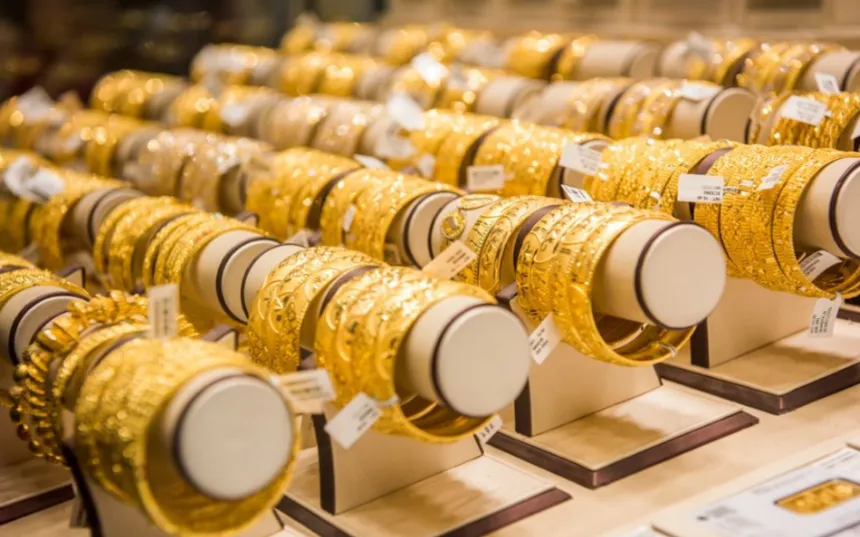
Before the Spring Festival, there were rumors in the market that Chow Tai Fook would raise the price of fixed-price products in mid-March, with the increase possibly reaching 10%-30%. Among them, the "Five Emperors Money Pure Gold Bracelet" was once rumored to rise to 71,800 yuan. Around March 15, the Beijing News Shell Finance reporter learned from the store that the new label had arrived in the store. The price of the product was 59,800 yuan, an actual increase of about 11%, which was lower than previous expectations. Despite this, the current price has increased by nearly 50% compared to about 38,600 yuan at the beginning of 2025.
However, the price adjustment that was originally "on the horizon" has yet to come to fruition. Since March, international gold prices have experienced continuous corrections, driving domestic gold jewelry prices to fall simultaneously. Consumer Mr. Li said that he had lost 8,000 yuan on a gold bracelet he bought at a gold store during the Spring Festival.
On March 23, Chow Tai Fook’s official website showed that the price of pure gold jewelry that day was 1,375 yuan/gram, down 331 yuan/gram from the high of 1,706 yuan/gram at the end of January.
The price of gold has fluctuated downwards, which has also caused uncertainty in the price increase expectations of "fixed price" products. Many consumers asked on social platforms: Will the "fixed price" gold jewelry continue to rise?
Many brands follow suit, Chow Tai Fook's "one-price" price increase is delayed
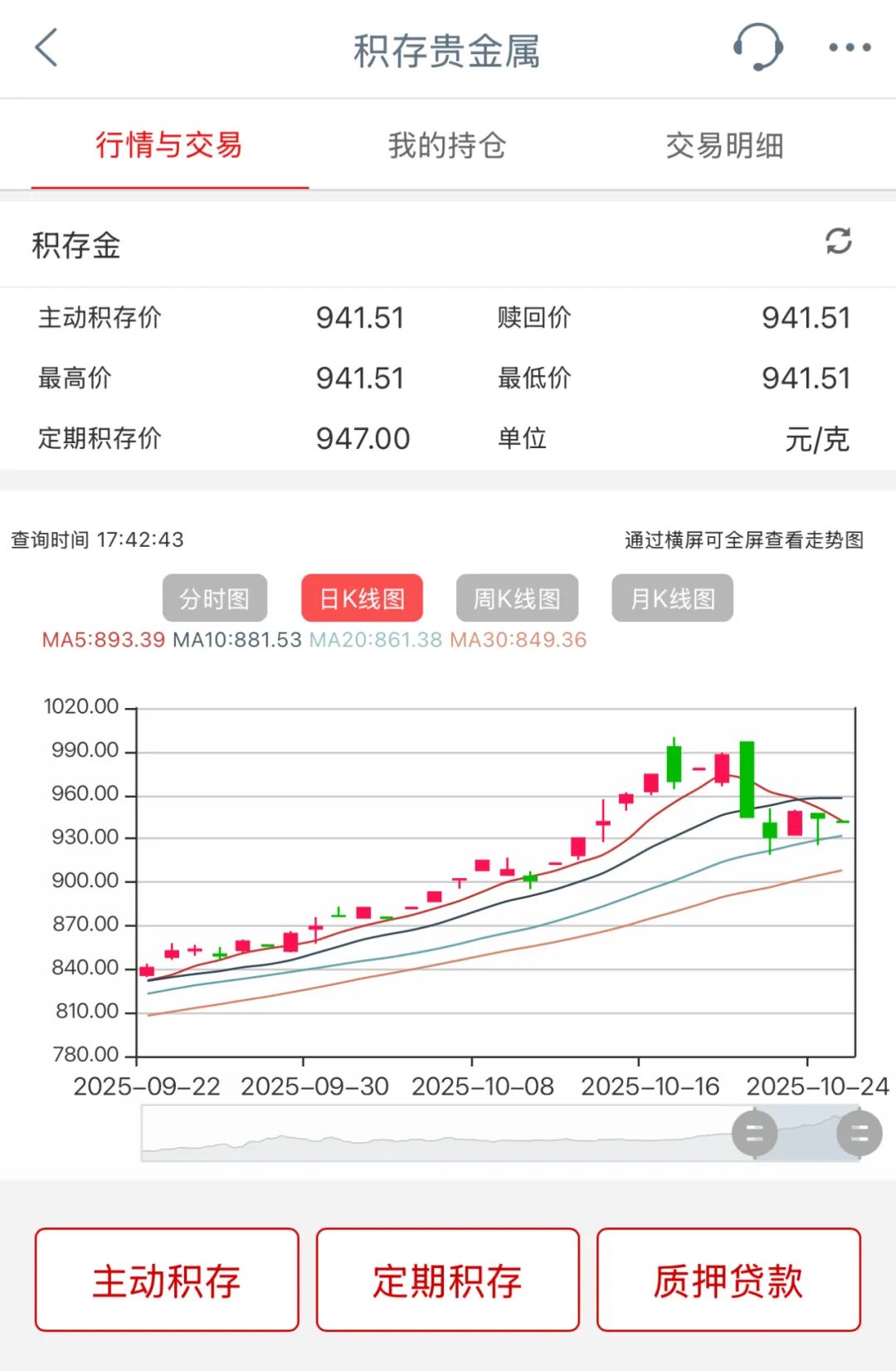
Since last week, international gold prices have continued to correct, continuing their decline on March 23, and the gains during the year have basically been given back. On the same day, many gold brands simultaneously lowered their retail prices. Chow Tai Fook reported 1,375 yuan/gram, Saturday Fortune reported 1,370 yuan/gram, Lukfook Jewelry reported 1,373 yuan/gram, and China Gold reported 969 yuan/gram, a single-day decrease of nearly 5%. Compared with the high point at the end of January, the prices of mainstream brands have dropped by about 277 yuan/gram to 331 yuan/gram, a decrease of about 20%.
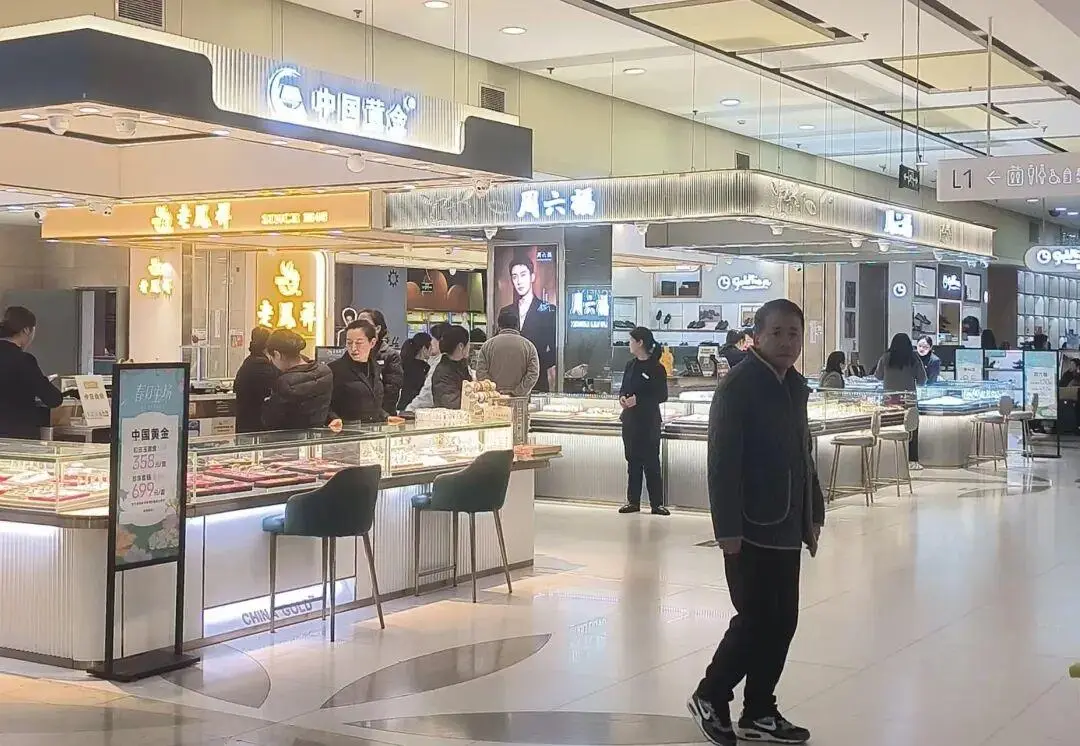
Recently, Shell Finance reporters visited Beijing Chow Tai Fook stores many times and learned that new labels have been arriving in stores one after another, but the specific price adjustment time has not yet been made clear. A salesperson said, "We need to wait for a unified notification from the company."
On March 23, Chow Tai Fook’s official customer service responded to reporters saying that product prices will be affected by raw materials, operating costs, market environment and other factors. Based on the fluctuation of international gold prices, the company has decided to postpone this pricing adjustment.
Entering 2026, as gold prices fluctuate at high levels, many brands have taken the lead in raising the prices of fixed-price products. Among them, Chow Sang Sang and Chao Acer have successively raised the prices of their "fixed price" products, with the increase generally ranging from 10% to 20%, and some single products have increased in price by tens of thousands of yuan. Ancient gold brands Baolan and Linchao completed price increases at the end of January and early February respectively; Laopu Gold launched the first round of price increases in 2026 on February 28, with the increase ranging from 20% to 30%.
Chow Tai Fook also adjusted the price of gold products three times in 2025. In response to this, Chow Tai Fook previously stated that the pricing of gold products is mainly based on a comprehensive set of raw material costs, production losses and operating costs, and a monitoring mechanism is in place to adjust retail prices in a timely manner according to changes in gold prices.
The industry believes that the price increase of gold jewelry is not only driven by cost, but also closely related to brand strategy. In recent years, as competition in the industry has intensified, brands such as Chow Sang Sang and Chao Acer have continued to increase their “fixed price” products, and cutting-edge brands such as Junpei and Baolan have also generally adopted pricing models. Chow Tai Fook is also accelerating its transformation, including continuing to close inefficient franchise stores and increasing the proportion of fixed-price jewelry. It is trying to shift gold from "selling by the gram" to "selling by the piece" and further move closer to the logic of luxury goods.
"The pricing logic of the industry is being reshaped, and 'fixed price' has become an important source of profit for some brands." Zhou Ting, president of the Yaoke Research Institute, said that if the brand has not established a "moat" independent of the gold price, there is a risk in over-betting on "fixed price": once the gold price falls, sales and profits may suffer.
She pointed out that the gold and jewelry industry is transforming towards the mainstream of "fixed price", through which it can get rid of the constraints of gold prices and build premium capabilities. However, most brands of "fixed-price" products still rely on gold price fluctuations, and high profits are mainly supported by rising gold prices and demand for value preservation. Once gold prices fall and the premium model comes under pressure, "industry differentiation will intensify. Leading brands can use fixed prices to stabilize profits, while small and medium-sized brands may be eliminated."
Supporting high gross profit, fixed-price jewelry sales account for more than 30%
In recent years, "fixed price" products have become an important profit support for Chow Tai Fook.
The financial report shows that in the first half of fiscal year 2026 (April to September 2025), sales of fixed-price products, including the Forbidden City series, Chuanfu and Chuanxi series, etc., reached HK$3.4 billion, and the proportion of mainland fixed-price jewelry retail sales increased from 27.4% in the same period last year to 31.8%. Chow Tai Fook said that with the dual support of an increase in the proportion of fixed-price jewelry and rising gold prices, the group's gross profit margin remained above 30%.
Chow Tai Fook achieved revenue of HK$38.99 billion in the first half of fiscal year 2026, a year-on-year decrease of approximately 1.1%; net profit attributable to the parent company was HK$2.53 billion, a year-on-year increase of 0.16%. In terms of sales performance, same-store sales of directly-operated retail outlets in the mainland increased by 2.6%, same-store sales of franchised retail outlets increased by 4.8%; same-store sales in Hong Kong and Macau increased by 4.4%.
Chow Tai Fook has mentioned many times that in the first half of fiscal year 2026, high-margin priced jewelry sales will be strong. The financial report shows that during the period, the group's fixed gold jewelry turnover reached HK$11.4 billion, a year-on-year increase of 9.3%; among which, the average selling price of fixed gold jewelry in the mainland market rose to HK$6,300, a year-on-year increase of 18.9%.
In recent years, Chow Tai Fook's performance has continued to be under pressure. In fiscal year 2025, the company achieved a turnover of HK$89.656 billion, a year-on-year decrease of 17.5%. Although operating profit increased by 9.8% year-on-year to HK$14.746 billion, net profit attributable to parent companies still fell by 9.0% year-on-year to HK$5.916 billion. Affected by the overall pressure on the gold and jewelry retail environment, the turnover in the mainland market, which accounts for more than 80% of the group's turnover, fell by 16.9% year-on-year, and same-store sales fell by 19.4%; same-store sales in the Hong Kong and Macau markets also fell by 26.1%.
The large number of franchise stores has dragged down Chow Tai Fook's performance to a certain extent. Data shows that the number of Chow Tai Fook stores will increase from more than 4,400 in 2021 to more than 7,400 in 2024. As the proportion of franchised stores increases, Chow Tai Fook's overall profitability is affected, and the company's gross profit margin drops from 28.6% in fiscal year 2021 to 20.5% in fiscal year 2024.
In the past two years, Chow Tai Fook has endured the pain of "broken arms" and optimized and adjusted its store network. As of the end of September 2025, the company had closed more than 600 stores in half a year, a decrease of approximately 1,500 stores from the end of March 2024.
Store structure adjustment and cost control are gradually showing results. In the first half of fiscal year 2026, Chow Tai Fook's gross profit margin remained above 30%, which is at a historically high level. The company said that through store optimization and strict cost management, the group's operating profit margin increased by 30 basis points year-on-year to 17.5%, a new high in the past five years.
Industry differentiation intensifies, Chow Tai Fook bets on high-end
As competition in the gold and jewelry industry continues to intensify, for Chow Tai Fook, simply accelerating the promotion of the "fixed price" product strategy is far from enough.
In the past two years, international gold prices have continued to rise, and differentiation within the industry has become increasingly obvious. On the one hand, some companies have made huge profits during the rising gold price cycle; on the other hand, some brands are under pressure from high costs and demand fluctuations.
At the same time, domestic high-end gold brands have quietly emerged, such as Laopu Gold, Linchao Jewelry, Junpei, and Baolan. These names have gradually become a national phenomenon. Taking Laopu Gold as an example, the company's latest profit forecast shows that sales are expected to exceed 30 billion yuan in 2025, with net profit approaching 5 billion yuan. Both revenue and net profit have more than tripled, making it one of the fastest-growing brands in the industry.
Under the impact of emerging high-end brands, Chow Tai Fook, as a leader in the traditional industry, has also begun to re-examine its positioning and accelerate strategic transformation.
In the past year or so, Chow Tai Fook has closed inefficient stores, deployed experiential stores, increased the design premium and process added value of gold products, and expanded the proportion of priced products with higher gross profit margins; at the brand level, it has gradually moved closer to the logic of luxury goods to strengthen its brand image and premium capabilities.
In March this year, Chow Tai Fook Jewelry Group announced the appointment of David Tse as global creative director. Xie Dinghong once served as the creative director of Hermès Shanghai and was the brand's first creative director based outside the Paris headquarters. Chow Tai Fook stated that this appointment is one of the important measures to promote brand upgrade and international layout. It can be seen that Chow Tai Fook hopes to use its experience in the luxury goods industry to strengthen its brand design capabilities and promote high-end transformation.
In fact, Chow Tai Fook's high-end attempts have already begun. In June 2025, the company launched its first high-end jewelry series "Harmony Oriental", which is regarded as an important step for the brand to move into the luxury jewelry field. In the same year, Chow Tai Fook invested tens of millions of dollars to build a brand flagship store in Hong Kong, and launched newly designed stores in high-quality business districts in many core cities in the mainland to display an image closer to a luxury brand. The company said that the sales performance of new-image stores is generally better than that of traditional stores.
From the perspective of industry development trends, high-endization has become an important direction for gold and jewelry companies. As consumption upgrades and cultural confidence increases, gold products with unique design and craftsmanship are favored by more young consumers. The industry predicts that by 2030, China's high-end gold jewelry market is expected to exceed 300 billion yuan, with profit margins and demand stability significantly higher than those of traditional products sold by weight.
Zhou Ting believes that Chow Tai Fook’s high-end strategy in recent years is in the right direction, and it is also one of the brands with the greatest potential to grow into a Chinese luxury brand in China. At the same time, she also pointed out that if we want to truly move towards a luxury brand, Chow Tai Fook must firmly promote the "fixed price" model and shift the core of pricing from "gold weight" to "brand value, design value and cultural value" so that consumers pay for the brand. This is the only way to transform from a "precious metal processor" to a luxury brand.
However, she also emphasized that Chow Tai Fook's current high-end strategy relies more on "high-end elements to drive premiums and sales" and has not yet formed a real luxury barrier. "To achieve luxury, we need to create scarcity through limited editions, exclusive designs and high-end services, maintain long-term price stability, reduce discounts, and at the same time focus on core high-end customer groups, build our own unique Chinese luxury brand culture, and establish differentiated competitive advantages with international luxury brands."
Beijing News Shell Finance reporter Qu Xiaoyi
Editor Wang Jinyu
Proofreader Liu Baoqing