·Israel dominates decision-making on war against Iran
CARLSON: Joe, thank you so much for joining us. I want to go through the letter you sent when you resigned as director of the National Counterterrorism Center, go over the main points, and give you a chance to explain them. In the past 24 hours, everyone has said a lot on your behalf. I think it would be very helpful to all of us if you could lend your own voice and flesh out some of the details of these perspectives.
I read the first point now: "I cannot in good conscience support the ongoing war with Iran. Iran poses no imminent threat to our country." How did you come to this conclusion?
Kent: I think that’s key. If the secretary of state, the president, and the speaker of the House don't come out and say, we're launching this attack at this time because that's what the Israelis are going to do, it's going to be a lot more challenging to explain. This eliminates the argument that there is an imminent threat, that Iran is planning to attack us immediately – that simply does not exist.
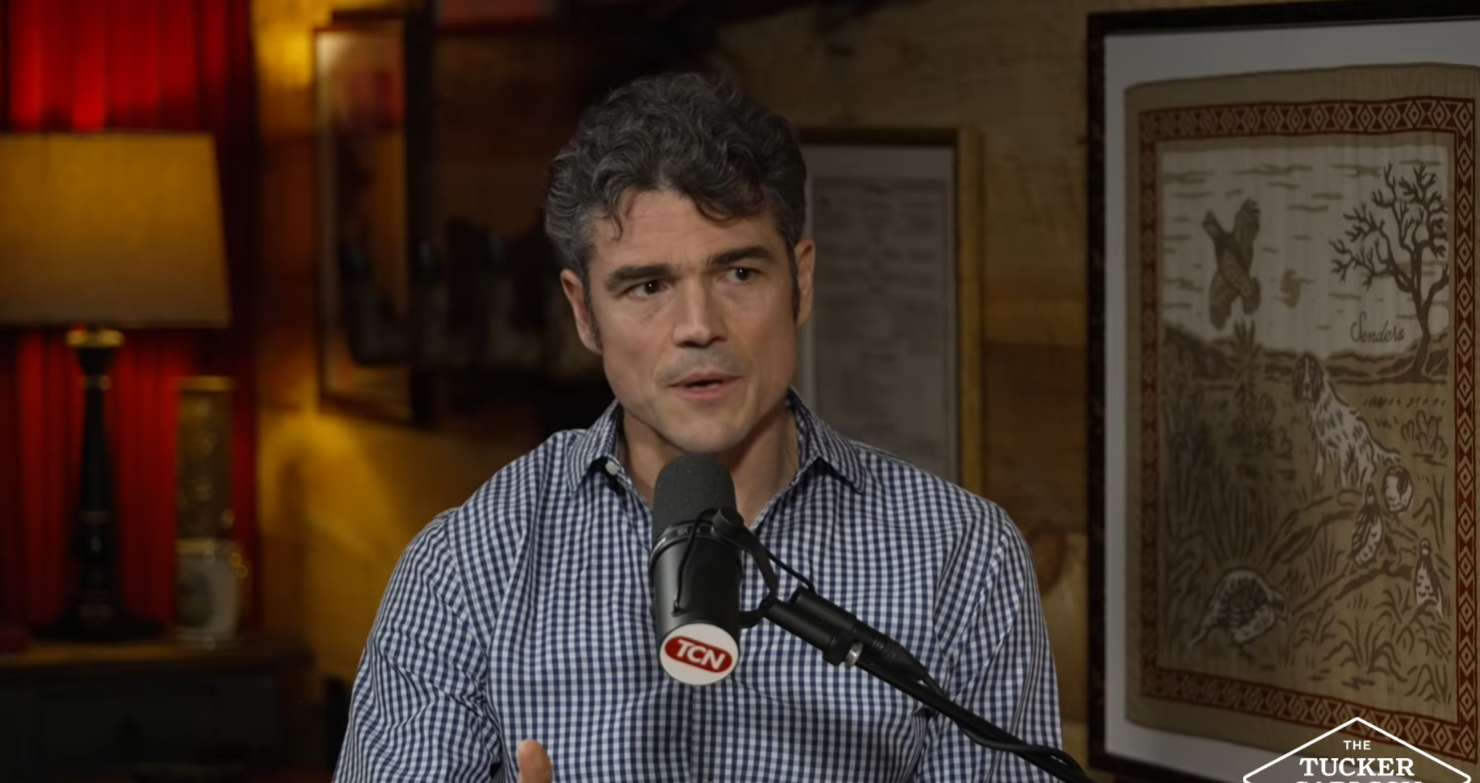
Screenshot of video of Joe Kent, former director of the US National Counterterrorism Center
CARLSON: Can I interrupt? I hear people say this too, but history has a way of being rewritten in real time. When you look back in 10, 15 or 20 years, no one seems to understand the things you saw because they were erased.
So I think it's important to pause and point out: this is what we actually know. I want to play a statement that you mentioned that Secretary Marco Rubio said shortly after the war started, and he was explaining the reasons in a thoughtful, precise way, which was his wont.
(Play Rubio clip)
Rubio: The president made a very wise decision. We know Israel is going to take action. We know this will provoke attacks against U.S. forces. We know that if we don't preemptively strike them before they launch these attacks, we're going to suffer higher casualties and possibly even more lives lost. At that time we will all be here to answer the question: Why do we know that but…
Carlson: That was his explanation at the time, it wasn't just a casual comment. Rubio reasoned and explained the logical chain. He said we knew – note, he didn't say Iran was going to attack. He didn't say that, right? He said we knew Israel was going to attack Iran. Iran may attack U.S. forces in retaliation for those previous Israeli attacks on Iran. So the "imminent threat" the secretary of state describes is not from Iran, it's from Israel.
Kent: Exactly. This points to a broader question: Who controls our Middle East policy? Who is deciding whether we go to war? As the subsequent statements of the Secretary of State, the President, and the Speaker of the House of Representatives and the actual evolution of the incident showed, it was Israel that led the decision to take this action, and we knew that this would trigger a series of events that would mean that the Iranians would retaliate.
I think there were a couple of things we could have done differently at that time, we could have just said to the Israelis, "No, you can't do this. If you did, we would take back some of the things we gave you." There was no problem providing defense support to Israel. But while we provide them with the means of defense, we should have the right to dictate the conditions under which they may attack. Otherwise, they risk losing the relationship.
And the Israelis feel that no matter what they do, no matter what situation they put us in, they can continue to take this action and we can only react passively. This illustrates the nature of the relationship. But it also shows that there is indeed a lobby pushing the United States toward war. Given what we know about the Iranians and how they react, particularly to President Trump's leadership style, we should have had a lot of wiggle room.
Under President Trump, especially in his second term, the Iranians have demonstrated a calculated escalation ladder strategy. For example, during the 12 days of war preparation leading up to Operation Midnight Hammer, the Iranians were not attacking us, they were negotiating with us. When President Trump returned to office, they stopped the proxy activities that were attacking us during the Biden administration because they knew Biden was weak; So they know President Trump is a willing negotiator.
But more importantly, they know President Trump is not someone to be trifled with, having ordered the killings of Qasem Soleimani and Abu Mahdi al-Muhandis. They know that President Trump is an activist and he is tough on military issues.
So, they said before we take action, we have to make sure it's well thought out. So I think in this case, even if the Israelis tell us they're going to strike at a certain point on a certain day, and we don't try to negotiate with the Israelis and say, "We're going to take something back from you," I think we still have a back channel to tell the Iranians: "If something happens here in the next few days, it's not our doing. We're still serious about negotiating and we don't want to escalate the situation."
Because the Iranians' plans are known. We know they will attack our bases in the Middle East and possibly our allies. We know what's going on in the Strait of Hormuz.
Carlson: But the core issue, as I understand it, is the imminent threat. Now, the president has said many times to many people, including the public: Iran cannot have a nuclear weapon. Is that fair to say?
Kent: That's fair.
Carlson: They can't have nuclear weapons. Whenever asked, we start here – they can't have a nuclear bomb. OK, got it. Everyone agrees on this. Conceptually, is Iran on the verge of acquiring a nuclear weapon?
Kent: No, they didn't. They didn't have one when this conflict began three weeks ago, nor last June. The Iranians have had a religious ruling (fatwa) since 2004 against the actual development of nuclear weapons. That ruling has been in effect since 2004 and is available in the public domain.
Furthermore, we have no intelligence that this fatwa has been violated or is about to be lifted. Iran's strategy is actually very pragmatic. The Iranians are clearly aware of what is happening in the region. Their strategy is not to give up the nuclear program completely because they saw what happened to Gaddafi in Libya – when he said "I don't have nuclear weapons anymore, I will do what you say, I will give up my nuclear weapons"…
CARLSON: And then we gave them the promise of peace?
Kent: Yes, we overthrew his regime and he was executed in the most horrific way by his own people.
CARLSON: That's the lesson the entire region learned from this.
Kent: Unfortunately, that's the lesson that the neoconservatives, the neoliberal war hawks are showing everyone in the Middle East. And conversely, the Iranians also know that if they come out and say, "Okay, we have the bomb," whether they're bluffing or they really mean it, look next door at Saddam Hussein in Iraq.
CARLSON: He was hanged?
Kent: Saddam was hanged by his own people after a bloody war that was essentially continuing inside Iraq.
So from a regional perspective, Iran's position is actually quite pragmatic. They're preventing themselves from building bombs, but they still want the ability. They want the ability to enrich uranium, they want to have some components so they're not completely deprived of that ability. We've always assessed that they were months, maybe a year or two away from actually being able to build a nuclear weapon.
This is not because Iranians are stupid. The Iranians are by no means stupid, they have the capability and conditions to actually build a nuclear bomb, or they could have traded large amounts of oil with Pakistan or others to obtain a nuclear weapon. But they're not doing that, and we have no indication, no intelligence that they're doing that.