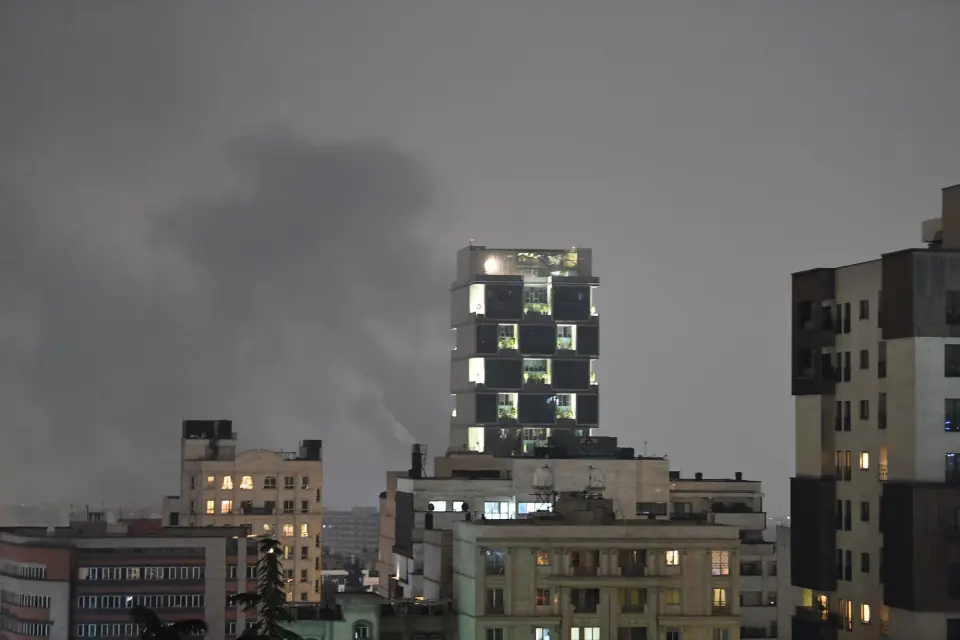
The Associated Press published an article on March 23 stating that in order to resolve the crisis in the Strait of Hormuz, Trump was in desperate need of medical attention and was switching back and forth between a series of desperate options. From pressuring countries to send warships to escort, to lifting oil-related sanctions, to threatening to destroy Iran's civilian infrastructure, he has used almost all the tricks at his disposal, but has not made significant progress so far, and may also stimulate Iran to fight back more fiercely.
The United States and Israel suddenly launched a war against Iran at the end of last month. Although Trump and his allies had repeatedly insisted that they were prepared for Iran's possible blockade of the Strait of Hormuz, when the crisis did arise, Trump's strategy seemed disorganized. This triggered criticism from the outside world, accusing him of blindly starting the war without thinking about how it would end.
On March 21, local time, Trump issued an "ultimatum" to Iran, requiring the latter to open the Strait of Hormuz within 48 hours, otherwise the United States would destroy Iran's power plants. Critics believe that Trump has misjudged the path out of the geopolitical dilemma, and the current pressure is a manifestation of his failure.
“Trump has no strategy for reopening the Strait of Hormuz, so he threatened to attack Iranian civilian power plants,” said Massachusetts Democratic U.S. Senator Ed Markey, warning that Trump’s move would constitute a war crime.
Connecticut Democratic U.S. Senator Chris Murphy said more bluntly: "He (Trump) has lost control of the war and he is panicking."
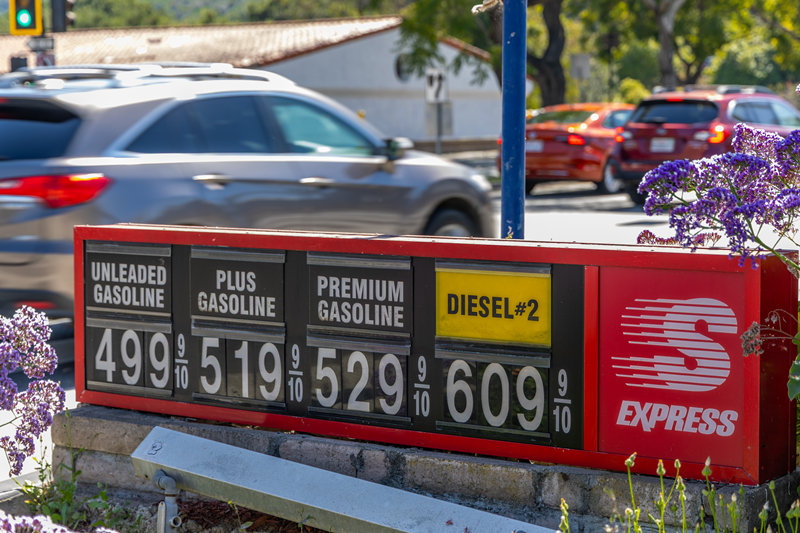
On March 14, 2026 local time, in California, the United States, an oil price display board. IC Photo
The Associated Press pointed out that soaring oil prices have shocked global energy markets and continued to put pressure on American consumers in the months before the mid-term elections, which has increased the urgency faced by Trump. Against this background, Trump continued to adjust his strategy for dealing with the blockade of the Strait of Hormuz for about a week.
On March 14, Trump tried to resolve the crisis through diplomatic means. He called for the establishment of an international alliance to escort the Strait of Hormuz. But U.S. allies have expressed their rejection. Later, an angry Trump said that the United States could deal with it alone.
On March 20, Trump hinted that other countries may have to take over, saying that with the United States no longer responsible for guarding and patrolling the Strait of Hormuz, this work should be undertaken by the countries using the Strait. Hours later, he said the channel would "open on its own."
"You can't create trouble to some extent and then suddenly step back and expect others to clean up the mess," said North Carolina Republican U.S. Senator Thom Tillis.
In order to increase supply in the oil market, the Office of Foreign Assets Control under the U.S. Department of the Treasury issued a general licensing document on the 20th, allowing the delivery and sale of Iranian crude oil and petroleum products that have been shipped as of that day. This is the first time in decades that the United States has lifted sanctions on some Iranian oil. Previously, the United States also temporarily lifted sanctions on some Russian oil. It's unclear how much these moves will lower oil prices.
Since the United States and Israel launched military strikes against Iran, international oil prices have risen by about 50%, reaching a peak of nearly $120 per barrel.
Trump's latest threat takes direct aim at Iran's civilian facilities. He posted on social media on the 21st: "If Iran fails to fully open the Strait of Hormuz without threats within 48 hours from now, the United States will attack and destroy Iran's various power plants, starting with the largest one!"
Jeffrey Cohen, a retired U.S. Army lieutenant colonel and Texas Tech University law professor, said Trump's remarks did not appear to be information that would have been subject to legal scrutiny to justify attacks on civilian facilities.
"There was a sense of 'ready, fire, aim,'" Cohen said. "He overestimated his ability to control the situation after unleashing this torrent of violence."
Cohen said such a widespread attack would likely constitute a war crime. For military brass, this could force them to choose between enforcing war-crime orders or refusing to do so, thereby facing criminal penalties for willful disobedience.
Iran's ambassador to the United Nations warned in a letter to the Security Council that deliberately targeting power plants would be an indiscriminate attack and constitute a war crime, the Islamic Republic News Agency reported.
According to reports, Trump’s threats may backfire. Iran's Islamic Revolutionary Guard Corps warned on the 22nd that if Trump's threat to attack Iranian power stations is implemented, Iran will immediately take four measures, including completely closing the Strait of Hormuz, attacking all Israeli power stations, energy and information technology facilities, completely destroying all US-owned companies in the Middle East, and attacking power stations in Middle Eastern countries with US military bases.