At the 2026 Yabuli Forum "Investment Opportunities and Warnings under the Technological Innovation Boom" sub-forum held on the afternoon of March 18, Ding Jian, managing partner of Jinshajiang Venture Capital, shared his cutting-edge observations on artificial intelligence development trends, investment logic and risks, which attracted on-site attention.
Ding Jian believes that taking ChatGPT 3.5 in 2022 as the dividing line, the development of artificial intelligence has entered a new stage. The previous AI and the subsequent AI are two completely different things. The generalization ability, development speed and impact of this round of AI on the economy and society far exceed all previous high-tech waves. Its importance is "no less than the invention of electricity". It can no longer be described as "revolution", but should be called "subversion".
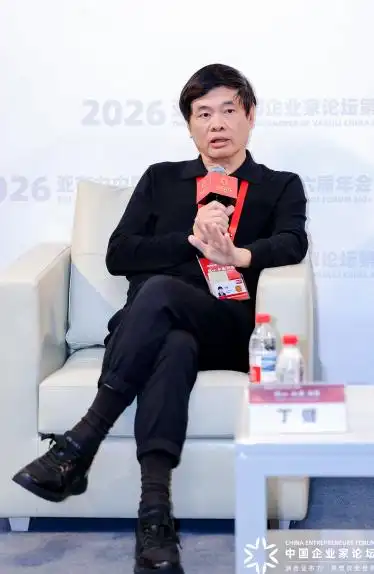
Ding Jian said that AI is evolving from a tool to infrastructure, and its influence will penetrate into all industries. "AI is probably the last outlet for mankind. If there is an industrial revolution in the future, it may already be a matter of silicon-based organisms."
Ding Jian said that no matter in the fields of biology, medicine or energy, "AI for Science" is now being talked about, and the basic enabling role of AI in all industries cannot be ignored. 6G, nuclear fusion, etc. are lower-level supporting technologies. One solves communication problems, and the other solves the energy bottleneck caused by computing power.
Regarding OpenClaw, which has attracted much attention recently, Ding Jian said that although "Lobster" is important, there is "nothing to pay attention to" technically. It just makes AI programming more automated and simply combines two technologies. What is really worthy of attention is actually the AI programming itself. "Probably by the end of this year, almost all human engineers and original programming engineers will be eliminated."
However, in Ding Jian's view, current AI also has fundamental flaws, that is, it lacks perception and understanding of the physical world, and in many aspects of intelligence is not even as good as a cat. In this regard, he believes that the "world model" will be the core direction of investment in the next five years.
According to Ding Jian, he has recently participated in Li Feifei's world model project and AMI Labs co-founded by Yang Likun, and the latter's seed round financing reached 1.03 billion euros. He judged that large language models cannot lead to AGI and must rely on a new generation of paradigm breakthroughs, and conquering the world model is the prerequisite for large-scale application of robots. Whoever can make a breakthrough in the world model will not only achieve a Turing Award-level achievement, but will also completely rewrite the industrial landscape.
On the other hand, Ding Jian also mentioned that the role of capital is undergoing fundamental changes. He quoted former Google CEO Schmidt’s view that the strong capital market in the United States constitutes an important moat for its AI competition. Currently, the “AIROP” fund model has emerged in Silicon Valley—capital no longer only invests in technology companies, but directly acquires traditional industries, reconstructs them with AI, and then integrates and expands them. Capital has become the glue of the AI industry, and the value chain distribution rules are being reconstructed.
Ding Jian said that the traditional investment method of finding a track in the past has faced challenges. A large number of AI application companies lack moats, and value is rapidly concentrated in the heads of large models. He suggested that what really deserves attention are new models that can open up the closed loop between data and industry. In the future, AI will be deeply integrated with real industries, and capital and technology will evolve together in an unprecedented way. Chinese investors and entrepreneurs need to simultaneously "upgrade" their cognition and actions to truly seize this historical opportunity.