* U.S. stocks fell across the board, with the Dow falling more than 400 points;
* The sell-off in U.S. Treasuries continues, with the 10-year U.S. Treasury yield approaching 4.40%;
*The S&P 500 energy sector index closed higher for the 13th consecutive week, the longest streak in history.
U.S. stocks fell across the board on Friday, with heavyweights such as Nvidia and Microsoft dragging down the market. As the U.S.-Israeli war against Iran enters its fourth week, market concerns about the risks of rising inflation and interest rate hikes have further intensified. The Nasdaq and the Dow both fell into correction territory during the session, and their declines narrowed before the close.
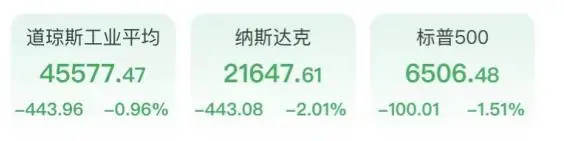
As of the close, the Dow Jones Industrial Average fell 443.96 points, or 0.96%, to 45577.47 points, the Nasdaq fell 2.01% to 21647.61 points, and the S&P 500 Index fell 1.51% to 6506.48 points. The S&P 500 has fallen for four consecutive weeks, its longest weekly losing streak since March 2025. The Dow Jones Industrial Average has fallen for four consecutive weeks, setting a record for its longest weekly losing streak since February 2023.
Friday coincides with the quarterly "Triple Witching Day", when stocks, stock index options and futures derivatives contracts expire simultaneously, amplifying trading volume and exacerbating market volatility. All three major U.S. stock indexes fell below their 200-day moving averages, highlighting the continued deterioration of market sentiment on Wall Street. The Russell 2000 index of small-cap stocks fell 1.6%, retracing more than 10% from its all-time closing high set on January 22.
[Performance of popular stocks]
Star technology stocks performed poorly, with Apple falling 0.39%, Microsoft falling 1.84%, and Meta, Google, Nvidia and Tesla falling more than 2%.
Amazon fell 1.62%. According to reports, the technology giant launched its first smartphone, aiming to compete with Apple and Samsung.
Energy stocks performed strongly, with the S&P 500 energy sector index closing up for the 13th consecutive week, setting a record for the longest time in history. This was mainly affected by geopolitical events in Venezuela and the Middle East that dominated the market in the first quarter.
The Nasdaq China Golden Dragon Index fell 2.92%, Baidu fell 3.99%, and Alibaba, NetEase, and JD.com fell more than 2%.
【Market Overview】
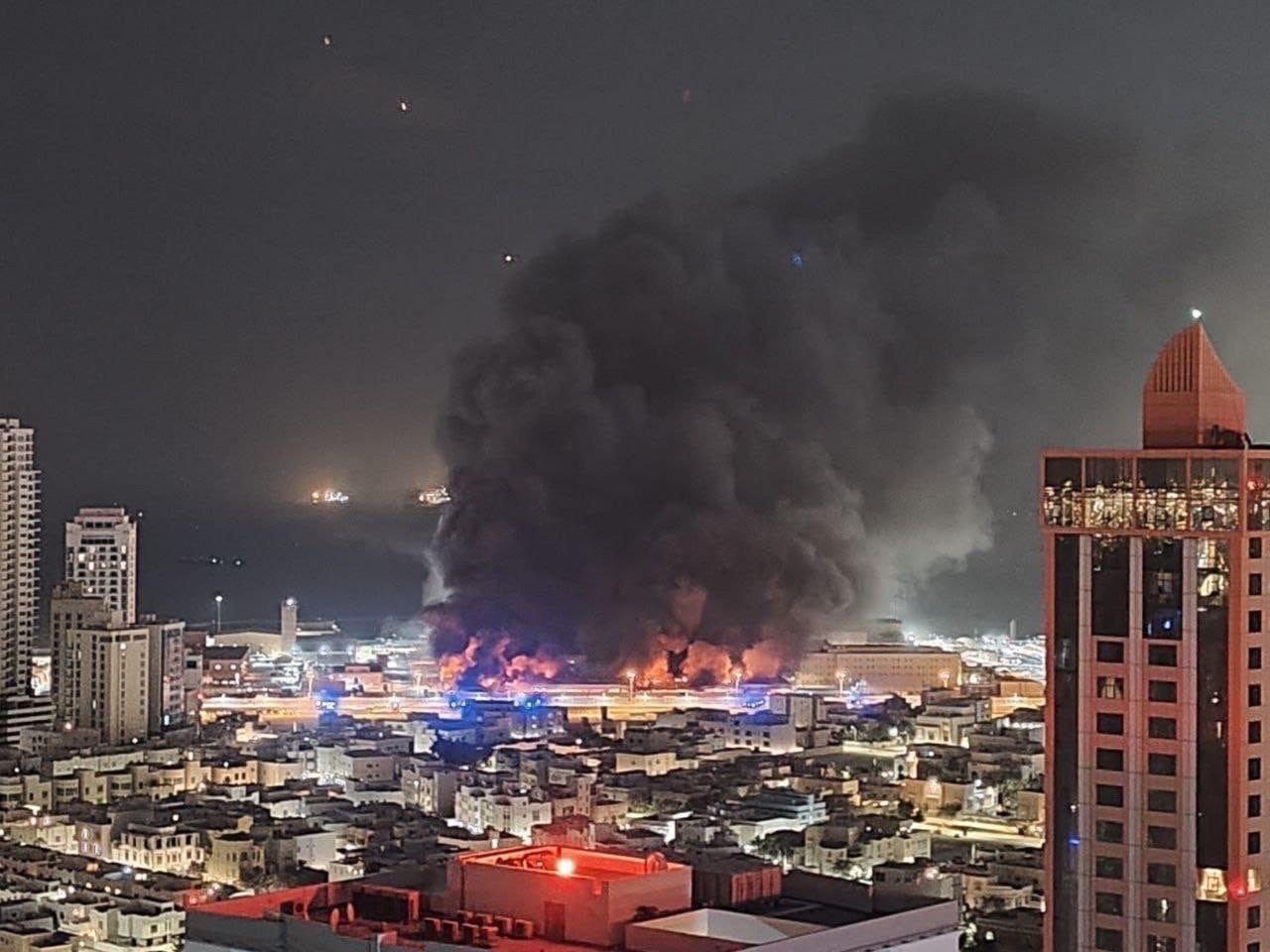
The conflict in the Middle East shows no signs of easing. According to CCTV News, U.S. Department of Defense officials have formulated detailed preparation plans for the deployment of U.S. ground troops to Iran. However, the situation changed after the market closed. According to Xinhua News Agency, U.S. President Trump posted on social media on the 20th that "we are very close to achieving our goal" and that the United States is considering gradually downgrading military operations against Iran.
Jack Dolarhyde, chief executive of Longbow Asset Management, said: "The market finally recognized that this conflict may last much longer than originally expected, which is why the stock market sold off. The war may not only last a few weeks, but even last for months."
Fed officials also acknowledged that the conflict complicates policymaking. Federal Reserve Governor Christopher Waller said he was originally prepared to vote for an interest rate cut at the Fed meeting due to an unexpected decline in employment data, but the escalating oil shock pushed up the risk of inflation, causing him to change his stance. Although U.S. policymakers still expect to cut interest rates by at least 25 basis points this year, the market is less confident about this.
U.S. bond yields rose further. The 2-year U.S. bond, which is closely related to interest rate expectations, rose 9.7 basis points to 3.893%, and the benchmark 10-year U.S. bond rose 13.5 basis points to 4.390%. The conflict in the Middle East has supported high oil prices and further intensified the market's concerns about inflation. The Chicago Mercantile Exchange's Fed Watch tool shows that U.S. interest rate futures pricing shows that by the end of 2026, the probability of the Fed raising interest rates is higher than the probability of cutting interest rates.
Patrick Garvey, head of global interest rate and debt strategy at ING, said: "The current environment is a typical upward interest rate environment, and the core driving force is oil prices pushing up inflation expectations. And the war has entered its fourth week, which means that this kind of market pressure is difficult to dissipate in the short term."
Robert Pavlik, senior portfolio manager at Dakota Wealth Management, said: "Many people believe that rising inflationary pressure will force the Federal Reserve to raise interest rates, but I think this is unlikely because this round of inflation is not a demand-side problem. It is a supply problem… Only by reopening the Strait of Hormuz and restoring the flow of crude oil can the upward pressure on oil prices be alleviated."
As the first quarter draws to a close, investors are assessing the impact of higher oil prices on corporate earnings. "The longer this continues, the more companies will begin to disclose cost pressures in their financial reports, and this pressure may be transmitted to the entire industry chain," said Joe Saluzzi, co-head of equity trading at Themes Trading Company.
In terms of other stocks, FedEx, which is regarded as an economic barometer, issued an optimistic performance outlook, saying that despite geopolitical tensions, global demand remained solid, pushing its stock price up 0.77%.
【Bulk Performance】
Crude oil continued its gains. The price of light crude oil futures for April delivery on the New York Mercantile Exchange rose by US$2.18 to close at US$98.32 per barrel, an increase of 2.27%; the price of London Brent crude oil futures for May delivery rose by US$3.54 to close at US$112.19 per barrel, an increase of 3.26%.
Expectations of interest rate hikes continue to weigh on the precious metals market. COMEX gold futures for May delivery on the New York Mercantile Exchange fell below $4,500 in late trading, down 2.5%. They fell nearly 11% this week and entered a technical bear market. COMEX silver futures fell 4.7% and were trading around $67.80.