Foreword: The current bidding agency industry stands at the crossroads of opportunities and challenges: behind the scale of more than 50,000 institutions and one million practitioners across the country is the rapid growth of the number of institutions at an average annual rate of 12.66%, and the complex pattern of fluctuations in the total government procurement market and the continued increase in the proportion of decentralized procurement. On the one hand, the market competition is intensifying, with low prices and uneven services becoming the norm in the industry; on the other hand, the new market space brought about by decentralized procurement is waiting for capable institutions to explore. For the owners of bidding agencies, the industry has never been about "can you do it", but "how to do it well" – the answer is only to break away from traditional business thinking and use information technology to reduce costs, improve efficiency and improve quality. Only then can you gain a firm foothold in the industry reshuffle and seize market dividends.
Digital reading industry: four major industry pain points behind rapid growth

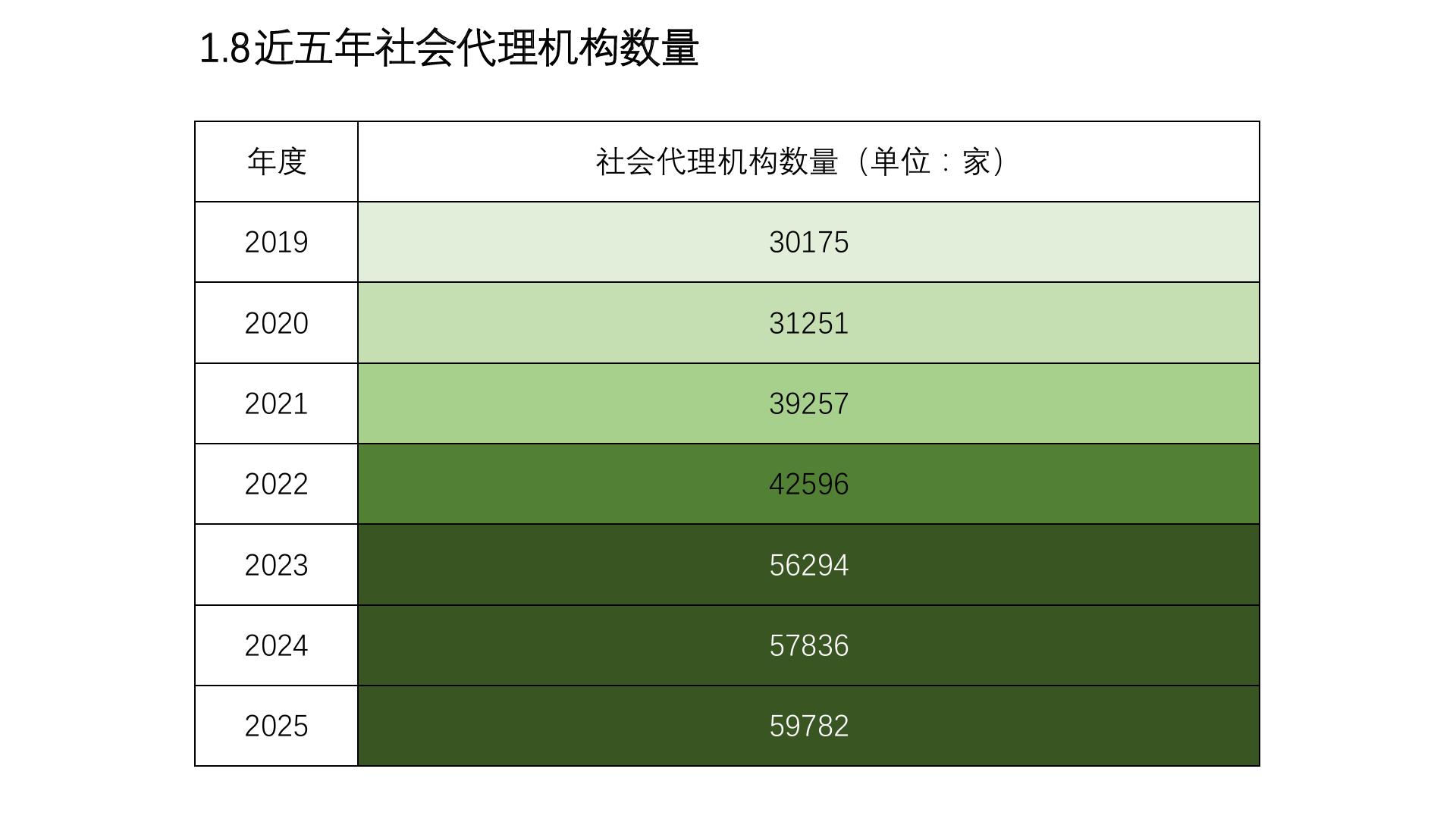
A set of core data illustrates the current development status of the bidding agency industry: from 2019 to 2025, the number of social bidding agencies increased from 30,175 to 59,782, with an average annual growth rate of 12.66%, and there were two rounds of surges in 2020-2021 and 2022-2023;
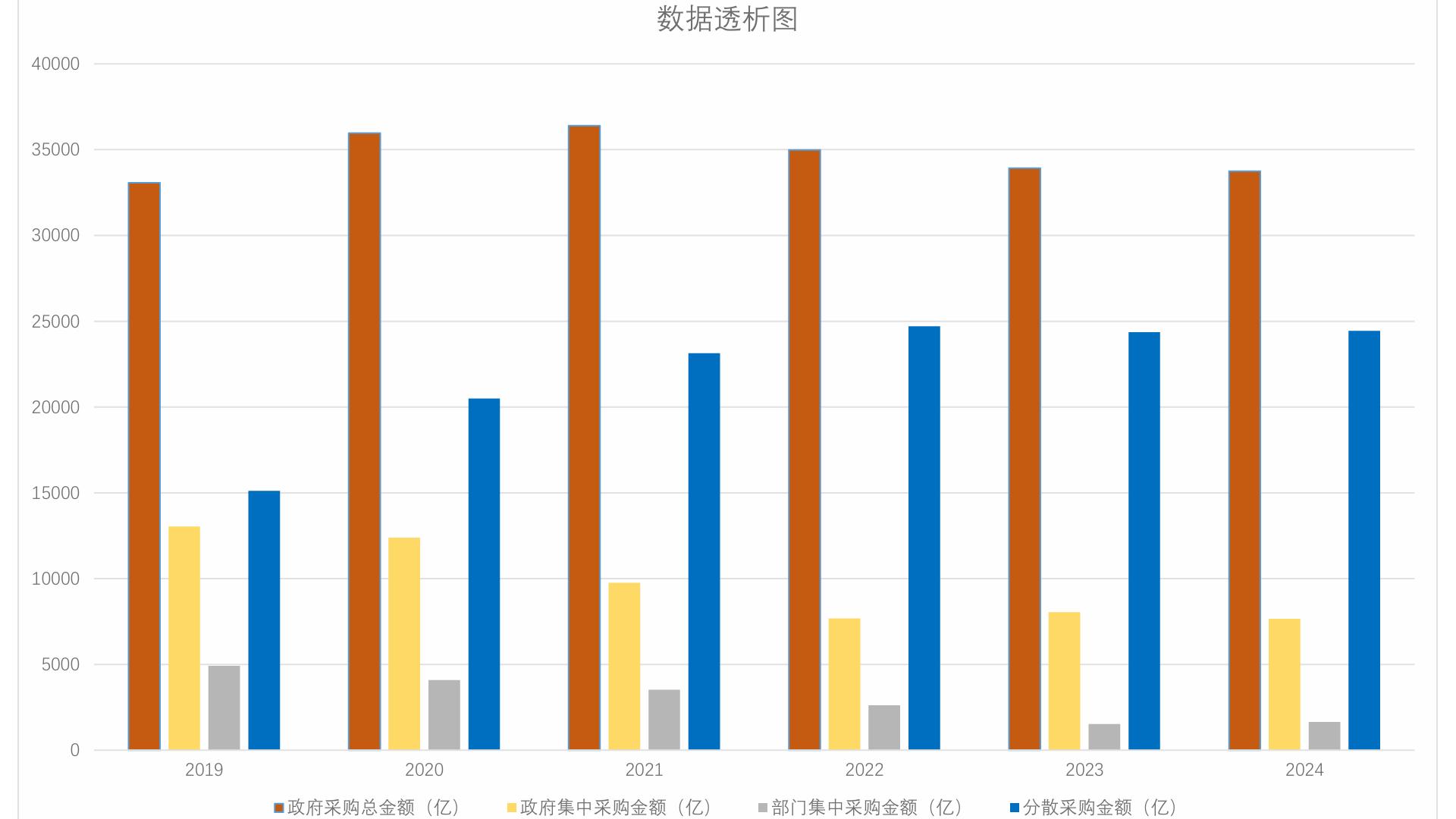
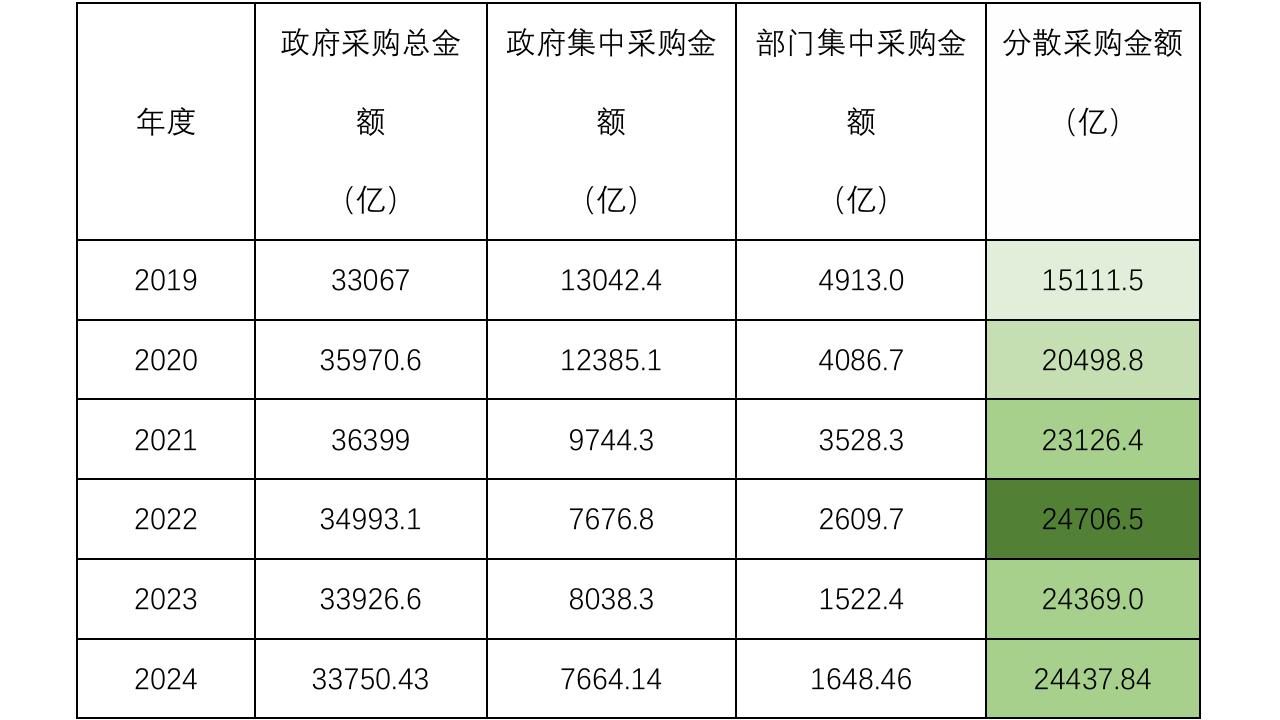
In the government procurement market, after the total budget amount grew positively from 2019 to 2021, it entered a period of volatility from 2022 to 2024. Only the amount of dispersed procurement has been rising, rising from 45.7% in 2019 to 72.41% in 2024, with an average annual growth of 5.34%.
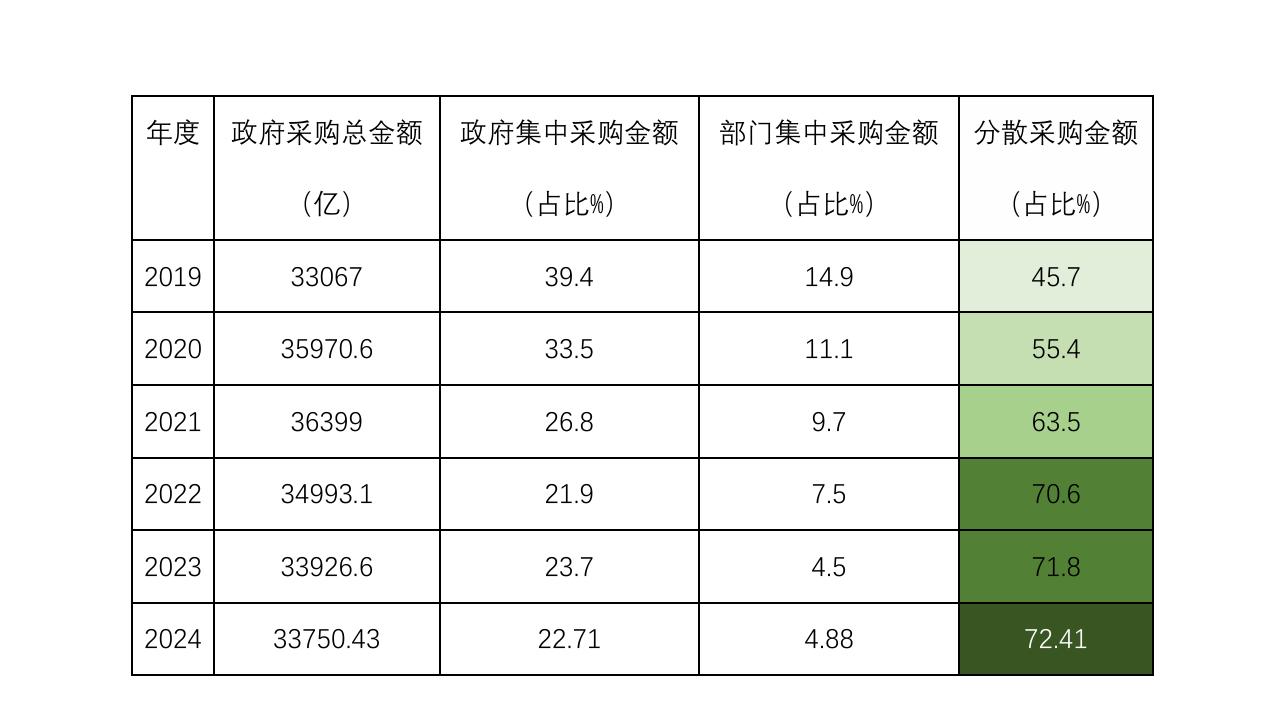
The rapid growth in the number of institutions and the in-depth adjustment of the market structure have jointly given rise to the four core pain points of the industry, which have become the constraints of institutions.
Key bottlenecks in development:
1. Market competition is fierce and service quality varies.
The surge in the number of institutions has directly led to low-price competition and vicious bidding. Some institutions have simplified service processes in order to reduce costs, which has seriously affected the professionalism of bidding. In addition, the industry talent training cycle is long and difficult. Most small and medium-sized institutions lack a systematic employee training system and employees have insufficient business capabilities. This further leads to low compliance of procurement documents and slow project advancement efficiency, forming a vicious cycle of "cheating orders at low prices → shrinking services → damaged reputation".
2. Supervision is becoming more difficult and project operation risks are increasing.
Agencies are everywhere and the proportion of decentralized procurement continues to increase, which greatly expands regulatory coverage. Administrative departments are faced with the problem of insufficient human and technical resources. Under the decentralized procurement model, purchasers have greater autonomy. If an organization lacks a strict internal control management system, it is easy to breed irregularities such as bid rigging and false bidding. Not only will it face administrative penalties, but it will also directly destroy the foundation of the organization's development.
3. "Emphasis on market and neglect of internal strength", the professional level of the industry is diluted
In the face of fierce competition, many institutions have focused their core energy on "grabbing projects and expanding markets" and have neglected internal capacity building and professional level improvement, resulting in the industry's overall professional development being slow; the general decline in service quality has also impacted the social credibility of the bidding agency industry, and frequent negative news has further aggravated the vicious cycle of industry development.
4. The market structure is unbalanced and the problem of resource misallocation is prominent.
Uneven regional development has become a prominent feature of the industry. Shandong, Sichuan, Hubei and other provinces have an excess number of agencies. More than 50% of agencies have less than 50 projects per year, falling into the dilemma of "not having enough to eat". Tibet, Xinjiang, Gansu and other regions are facing the problem of insufficient service supply. The total number of agencies in the three provinces is less than half that of Sichuan, forming an obvious misallocation of resources. At the same time, small institutions have weak ability to resist risks and are prone to collapse under policy and market fluctuations, which affects the continuity of agency services and makes the market order more chaotic.
Summarizing the current status of the bidding agency industry in eight words could not be more apt: there are more monks than porridge, and there are more wolves than meat. But this does not mean that the industry has no room for development. On the contrary, the continued growth of decentralized procurement has provided new market opportunities for capable and standardized institutions; and those institutions that can escape from involution and deepen their internal strength will eventually become the winners after the industry reshuffle.
Cognitive misunderstanding: Cost reduction is not simply “saving money”, hidden costs are the profit killer
Faced with industry competition pressure and profitability difficulties, many bidding agency owners have focused on cost reduction and efficiency improvement on basic costs such as compressing space and streamlining personnel, but they have fallen into the dilemma of "saving more and losing more": blindly downsizing personnel has led to a decline in service capabilities, abandoned project bids and an increase in customer complaints; compressing the size of the site has affected the agency's image and lost high-quality customers. In fact, the core of this misunderstanding is a superficial understanding of the cost structure of the bidding agency industry – most people believe that agency costs only include venue rental and personnel salaries, but ignore the hidden costs that quietly erode profits, which is the key pain point for mid-sized agencies to make profits.
For medium-sized bidding agencies, space and labor are just the "bottom-line expenses" to maintain operations. What truly determines the success or failure of the project and profitability are three hidden costs that are easily overlooked:
1. Project risk cost: one mistake and everything will be lost
Abandoned project bids and customer complaints caused by process omissions and operational errors are the most direct risk costs for the organization. Not only do they have to bear financial compensation, but they will also lose the brand reputation accumulated over the years and lose follow-up cooperation opportunities. In addition, errors in procurement documents and non-standard bid evaluation processes caused by insufficient professional skills of personnel have made risk costs the norm in the industry.
2. Project management costs: inefficient communication, invisible internal friction
The projects undertaken by medium-sized institutions are moderate in number and complex in type, and often have problems such as dispersed projects and complicated people in charge. Project omissions, time delays, unclear responsibilities, etc. are prone to occur. In addition, there is a lack of efficient communication and collaboration mechanisms. Ineffective expenditures caused by inefficient docking and repeated communication continue to increase, resulting in a large amount of manpower and time costs being wasted, and management efficiency greatly reduced.
3. Business development costs: Emphasis on maintenance and neglect of deep cultivation, no return on investment
Hidden investments such as maintaining customer relationships, docking with regulatory authorities, and market research are necessary costs for institutional business expansion. However, many institutions focus on "maintenance of human relationships" and neglect to improve customer stickiness through professional services. As a result, it is difficult to form a stable customer base while investing a lot of costs, and the efficiency of business expansion is low.
These hidden costs are like "hidden consumption", slowly eroding the profits of the organization in daily operations, and simple "throttling" will not only fail to solve the problem, but will further push up hidden costs due to reduced service quality. For medium-sized institutions, the real cost reduction and efficiency improvement has never been about "sparing the budget and saving money", but jumping out of traditional thinking and reversely compressing ineffective costs through informatization efficiency improvement to achieve the triple goals of "improving quality, improving efficiency, and reducing costs".
The road to breaking through: Three major informatization levers to reduce costs, increase efficiency and improve quality
Informatization is not a "proprietary weapon" for industry giants, but the core starting point for medium-sized bidding agencies to break through development bottlenecks and achieve differentiated competition. In view of the pain points and cost misunderstandings in the industry, informatization empowerment does not need to pursue "high-end", but focuses on implementation and practicality, focusing on the three core links of project management, supplier services, and document preparation, so that every investment is transformed into actual efficiency improvement and profit growth, and truly realizes "seeking benefits from management and seeking markets from professionalism."
Focus 1: Standardize project management and reduce ineffective management costs
The project management pain points of medium-sized institutions lie in "dispersion, chaos, and no closed loop." The core role of informatization is to build a unified project management platform to achieve full-process standardization and visual control. Embed the process nodes, time limit requirements, division of responsibilities, and advancement status of all bidding projects into the system to form a full-process closed-loop management of "project acceptance → process advancement → risk warning → filing and closing".
Through this model, it can not only eliminate problems such as project omissions and delays caused by human negligence, and reduce remedial costs and communication internal friction from the source; it also allows managers to grasp the progress of all projects in real time through the system, achieve efficient coordination, and make every human investment produce actual value, completely saying goodbye to the management status quo of "busy and disorderly, hard work without success".
Focus 2: Make supplier services online and release the core value of human resources
The human resources of medium-sized institutions are relatively tight, but a large amount of manpower is consumed in repetitive and transactional work such as announcements, registration review, fee collection, and document issuance. This is not only inefficient, but also prevents core manpower from focusing on high-value services. The key to informatization is to build an online supplier self-service platform, allowing suppliers to independently complete the entire process of registration, payment, obtaining bidding documents, checking correction announcements, and receiving bid winning notices, so as to achieve "more data travel, less errands for suppliers, and less manpower for the organization."
The released manpower will be concentrated into high-value links such as project planning, risk control, in-depth customer docking, and professional consulting. This will not only improve the service experience of suppliers, but also strengthen the professional competitiveness of the organization and achieve "precise utilization" of labor costs – letting professional people do professional things is the best way to unlock labor costs.
Focus 3: Modularize document preparation to reduce the risk of scrapped bids and duplicate costs
The preparation of bidding and procurement documents, bid opening materials, and archives is the core of the work of a bidding agency, and it is also the link most prone to errors: the omission of a document will not only extend the work cycle, but may also lead to the cancellation of project bids, resulting in huge risk costs and duplication of labor costs. The informatization solution is to use professional bidding tools to sort out standardized document templates for various projects, and modularize core content such as procurement documents, bid opening materials, and archived materials to achieve "one-click generation and on-demand modification."
This model can not only significantly shorten the document preparation time and improve work efficiency; it can also reduce the risk of scrapped bids due to personnel errors and inconsistent standards through standardized templates, compress ineffective costs from the source, and ensure the smooth progress of the project. At the same time, a standardized document preparation system can also enhance the professional image of the organization and allow customers to experience more standardized and reliable services.
Informatization in 2026 must be a "required course for survival" in the industry
In the bidding agency industry in 2026, the reshuffle will only accelerate: those institutions that rely on low-price competition and lack standardized management will eventually be eliminated by the market; and those institutions that can recognize industry trends, jump out of traditional thinking, and use information technology to reduce costs, increase efficiency and improve quality will surely seize the opportunity in the market dividends of decentralized procurement.
For the bosses of bidding agencies, the core cognitive change at the moment is to understand that informatization is not a "choice question" but a "required course for survival." It is not a simple tool upgrade, but a complete reconstruction from management model, service model to profit model – through informatization, project management can be made more standardized, manpower utilization more efficient, and service expertise more prominent. Only in this way can we stand out in a market where there are too many monks, say goodbye to involution, and achieve sustainable development.
The industry will never let down those practitioners who have deeply cultivated their internal skills and actively seek change. In 2026, only by using informatization as a sail and professional capabilities as an oar can we move steadily and further in the wave of the bidding agency industry, and go wider and wider.