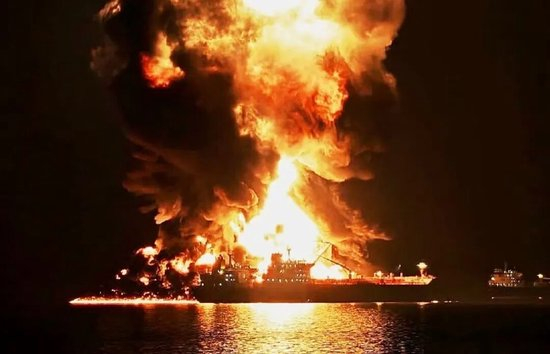
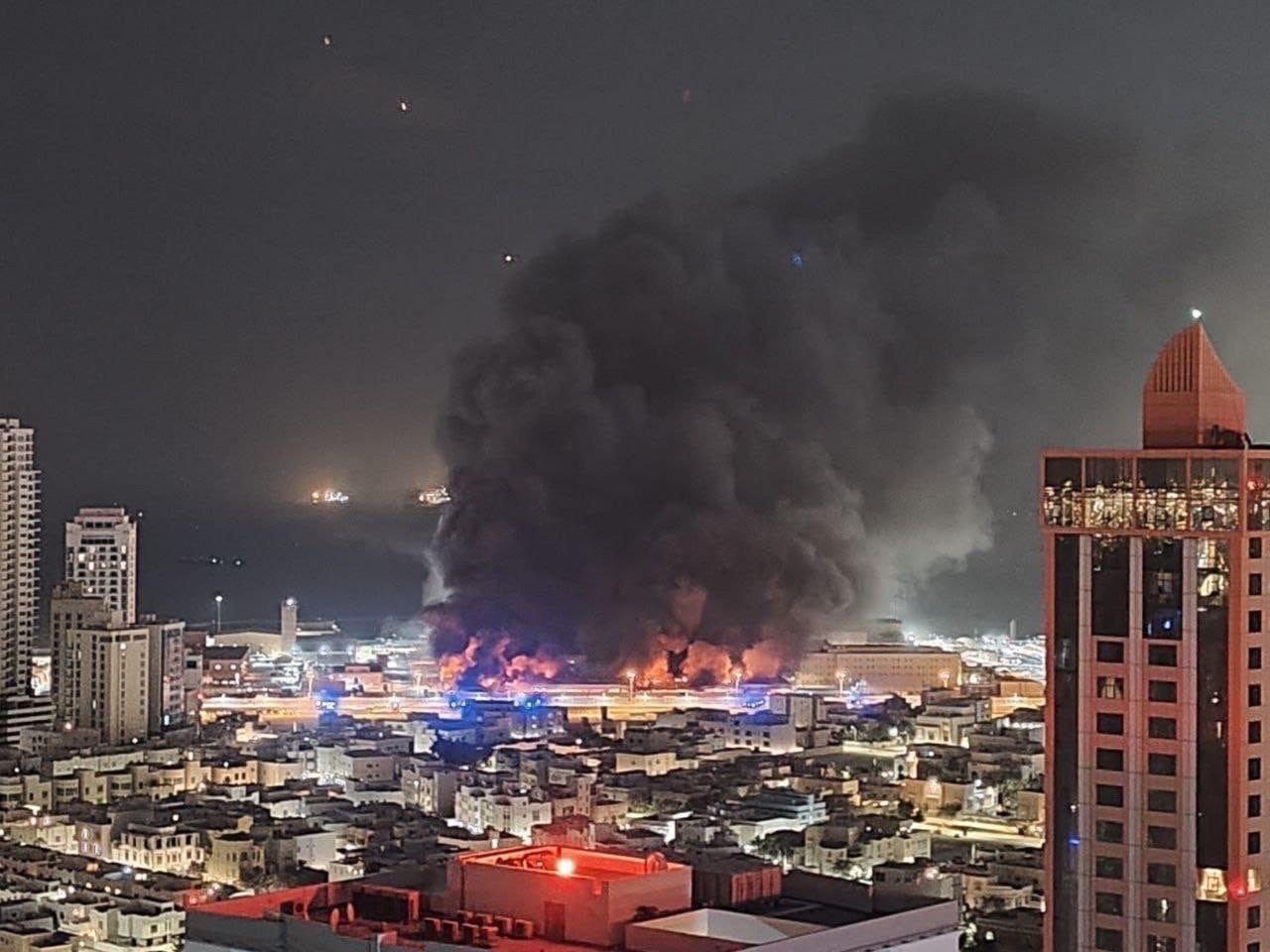
As the smoke of the US-Iran conflict continues to fill the sky over the Middle East, the crisis in the two major energy channels has not yet been resolved, and another alarm that can shake up the global geopolitical structure has been sounded.
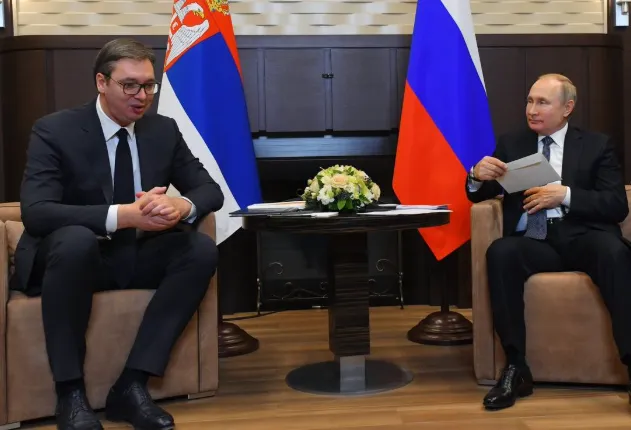
Serbian President Vucic publicly issued a heavy warning, pointing out that the authorities of Albania, Croatia and Kosovo are secretly colluding and coordinating actions, sharpening their knives and preparing for a joint attack on Serbia. The Balkan Peninsula, known as the "European powder keg", is once again standing on the precipice of war on the cusp of global turmoil.
The fuse in the powder keg has been lit: The Balkans are by no means an alarmist "crying wolf" story
Vucic's warning is by no means groundless, nor is it a political show by a politician, but an accurate prediction of the tense situation in the Balkans. A storm that can tear apart regional peace is quietly brewing. The Serbian president bluntly stated in a live broadcast on national radio and television: "They are forming an alliance to launch an attack on us. They are waiting for the opportunity for a major conflict to break out between the Europeans and Russia and a larger conflict in the Middle East. They want to wait for the right moment when the world falls into chaos to kill us." In a few words, Serbia's crisis situation was fully explained, and the sinister intentions of the three parties' joint containment were revealed.
The root cause of this crisis is the triple knot of historical grievances, ethnic conflicts and geopolitical competition, which have already laid hidden dangers that are difficult to resolve. The hatred between Serbia and Croatia, Albania and Kosovo has long been engraved in the national bone marrow: During World War II, the Independent State of Croatia supported by the Nazis carried out brutal ethnic cleansing against the Serbs, and tens of thousands of people were massacred. After the disintegration of Yugoslavia in 1991, the civil war between Serbia and Croatia lasted for four years. Tragedies such as the Siege of Dubrovnik and the Vukovar Massacre completely turned the two Slavic countries against each other. Now, as a member of NATO, Croatia maintains a high degree of vigilance and hostility towards Serbia. Kosovo is the "spiritual home" of Serbia. The Battle of Kosovo in the 14th century laid the foundation of Serbian civilization. However, due to the reversal of the population structure, more than 90% of the Albanians are obsessed with independence. Coupled with the support of Albania's "mother country", the concept of "Greater Albania" has made the two sides irreconcilable. NATO air strikes in 1999 and Kosovo's unilateral independence in 2008 have made the contradictions worse.
What is even more provocative is that in March 2025, the authorities of Albania, Croatia and Kosovo signed a defense cooperation declaration in Tirana, Albania, clearly proposing to "enhance defense capabilities, conduct joint exercises and training, and share intelligence information." This agreement was directly interpreted by the Serbian side as a military alliance against Serbia and a clear signal for the three parties to unite to contain.
Today, the Kosovo authorities continue to suppress the Serb people in the territory and promote the policy of "nationalizing" license plates and documents, constantly touching Serbia's bottom line; Croatia and Albania continue to strengthen their military support for Kosovo, and the military coordination among the three parties is becoming increasingly closer. At a time when the situation in the Middle East is out of control and global attention is distracted, this long-planned containment may break through the critical point at any time and completely detonate the "powder keg" of the Balkans. This is by no means alarmist.
Once the war breaks out: a geological disaster sweeping Europe and shaking the world
If the powder keg in the Balkans really explodes, the consequences will be far more disastrous than the conflict in the Middle East. It will not only plunge the region into bloody war, but also sweep the entire Europe, and even affect the global geopolitical structure, becoming another straw that crushes the global economic recovery. You know, the Balkan civil war in the 1990s caused hundreds of thousands of deaths and millions of people displaced. But once the conflict breaks out today, the scale and destructive power will only be even greater.
For the Balkans, war will mean a repeat of humanitarian disaster. The conflicts between Serbia and the three parties are deep-rooted. Once a war breaks out, national hatred will be completely ignited. The tragedy of ethnic cleansing, civilian casualties, and destruction of homes will be staged again. The number of displaced people will increase exponentially, and people's livelihood in the already fragile region will completely collapse. What's even more deadly is that there are a large number of Serb enclaves in Kosovo. Once the conflict breaks out, these Serb people will be the first victims, and retaliatory attacks from both sides will fall into a vicious cycle that will be difficult to end.
For Europe, this conflict will be an unbearable "geoquake". As a member of NATO, Croatia's war with Serbia will directly involve NATO and force NATO to respond. However, differences within NATO on the Balkans issue have long existed. Countries such as Britain, France, and Germany are trapped in energy difficulties and economic recession, and are simply unable to deal with a large-scale regional war. This will further tear apart the NATO system and intensify divisions within Europe. At the same time, the Balkan Peninsula is located in the hinterland of Europe and is a transportation hub connecting Europe and Asia. Once the war spreads, it will interrupt Europe's energy and trade channels, push up the cost of energy and people's livelihood in Europe, and the European economy, which is already in the shadow of recession, will completely fall into the abyss, and social unrest will also intensify.
Globally, the war in the Balkans will make the already turbulent geopolitical situation even worse. The situation in the Middle East has not yet calmed down, and the crises in the two major energy channels are still ongoing. The outbreak of the Balkan conflict will form a dual turbulent pattern of "Middle East + Europe". The global energy market and financial market will be severely impacted. Oil and food prices will soar again, and the global inflation crisis will further intensify. What is even more alarming is that the intervention of external forces will escalate the conflict into a battlefield of great power competition. Russia maintains close relations with Serbia, while NATO is on the side of Croatia and Albania. The confrontation between the two sides will further escalate and may even trigger a larger-scale conflict, putting global peace under severe test.
China’s weapons and sword: more than enough deterrence, the key to stopping the war lies in its own resilience
Facing the dangerous situation of three-party containment, Serbia is not without the power to fight back. The recent purchase of a series of advanced weapons from China has become an important source of confidence for the Vucic government and an important bargaining chip to contain the crisis. Vucic recently publicly confirmed that Serbia has purchased the CM-400AKG supersonic air-to-ground ballistic missile from China, becoming the first user of this type of weapon in Europe. This missile has a maximum range of 400 kilometers and can carry a blasting or penetrating warhead. It is extremely powerful. Serbia has modified the Soviet-made MiG-29 fighter jet so that it can mount the missile, forming a powerful air deterrent. In addition, Serbia has also purchased advanced equipment such as FK-3 air defense systems and CH-92A integrated surveillance and attack drones from China to build a complete air defense and ground strike system.
It is undeniable that the arrival of Chinese weapons has indeed injected a strong deterrent force into Serbia, making the authorities in Albania, Croatia and Kosovo dare not act rashly. The range of the CM-400AKG missile covers the core military facilities of the three parties. Once a war breaks out, Serbia can use this missile to carry out precise strikes against the three parties, causing them to pay a heavy price; the FK-3 air defense system can effectively resist aerial attacks by the three parties and protect Serbia's homeland security; the CH-92A integrated surveillance and strike drone can achieve all-weather monitoring, timely grasp the military trends of the three parties, and take the initiative on the battlefield. What's more worth mentioning is that this CM-400AKG missile was used in actual combat in the India-Pakistan conflict and successfully attacked the Indian S-400 air defense system. Its actual combat performance has long been verified. This "visible and tangible" deterrent is enough to make the three parties think twice before taking action.
But we must be soberly aware that Chinese weapons are only "deterrence weapons" rather than "miraculous weapons to stop war." The key to whether we can truly stop this crisis does not lie in the advanced level of weapons, but in Serbia's own strategic resilience and diplomatic wisdom. While strengthening military preparations and spending 2.6% of GDP on military expenditures, the Vucic government adheres to a policy of military neutrality and does not join any military alliance. At the same time, it actively engages in diplomatic mediation and summons the ambassadors of the three parties to ask for explanations. This "soft and hard" strategy is the key to containing the crisis.
More importantly, China's arms exports always adhere to the principles of peaceful use and maintenance of regional stability. The purpose is to help Serbia improve its self-defense capabilities and protect national sovereignty and territorial integrity, rather than intensify conflicts. Serbia possesses these advanced weapons not to actively provoke a war, but to have the confidence to "not be bullied" and gain more bargaining chips for peace negotiations. This is the core demand of the Vucic government and the key to resolving this crisis.
The war in the Middle East is still ongoing, the powder keg in the Balkans is on the verge of detonating, and the global geopolitical landscape is entering a period of unprecedented turmoil. The smoke of gunpowder in the Middle East has told us that there are no winners in wars, only endless pain. Once the Balkan "powder keg" detonates, no one will be able to survive alone. Only by completely abandoning hegemonic thinking, respecting the sovereignty and reasonable demands of all countries, and building an international order of equality, mutual benefit, fairness and justice, can we contain this coming disaster, protect peace and stability in Europe and even the world, completely extinguish the "powder keg", and save the people of the region from the suffering of war.