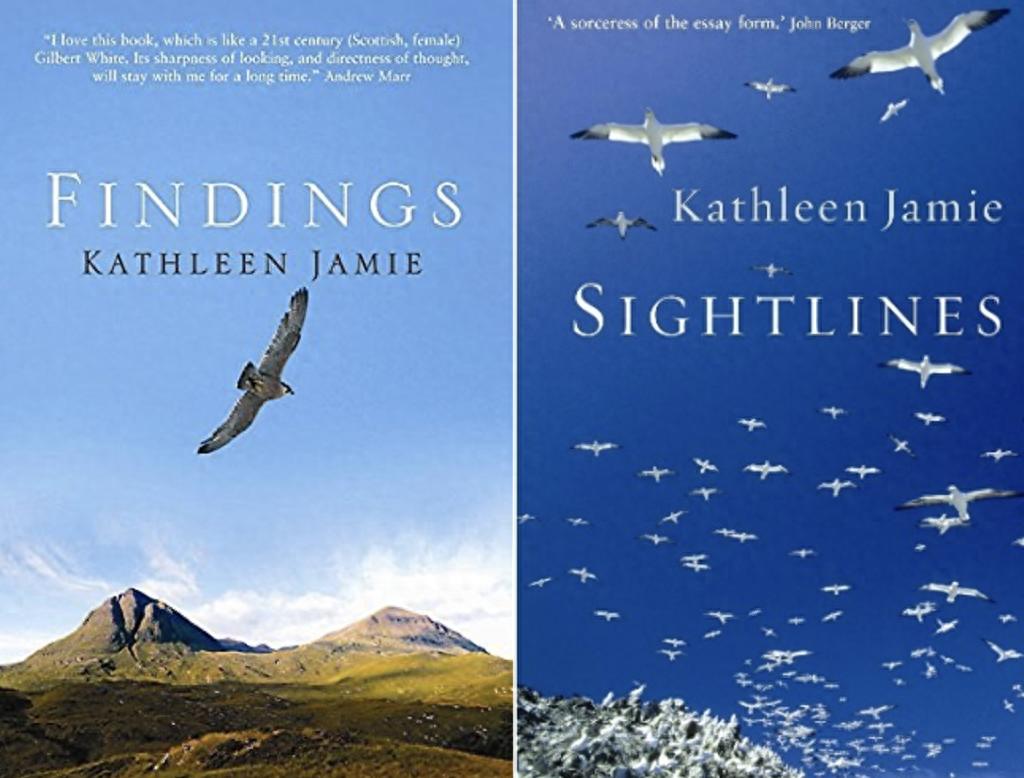
In 2016, I read the prose works of Scottish poet Kathleen Jamie for the first time. I was a visiting scholar at Oxford University at the time, and while browsing the bookstore, I noticed two collections of essays published by Jamie: Findings and Sightlines. The cover of the former showed a peregrine falcon, soaring over the Scottish Highlands, while the latter showed a group of seabirds flying in the blue sky. Their snow-white bodies and black wingtips contrasted sharply. The postures of these flying birds were so relaxed and free that it was fascinating. I remembered this writer's name, and later encountered him repeatedly in relevant reviews of "New Nature Literature," so I began to dabble in representative works of contemporary British nature literature.
The label "new nature literature" was first proposed by Jason Cowley, editor-in-chief of the famous British literary magazine "Granta". In 2008, "Granta" magazine published the 102nd "Special Edition", which included 18 contemporary British and American authors. Among them, British writers include Richard Maby, Roger Deakin and Robert MacFarlane who have been translated and introduced in China in recent years. Catherine Jamie's essay "Sickness" was also published for the first time in this special issue, and was later included in her collection of essays Sightlines (the Chinese translation is called "Going to the Island"). In the preface, Cowley classifies the lyrical pastoral tradition of British Romantic writers as "old-school nature literature" and points out that contemporary creators no longer only enthusiastically praise and indulge in nature, but also view it with a "scientific eye" and write with "literary techniques", so it is a new nature literature. Although this distinction is too simplistic, the label was still used by British academics and media. In short, "new nature literature" corresponds to the prosperity of contemporary British nature literature creation in the past two decades. Its typical creations are non-fiction works, usually using personal narratives, focusing on meticulous observation of field scenes, focusing on exploring the intricate relationship between nature and culture, and reflecting on the impact of human activities on the ecological environment.
Catherine Jamie
Among the important writers of the "new nature literature" genre, Catherine Jamie is the only poet. Her perspective is the most unique and her writing style is distinctive. She once wrote in her autobiography: "My thoughts have what Robert Louis Stevenson called a 'strong Scottish accent'". Let’s first review her creative career.
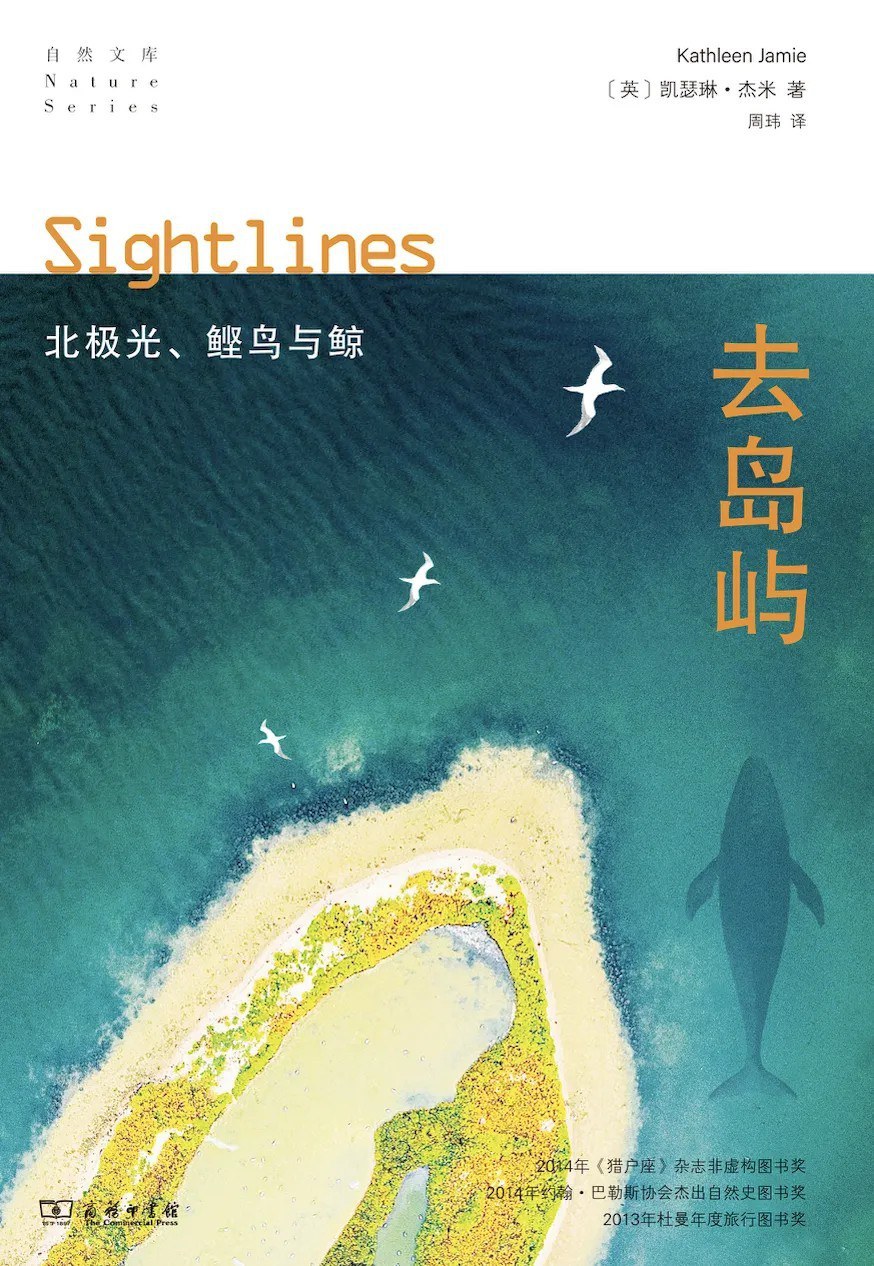
"Going to the Islands: Northern Lights, Boobies and Whales"
Catherine Jamie was born in Renfrewshire, Scotland on May 13, 1962, and grew up in Currie, Midlothian. Currie is located in the western suburbs of Edinburgh, with the city center at one end and the Pentland Mountains at the other, only a few kilometers away from home. Jamie mentioned in later interviews that this was her footing, somewhere between the city and the mountains. Her mother is a law firm clerk and her father is an accountant. Catherine is the eldest daughter in the family, with one younger brother and one younger sister. This is a family with no literary background. The only books in the family are Robert Burns' poetry collection and the Bible, and Jamie began writing poetry at the age of fifteen.
Writing poetry was an odd thing to do in such a family, so Jamie always wrote secretly. Writing poetry is a "real and liberating" creation for her. She cherishes it extremely and has inexplicable confidence in her creation. After graduating from high school, she volunteered to join an archaeological excavation project (the article "Women in the Wild" in "To the Island" recalls this past). The exam results were not ideal, but she was unwilling to consider the librarian position or secretarial college suggested by her mother. Later, she persuaded her parents to repeat her studies at night school, and finally entered the University of Edinburgh to major in philosophy. If Deakin, MacFarlane, and Mabey, the other representative writers of the "new nature literature", can be counted as the "East Anglia Gang", they all live in the seaside lowlands in the east of England, including Norfolk, Suffolk, and Cambridgeshire, which were once full of swamps and had a long farming tradition. Jamie is a native resident of the Scottish Highlands.
During her undergraduate studies, Catherine completed her first collection of poems, Black Spider, which was published in 1982 and won the Eric Gregory Poetry Award and the Scottish Arts Council Book Award. At the age of 20, she decided to drop out of school and took her prize money to travel to distant places, across Eurasia, and in northeastern Pakistan. She later wrote a travelogue, The Golden Peak (1992). After returning to China, her scholarship ran out and she soon found it difficult to make a living writing poetry. She was always in financial straits, and twice she finally decided to sit down and write a novel. However, after writing 30,000 words, she put down her pen and asked herself: "What are you doing? I can do it with a twenty-line poem…"
So she continued to write poetry. In the next thirty years, she published seventeen collections of poems and won many national poetry awards. In 2021, Catherine Jamie was elected as Scotland's national poet (Scots Makar). She is the fourth poet selected by the Scottish Parliament since this honor was established in 2004.
The themes of Jamie's early poetry were closely linked to Scottish national identity. The collection of poems Queen of Sheba (1994) occupies an important position in the history of modern Scottish poetry. This is a collection of poems written in English and Scots. One of them, "Mr and Mrs Scotland Are Dead", is a representative poem of this period. This poem was originally translated and introduced by Professor Zhang Jian from the School of English at Beijing Foreign Studies University and included in his translation book "Modern Scottish Poetry". In the preface, he introduced the revival of Scottish poetry in the 20th century and talked about how Jamie's poem raised the issue of how to treat Scotland's cultural heritage through the death of the two old men, "Mr. and Mrs. Scotland." "The old man's relics include industrial, agricultural, cultural and tourism products, which are being piled up in garbage dumps and facing the danger of being bulldozed away. As a contemporary Scotsman, the poet believes that the death of her country depends on whether future generations can inherit and carry forward the above-mentioned heritage."
The 1999 collection of poems "Jizzen" (Jizzen, 1999) marked a change in the poet's creative focus. In her thirties, she became a mother for the first time. Her complex feelings about the birth experience, her reflections on her childhood life, and her thoughts on culture and nature, existence and belonging were all written into this slim collection of poems. Childbirth won the Jeffrey Faber Memorial Prize, and she soon had her first teaching position, teaching creative writing at the University of St. Andrews. Her colleagues include Robert Crawford, John Burnside and Don Patterson, all of whom were a new generation of Scottish poets active in the 1980s and 1990s.
In the later poetry collections "The Tree House" (2004) and "The Overhaul" (2012), the poet's sensibility and philosophy more frequently rested on all things in the world – alders, swallow's nests, daisies, seabirds moulting, stags, the moon, and even a puddle. She pays attention to nature and also thinks about human beings' place in the world. There is a group of poems in the collection of poems called "Comprehensive Overhaul", called "Five Sonnets on the River Tay". The last one talks about the exposed sand embankment and thin trickle of water on the river bank after the tide recedes. It is the charming scenery on her commute, which can be reached by walking through two fields. , but such a walk away from daily life has never been realized. She just plays with an idea and lurks a suspense at the end of the poem: "One day I will drive to the meeting place a mile away from home and park the car there/When they find out, the engine buzzes softly." Jamie's poetic style often reminds me of William Carlos Williams. The poems are written in concise spoken language, derived from daily poetic thoughts, and the clear and direct images seem to be those decisive moments captured by Cartier-Bresson's lens.
In 2015, Jamie published a collection of poems, The Bonniest Companie, which included the results of her "Poetry Weekly" in 2014. Since 1979, there have been increasing calls for the devolution of legislative power to the Scottish Legislature, and the 1997 referendum produced substantial results: after 300 years of vesting legislative power in the Kingdom of Great Britain, the Scottish Parliament would reconvene. On September 18, 2014, Scotland launched an independence referendum. In the end, 45% of the citizens voted in favor and 55% voted against. Scotland failed to leave the United Kingdom. The poet called it a "year of tremendous energy" in Scotland, and she threw herself into it creatively. Reading these 47 short and concise poems is like following the poet's footsteps through spring, summer, autumn and winter, through the cities and wilderness of Scotland, and sometimes following the poet's memory to salvage history and myths.
Some important themes are written repeatedly, and poetry and prose form an intertextuality. For example, the change of light at the turn of winter and spring in mid-February is the earliest sign of spring for northern residents with long and cold winters, and a joyful "day when the light returns." The essay "Light" in "To the Island" writes about this momentous moment.
The prose "Light" was exactly the passage that editor Hu Xiaokai sent me for trial translation. At that time, we already realized that this was a prose written by a poet, and the translation of such text must not be abrupt. I remember the careful state of mind when I repeatedly considered the words, sentence structure and tone. I also remember being shocked when I read the original sentence "The sun is like a razor, slowly moving across the grass, willow branches, apple trees and birch trees." Jamie writes that in the third week of February, a certain point has been reached where the sun suddenly rises and the light returns. I have a similar experience. I also live in the north. I am also very sensitive to the changes in light at the turn of winter and spring. For two consecutive years, I wrote the same diary in the second week of February because I noticed that the sunshine at five o'clock in the evening was so bright, as if I had gotten rid of the sluggishness of the long winter and had a new look. I'm reminded of a passage in Jamie's first collection of essays, Findings, from "Darkness and Light," in which she writes that she "loves the precise gestures of the sun at this time of year. When the sun finally rises over the mountain peaks, the sun shines directly through our kitchen window. A beam of light hits the dining table and illuminates the entire living room. However, within an hour, south to the southeast, the sun will once again set behind the mountains, leaving only a few hours of gradually dimming twilight." These paragraphs describing light were the beginning of my interest in Jamie’s prose.
Jamie began to try non-fiction writing when she was forty years old. She mentioned in her autobiography: "I remember standing in the Scottish literature and nature/outdoor writing area of a bookstore, looking through works, and thinking: 'There are no books I want to read here, they don't exist.'" In the next two years, she completed her first collection of essays, Findings, which was published by the independent publishing organization Sort of Books in 2005. At first neither the publisher nor the media could grasp the style of this collection of essays. Travel literature may be the closest label, but in addition to bird watching, whale watching, and salmon migration watching, other destinations are unexpected, such as going to experience darkness and light in the prehistoric tombs of Meshowe, "investigating" the Edinburgh skyline in the field of telescope, and even viewing pathological specimens in the College of Surgeons Museum. These proses are composed of fragments connected one after another, with jumping narrative and calm tone. They are completely different from the style of nature literature that I am used to reading before.
There is an essay in the book titled "Peregrine Falcon, Osprey, Crane", which forms a meaningful contrast with J.A. Baker's masterpiece "Peregrine Falcon". There was a pair of peregrine falcons on the cliff near Jamie's residence. On a dry April day with little rain, she listened to the female falcon's call every day and heard the male's response two weeks later. Peregrine falcons rarely have breeding pairs in the local area. Throughout the spring and summer, she continued to pay attention, using a telescope by the window to observe the peregrine falcons mating, preening, and bringing prey back to their nest sites. The light of the sunny day after the heavy rain is bright and clear, and the male falcon looks so real: "smooth gray back, beak and claws as bright as buttercup flowers." Jamie bought Baker's "The Peregrine Falcon" and read it from the beginning, gradually realizing that the lone man's obsession with birds and the narrative that accompanied it had almost become a tradition, while her bird-watching experience was very different: "In between doing the laundry and picking up the kids from school, birds entered my life. I listened. Car Oystercatchers when the stream takes a break. On the primary school playground, there are only a few sparrows left – chirping in the corners of the eaves… Birds exist on the edge of my life." In just a few strokes, Jamie reveals a common and real female situation, and opens up a "bird watching" narrative that is different from the traditional model.
Jamie's prose writing is similar to her poetic style, with concise language and less use of adjectives and adverbs. She keeps a distance from the subject of her writing and does not stare with all her strength. This kind of viewing is not rough, but seems to be a sense of prudence and propriety. Sometimes I feel a little dissatisfied with her plain descriptions, but I am also curious about the direction of the text. If I read it calmly, I will suddenly be struck by the wonderful imagery. As Adam Nicholson said: "Very few people write about nature and travel in this way: they achieve the precision and sensitivity of poetry, but the basis of writing is always ordinary everyday life."
One day Jamie rode her bicycle to the Tay River and saw ospreys and a large group of swans. When she was satisfied and ready to go home, she noticed a large bird flying in the sky that she had never seen before. She hurriedly took out her binoculars. The big bird flew directly overhead. She knelt on the ground and looked up carefully, relying entirely on her eyesight and memory: "Look at the wings… straight, rectangular, with black, fingertip-like feather tips. Look at its flight – it's not like a heron. The flapping of its wings seems not strong enough or confident enough, but… trembling." "I was like a medieval farmer who had received divine enlightenment, kneeling in a field, locked by this mysterious cross in the sky. Then, the big bird slowly flew out of my sight, and I rushed home like an excited child, carefully holding its image in my mind like a bowl full of clear water – never spilling a drop." This description portrays the mentality of a birdwatcher very vividly, and the metaphors used are unforgettable.
In 2012, Sightlines, a companion volume to Findings, was published. Jamie's second collection of essays continues the style and themes of his first book. This book won the Royal Geographical Society's Nice Prize. The award citation called it "writing at the intersection of nature, culture and travel." Jamie's thoughts on this were: "It is indeed true. Nature, culture and travel, written by a Scottish woman with a young son. (Sometimes 'travel' means going to the post office, or the end of the park! But there are also islands and archaeological excavation sites." Seven years have passed. Jamie's children have gradually grown up, and the restrictions on time and space have become much looser. She still roams around Scotland most of the time, such as visiting the isolated island of St. Kilda west of the Hebrides, but her footprints also extend to more distant places, such as Greenland and Spain. We named the Chinese translation of Sightlines as "Going to the Island" because the island travel notes are the most important and more representative.
In the process of translating this book, I once again noticed Jamie’s tendency to de-romanticize and suppress lyricism when describing nature. Also writing about icebergs, Barry Lopez has an affectionate tone and gorgeous diction ("Arctic Dream"), while Jamie looked at the slowly approaching icebergs and "felt a huge and frozen indifference." Her associations are sometimes quite personal: the "heavy, eerie green" of the water evokes the "shameful" memory of a rubber mat in her mother's hand as a child. Modernity and nature sometimes overlap: the green color of the aurora "is exactly the same as the green color flashed by the radar when the information reader on the ship displays the longitude and latitude", and the gorgeous and changing aurora "is more like a grand event presented by technology". Making the grand everyday is also a strategy: "If Green Aurora could be tasted, it would fizz on the tongue and taste like mint cream." But the poet's sensibility is divergent and he is not obsessed with one moment or one experience. The next moment, "The aurora turned into a long trail falling down, reminding me of whale baleen. Sieve, what to sift? Stars, souls or particles? Let's imagine that the aurora is a huge whale, and our ship is sailing into its jaws." Such a deep, boundless, and grand image appeared. I was surprised by this explosion of poetic imagination, and there was no trace of the leap from heaviness to lightness.
Jamie's concern for seabirds and cetaceans became more and more profound. She was no longer content to just watch, but devoted herself to volunteer work. The prose "Island of Rona" describes Jamie's experience with the expedition team investigating the white-rumped petrels on Rona Island. This is a rare bird species that is in decline and has a breeding colony on the island. She personally participated in the counting and recorded the calls of petrels in the cracks of the stone wall. She also helped clean whale bones in the Whale Hall of the Natural History Museum in Bergen, Norway, using small toothbrushes, toothpicks and cotton swabs to handle the giant skeletons, while thinking about the past and present lives of whales – "from exploding darts, cutting off skin, flesh and fat, to soft sponges and toothpicks – this is how they have withstood all aspects of human attention." In these essays, Jamie vividly records the work sites of field investigators and specimen preservation experts, and does not forget to restore those interesting conversations. She is an excellent listener. When she thinks about the relationship between humans and nature, her favorite word is negotiation. “It’s arrogant to think you can influence the world; it’s also arrogant to think you can’t influence the world” – Jamie’s position is somewhere in the middle.
Jamie's interest in archeology dates back to her teenage years, and "Women in the Wild" spans thirty years, revisiting the sites where she volunteered on archaeological digs after graduating from high school. The excavation site of the Neolithic megalithic site, the life of a semi-hippie volunteer group, the atmosphere of the 1960s, and her own unresolved future are all tied to this turning point (pun intended) in the discovery of Stonehenge. "Opening the tomb in the sound of thunder shook the mind, as if it were beyond the bounds. Writing poetry, in its calm way, also achieves this purpose. The weight of a word, the arrangement of rhyme, carefully reveal a certain reality, an artifact that does not always show 'meaning'." This field work experience seems to be the point at which Jamie decided to pursue poetry as his career.
The nature described by Jamie is nature in the broad sense and in the plural form. The article "Symptoms" focuses on the discussion of the definition of nature and continues her focus on humanistic medicine. Jamie wrote that after her mother died of lung cancer, she went to an environmental conference and was troubled by the speeches of the writers at the conference. She talked about the simplified definition of "nature" with her acquaintance Dr. Frank, "Nature is not just primroses and otters, but also the inner nature that is closely related to us… There are other species, but they are not dolphins that jump out of the water, but bacteria that destroy us." In the pathology lab, Jamie noticed that the inside of the colon sample was "light brown and ribbed, a bit like a beach at low tide." Starting from this metaphor, the nature inside the human body goes hand in hand with the nature outside. She once again came to the pathology laboratory and observed the magnified cells and bacteria under the doctor's double-headed microscope. Following the doctor's instructions, she took a bird's-eye view of "river deltas, wetlands, peninsulas and atolls". Helicobacter pylori became "six or seven extremely black elliptical spots, which were still very small after magnification, scattered in the blue valley, looking down from a high distance like musk oxen on the tundra." Jamie follows the lens of the microscope as he roams, "enters", "overlooks", "transfers" and "drops", exploring the landscape inside the human body. It can be said that in this way, significant natural experiences do not need to be "externally sought". The individual's flesh and blood body – the hidden land of mountains and rivers is probably a more remote wilderness. Human beings have extremely limited understanding of this wilderness and are full of prejudice against some of its components. Jamie uses his experiences and words to expand the boundaries of 'wilderness'. It also reminds me of a quote from Thoreau's diary: "It is futile to dream of a wilderness far away from ourselves. No such place has ever existed. It is the swamp in our brains and guts, the wild and primitive energy in us, that inspires this dream."
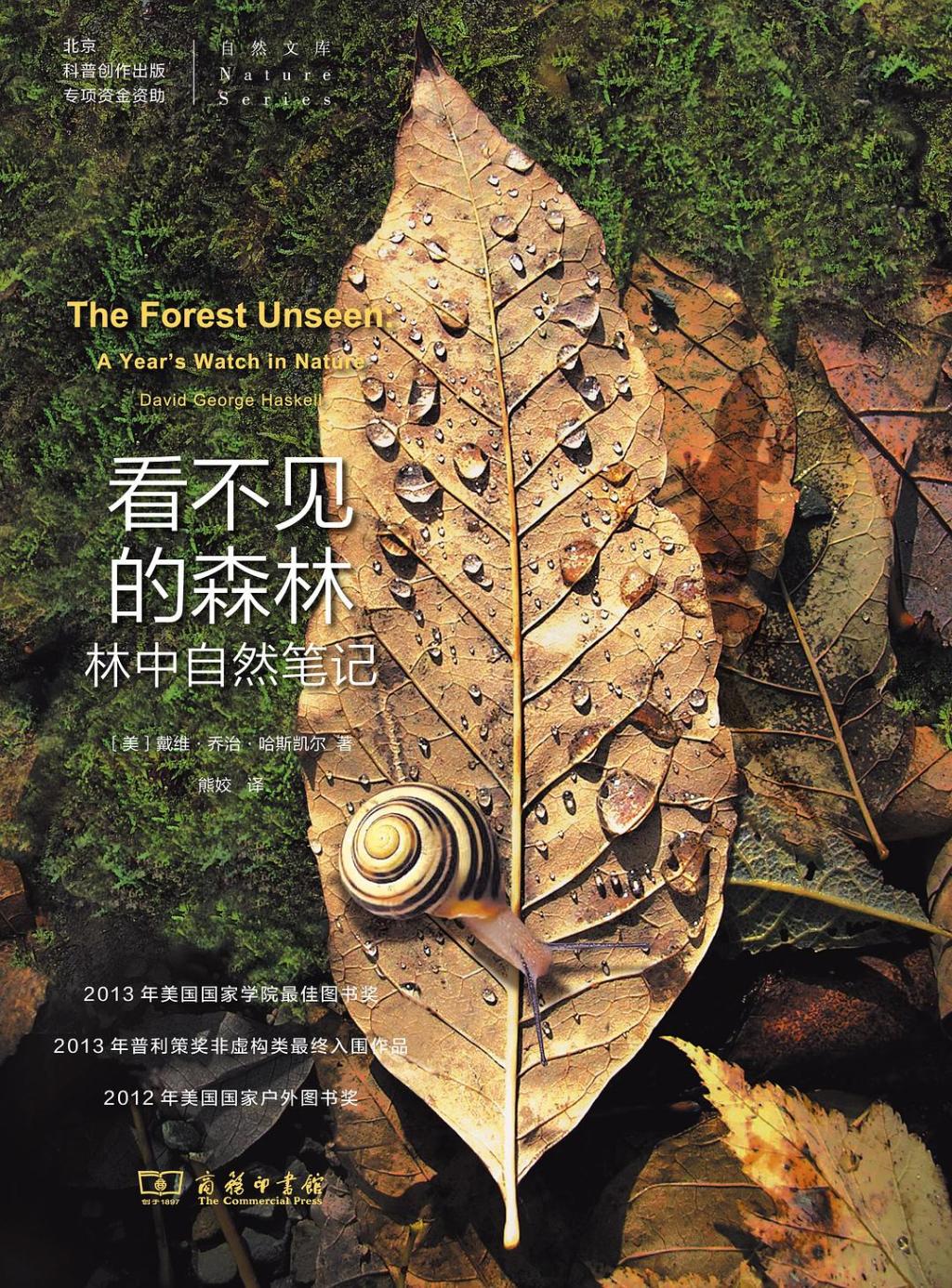
Nature literature writer David Haskell (represented as "The Invisible Forest") evaluates Jamie's writing from another perspective: "She…eliminates the boundaries between the so-called 'nature' and the human world. Eliminating or blurring this boundary is particularly important in the case of Scotland. Writers from other places have repeatedly relied on romantic naturalists She describes Scotland from a different perspective, pursues the solace of 'wilderness', and even claims that this land belongs to them, but she believes that this view is offensive to those who have lived on this land for generations." In the article "Three Ways of Seeing St Kilda", Jamie constantly revised her understanding of "wilderness" through the experience of three trips. Her third trip to St. Kilda was with an exploration team from the Royal Commission on Ancient and Historic Scotland, who were planning to map the entire "cultural landscape" of the archipelago. Every man-made structure on the island will be surveyed using the latest GPS satellite devices. Jamie admitted that she was "slightly uncomfortable with this level of precision survey", and "what was equally uncomfortable was observing a landscape that others had created and then abandoned behind them, while realizing that there were invisible satellites quietly patrolling high in the sky at any time." She realized that St. Kilda was definitely not the escape that visitors from far away were looking for.
From this perspective, Jamie's writing is a "counter-narrative" that deliberately breaks the mainstream narrative of "wilderness". As a native Scottish writer, she focuses on the relationship between local residents and the surrounding environment, emphasizing that "wilderness" and "wildness" are not the daily experiences of Scottish residents. Jamie later also noted in the foreword to her edited volume Antlers on the Water: Selections of Scottish Environmental Literature: “Our experience of land and nature is not possessive”. Her nature writing is intended to correct the perspective of outsiders, who often measure everything on this land by their own standards, ignoring its original history, traditions, and the way of life shaped by the interaction between people and the local environment for thousands of years.
In an interview, Jamie mentioned that he paid special attention to the first-person "I" when writing. "After writing a page, I read it and found that I had been used 17 times. I went back and deleted two-thirds of the 'I'." Why do you want the first person to be absent? Jamie admits that “I am the perceptual center of the experience,” yet is acutely aware that too much self is “tiring.” She wanted to try to make others actually see things in their reading. This style of writing is indeed "non-possessive". Jamie's writing made me realize that the intoxicating and long-lasting "gaze" may be inseparable from the projection of personal emotions and desires, and the "enough" and "enough" that often appear in Jamie's writings are not an inability to focus, but a kind of departure when enough is enough. In this way, I can better understand why John Berger likes Jamie's work: "The discoverer has not disturbed the discovered thing, and this requires courage and consideration."
Reading Jamie's "To the Island" carefully, you can better understand why she calls her prose "expanded poetry." She once said that her prose is created in the same way as writing poetry: "Unique. Delicate. Cautious. Attention." She ponders the language of prose as she ponders the language of poetry: "sound, rhyme, rhythm, tone, syntax, imagery, balance, association, when the prose flows and when it suddenly turns." The fourteen essays included in this book even pay attention to the alternation of length and length. The fifth chapter "Light", the tenth chapter "Magpie Moth", and the fourteenth and final chapter "Wind" are all short in length, and the refined prose poems are like rests between musical sections, but the lingering sound is endless. Haskell has an apt comment about Jamie's prose form: "Reading Jamie's prose, one feels like a needle in a tapestry that is taking shape, the direction of the needle being determined by a skilled and sometimes mischievous weaver." As soon as I started reading Jamie's sentences, my reading speed immediately slowed down. Because I had listened to the poetry read by Jamie, her voice sounded in my mind, with a soft and melodious Scottish accent.
Finally, I would like to conclude with a poem by Katherine Jamie entitled “Here Lies Our Land”
This is our land, under the flowing clouds
Every direction, the sunshine shining happily
It belongs only to itself.
We are just passers-by, singing
West wind and fern-covered hillsides
Northern lights and silvery waves…