What exactly is a bubble?

In short, when there are too many people on a certain asset, a bubble will occur.
Richard Thaler also gave a vivid real-life case.
In the United States, a closed-end mutual fund called the Hertzfeld Caribbean Fund (trading code: CUBA) has been ignored for a long time and has been significantly undervalued by the market, often at a discount of 90%.
It was such a fund that suddenly skyrocketed on December 18, 2014, turning from a discount to a substantial premium. The premium rate even exceeded 70% at one time.
what happened?
It turned out that at that time, US President Obama announced that he would ease diplomatic relations with Cuba, and the trading code of the fund was very similar to the name of Cuba.
This is similar to the name speculation in the A-share market. In other words, speculation in U.S. stocks also depends on the name of the dish.
Of course, the ending is similar, ashes to ashes, dust to dust, where they came from, retail investors who follow the trend become the price of the bubble.
With the rise of the Internet, especially in the AI era, the ability to generate and spread short essays has been infinitely amplified. Similar situations are becoming more and more frequent, and skyrocketing prices and plummeting prices have become the norm.
However, everything remains true to its roots, and the essential thing is still human nature.
In the book "Common Knowledge", the famous cognitive psychologist Stephen Pinker calls its essence the self-realization psychology of human common knowledge.

That is, everyone is using their own wisdom to anticipate the mainstream views expected from the mainstream views.
But reality is often cruel. Except for a few people who can deduce mainstream expectations to the fourth, fifth or even higher levels, most people tend to focus on media hot spots and predict other people’s predictions through hot topics, which is the least complicated and most accessible way.
Keynes believed that when most investors began to listen to the news "beauty contest", speculative investment would intensify.
Ultimately, it triggers a "Super Bowl" advertising effect.
The so-called "Super Bowl" advertising effect means that once a certain technological innovation is heavily advertised in the "Super Bowl", it often indicates that the bubble is about to burst. This is true for technology and Internet stocks in 2000 and cryptocurrencies in 2022.
In 2026, who will place the most Super Bowl pitches? AI accounts for a quarter, which can be called the first year of AI advertising.
It’s the Year of the Horse, the old American horse – Mark Twain once said that history does not repeat itself, but it does rhyme.
As long as human nature remains unchanged, the ups and downs of bubbles will not change.
When we see that a certain industry is in a period of "extreme prosperity", we must pay attention. This may be a re-enactment of the historical cycle.
Global stock markets continue to strengthen, are A-shares stable?
During the A-share market closure period, the global stock market was generally improving, with a structural decline.
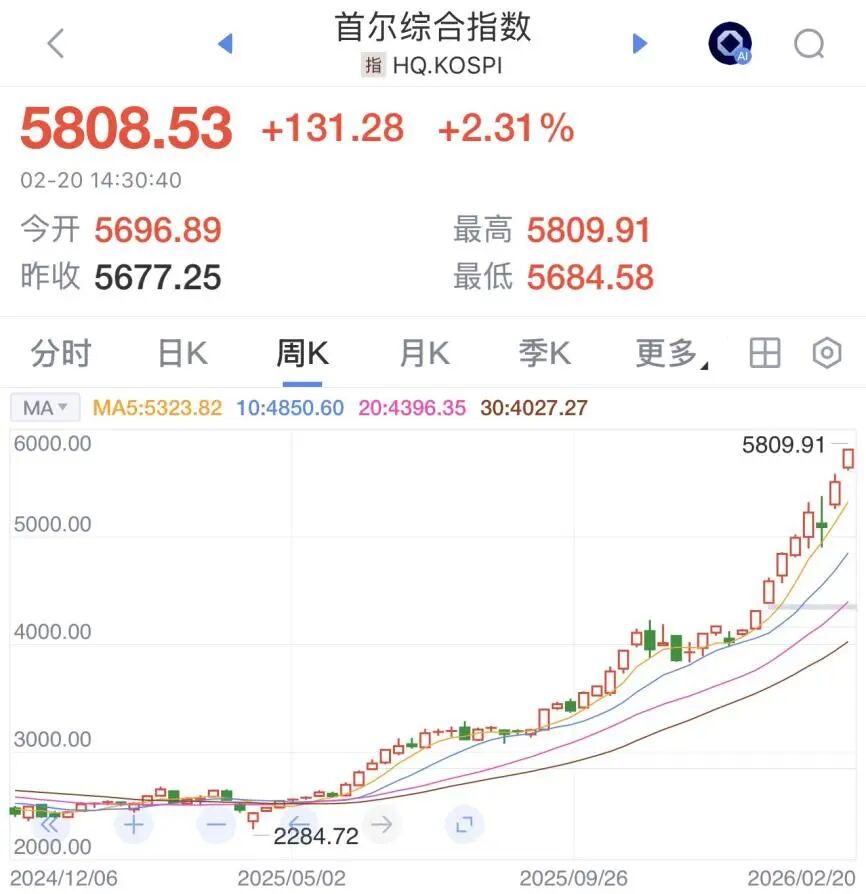
In Asia, South Korea’s stock market continues to surge forward and, led by AI hardware companies, continues to hit record highs. As of February 20, the Seoul Composite Index has exceeded 5,800 points, with an increase of nearly 35% during the year, ranking first in the world.
After experiencing the "high market stimulus" rise, the Japanese market began to enter the adjustment stage, with little change during the Spring Festival.
In the U.S. market, the impact of AI continues, but the negative impact is slowly narrowing, and the three major indexes such as Nasdaq have little change.
Among technology giants, except for Nvidia, whose stock price is relatively stable, most technology leaders are still bottoming out. Google, which was previously strong, has also corrected by 10%.
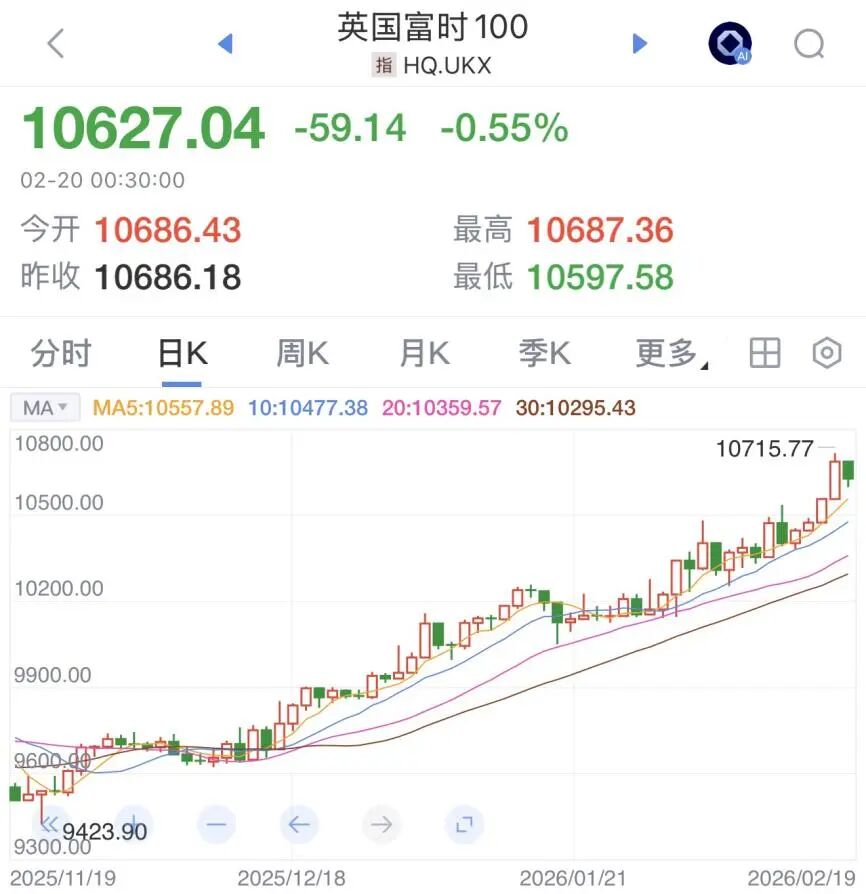
The European stock market has gone through a completely different trend from that of the United States. The indices of the United Kingdom, Spain and other countries have hit new highs continuously, and the stock markets of Germany and France are also quite strong.
On February 10, Xinhua News Agency and other media reported that France’s Amundi Asset Management, Europe’s largest asset management company, with 23 trillion yuan in assets, made it clear that it would reduce its investment in U.S. dollar assets and increase its exposure to Europe and emerging markets.
If European investors collectively switch gears, the Eurasian market will undoubtedly benefit the most.
On February 20, the U.S. Supreme Court announced its ruling that the U.S. International Emergency Economic Powers Act did not authorize the president to impose large-scale tariffs. This means that Laochuan’s tariffs are illegal.
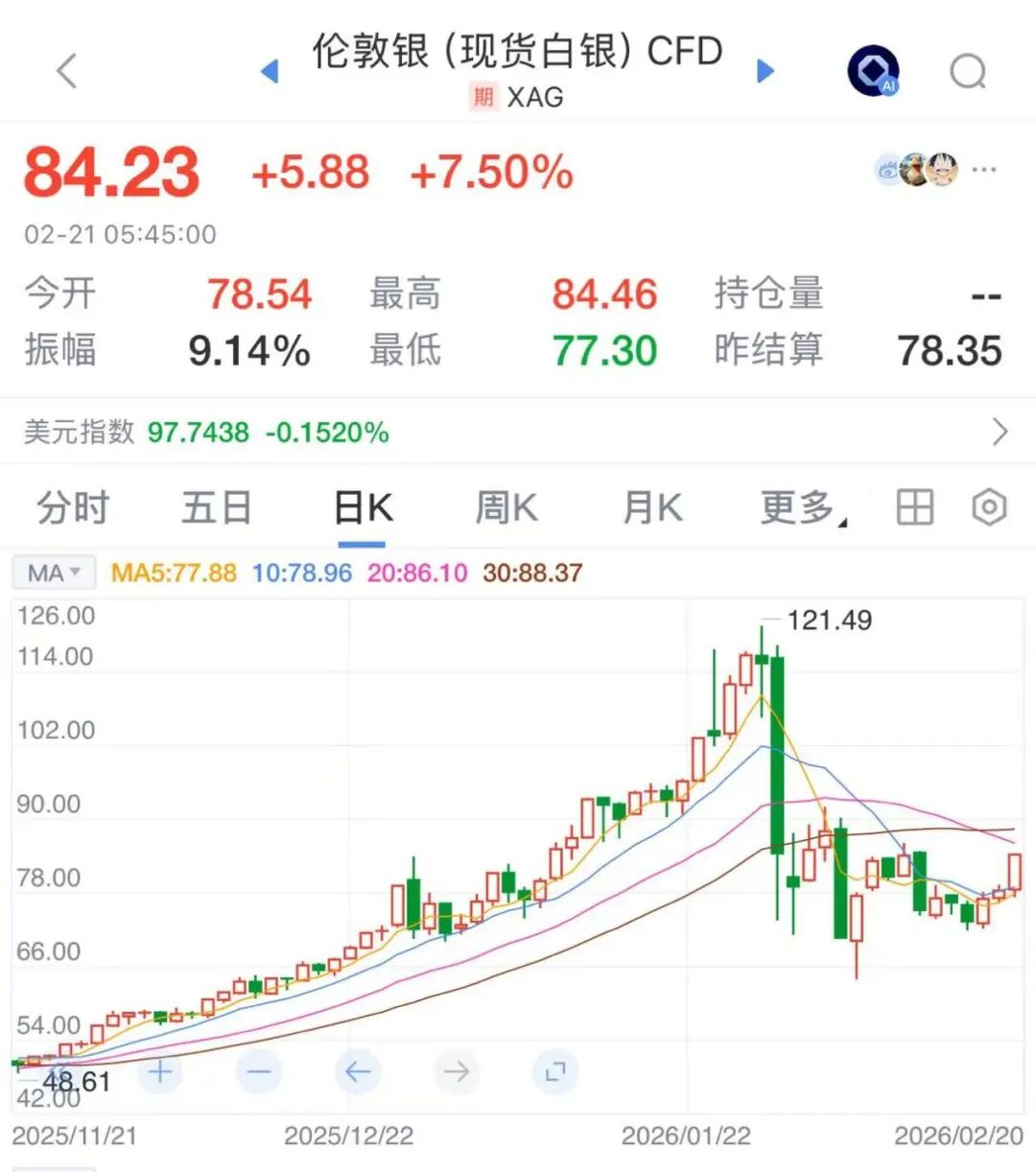
As soon as the news came out, gold and silver began to rise.
As of the close on February 21, London silver rose more than 7% and gold rose more than 2%.
Unconsciously, the annual increase in crude oil has exceeded that of gold, becoming the most powerful bulk asset in recent times.
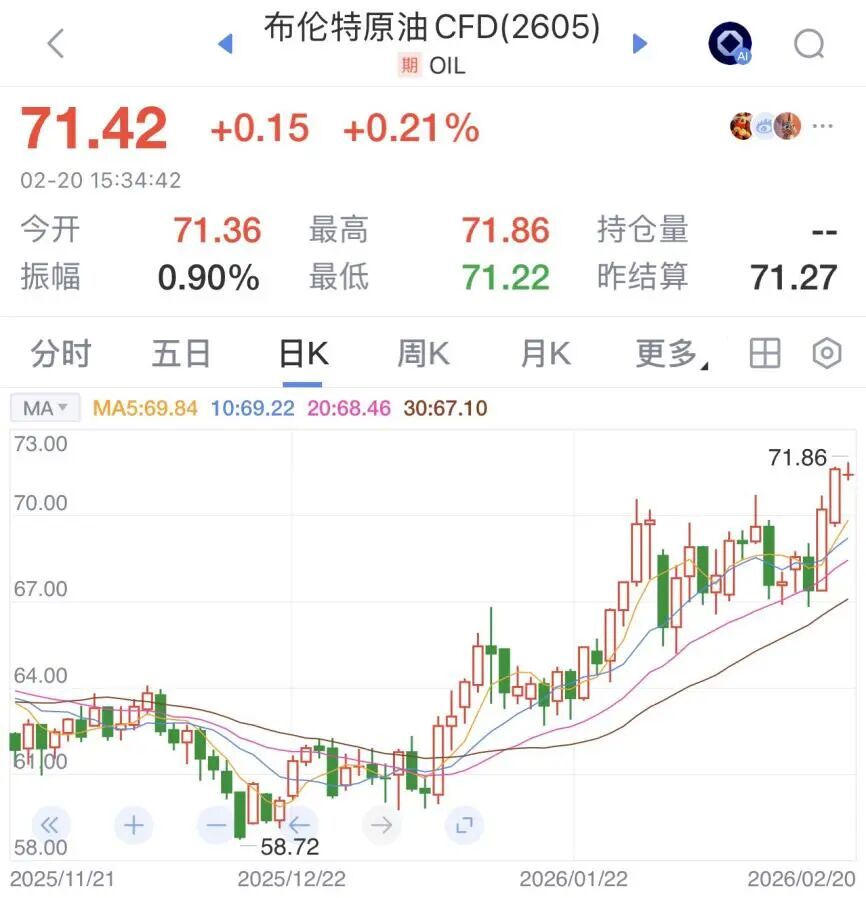
As of February 20, Brent crude oil has risen by 17% this year, exceeding gold's 15%.
Markets related to Chinese assets have been relatively weak.
On February 20, when the Hong Kong market opened, the Hang Seng Index fell more than 1% and fell back to the 60-day line again. Hang Seng Technology fell more than expected, falling nearly 3%, hitting a new low since July 2025.
Looking at the market, traditional technology stocks represented by Tencent and Baidu continue to weaken, while technology upstarts such as large models + robots continue to strengthen.
Affected by the CCTV Science and Technology Spring Festival Gala, robot and large-scale model companies have exploded. Companies such as Yuexian, Sagitar Juchuang, and UBTECH have experienced increases ranging from 6% to 20%.
Large model companies Zhipu and MINIMAX also achieved super performance of more than 10% or even 40%.
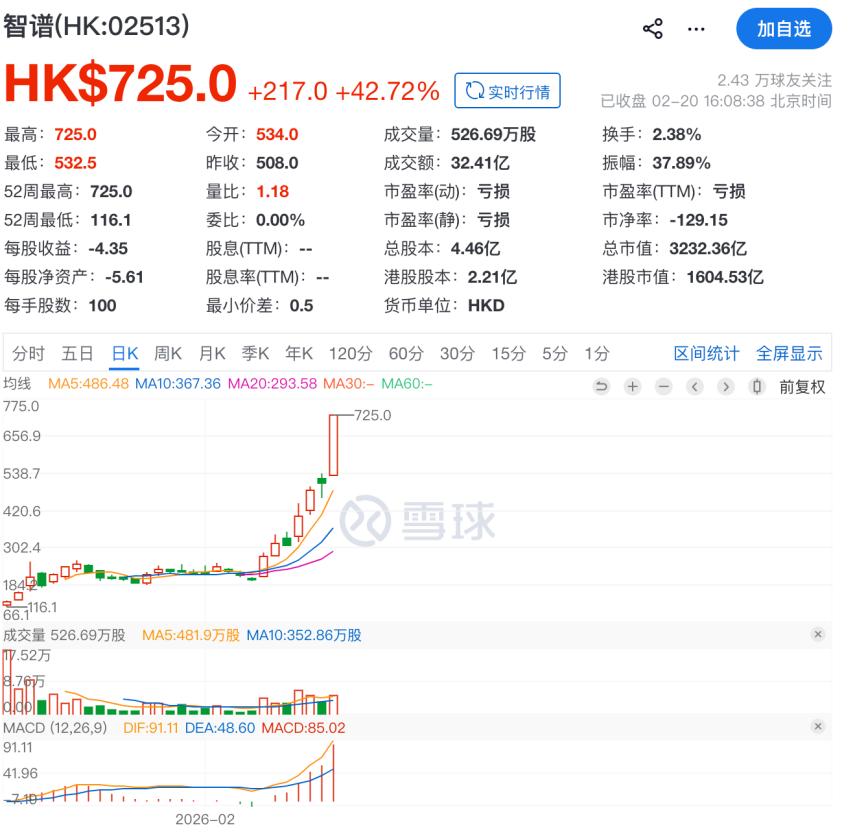
These concept companies do not make money, but their stock prices are high, and traditional technology and Internet stocks such as Alibaba continue to be in the doldrums. Because traditional businesses continue to burn money and AI business is fiercely competitive, the market has lost patience and imagination due to multiple factors.
More and more investors are joking that Byte is the biggest short seller of Hang Seng Technology. There is some truth to this joke.
Byte's current AI business is making the fastest progress and is also the most recognized by the market.
After bean bags became popular in 2025, Seedance will also become popular in 2026. Byte's leading advantage in the post-video era has not only not diminished, but is likely to be further expanded.

In the future, once there are disruptive changes in traffic entrances or traffic methods, it may seriously impact traditional giants such as BAT.
What is embarrassing is that Byte is not listed on Hong Kong stocks or A-shares. The positive significance it brings not only boosts the stock market, but the negative impact is becoming increasingly profound.
What to do? Letting Byte be listed in the country or Hong Kong may be the best way to hedge.
In 2022, Byte Hong Kong changed its name to Douyin Group, which was once considered to be preparing for listing. However, four years have passed, and the voice of Byte's IPO has become weaker and weaker.
The last time it was reported that Byte would go public was on September 25, 2025. Foreign media revealed that Byte may raise funds in Hong Kong, but the rumor was quickly refuted by Douyin Group executives.
During the Spring Festival, the currency that performed the most stably was the RMB. In the days when Chinese funds were absent, the increase was almost zero, and people seemed to be looking forward to the return of Chinese funds.
In 2026, will various funds continue to enter the market?
Have the deposits been moved?
In an era when interest rates continue to fall, this is a topic on everyone's mind.
Investors hope that deposits will continue to move so that the market can rise; banks have a tangled mentality. If they move too much, they will have no bottom; if they move too little, they will have no business; regulators are also very complicated. They are afraid of moving too fast and the index will be too strong and it will be difficult to end. They are also worried that too many deposits will accumulate and investment and consumption will be sluggish for a long time…
In 2026, before the Spring Festival, the central bank gave an official answer: the deposits moved but did not leave the bank.
How to interpret this statement?
The central bank explained in the "China Monetary Policy Implementation Report" for the fourth quarter of 2025:
Since 2024, as bank deposit interest rates continue to decline, the return rate of cash management financial products with deposit-like characteristics over the same period is still generally higher than the bank deposit interest rate, while the return rate of other asset management products is higher than that of cash management financial products.
Against this background, the asset allocation of residents and enterprises is turning more and more to wealth management, funds and other asset management products.
According to data from the central bank, from the beginning of 2024 to the end of 2025, the capital of asset management products from residents and enterprises increased by 9.4 trillion yuan, and the growth rate was 2.4 percentage points higher than deposits in the same period.
However, considering that residents still purchase financial products through banks, their destination has not changed. This is why the saying goes, deposits have moved, but they have not left the bank.
Many people have forgotten that during the Guo Shuqing era, asset management products were once synonymous with risk.
After years of adjustments, the large asset management industry is no longer what it used to be, and its appeal to residents has become more diverse.
The "Domestic Asset Management Industry Report (2025)" released by CITIC Financial Holdings shows that as of the end of 2025, the overall scale of China's asset management industry reached 184.53 trillion yuan, an increase of 13.1% from the end of 2024.
The growth rate of 13.1% is much higher than GDP, indicating that Chinese people have strong demand for wealth management.
Among various asset management directions, public funds and insurance funds have surpassed bank financial management to become the two largest forces.
As of the end of 2025, the scale of public funds was 37.71 trillion yuan, the balance of insurance funds used was 37.46 trillion yuan, the scale of bank wealth management was 33.29 trillion yuan, the scale of trust assets of trust companies was 32.43 trillion yuan, and the scale of private equity funds was 22.15 trillion yuan.
Previously, we analyzed financial management, public offerings, and private placements, but here we will expand on insurance funds.
According to statistics compiled by China Merchants Securities and other institutions, as of the end of the fourth quarter of 2025, the total assets of insurance companies and insurance asset management companies have reached 41.3 trillion yuan, a significant increase of 15.1% from the beginning of the year.
Among them, personal insurance companies ranked first in terms of absolute size and growth rate.
In 2025, the scale of personal insurance companies will be 36.4 trillion yuan, an increase of 15.4% from the beginning of the year; the scale of property insurance companies will be 3.1 trillion yuan, an increase of 7.5% from the beginning of the year; the scale of reinsurance companies will be 857.3 billion yuan, an increase of 3.5% from the beginning of the year;
From the perspective of capital operations of insurance funds, the stock assets of both personal insurance companies and property and casualty insurance companies have grown significantly. Among them, the stock assets of personal insurance companies have increased by more than 50%, reaching a scale of 3.5 trillion yuan; property insurance companies have increased by more than 40%, with a scale of 220 billion yuan.
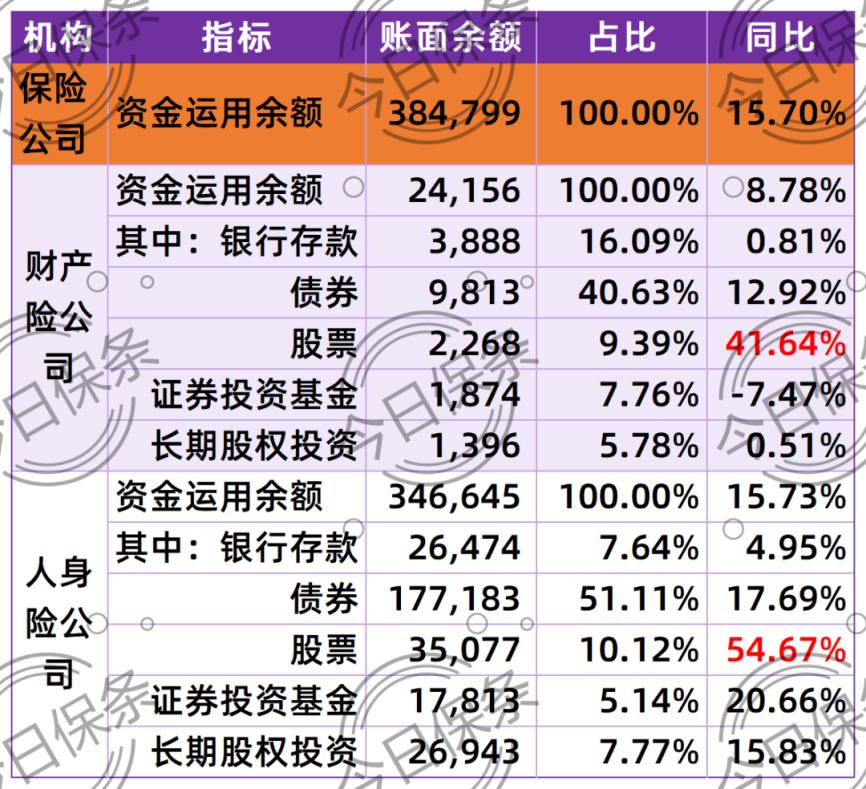
As of the end of 2025, the proportion of stocks in insurance companies’ equity investments hit a four-year high.
What exactly did the insurance money buy? Banking is the core direction.
According to statistics, in 2025, insurance companies held placards in the Shanghai and Shenzhen stock markets a total of 41 times, a 10-year high. Among the 41 placards raised, 20 were H-share listed companies, six of which were banks.
Ping An Capital is a typical representative of active insurance capital. Since 2025, Ping An Life has purchased H shares of Agricultural Bank of China 16 times, increased its holdings of H shares of China Merchants Bank 15 times, increased its holdings of H shares of Postal Savings Bank of China 12 times, and increased its holdings of H shares of Industrial and Commercial Bank of China twice.
After massively increasing its holdings, Ping An Life now holds 20% of Agricultural Bank of China's H shares, 20% of China Merchants Bank's H shares, and 16% of Postal Savings Bank's H shares.
In addition to banks, there are also internal mutual purchases of insurance funds.
In mid-to-early August 2025, Ping An Life successively bought China Pacific Insurance H shares and China Life H shares, both of which reached the mark-up line (5%).
After reaching the mark-up line, Ping An Life not only did not slow down its investment pace, but instead further increased its investment. As of February 3, 2026, Ping An Life holds 10% of China Life's H shares.
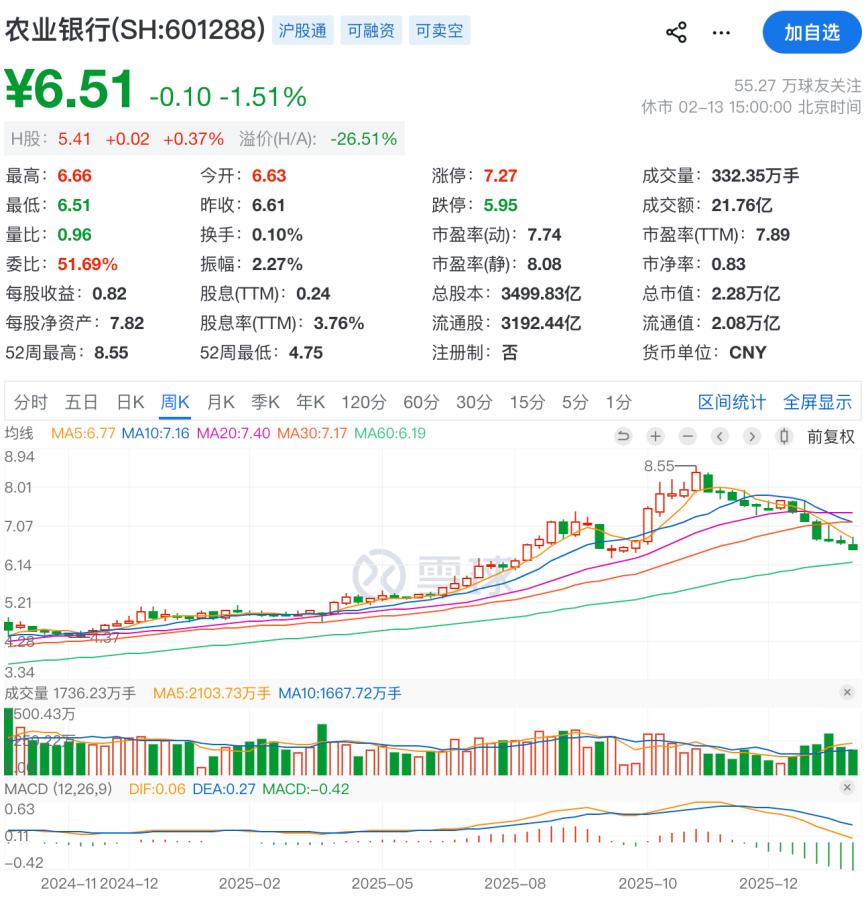
Although insurance funds continue to increase their holdings in bank stocks, the stock prices of bank stocks are still adjusting.
Taking the leading Agricultural Bank of China as an example, it has continued to weaken since peaking in November 2025. As of February 12, the stock price has fallen by more than 20% from its high, just one step away from the annual line.
Why is Shantou so popular during the Spring Festival of 2026?
From a policy perspective, 2026 will definitely be a big year for domestic demand.
On February 16, New Year's Eve, "Qiushi" published the leader's important article "The Key Tasks of Current Economic Work," which once again placed domestic demand in the most important position.
The article emphasizes that there will be many clues for economic work in 2026, and we must grasp the key points and outline the outline. Adhere to the dominance of domestic demand, build a strong domestic market, coordinate the promotion of consumption and expand investment, and make full use of my country's ultra-large market advantages.
We will deepen the implementation of special actions to boost consumption, formulate and implement plans to increase the income of urban and rural residents, expand the supply of high-quality goods and services, optimize the implementation of the "two new" policies, clean up unreasonable restrictive measures in the consumption field, and release the consumption potential of cultural tourism and other services.
History tells us that stimulating consumption is not easy.
What is the situation like during the 2026 Spring Festival as the most important consumption window at the beginning of the year?
According to Lianhe Zaobao, data from the Ministry of Commerce showed that in the two days before the holiday, the average daily sales of key retail and catering companies across the country increased by 10.6% compared with the two days before the Spring Festival in 2025.
In comparison, retail catering sales increased by 4.1% during the entire Spring Festival in 2025.
On February 15, the passenger flow and turnover of 78 pedestrian streets (business districts) monitored by the Ministry of Commerce increased by 23.2% and 33.2% respectively compared with the first day of the holiday last year.
As of the 15th, New Year’s Eve dinner bookings on key platforms increased by 80.7%, hotel accommodation transactions increased by 32.7%, car rental orders increased by 54%, ice and snow tourism consumption increased by 1.2 times, and winter vacation consumption increased by 68%.

The rise in domestic demand during the Spring Festival is partly due to the misalignment and extension of the holiday, and on the other hand is closely related to changing trends.
According to media reports such as CCTV Finance, the 2026 Spring Festival will focus on "reverse New Year celebrations", that is, celebrating the New Year from small cities to big cities, and parents celebrating the New Year with their children.
According to Voice of China, online travel platform data shows that during the 2026 Spring Festival holiday, many "reverse New Year" routes to Beijing, Shanghai, Chengdu, Guangzhou and other places are popular, and air ticket bookings have doubled.
Among them, among the passengers flying to Beijing, the number of passengers aged 60 and above increased 1.6 times compared with the same period during the Spring Festival holiday in 2025.
Guangdong tourism is particularly popular this year. According to Yangcheng Evening News, according to the latest data released by an online travel service platform, during the 2026 New Year period, the number of orders from tourists to Guangdong increased by 44% year-on-year.
According to information from the "Guangzhou Railway" WeChat public account, on February 13, Guangdong sent 1.909 million passengers, an increase of 165,000 passengers or 9.5% year-on-year; 1.426 million passengers arrived, an increase of 316,000 passengers or 28.4% year-on-year.
In Guangdong, Shantou is considered popular.
According to media reports such as Red Star News, the prices of some hotels in Shantou have exceeded those on the Bund in Shanghai. House prices at Home Inns and other hotels have generally jumped to more than 1,000 yuan, and some hotels in scenic spots have even exceeded 6,000 yuan.
Compared with usual times, many have doubled, and the most have even increased by nearly five times.
In this regard, the Price Monitoring Center of Shantou Municipal Development and Reform Bureau stated that this is caused by a short-term surge in market demand, and prices will gradually fall after the fifth day of the new year.
However, many media believe that such a price increase is abnormal and irrational, and that merchants are suspected of raising prices.
Objectively speaking, in today's consumer environment, it is a miracle that hotels in Shantou can maintain such high prices.
Obviously, this cannot be explained by simply raising prices.
We checked Shantou’s Spring Festival tourism situation in recent years and found that it is growing explosively.
During the 2024 Spring Festival, Shantou received a total of 5.0716 million tourists, an increase of 43.4%, and tourism revenue was 4.37 billion yuan, a surge of 133.03%.
During the Spring Festival of 2025, Shantou received more than 6.3 million tourists, and tourism revenue exceeded 6 billion for the first time, with a year-on-year growth of more than 40%.
In 2026, the popularity of Spring Festival tours in Shantou is still growing. According to The Paper, on February 16 (New Year’s Eve), Shantou received a total of 1.1507 million tourists, more than 30% year-on-year.
Why do people want to go to Shantou and other Chaoshan areas to celebrate the New Year?
According to an article by Mirror Studio, this is the result of looking for the flavor of the year. Since two or three years ago, folk activities such as English singing and dancing in Guangdong and Wandering Gods in Fujian have been on the hot search in turn. Through short videos, many folk customs that originally existed only in local memories were quickly spread.
People from all over the country poured in, and Shantou was overcrowded. You know, Shantou has a population of only 5.5 million, but the number of tourists has increased by one to two million in two to three years.
Without major expansion of local hotels, there will be no choice but to raise prices.
According to top news reports, hotel bookings in Shantou during the 2026 Spring Festival surged 186% year-on-year. There are only more than 100 local mid-to-high-end hotels in total, with about 20,000 guest rooms. The number of guest rooms is 20,000. Even if three people are accommodated in a single room, it can only accommodate 60,000 people, which is a drop in the bucket.
Labor costs during the Spring Festival were three times higher than usual, and conflicts broke out intensively, creating a price miracle.
Shantou tourism is so popular, why not expand it? The answer is, on the road.
The Paper reports that mid-to-high-end hotels in Shantou will enter a frenzied expansion wave in 2024, with as many as 20 hotel projects planned to be put into construction (or under construction) that year.
According to an article on the Kilou public account, in 2025, more than 20 large-scale hotel projects will enter the construction or opening stage, with many projects exceeding RMB 100 million each.
Starting from 2027, it will be the first wave of expansion of Shantou hotels, and prices may fall back by then.
In 2025, in addition to the reverse tourism craze among Chinese people, inbound tourism by overseas tourists will also continue to be popular.
According to predictions from the National Immigration Administration, the average daily number of entries and exits at ports across the country during the 2026 Spring Festival holiday will exceed 2.05 million, a year-on-year increase of 14.1%.
According to Phoenix Finance and other media reports, during the 2026 Spring Festival, the number of air tickets booked by foreigners to China increased more than four times year-on-year.
Singapore, Australia, and Canada are at the forefront. Bookings in European countries such as the Netherlands, Spain, and the United Kingdom have more than doubled, and Argentina has increased by more than 9 times.
In addition to tourism, overseas tourists may have other purposes.
On February 10, according to the 21st Century Business Herald, dental, physical examination, and traditional Chinese medicine physiotherapy have become the "new three-piece package" for overseas tourists entering China.
The National Health Commission's 2025 foreign-related medical services report shows that key foreign-related hospitals received 1.28 million international patients throughout the year, an increase of 73.6% from three years ago, of which the number of European and American patients doubled.
We have analyzed many times before that if China can continue to expand the scale of inbound tourism, it will be extremely beneficial to domestic demand.
On February 15, the Ministry of Foreign Affairs officially announced that Canada and the United Kingdom would be unilaterally exempted from visas, and the circle of friends was once again expanded.
Inbound travel is very popular, and outbound travel is not bad either.
On February 20, according to PR Newswire, the number of Chinese outbound tourists in 2026 is expected to exceed 225 million, not only surpassing the pre-epidemic level, but also marking that the market has transcended a simple "recovery period" and entered a new structural growth stage.
Liquor has always been an important indicator of consumption during the Spring Festival. Liquor consumption during the Spring Festival in 2026 will be polarized, and there is a big difference between Moutai and non-Moutai.
According to Caixin reports, in the nearly three weeks before the Spring Festival (January 25 to February 10, 2026), Moutai's sales increased by 32.3% month-on-month. The wholesale price of Feitian Moutai increased moderately from 1,680 yuan per bottle on February 9 to 1,715 yuan per bottle on February 13.
According to agency tracking, the current shipment progress of Moutai dealer channels has reached more than 30% of the annual sales target, compared with about 25% in the same period last year, and channel inventory is low.
A Moutai dealer said that sales in 2026 will be better than in 2025, but dealers dare not stock up on wine.
However, the rising consumption of Moutai cannot maintain the overall popularity of the product line. According to Jiemian News, the current market is "hot in Feitian and sluggish in MaMao", and the Year of the Horse zodiac wine is not as popular as in the past.
Generally speaking, this year’s Spring Festival consumption is better than last year, but whether this can be reversed remains to be seen.
On February 19, the IMF issued a document titled "How China's Economy Shifts to Consumption-led Growth", proposing several major measures.
The article points out that China's current household savings rate is much higher than the OECD median, and private consumption and social security expenditures are significantly lower than the OECD level.
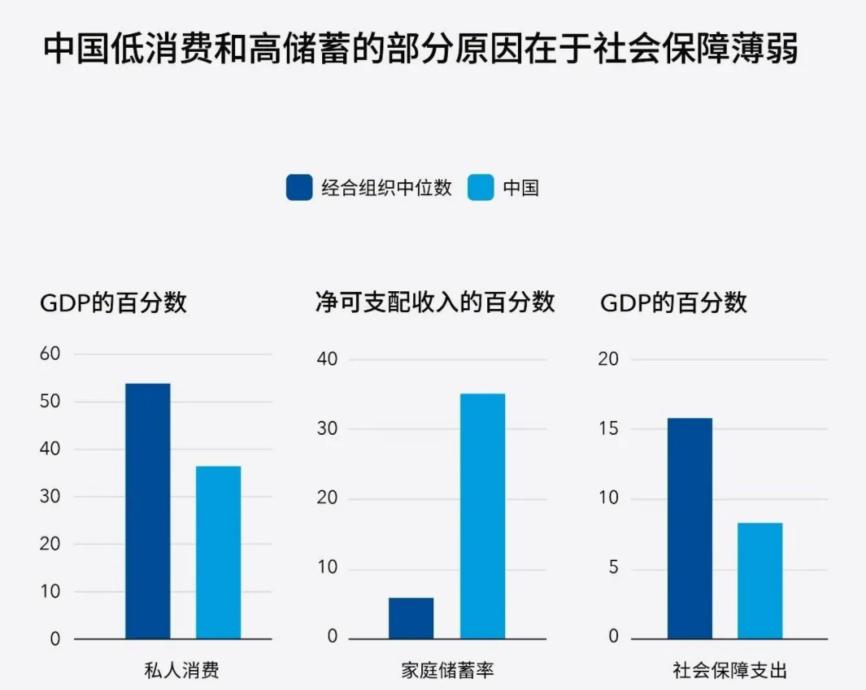
How to convert savings into consumption may start with strengthening social security.
The IMF proposed that if measures such as expanding social welfare and household registration reform for residents in rural areas are adopted, China's consumption may be greatly improved.
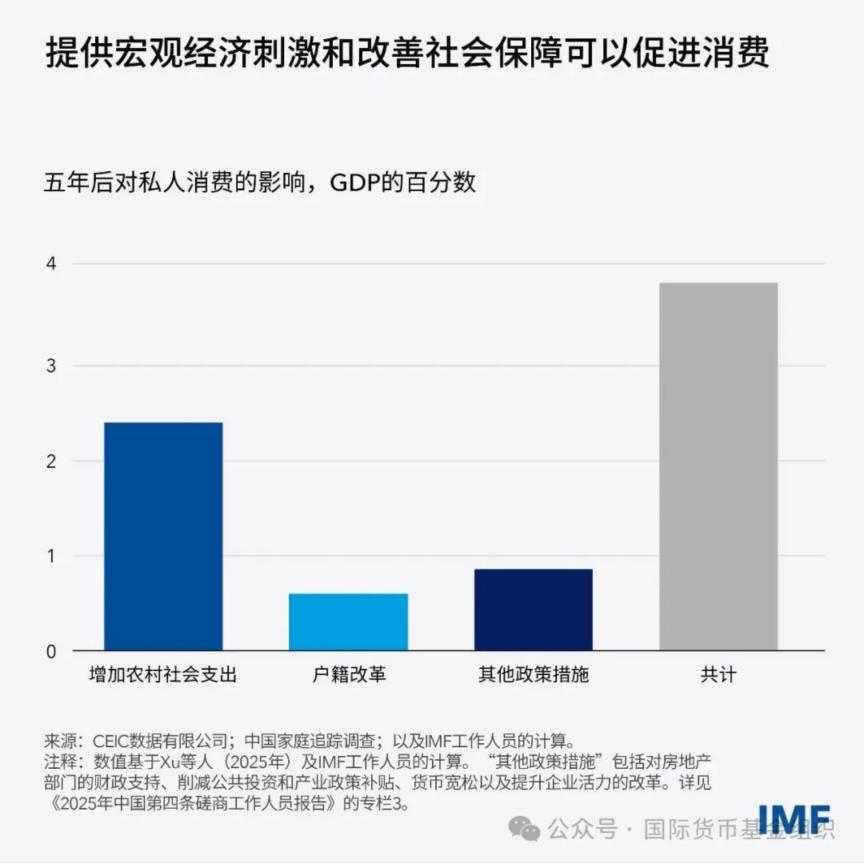
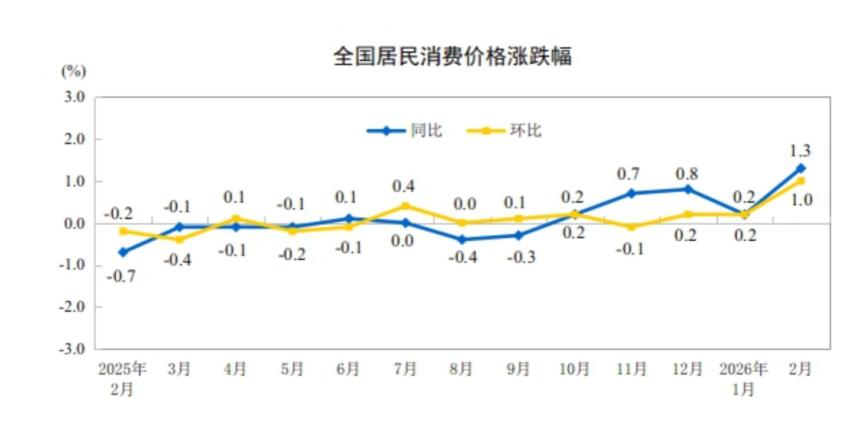
Consumption cannot be afforded, and inflation is likely to remain at a low level.
Regarding China's 39 months of negative PPI growth, the IMF has recently conducted a special analysis and dismantling.
According to the Rick Notes public account, the IMF paper states that historically, in areas where real estate prices have been declining for a long time, CPI has tended to continue to decline, and China is no exception. In 2021, after the adjustment of China's property market, CPI has also entered the era of deflation.
The IMF further dissected it and found that provinces in mainland China with greater housing price declines tended to have greater CPI declines.
Prudent consumption caused by the wealth effect forms a perfect link.
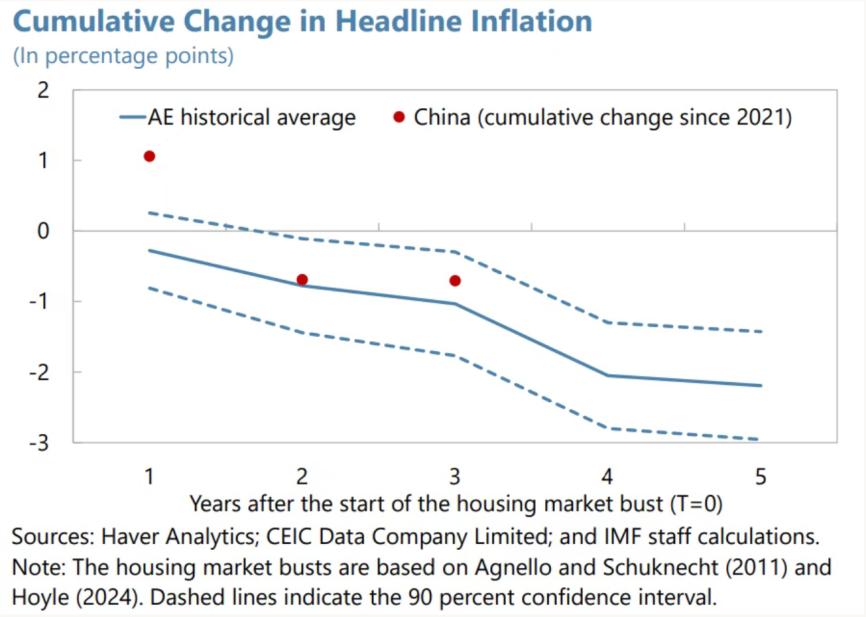
From this perspective, if you want to increase prices, you must stabilize housing prices. Housing prices have become a prerequisite for the rise of consumption.
The louder the trade war, the better will China’s exports become?
In the past few years, foreign trade has been the most important support for China's economy.
No matter how European and American countries block it, China's global share of exports remains at a historically high level. In 2025, China's export share will hit a new record high.
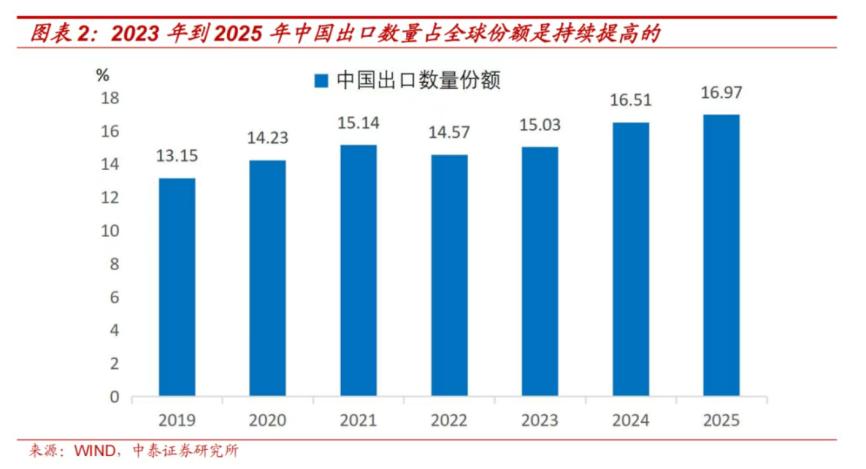
In 2025, various data prove that the United States' attempt to use tariff barriers to reverse the world trade pattern has completely failed. This is not only reflected in China's trade data, but also in the changes in U.S. trade.
On February 19, data from the U.S. Department of Commerce showed that the U.S. trade deficit in goods and services expanded to $70.3 billion in December 2025, far exceeding market expectations.
At this point, the United States has accumulated a total trade deficit of more than 900 billion U.S. dollars in 2025. Although it has narrowed slightly compared with the historical record in 2024 (less than 2 billion U.S. dollars), it is still at the highest level in history.
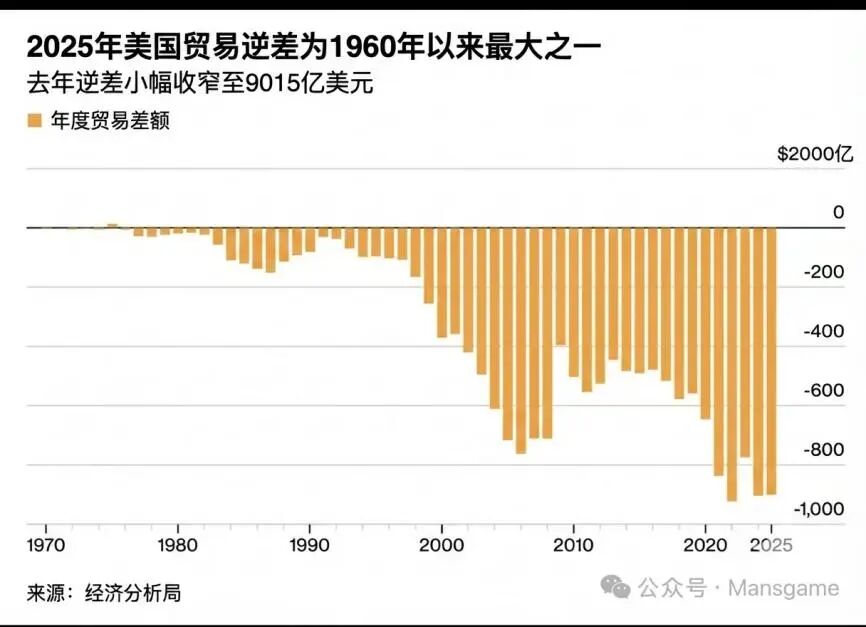
According to reports from Reuters and other media, data from the U.S. Department of Commerce also showed that the U.S. trade deficit with China narrowed from $295.5 billion in 2024 to $202.1 billion in 2025, a significant year-on-year decrease of nearly 32%.
The direct trade deficit with China has declined, but the overall deficit has remained unchanged. This is the result of the structural adjustment of China+ (ASEAN, Latin America, and Africa).
The Sino-US trade pattern continues to move forward while the other continues to move backward. The general trend seems to be difficult to stop.
However, as China's trade surplus continues to expand, there are more and more doubts. As China celebrates the Spring Festival, major global economic and trade institutions continue to speak out, calling on China to change the current trade imbalance.
On February 13, World Trade Organization Director General Iweala said in Germany:
China has used exports to promote economic growth in the past 40 years, but this trade model cannot drive China's growth in the next 40 years. The $1.2 trillion trade surplus held by China will be unsustainable because the rest of the world cannot absorb it. If China takes no action, we will see more new trade barriers emerge.
On February 18, the IMF warned that China's current economic policies have caused resource misallocation domestically and produced negative spillover effects overseas, and called for adjustments to the development model and a shift to a growth model dominated by domestic demand and consumption.
In Europe, high-wall trade protection measures are still increasing.
On February 17, the Financial Times reported that the European Commission is planning to amend the relevant provisions of the soon-to-be-announced Industrial Accelerator Act (IAA). It plans to require that at least 70% of the "non-battery components" of electric vehicles (EVs), hybrid vehicles, and fuel cell vehicles must be produced in the EU, and the final assembly must also be completed in the EU before they are eligible to apply for support from EU countries or participate in public procurement.
These changes are clearly targeted at China.
The Financial Times also revealed that according to the draft of the Industrial Accelerator Bill it has seen, the European Commission will also stipulate that at least 25% of aluminum products and 30% of plastic doors and windows in the construction industry must be manufactured in the EU to qualify for public subsidies.
We have been tracking EU policies for a long time, and industrial policies plus carbon tax barriers have jointly formed an increasingly deep trade gap. Going to the EU to start production and build factories has gradually become the only way.

In terms of China's foreign trade, there has been a very paradoxical change recently.
As Sino-Japanese relations continue to be tense, Japan's exports to China have bucked the trend and surged.
According to Wall Street Insights, Japan's export growth reached 17% in January 2026, which was not only significantly higher than the 5.1% growth in December last year, but also significantly exceeded market forecasts, marking the best start since 2023.
Which regions contribute to Japan's exports? China.
According to reports, in January 2026, Japan's exports to China increased significantly by 32%, while exports to the United States decreased by 5%. Because of China's strong demand, Asia has become the largest contributor to Japan's external demand.
From a category perspective, products such as machinery and chips have the fastest growth rates, with growth rates of 14.3% and 27.3% respectively. It seems that Chinese customers are hoarding Japanese equipment to prevent further changes in the relationship between the two countries.
Cursing the Supreme Court, Lao Chuan lost on tariffs for a while?
On February 20, Lao Chuan’s special treatment at the U.S. Supreme Court came to an end. The U.S. Supreme Court ruled that the relevant large-scale tariff measures implemented by the Trump administration lacked clear legal authority.
The Supreme Court made the ruling by a vote of 6 to 3. Of the nine justices on the Supreme Court, six were appointed by Republicans, three of whom were appointed by Trump.
Lao Chuan scolded the other party for being unpatriotic and disloyal.
Chief Justice Roberts said he was defending judicial independence, "We don't have an 'Obama judge' or a 'Trump judge,' a 'Bush judge' or a 'Clinton judge. What we have is a group of extraordinary and dedicated judges who do their best to deliver justice to every person who comes before them."
Lao Chuan chose to be tough and announced at the press conference that day that in accordance with Article 122 of the 1974 Trade Act, an additional 10% global import tariff will be imposed on the existing tariffs for 150 days.
It seems that there are many difficulties for Lao Chuan to get involved in the independent judicial and Federal Reserve systems.
Economically speaking, these farces will have many implementation difficulties. For example, how will customs enforce them? Also, how to deal with the hundreds of billions of dollars in tariffs paid by U.S. companies after Trump significantly increased global tariffs last year.
Economists at the University of Pennsylvania's Wharton Budget Model estimate that more than $175 billion in tariffs imposed under the International Emergency Economic Powers Act are at risk of being refunded.
With tariffs removed, the three major U.S. indexes happily rose.
So, what impact will this move have on Chinese goods? A friend sent an analysis, which is very detailed and can be used for reference.

1. What has the Supreme Court struck down?
What has been canceled is the global "reciprocal tariff" imposed by Trump in accordance with the International Emergency Economic Powers Act (IEEPA), in which the tax rate on Chinese goods ranges from 10% to 34% (it was even pushed up to 125% at one time).
This part of the tariff was found to be illegal and was immediately stopped.
2. What else did Trump add?
In accordance with Section 122 of the Trade Act of 1974, he imposed an additional 10% temporary tariff on global imported goods for 150 days.
This 10% is superimposed on the original legal tariffs (such as Section 301 tariffs on China and Section 232 steel and aluminum tariffs).
3. Comprehensive results: Are tariffs increased or reduced?
Let’s look at two situations:
Situation 1: Ordinary Chinese goods (Section 301 tariffs apply)
Before: Section 301 tariff (7.5%–25%) + IEEPA reciprocal tariff (10%–34%)
Now: Section 301 tariff (7.5%–25%) + new 10% temporary tariff
Estimate the median:
The previous comprehensive tax rate ≈ 16.25% + 22% = 38.25%
The current comprehensive tax rate ≈ 16.25% + 10% = 26.25%
Tariffs are down for most Chinese goods, but are still well above normal levels.
Scenario 2: Specific commodities such as steel and aluminum (Article 232 tariffs apply)
Before: 232 tariff (25%) + IEEPA reciprocal tariff (10%–34%)
Now: 232 tariff (25%) + new 10% temporary tariff
Estimate the median:
Previous comprehensive tax rate ≈ 25% + 22% = 47%
The current comprehensive tax rate ≈ 25% + 10% = 35%
For steel, aluminum and other commodities, tariffs have also dropped, but they still remain at high levels.
One sentence summary:
For the vast majority of goods exported from China to the United States, the tariff level has dropped, but this is not a "return to the original", but a reduction from an extremely high illegal tariff level to a still high legal tariff level.
The essence of Trump's operation is to replace the previously illegal 10%-34% global tariffs with a legal 10% temporary tariff, while retaining all other legal tariffs on China.
The first few articles of the Year of the Horse are over. Those of us who can read this far during the Spring Festival, we admire the energy of learning.
During the Chinese New Year this year, many areas can set off firecrackers. There is a strong flavor of the New Year in the air again, and the gorgeous memory of fireworks streaking across the sky is back.
Starting from New Year's Eve, the ground is red, the Sky Monkey is flying, the God of Thunder is ringing in the clouds…these names that only appear during the New Year gradually turn from vague to realistic and vivid, and the long-lost excitement, excitement, and little fear arise spontaneously.
The year seems to be how it should be spent.
The return trip from the Spring Festival is coming soon. I wish everyone a happy Year of the Horse and a healthy return trip.