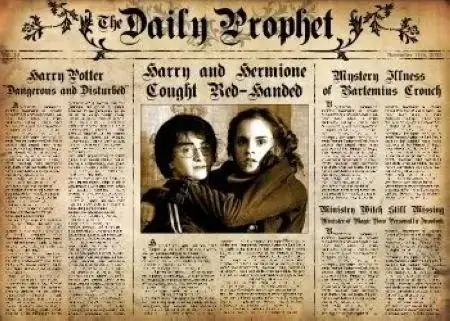
About 20 years ago, there was a fascinating "magic newspaper" in the movie "Harry Potter and the Philosopher's Stone". The characters in the newspaper pictures will move and the text content will automatically refresh. The plots in science fiction movies at that time have become reality today. We see the pictures and texts in WeChat and the content in handheld readers every day, and we don’t think it is very magical.
This is an interesting topic. The various communication media that people rely on for their lives are actually changing all the time. From handwriting and drawings to electronic diaries, from family photo albums to photo waterfalls in "moments", from theater viewing to video logs on mobile phones, the current media communication conditions and media usage status are no longer what they used to be, and the presentation of literature and art is also constantly changing.
New media literature and art have reshaped our way of life
The changes in the media environment surrounding our work, communication, and entertainment are, in a general sense, a logic of technological evolution. Just as mechanical printing and the postal system gave birth to modern newspapers and magazines, electricity and radio technology gave birth to radio and television, mobile Internet, 5G communications, artificial intelligence, big data and cloud computing are the technical basis for all video software and social application scenarios today.
If we carefully consider the above process, we can find that when new media is applied to society, from a time perspective, there are both leap-forward iterations, such as mobile phones replacing wired phones, and gradual changes, such as the resolution of mobile phone screens getting higher and higher. Only when we look back can we realize how far we have come. From a spatial perspective, the diffusion trajectory of new media in the field of literature and art is not like a spoonful of sugar sprinkled into water, which will soon be evenly distributed and invisible. It is more like a drop of ink dripping into water, with a process of spreading out.
At any point in time, we will encounter new ways of playing with new media. As far as the attitude is concerned, those who enjoy it will enjoy it as if they are sweetmeats, while those who resent it will abandon it like a piece of shit. From the printing era to the film era, and then to the radio and television era, this has also happened. The key issues are two: the speed and status of new media literature and art adapting to society, and the speed and status of everyone adapting to new media literature and art.
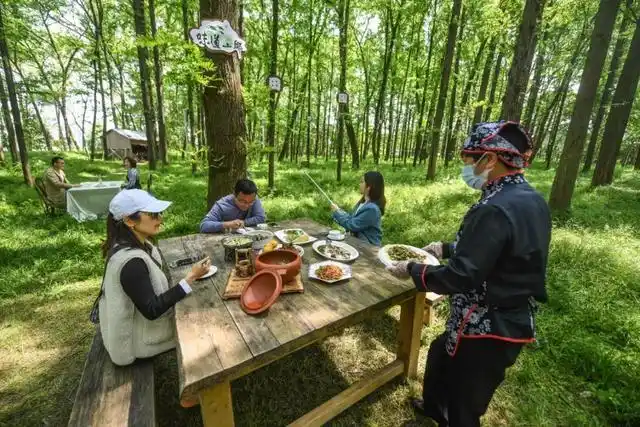
The staff tasted mountain delicacies at a pastoral table in the woods of Xinsha Island, and conducted a "cloud live broadcast" through a mobile phone live broadcast platform. Photo by Xinhua News Agency reporter Xu Yu
How does new media literature and art adapt to society? In the laboratory and on the drawings, technology is neutral, but once it is among different groups, the use of technology will inevitably be biased. For example, social software is used all over the world, but the content shared by members of different cultural backgrounds on social software has its own characteristics. The various "online articles" that Chinese people are used to and the "eating and broadcasting videos" that are popular among young people in East Asia have obvious regional and cultural characteristics.
Take Kuaishou as an example. In 2011, "GIF Kuaishou", a free software for making and sharing GIF animations, was launched; in 2013, "GIF Kuaishou" transformed from a tool software into a short video community; and now, "Internet celebrity live broadcast" and "live streaming with goods" have become its main profit models. The development trajectory of "Kuaishou" reflects some characteristics of the integration of Chinese new media and literature and art, and also reflects some of the current trends in popular literature and art.
Develop your own ability to adapt to and use new media
How do each of us adapt to new media? This and the previous question are actually two sides of the same coin. On the whole, the speed at which new media spreads in a society depends on the acceptance of a large number of individuals. Since people have different endowments and habits, each individual’s preferences and choices for new media are also different. However, as long as everyone agrees with the view that “new media will replace old media, just as new media in the future will inevitably replace today’s new media,” they should cultivate their own ability to adapt to and use new media.
This kind of adaptation is not unique to today. At the end of the 19th century, with the maturity of photography, mankind entered the age of images, which broke the long-term text tradition. Different from the relatively single and linear communication method of reading text, the communication form in the image era is more diversified and non-linear. Lenses and pictures have become an important part of social culture and people's lives. Information acquisition, knowledge mastery, entertainment and leisure are all increasingly related to the viewing of images. Therefore, our ancestors a hundred years ago overcame their fear of photography and learned to watch movies, and today we learn to shoot videos, which are essentially adaptations to the media ecology.
It was also since the second half of the 19th century that the concept of "adaptation" in biology was introduced into the research field of early Western sociology. The psychological adaptation of individuals in the interaction with the social living environment, that is, the response to culture, values, and lifestyles, is called "social adaptation." Since the 1960s, with the rise of the media industry and media research, individual adaptation to the media ecology has become an important part of "social adaptation". Later, a concept called "media literacy" was created.
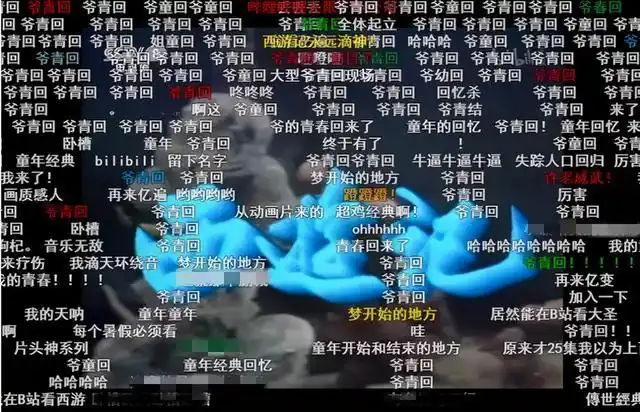
Media literacy is a topic that is often talked about and is always new. With the changes of media, new connotations and requirements are constantly emerging. Back then we watched plays in theaters, but in the future more plays will be broadcast on mobile phones. Search for content about "Peking Opera" and "Kunqu Opera" on "Douyin", and you can find a large number of enthusiasts and fans. It can be said that "who said opera does not have TikTok". For another example, if a young person tells you unfamiliar terms such as "barrage", "one-click triple connection", "luzhuanfan", etc., you might as well search for it, learn more about it, or even give it a try. The new media ecology calls for everyone's new media literacy. The literary and artistic ecology under the new media background must also match the new media literacy of the mainstream people.
Let new media cross the technical threshold and become more warm and humane
The social changes brought about by changes in communication methods are by no means limited to the content they convey, but rather the social relations and social structures they affect. New media literature and art has reshaped our lifestyle and reconstructed the media environment including the symbolic environment and the perceptual environment. The process of new media literature and art adapting to society is the process of new media integrating and transforming the existing media ecosystem, thereby forming a symbiotic media ecosystem and literature and art ecosystem.
New media blurs the strict "sender-receiver" relationship in the past, reduces the cost of personal creation and expression, and empowers everyone. If we can correctly understand and handle the relationship between new media and national policies, commercial capital, and public attitudes, and use new media to expand cognitive resources, extend social scenes, inherit excellent culture, and convey true feelings, we can cross the technical threshold and transform new media from a binary digital existence into a warmer and more humane one.
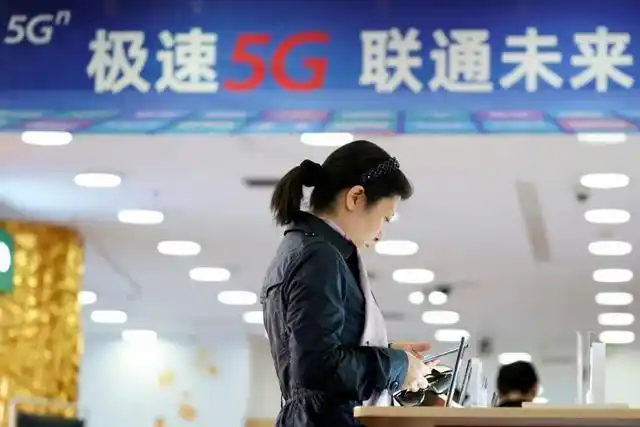
The technical content of mobile phones is getting higher and higher, and the creative functions are becoming more and more powerful. The picture shows consumers experiencing 5G mobile phones. Photo by Xinhua News Agency reporter Shen Bohan
Some people say that new media has fragmented time, brought about "fragmented" usage habits of users, led to people's "de-depth" thinking, and made it difficult to distinguish between "virtual" and "reality"… These expressions point directly to the key points of new media. But we must also see that the entire modernization of human society is a process of redefining and recoordinating time and space. As a tool that emerged in the process of modernization, new media has changed the original space-time environment of communication. Our activity space has expanded from offline to online, and new situations such as "cognitive surplus" and "absent presence" have emerged, which essentially promotes people's cooperation and communication. Furthermore, precious ideas are scarce in every era. Rather than saying that new media leads to "de-depth" thinking, it is better to say that human beings will always have to overcome external and internal obstacles to maintain the depth and sharpness of thinking. The "Li Ziqi Video Series" are very short, but they convey the yearning for pastoral life among users around the world. Who can deny its significance?
“Magic newspapers” have become a thing of the past, what will be the next new media? In the short term, it will be wearable devices and more intelligent media. In the long term, it may be further integration of chips and the human body. We have to wait and see what the media will look like in the future, but human literary and artistic activities will always continue to adapt to technology and the communication ecology created by technology.
(Author: Chen Yi is a professor at the School of Communication of Soochow University and a researcher at the Soochow Think Tank of Soochow University)