"After working hard, China Eastern Airlines has arranged a flight (MU7294) from Muscat, the capital of Oman, to Beijing. It is scheduled to take off back to China at 21:55 local time on March 7, Oman. There are still tickets available."
This is an emergency notice issued by the Consular Protection Center of the Ministry of Foreign Affairs on March 7. It was released simultaneously with the notice, as well as ticket purchase channels and the embassy’s consular protection and assistance phone number.
When the US-Israeli coalition launched a surprise attack on Iraq, the Middle East aviation hubs represented by the United Arab Emirates and Qatar were still operating normally. Moreover, the Middle East is an important transit point for European and Asian routes. A large number of passengers transfer from the Middle East to and from Europe and China every day. Therefore, after the sudden outbreak of war and the suspension of flights, a large number of Chinese tourists were stranded in the Middle East, mainly in the United Arab Emirates and Qatar.
In the current round of the US-Israel war, Iran clearly listed the Gulf countries that provide military bases to the United States as targets for attack. The United Arab Emirates and Qatar, which were originally safe zones in previous conflicts in the Middle East, have also become targets of attack. Although Iran's counterattacks are relatively restrained, they are limited to US military bases in the two countries, have high attack accuracy, and do not attack civilian targets. However, the location of the wreckage of the interceptor shot down from the incoming missile was completely random. This also made these two busy Middle Eastern aviation hubs feel the threat of war for the first time.
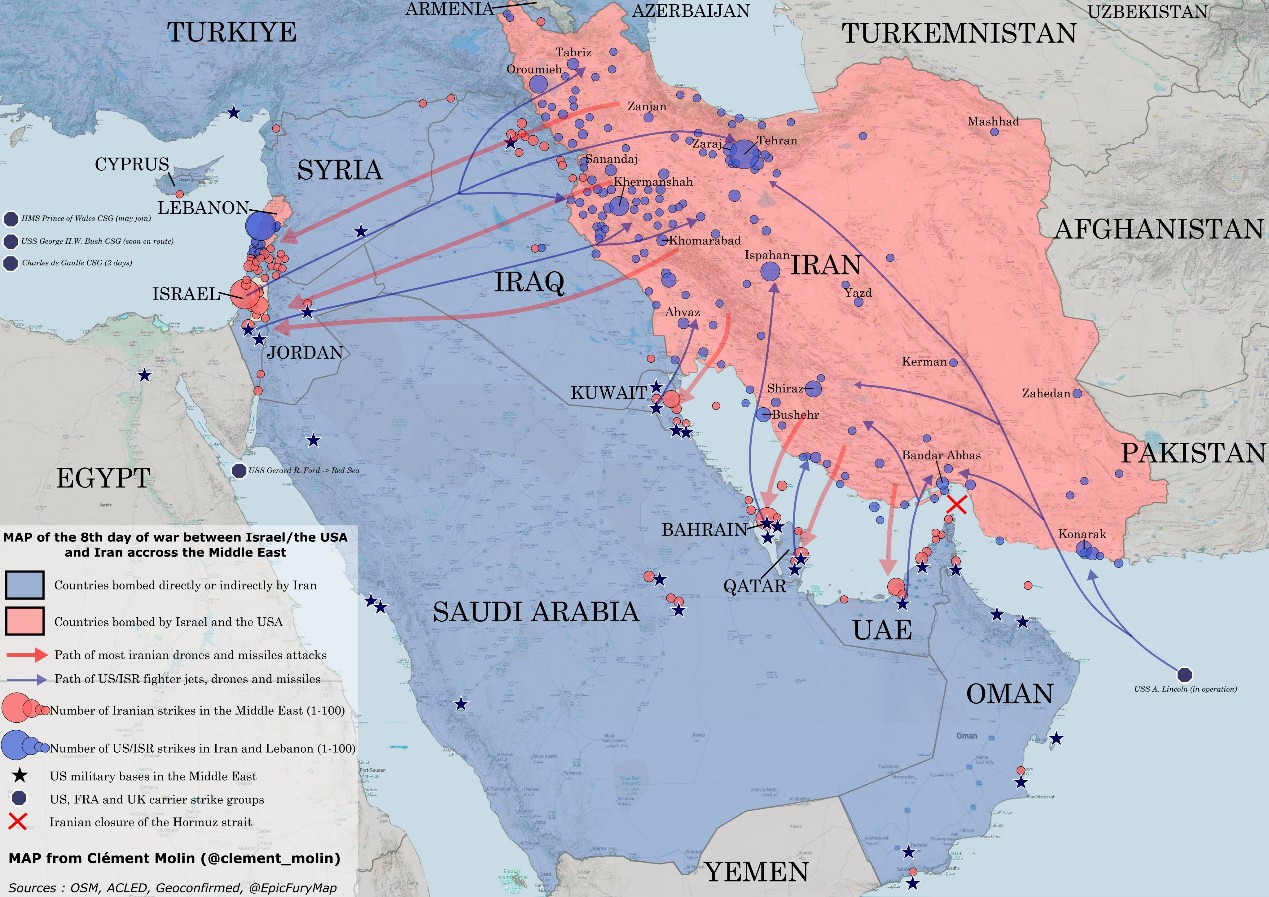
A schematic diagram of the attacks by both sides in this round of the US-Israel-Iraq war. It can be seen that Qatar, the United Arab Emirates, has rarely become the target of Iranian attacks.
For the large number of stranded Chinese tourists, on the one hand there is an urgent need to return home (many of them are forced to stay in transit), and on the other hand there is the real threat of war. For this reason, the local Chinese Embassy also began emergency coordination, and began the evacuation operation after the intensity of the war dropped significantly. Therefore, there was an emergency notice from the Consular Protection Center of the Ministry of Foreign Affairs at the beginning.
Why should we seize the window period to evacuate?
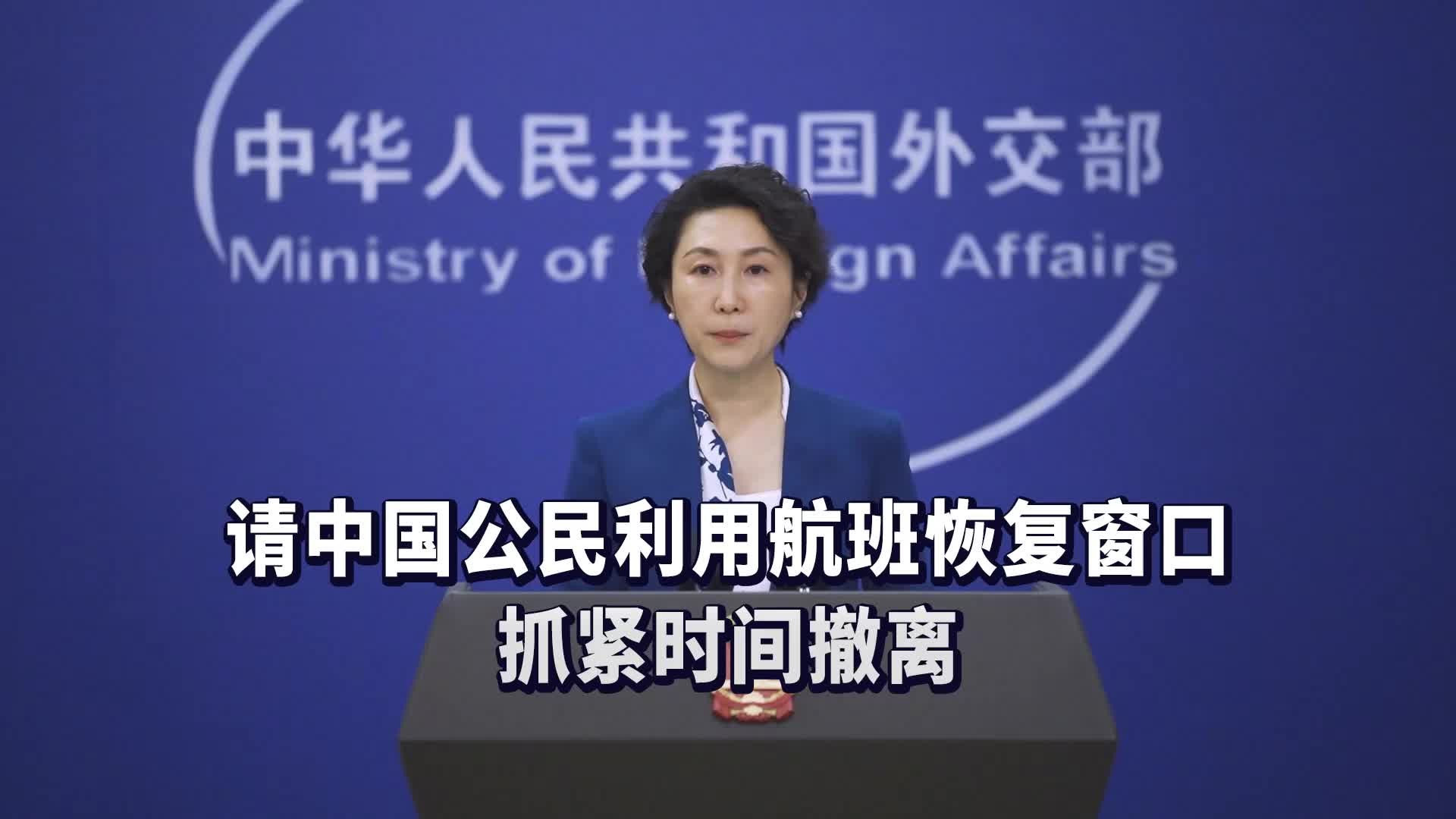
In this Middle East evacuation operation, the air evacuation rhythms in different regions are also different, and the situation is highly complex. Therefore, after starting the evacuation work, the Ministry of Foreign Affairs immediately issued a reminder to take advantage of the short flight recovery window to seize the time to take flights to evacuate. The Ministry of Foreign Affairs' warning is not alarmist, because the reality is that there are many crises.
Saudi Arabia was the first to initiate evacuation operations. On March 2, Hainan Airlines' flight HU7913 from Haikou to Jeddah, Saudi Arabia, successfully landed in Saudi Arabia and flew back to China on the same day, completing the evacuation of the first batch of stranded passengers. Due to its large land area and multiple airports, Saudi Arabia was less affected by Iran's attack, so it was the first to resume air routes and evacuate stranded passengers.
However, the United Arab Emirates and Qatar were the top targets of Iran's attacks on U.S. overseas bases in the early stages of this war, making the situation more complicated.
The UAE and Qatar themselves have a large number of advanced weapons and air defense equipment, and Iran ranks first in missiles and drones launched by these two countries, making the air defense war particularly fierce. According to Zelensky, in the first three days of the war, more than 800 Patriot anti-aircraft missiles were fired in the Middle East. The air defense forces of Qatar and the United Arab Emirates have not experienced actual combat tests. Once there is a passenger plane in the combat airspace when firing to intercept, there is a high probability of accidental damage.
Therefore, the time window for evacuation flights requires a high degree of coordination with all parties to execute flights at designated times, airspace, and routes. Due to the high degree of uncertainty in the war situation, the airport that was operating one hour ago may have an air defense warning and have to be closed, which makes the time window even more precious.
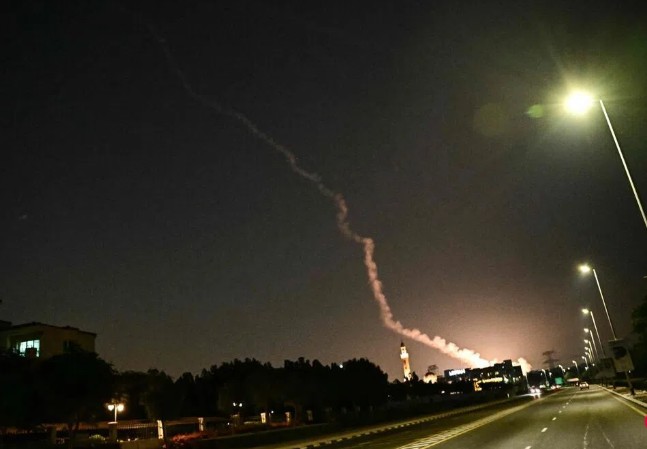
UAE military launches anti-aircraft missiles to intercept
Take the evacuation charter flight of Air France as an example. The aircraft encountered a dangerous situation while performing the evacuation mission of French citizens from the United Arab Emirates, and happened to encounter a large-scale missile attack in the airspace. The evacuation charter flight that was already loaded with passengers had to return to the United Arab Emirates and find another opportunity to fly back to France. This also illustrates the instability of the situation in the Middle East and the complexity and uncertainty of evacuation operations.
Moreover, the limitations of transportation capacity determine that it cannot meet the immediate needs of all stranded people. After the war broke out, all countries were rushing to transport their own citizens, but due to the impact of the war, transportation capacity was extremely limited. Although China's civil aviation urgently allocates aircraft types and resumes routes, the number of flights is limited due to restrictions on airspace approval, safety assessment, aircraft type allocation, etc., and priority must be given to special groups such as the elderly, the weak, the sick and disabled, women and children.
More importantly, the uncertainty of war and the absolute requirement for safety have further reduced the evacuation space. It can be said that the so-called "designated flights" are scarce resources obtained by the embassy through coordination and efforts. Missing one may mean a longer wait or even greater security risks.
Evacuation operations under fire
Technically speaking, it is extremely difficult to formulate a flight plan for such a war zone evacuation flight. On the one hand, we must consider using uncommon routes to fly around. On the other hand, the war zone is extremely variable, and it is very likely that we will need to hover and wait in the air for a long time, or even make an alternate landing due to force majeure. Therefore, it is not only necessary to have a large amount of reserve fuel, but also for pilots to take unfamiliar routes and be prepared to make alternate landings at unfamiliar airports. We will even encounter special situations such as missile attacks, contact loss, GNSS interference, shootings, etc. This not only tests the quality of the crew, but also tests the support capabilities and even the overall national strength behind it.
The evacuation operations of the United Arab Emirates, Qatar and Saudi Arabia were generally smooth and orderly. As of March 10, tens of thousands of Chinese citizens have been successfully evacuated, and this is inseparable from the efforts of the Chinese embassy and consulates and China Civil Aviation.
Taking Qatar as an example, air routes have never been restored due to its small size and constant threats. This leaves people stranded in Qatar to evacuate by land to relatively safe countries such as Saudi Arabia or Oman, and then return home by plane. During the land transfer process, the Chinese embassy and consulates formed special teams, mobilized a large number of resources and coordinated all parties to complete this complicated transfer process and send the stranded Chinese citizens home.
But this land route was not as easy to walk as imagined. Due to the complex and tense relationship between Saudi Arabia and Qatar, it is not easy to enter Saudi Arabia from Qatar for evacuation by land, and it is also full of unknown risks. It takes eight hours to charter a bus from Doha to Riyadh, Saudi Arabia, and pass through a five-kilometer isolation zone between Qatar and Saudi customs. You must have the assistance of a guarantor holding both Saudi and Qatari visas to pass. Some compatriots were temporarily intercepted by military checkpoints during the transfer, and it took several hours of coordination before they could continue. The evacuation could not be completed without the help of the embassy and people from all walks of life.
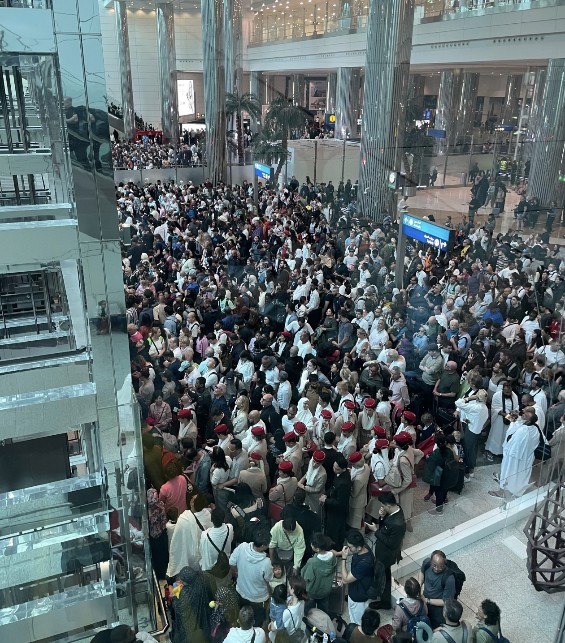
A large number of passengers were stranded at Dubai Airport, and Emirates flight crews could also be seen among them.