Prepare for a construction boom in the country? The outside world has noticed that North Korea has recently significantly expanded the import of various types of machinery and equipment. According to a report by the South Korean media "Daily North Korea" on the 13th, which focuses on North Korea, North Korean trading companies have continued to import agricultural machinery, engineering equipment, industrial machinery, shipbuilding equipment, and medical equipment from the end of last year to the beginning of this month. Among them, agricultural machinery includes tractors, planters, etc., engineering equipment includes excavators, bulldozers, etc., and industrial machinery includes lathes, injection molding machines, etc. These equipment mainly come from China, and some are second-hand goods, entering North Korea through multiple border ports such as Dandong and Hunchun.
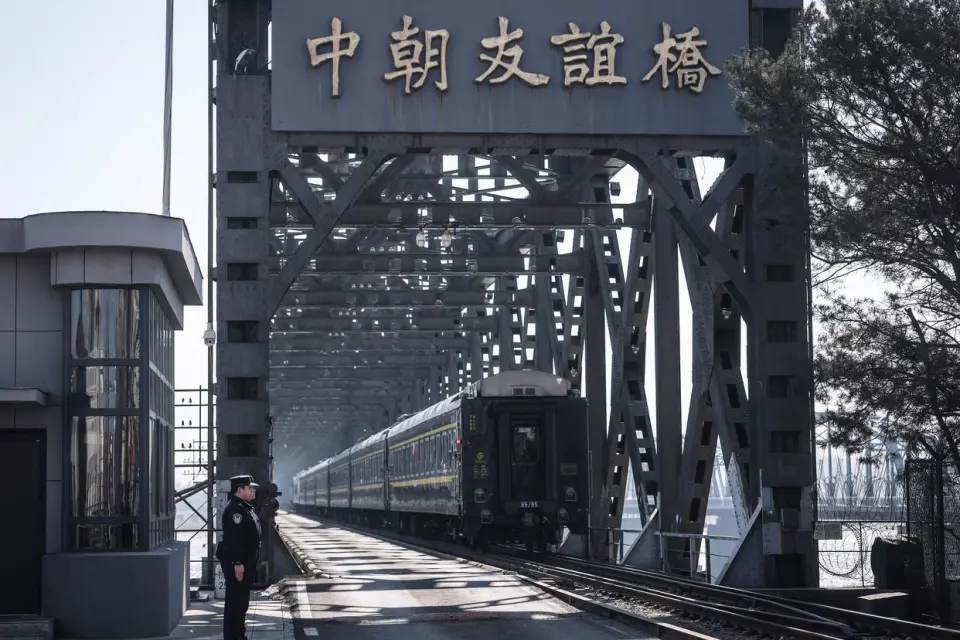
The media said that the import volume of machinery from North Korea has surged in the past three months, even triggering discussions among Chinese traders that "North Korea has never imported so much machinery." At the same time, passenger trains between China and North Korea have resumed operation after six years, and the trade atmosphere on the Dandong border has become active. Goods from North Korea are also sold at higher prices in the market.
Seeing this news, some people may wonder the most direct question: Where does the money come from when North Korea buys so many things? After checking some trade data in recent years, I found that it should not be a big problem. In recent years, a large-scale wig trade has emerged between China and North Korea. According to customs data analysis, wigs alone will bring a RMB trade surplus of approximately 100 million yuan to North Korea in 2025. Judging from the comparison of import and export data, not all of these finished wigs may be sold back to China, but a large part may be sold to Russia or other third-party markets.
In addition, since the Russia-Ukraine conflict, North Korea has obtained opaque but considerable strategic income by providing military supplies to Russia. This input of foreign exchange or equivalent supplies is the "first pot of gold" for North Korea to launch a series of domestic construction projects. Taken together, North Korea can afford to use these revenues to import machinery and equipment that are crucial to economic development.
With the machinery in place, the next question is: Do they have enough fuel or electricity to run? There seems to be no need to worry too much about this. According to Chinese customs data, China's refined oil exports to North Korea have significantly recovered and exceeded pre-epidemic levels after experiencing extreme shrinkage during the epidemic (only more than 5 million yuan a year).
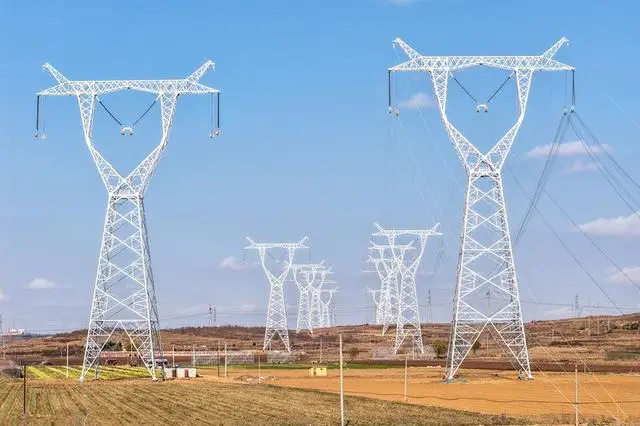
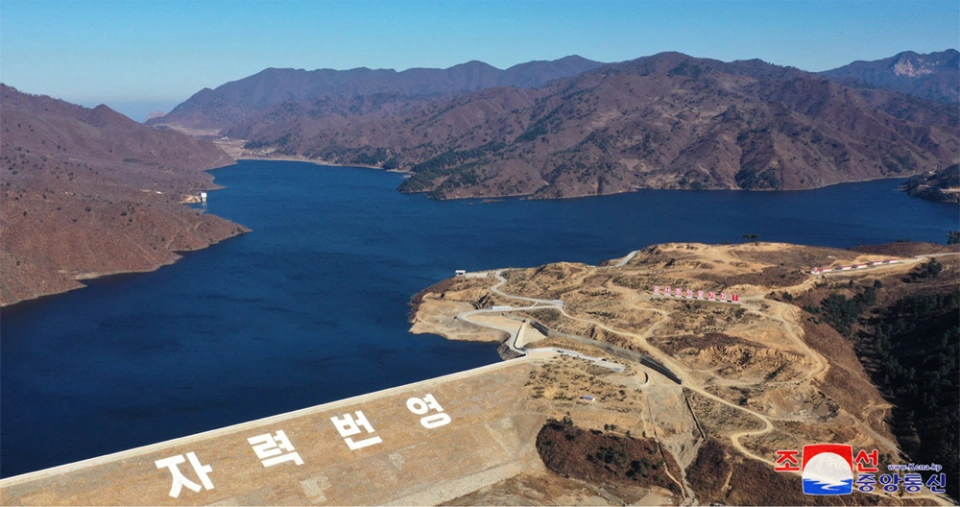
Another key data is electricity. Since there is no internal data from North Korea, we can only observe it from the side. For hydropower stations cooperating on the China-North Korea border, the electricity sold by North Korea to China has increased from 276 million kilowatt hours worth about 79 million yuan in 2019 to 562 million kilowatt hours worth about 174 million yuan in 2025. The power transmission has doubled, which strongly implies that North Korea's domestic hydropower stations are likely to have completed technical transformation, quality improvement and expansion as a whole. In addition, with the completion of a series of new hydropower stations such as Pyongkang, Sepo, and Goseong in recent years, its own power generation capacity has been enhanced. Coupled with the energy support received from Russia, it can be inferred that whether it is oil-burning tractors, excavators, or electric machine tools, injection molding machines, these imported equipment are unlikely to be bought back as furnishings. They have corresponding energy guarantees for actual use.
From the list of imported equipment categories, we can clearly see the logical chain of North Korea's economic development. Agricultural machinery is responsible for improving the basic production capacity of food and raw materials; engineering machinery serves the construction of factories, residences, hospitals and other infrastructure across the country; various industrial machine tools and injection molding machines provide production tools for local industrial factories under the "Local Development 20×10 Policy"; even CNC cutting machines and welding machines in shipyards appear on the list, pointing to more advanced processing and manufacturing fields.
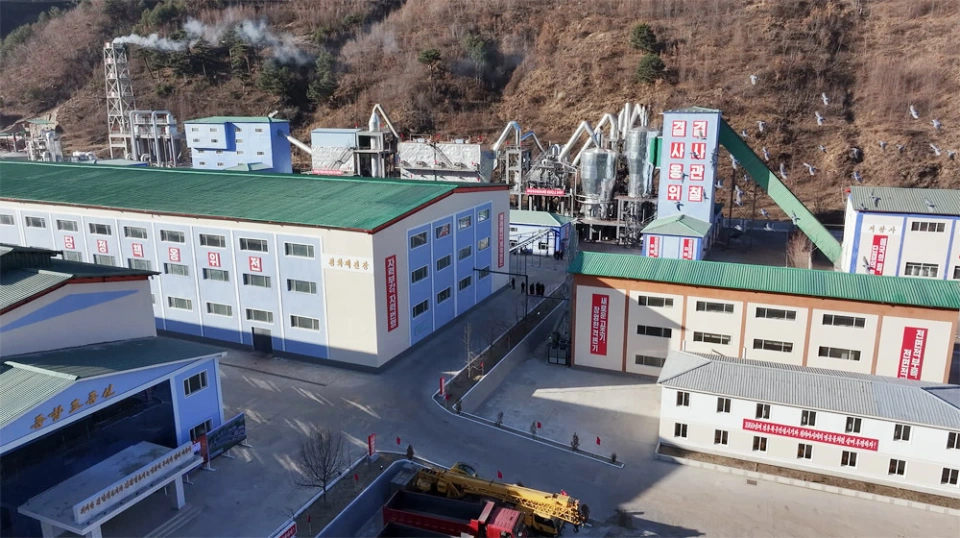
This is a complete map from basic to advanced, from raw materials to processing. As these devices enter the production cycle, the value chain created within North Korea will be extended and enhanced. Once the internal economic cycle is up and running, more products can be produced for domestic consumption and export, and people's lives will naturally become more comfortable.
Even if many of them are second-hand equipment, it is completely suitable for restarting and upgrading an industrial system that has been dormant for many years. And since China's economy has been in a period of adjustment in recent years, with more idle equipment, the price of some second-hand goods may be much more affordable than during the economic boom. This change is tangible and can be seen in the fact that residents of Dandong on the border between China and North Korea began to sell more and higher-priced North Korean goods. This year's scene is likely to be just the beginning of a big era.
Of course, looking at the long-term trend, this large-scale import boom of machinery and equipment may not necessarily continue forever. There are two reasons. First, machinery and equipment are durable goods, not fast-moving consumer goods. Once the procurement is in place, only consumables and repair parts need to be replenished over a long period of time, and frequent large-volume purchases will not be required. The second is that in order to save precious foreign exchange, North Korea will inevitably use its own industrial base and scientific research capabilities to accelerate the imitation and localization of low-end and mid-range equipment.
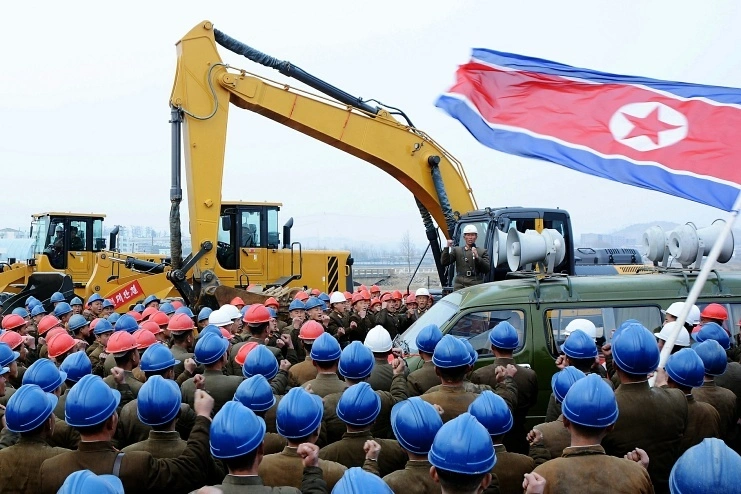
In fact, North Korea has always had its own tradition in reverse engineering and adaptive innovation. Its "Cholima" series tractors and "Fenghuo" construction machinery have Chinese origins. In the future, it may still have to import mid-to-high-end core equipment that it cannot manufacture itself, and if the industrial upgrade goes smoothly, it may even import more advanced and sophisticated equipment. The import structure will shift from "comprehensive distribution of goods" to "compensating for weak links and climbing high-end".
New trends emerging on the China-North Korea border—large-scale imports of production equipment rather than pure consumer goods, and the resumption of passenger trains bringing more frequent movement of people—are strong signals that what is happening within North Korea is a substantive change based on productivity improvements. It is not simply consuming foreign exchange to purchase the means of living, but investing in the means of production with the aim of expanding future reproduction.
The foundation of this change is much more solid than growth driven solely by consumption. With the further smoothing of logistics and people flow channels between China and North Korea, the speed of North Korea's economic recovery and construction is likely to continue to accelerate. In an industrial system that has been silent for a long time, after receiving external energy input, the sound of its gears restarting has become increasingly clear and audible.