The military conflict between the United States and Iran has triggered a global "oil cutoff" crisis, causing worries in Southeast Asian countries that rely heavily on energy imports from the Middle East.
According to the Vietnam News Agency, on March 17, Prime Minister Pham Minh Zheng of the Vietnamese government met with Japanese Ambassador to Vietnam Naoki Ito and expressed his clear hope that Japan would provide support to Vietnam in the energy field. Fan Mingzheng revealed that he has written to Japanese Prime Minister Takaichi Sanae to request help.
The day before (16th), Vietnam’s Ministry of Industry and Trade stated that Vietnam had asked Japan and South Korea to help it increase crude oil supplies.
The Ministry of Industry and Trade of Vietnam said in a statement that day that from March 14 to 15, Deputy Minister of Industry and Trade Nguyen Hoang Long led a delegation to Tokyo, Japan to participate in the "Indo-Pacific Energy Security and Business Forum" jointly organized by the National Energy Council of the United States and the Ministry of Economy, Trade and Industry of Japan. During the period, Nguyen Hoang Long held bilateral talks with partners from Japan, South Korea and the United States.
On the afternoon of the 14th, Nguyen Hoang Long met with Takehiko Matsuo, Japan’s Economic and Trade Commissioner (Deputy Minister level), to discuss specific areas of cooperation, as well as promoting Japan’s construction of energy projects such as liquefied natural gas power plants and nuclear power plants in Vietnam, and discussed long-term cooperation plans in the energy field.
Nguyen Hoang Long mentioned that in view of Japan’s important role in the field of petroleum resources and its abundant crude oil reserves, he “requests Japan to support Vietnam in finding and acquiring crude oil resources to meet Vietnam’s domestic needs.”
Later, Nguyen Hoang Long met with Kim Jung Kwan, Minister of Industry and Trade of South Korea. During the talks, Nguyen Hoang Long reiterated that South Korea has always been an important partner in Vietnam’s energy infrastructure, energy industry and energy transformation development. The candid exchanges between the two parties laid the foundation for future cooperation projects in the energy field, such as liquefied natural gas power generation, nuclear power human resources training and technical cooperation.
"Amidst the complex and volatile situation in the Middle East, Nguyen Hoang Long requested South Korea to assist Vietnam in obtaining crude oil resources to promote crude oil imports," the statement said.
The next day, Nguyen Hoang Long met with US representatives. He reiterated that Vietnam attaches great importance to its relations with the United States and appreciated the role of the U.S. Department of Energy in promoting strategic cooperation between the two countries in the energy field. "The two sides had a very positive exchange, committed to cooperate in a transparent, open and substantive manner, and were willing to facilitate strategic cooperation projects in the energy field."
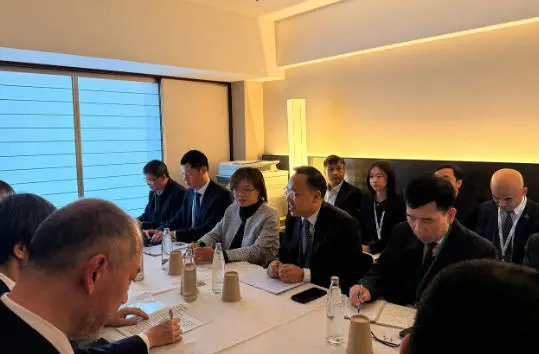
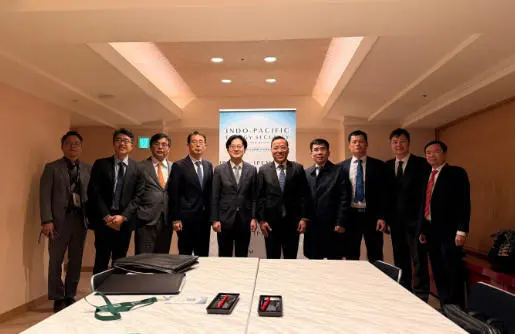
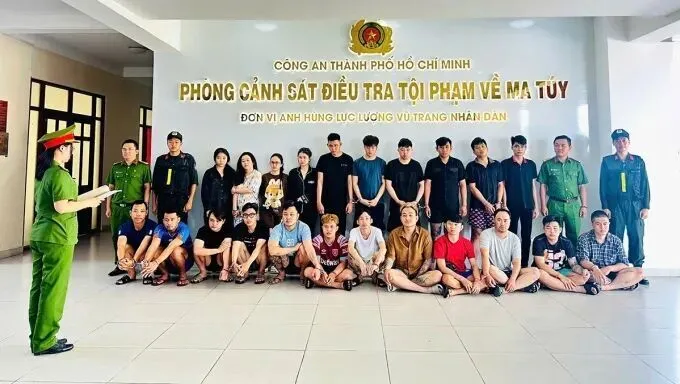
On the 14th, the Vietnamese delegation met with the Japanese and Korean delegations and the Vietnamese Ministry of Industry and Trade
According to the Vietnam News Agency, on the 17th, Pham Minh Zheng met with Japanese Ambassador to Vietnam Naoki Ito in Hanoi. In the context of conflicts in the Middle East affecting the crude oil supply chain, Pham Minh Ching hopes that Japan will provide support to Vietnam in the energy field to jointly overcome difficulties.
When talking about the increasingly complex security situation in the Middle East and the global energy crisis, Fan Mingzheng said that he has sent a letter to Japanese Prime Minister Sanae Takaichi, hoping that Japan will consider taking appropriate support measures. Specifically, Japan can provide support by directly providing a certain amount of crude oil from its reserves to Vietnam, or indirectly allow Vietnam's Nghi Son refinery to diversify its sources of crude oil from other partners.
In addition, Fan Mingzheng also hopes that Naoki Ito will promote the restructuring of the Yishan Refinery in terms of finance and production of raw materials.
Nghi Son Refinery is the largest refinery in Vietnam. It is a joint venture between Japanese energy giant Idemitsu Kosan, Kuwait Petroleum International Company, Japan's Mitsui Chemicals and Vietnam Oil and Gas Group, with a total investment of US$9 billion.
According to the report, based on the spirit of the comprehensive strategic partnership between the two countries, Pham Minh Zheng hopes that Japan will create conditions for Vietnam to obtain Japanese oil reserves in an appropriate form and for Vietnam to purchase aviation fuel from Japan, so as to reduce the impact of conflicts in the Middle East on fuel prices.
According to Vietnamese officials, Vietnam has two refineries: Nghi Son Refinery and Ping Son Refinery, but it still relies heavily on imports. Vietnam imported 14.2 million tons of crude oil last year, an increase of 5.3%, but Vietnam's total domestic oil consumption is expected to reach approximately 28.6 million tons.
Naoki Ito emphasized that Japan is actively consulting with relevant Vietnamese institutions on bilateral cooperation relations and expressed sympathy for the energy difficulties Vietnam is currently facing. He said Japan has decided to open its oil reserves and called on G7 countries to jointly release reserves to increase market supply. Japan is also actively considering making financial arrangements for Japan's liquefied natural gas thermal power project in Vietnam, thereby helping Vietnam ensure energy security.
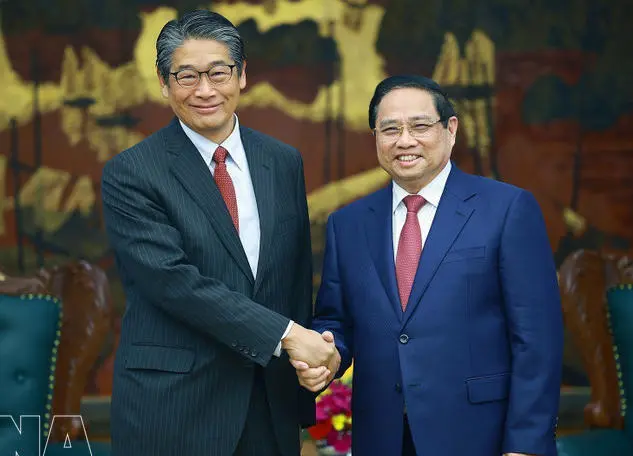
On the 17th, Prime Minister Pham Minh Zheng (right) of the Vietnamese government met with Japanese Ambassador to Vietnam Naoki Ito (VNA)
As Vietnam seeks help from Japan and South Korea, the Japanese and South Korean governments are also busy stabilizing their domestic energy markets.
According to Yonhap News Agency, South Korean President Lee Jae-myung asked government departments to prepare a supplementary budget as soon as possible on the 17th and formulate energy-saving countermeasures such as car restrictions to effectively respond to the crisis caused by the situation in the Middle East. Li Zaiming said that we should prepare for the worst and deal with the protracted crisis in the Middle East.
Previously, Kim Yong-beom, director of the Policy Office of the Blue House of South Korea, said that South Korea’s current oil reserves are 190 million barrels, which can guarantee supply for 208 days.
According to Japan's Kyodo News Agency, on the 12th, the Japanese government carried out comprehensive work to release oil reserves equivalent to 45 days' consumption. According to reports, the scale of the release will be the largest in history, reaching 1.8 times that after the Great East Japan Earthquake.
Data shows that at the end of 2025, Japan's oil reserves will be approximately 470 million barrels, equivalent to 254 days of consumption. Among them, the national reserve is equivalent to 146 days, the private reserves of refiners and trading companies are equivalent to 101 days, and the joint reserves of oil-producing countries held in Japan are equivalent to 7 days.
On the 17th, relevant sources in the Japanese government revealed that the Japanese government has begun coordination and plans to propose the purchase of crude oil produced in Alaska in the United States at the summit meeting between Prime Minister Takaichi Sanae and U.S. President Trump to be held in Washington, the United States, on the 19th local time. Kyodo News said that in view of the tense situation in the Middle East, Japan hopes to diversify the sources of crude oil imports.