In recent years, digital currencies represented by Bitcoin have continued to attract attention, and at the same time, a series of problems have followed.
Not long ago, Lu Lei, deputy director of the State Administration of Foreign Exchange, said at the 5th FinTech Bund Summit that using blockchain technology can easily bypass banks and achieve cross-border flow of funds. At the same time, digital currency money laundering is also a potential threat – using various virtual currencies as intermediaries, first convert the legal currency in the remitter's location into tokens, and then convert the tokens into the legal currency in the payee's location at the receiving end, in fact completing the cross-border payment.
For the current financial regulatory system, the use of digital currency to launder money has become a real threat. "Legal Daily" reporter conducted an interview.
Gray transactions rely on digital currency
"One day in the currency world is one year in the world." The currency circle is a circle of digital currency players.
At the beginning of this year, the digital currency market plummeted, and many senior players in the currency circle sold their digital currencies and cashed out. Jiang Ming, who has been in the industry for two years, is one of them.
"January is the peak period for cashing out, and the market has not slowed down yet, and there are more and more altcoins on the market." Despite this, Jiang Ming has no intention of quitting the currency circle.
Jiang Ming told reporters that money laundering is a major pillar of digital currency price support and is a transaction that exists on the dark web. As long as there is demand for money laundering, the price of digital currencies is bound to rise. Moreover, the currency circle itself is a bit of a gray area. Sometimes the messier the circle, the easier it is to make money.
Some Weibo bloggers in the currency circle even publicly claimed that "the biggest practical commercial value in the currency circle is the convenience of money laundering."
It has almost become a consensus that the currency circle is “a bit chaotic”, but the chaos does not stop there.
Although he rarely participates in digital currency transactions, Zhu Cheng has been paying attention to the currency circle for many years.
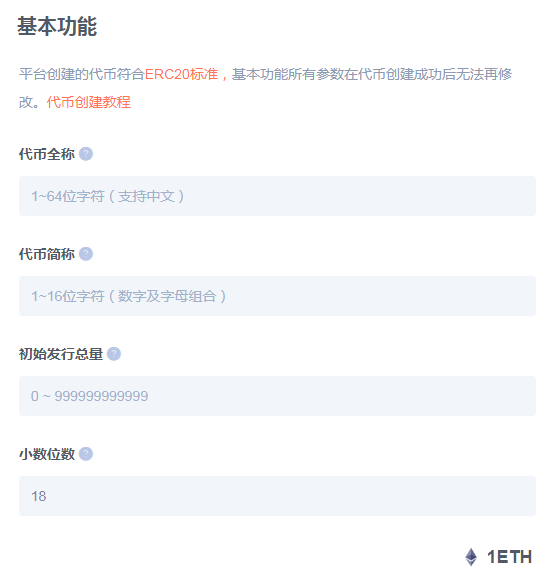
"Although air coins and MLM coins can be used to launder money, they also have their own problems, and many of them are just to steal money." Zhu Cheng listed the characteristics of air coins and MLM coins to reporters. "MLM coins earn income by attracting people. They have no contract address and no fixed total amount. They are generally traded through independent App software; air coins are usually developed in advance. There are obvious problems in the white paper, there is no physical support for implementation, and there is no open source progress."
Zhu Cheng’s statement was confirmed by the customer service staff of a digital asset exchange. “Some coins have no value on their own and are not supported by other projects. They only rely on the currency itself to make money. 98% of these coins are empty coins.”
"Some gray area transactions will be conducted through Bitcoin, which is why the price of Bitcoin has not collapsed." Jiang Ming revealed to reporters.
But within the currency circle, there are also different voices on this.
"In the final analysis, digital currency is just a bunch of encrypted codes. It will only generate value if it is recognized. If it is not recognized, it will have no value. As long as the currency is not issued for the purpose of making money, it is not much different from stocks. It is an investment." A currency player active in the blockchain exchange QQ group told reporters, "Similar to gold and silver, there was a lack of supervision on money laundering at the beginning. But now many large exchanges have launched digital currencies, and money laundering is not as easy as before."
There are many ways to launder digital currency money
How did digital currency become a tool for money laundering, and even became a “money laundering artifact” in the words of some players in the currency circle?
The reporter contacted a well-known Weibo blogger in the currency circle. In his opinion, "the use of digital currency to launder money is nothing more than anonymous transfers and money flushing."
According to reports, anonymity and decentralization are the two main characteristics of digital currency. Different from virtual currencies on the Internet, digital currencies, typically represented by Bitcoin, are actual media of exchange, generated through calculations based on specific algorithms, but without an issuing agency. Blockchain is a distributed data storage system that exists in a non-secure environment and its purpose is to achieve decentralization. Decentralization eliminates the supervision of trusted third-party institutions, but also allows digital currencies to be used for money laundering in theory. By purchasing digital currency in one country, converting legal currency into tokens, and then converting the tokens into legal currency in another country, cross-border transfers and remittances can be achieved to avoid supervision, and the "black money" in gray areas is laundered in the process.
"Tokens are not issued through smart contracts, and there is no formal trading platform for digital currencies. Most of them are traded through the self-built platform of the project. Therefore, the tokens can be converted into other currencies at will, which actually breaks the foreign exchange management regulations." Zhu Cheng said.
In Jiang Ming's view, cross-border transactions of digital currencies have led to regulatory difficulties and provided soil for money laundering.
Suai is a blockchain practitioner who regards digital currency money laundering as tax evasion.
"For example, if I take a lot of cash abroad, I need to pay a high tax, but if I buy it as digital currency and sell it abroad, I can escape this tax." Su Ai explained, "Buying a Bitcoin requires more than 40,000 yuan, and only a smaller amount of currency can be used to wash away more 'black money'."
There are also endless cases of money laundering using digital currencies.
Heilongjiang Provincial Higher People's Court [2016] Hei Minzhong Civil Judgment No. 274 shows that in August 2014, the criminal suspect Xu used the "OKcoin" trading platform through an account registered with Lekuda Company, and divided into three parts. Purchased 553.0346 Bitcoins in 4 transactions and conducted currency withdrawal business at the same time. All 553.0346 Bitcoins purchased were taken out of the platform in 4 transactions, transferred to the Bitcoin wallet, and then sold in Macau underground banks.
There are loopholes in the supervision of trading platforms
On September 4, 2017, seven ministries and commissions issued the "Announcement on Preventing Financing Risks of Token Issuance", officially defining the initial token issuance as "illegal financing behavior". Subsequently, "Bitcoin China" announced that it would close the trading platform starting from September 30 and would no longer accept registration from new users. On September 16, Huobi and OKCoin announced that they would cease all trading businesses related to virtual currencies.
The digital currency trading platform has now entered a cold winter.
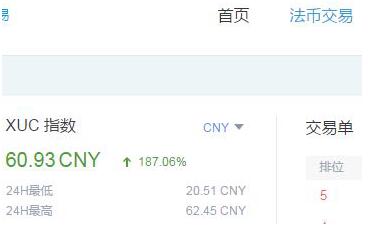
The reporter registered accounts on multiple trading platforms as a player in the currency circle and found that the services provided by the trading platform mainly include fiat currency transactions and currency-to-crypto transactions. The former is to recharge or withdraw fiat currency into a digital currency wallet, and the latter is to conduct transactions using the virtual currency in the digital currency wallet as an intermediary.
If you want to complete legal currency transactions, you must pass different levels of identity authentication.
Taking a trading platform established in Hong Kong in 2017 as an example, it divides real-name authentication into two levels. If you pass the first level, you need to fill in your real name, ID type and ID number. If you pass the second level, you need to upload relevant ID photos and wait for manual review. The reporter filled in a pseudonym and a non-existent ID number and successfully passed the first level of real-name authentication, which means that as long as there are coins in the digital currency wallet, the reporter can conduct currency-to-crypto transactions.
According to the customer service staff, “the first level can be traded, and the second level can be withdrawn.”
The reporter further investigated and found that the recharge and withdrawal of the trading platform were all completed through the QQ group. After completing the account registration on the platform, the user needs to enter a QQ group. According to the detailed C2C transactions, currency transactions and currency deposit and withdrawal processes in the group, the user needs to actively add the "officially certified acceptor" QQ number, obtain the payment address and complete subsequent purchase operations.
Another world-renowned digital asset trading platform divides real-name authentication into three levels. Level one requires an ID card, level two requires face recognition, and level three requires video recognition. The customer service staff told reporters that the recharge of digital currency does not necessarily need to be through legal currency transactions. There are other channels and can be achieved through other platforms.
When the reporter further asked about specific matters, the customer service staff said they were unclear and asked the reporter to "ask other platforms."
A currency player analyzed that, in other words, users have the opportunity to bypass the highest level of real-name authentication and disperse and transfer digital currencies through the operation of depositing and withdrawing coins between trading platforms, providing opportunities for money laundering.
(At the request of the interviewees, the names of the interviewees in this article are pseudonyms)
Industry experts analyze how to solve the problem of digital currency supervision
The use of digital currency to launder money has become a major problem faced by financial regulatory agencies in various countries.
How to deal with money laundering using digital currencies? The reporter interviewed relevant experts in the industry.
Using digital currency to launder money is relatively hidden
Yin Zhentao, deputy director of the Law and Finance Research Office of the Institute of Finance, Chinese Academy of Social Sciences, reviewed the birth of digital currency to reporters: The emergence of Bitcoin is not just for currency issuance, but it has indeed produced a brand new currency, but more importantly, Bitcoin has produced a trading system. Most of the initial users of Bitcoin were traders in gray areas, playing an important role in gray transaction fields such as drug trafficking, hacking, and money laundering. Only later did it gradually become the object of widespread public attention and application.
Digital currency has the characteristics of anonymity and decentralization, and also involves greater risks.
"Digital currency faces two risks. The first is the technical level. Digital currency relies on blockchain technology and a system, which will subject it to security impacts, such as hacker attacks on computer systems. We have seen many practical problems in this process." Yin Zhentao said.
In May 2017, the Bitcoin ransomware virus named WannaCry broke out around the world, affecting networks in more than 70 countries. Those infected with the virus were required to pay a Bitcoin ransom in exchange for unlocking their files.
Yin Zhentao believes that another risk of digital currency is credit risk. Because there are middlemen in digital currency transactions, these middlemen are different from real organizations. Organizations in reality are visible and tangible, but digital currency middlemen are on the Internet, and the risks are greater.
"For example, buying Bitcoin domestically and then converting it into other currencies in the international market arbitrarily violates foreign exchange management regulations. The characteristics of short time, high efficiency, low cost, and easy to avoid supervision make digital currency a weapon for money laundering. Compared with traditional means of money laundering, money laundering through digital currency technology is more convenient, more concealed, and easy to avoid financial supervision." Yin Zhentao said.
Zhao Zhanhan, a special researcher at the Intellectual Property Research Center of China University of Political Science and Law, believes that digital currencies are anonymous, fast and irrevocable. In addition, digital currencies such as Bitcoin are highly circulated around the world, so many criminals use digital currencies as a new money laundering channel. Moreover, there are many different ways to launder money through digital currency. Generally speaking, the chances of new money laundering methods being discovered and investigated are lower than before. Many countries still do not have the means and technology to effectively combat digital currency money laundering. These factors make criminals prefer this method of money laundering.
The use of digital currency to launder money is suspected of violating relevant laws and regulations.
"The use of digital currency to launder money mainly violates the provisions of the criminal law and relevant judicial interpretations. The criminal law specifically stipulates the crime of money laundering. The relevant judicial interpretations stipulate that those who knowingly provide illegal income and proceeds from drug crimes, organized crime of a gangland nature, and smuggling crimes in order to cover up or conceal their source and nature provide a capital account or assist in converting property into cash or financial instruments. "Anyone who assists in the transfer of funds through transfer or other settlement methods, assists in remittance of funds overseas, or uses other methods to conceal or conceal the illegal proceeds of crime and the nature and source of the proceeds, shall constitute a crime of money laundering and shall be prosecuted. Depending on the specific method of money laundering, it may be one or more of the aforementioned behaviors," Zhao Zhan said.
Speculation and hype maintain Bitcoin price
Because of this, the rise of digital currency and the development of blockchain technology have brought challenges to traditional financial supervision.
"Because of the new technology, the combination of finance and technology is completely different from the supervision of traditional finance. Theoretically, the challenge is huge, and the gray trading area cannot be seen, penetrated, or found. Our regulatory agencies are centralized, and the blockchain is decentralized. Our regulatory agency is this kind of central organization, and the blockchain is a platform-based organization." Yin Zhentao said.
At present, there are two main domestic regulations on virtual currencies. In 2013, many ministries and commissions issued the "Notice on Preventing Bitcoin Risks", giving important reminders on Bitcoin risks. On September 4, 2017, the central bank and seven other ministries and commissions jointly issued an announcement again, stating that the initial coin offering was an illegal financing without approval.
"These are the two most important regulations. Currently, our country prohibits domestic Bitcoin transactions." Yin Zhentao explained to reporters, "At the same time, our country also prohibits third-party payment institutions, which means that payment institutions are prohibited from providing payment channels for Bitcoin. In addition, there are currently not many laws and regulations to restrict and manage."
Regarding the view of some digital currency players that "money laundering is a major pillar in maintaining the price of Bitcoin," Yin Zhentao responded that the initial price increase of Bitcoin has a lot to do with its extensive application value in the field of money laundering, but at this stage, speculation and hype are the most likely to maintain the price of Bitcoin.
Zhao Zhan believes that there are various methods of using digital currency to launder money. For example, technical means may be used to transfer funds into the cryptocurrency system, and then various transfer addresses are deployed, making it difficult to query its transaction path. In other words, money laundering driven by technological progress is becoming more and more difficult to detect and prevent. In addition, it is cross-regional. The lack of a global response mechanism has exacerbated this situation.
Ensure digital currency transactions are traceable
The severe situation calls for financial regulatory changes.
"Blockchain is a decentralized distributed 'ledger system' that can be used to register and issue digital assets, property rights certificates, points, etc., and conduct transfers, payments and transactions in a peer-to-peer manner." Yin Zhentao believes that "blockchain technology is a double-edged sword. From a technical point of view, since blockchain can be used for money laundering, it can also be used for anti-money laundering through technical means. This logic is established, and this is also one of the important methods of regulatory technology that I advocate."
"For the financial supervision of digital currencies, the first point is to clarify the legal positioning. It is still unclear whether digital currencies represented by Bitcoin are a virtual asset or a virtual currency. Secondly, the effect of existing supporting policies is not obvious. Although initial coin offerings and digital currency transactions have been nominally prohibited, in fact this has not been done Total ban. The relationship between the ban on initial coin issuance and Bitcoin’s anti-money laundering is not very close, but there are certain restrictions on currency transactions, but the effect is not yet obvious. Finally, it is necessary to introduce technological means and use advanced technological means to supervise high-tech transactions in the financial field.
Zhao Zhan believes that money laundering can be tracked through digital currency. Ensuring the traceability of digital currency is the key to dealing with money laundering crimes on a global scale. At the same time, many money laundering behaviors using digital currencies are carried out through exchanges. Therefore, stricter management and regulations should be established for digital currency exchanges, requiring exchanges to effectively adopt technical and management measures, fully fulfill their anti-money laundering obligations, and promptly report to the relevant authorities after discovering money laundering behaviors.