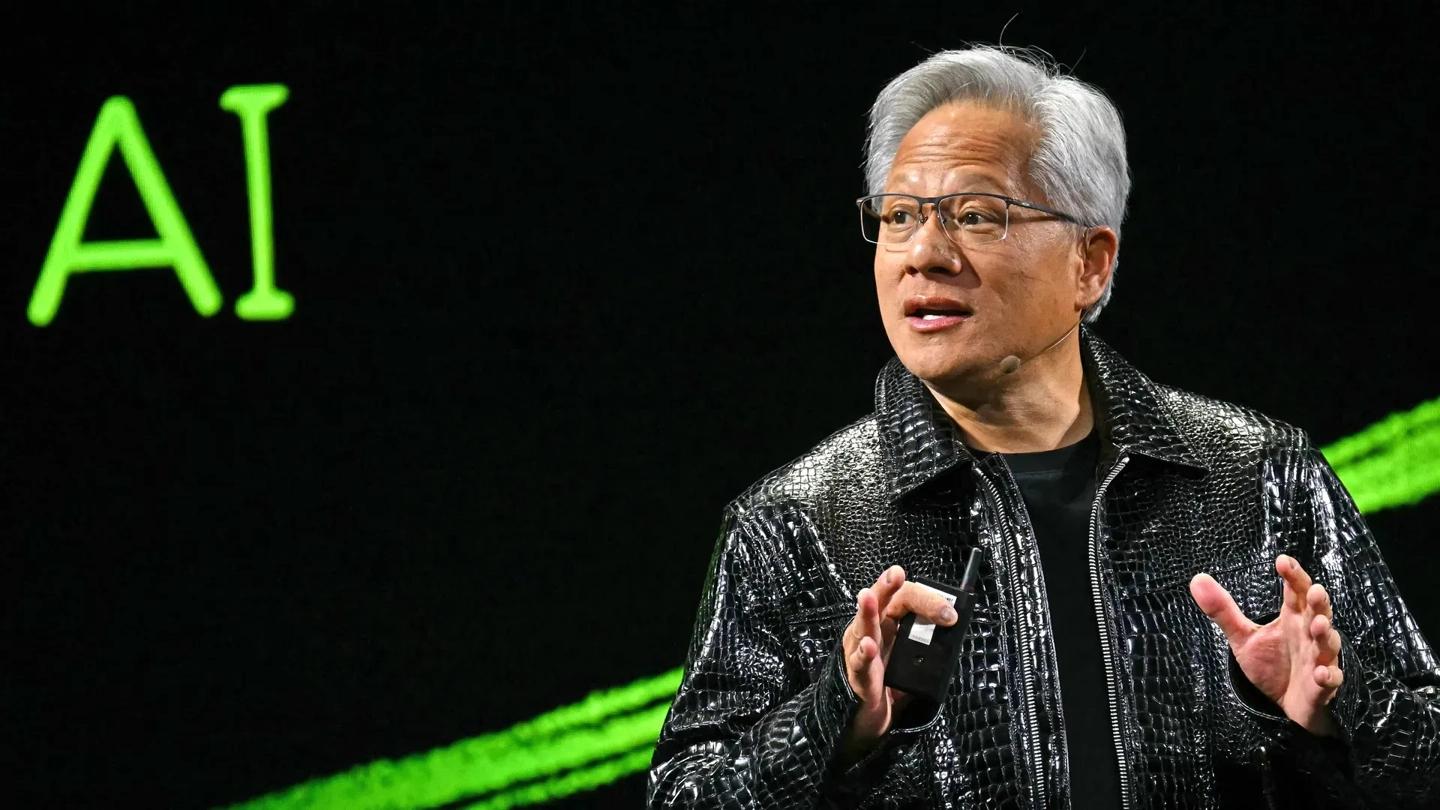
IT House reported on March 17 that today (March 17) at the 2026 GTC conference in San Jose, California, USA, NVIDIA announced a comprehensive expansion of its open source model family in order to promote the next wave of agent (agent), physical and medical AI.
In the field of intelligent agents, NVIDIA has launched the Nemotron 3 series of fully understanding multi-modal models. Among them, Nemotron 3 Ultra relies on the Blackwell architecture, with throughput efficiency increased by 5 times, and is specially designed for code assistance and complex workflows.
Nemotron 3 Omni accurately integrates audio, visual, and speech multi-modal capabilities; Nemotron 3 VoiceChat integrates speech recognition, large models, and speech synthesis to support real-time dialogue.
The supporting security model further ensures the reliability of content output, and leading companies such as CrowdStrike and ServiceNow have currently deployed it in enterprise-level applications.
In the field of physical AI, NVIDIA has released a number of basic models to accelerate the development of autonomous systems. The upcoming Cosmos 3 is the first world-based model that unifies synthetic world generation and motion simulation; Isaac GR00T N1.7 and Alpamayo 1.5 are visual language action (VLA) inference models specially built for humanoid robots and autonomous driving respectively, and are now ready for commercial deployment.
In addition, CEO Jen-Hsun Huang also previewed the next-generation robot model GR00T N2, which has twice the mission success rate of existing models in new environments and is expected to be launched by the end of the year.
Medical life science research has also ushered in major breakthroughs. IT Home quoted a blog post as saying that the BioNeMo platform has added a new generative model Proteina-Complexa, which has greatly accelerated the discovery of protein drugs.
At the same time, NVIDIA teamed up with Google DeepMind and other institutions to add 1.7 million high-confidence protein complex predictions to the AlphaFold database. In addition, the new GPU-accelerated simulation engine nvQSP is up to 77 times faster than traditional CPUs, allowing scientists to analyze massive treatment options in a very short time.
The above-mentioned open source models, data sets and frameworks are currently available on GitHub, Hugging Face and other platforms. Developers can also use NVIDIA NIM microservices to achieve secure, scalable and convenient deployment on various acceleration infrastructures from edge to cloud.