However, according to multiple foreign media reports, Iran has recently begun to allow some Indian ships to pass through the Strait of Hormuz. In this regard, Indian Foreign Minister Jaishankar said that this proves that India's diplomatic efforts have "produced results."
According to a report by the Financial Times on March 16, Jaishankar confirmed in an interview that two liquefied petroleum gas carriers flying the Indian flag passed through the Strait of Hormuz on March 14.
"I am currently in dialogue with them and my dialogue has yielded some results," Jaishankar said. "The dialogue is still continuing and if it yields results, I will naturally move forward."
"From India's perspective, it's better to reason, work together and find a solution than no solution at all," he added.
According to Reuters, the two liquefied petroleum gas carriers are Shivalik and Nanda Devi, carrying about 92,700 tons of liquefied petroleum gas.
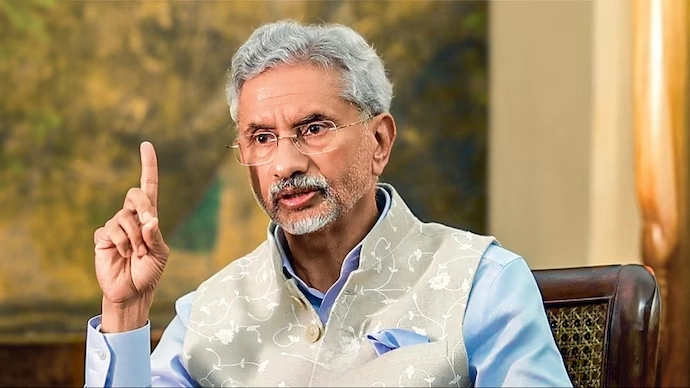
Indian Foreign Minister S Jaishankar Press Trust of India
Last week, international oil prices exceeded US$100 per barrel for the first time since August 2022, and are still hovering at this price. Some industry analysts expect oil prices may continue to rise if the conflict continues.
The Strait of Hormuz is the only waterway from the Persian Gulf to the outside world. More than a quarter of the world's total seaborne oil and about one-fifth of the world's liquefied natural gas transportation are shipped to all parts of the world through the Strait of Hormuz.
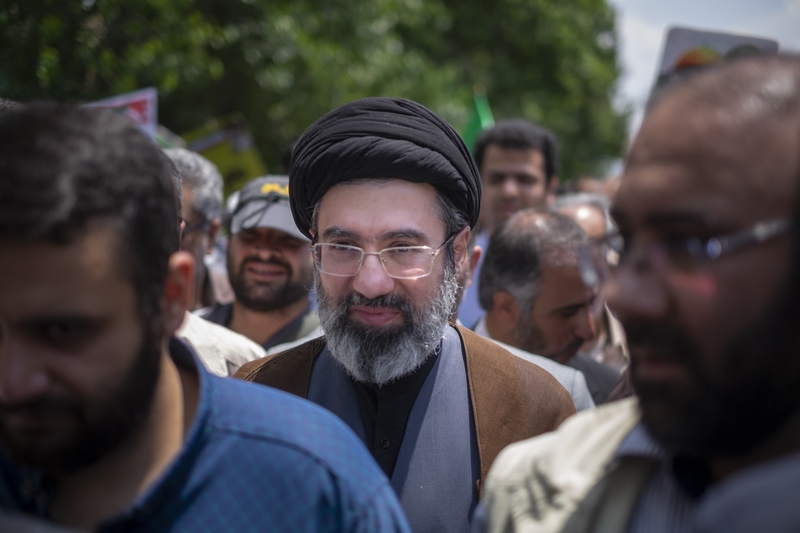
Iran's Supreme Leader Mujtaba Khamenei emphasized in his speech on the 12th that Iran should continue to use the "leverage method" of "closing" the Strait of Hormuz to put pressure on Iran's enemies.
The Financial Times stated that European countries, including France and Italy, have begun dialogue with Iran to discuss possible diplomatic solutions to restore energy transportation.
Iranian Foreign Minister Araghchi said in an interview with CBS on the 15th that Iran is open to countries that want to discuss "the safe passage of their ships."
According to Reuters, Iranian Ambassador to India Mohammad Fatali confirmed to the Indian media on the 14th that Tehran has allowed some Indian ships to pass through the Strait of Hormuz.
It is worth mentioning that Jaishankar was interviewed before going to Brussels to attend the EU Foreign Ministers' Meeting. The meeting will discuss whether to expand the EU's "Operation Aspid" in the Red Sea to the Strait of Hormuz.
"Operation Aspid" was launched in February 2024 to protect commercial ships in the Red Sea, Gulf of Aden and surrounding waters from attacks by Yemen's Houthi armed forces. It currently consists of three warships sent by France, Italy and Greece.
Asked whether European countries could emulate India's arrangement, Jaishankar said: "Frankly, every relationship to some extent has to work on its own terms. So, it's difficult for me to compare this to other relationships that may or may not have similar conditions."
"I am happy to share what we are doing with EU countries, and I know many countries have also had conversations with Tehran." Jaishankar said.
He revealed that there is no "unified arrangement" between India and Iran for ships flying the Indian flag, and "the passage of each ship is handled individually on a case-by-case basis."
Jaishankar also denied that Iran had obtained quid pro quo in the process, emphasizing that the "long history of dealings between the two sides… is the basis for my contacts."
"This is not a question of quid pro quo. India and Iran have maintained contacts. And we think this conflict is very unfortunate." Jaishankar said.
He added that diplomatic efforts between India and Iran are at an early stage and we have more ships there. So while this is a welcome development, conversations continue and work is ongoing. "
According to Reuters, a spokesperson for the Indian Ministry of Foreign Affairs said on the 14th that after Iran allowed several Indian ships to pass through the Strait of Hormuz, India is seeking Iran to provide safe passage for 22 Indian ships stranded.
India is the world's fourth largest buyer of LNG and the second largest buyer of LPG. According to Reuters, India consumed 33.15 million tons of cooking gas last year, of which imports accounted for about 60%, 90% of which came from the Middle East.
The Indian government has asked domestic refineries to increase LPG production and cut sales to the industrial sector to ensure that household supplies are not affected.