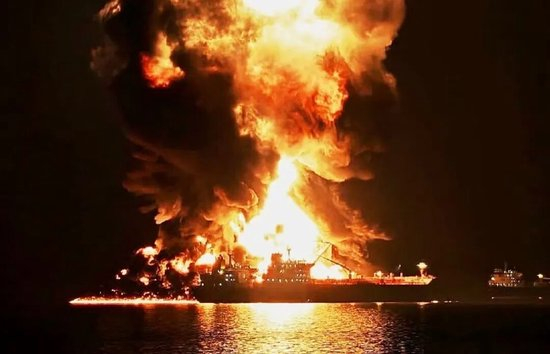
On the evening of March 13, local time, the US military launched a large-scale attack on Khark Island, Iran’s oil export hub.
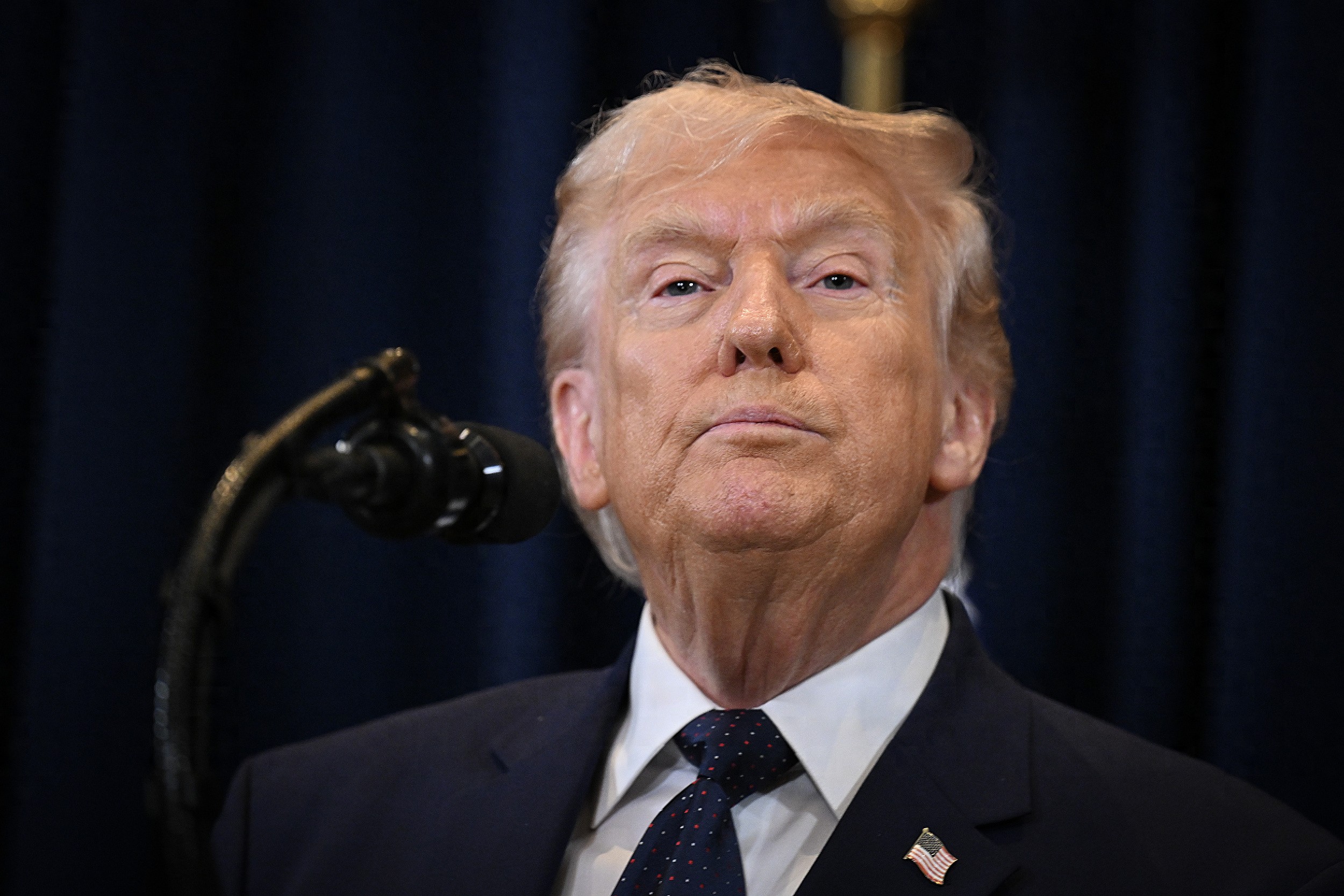
According to Xinhua News Agency, on March 14, US President Trump confirmed in a telephone interview with the National Broadcasting Corporation (NBC) that the United States had "completely destroyed" most of Khalk Island, but "we may bomb it a few more times, just for fun."
This statement caused controversy as soon as it appeared. What people don't understand is how can the president of a country say such "childish" words?
The Chinese people have understood the cruelty of war and the seriousness of military use since childhood. "Zuo Zhuan" points out that "the great affairs of the country lie in sacrifice and military affairs." "Sun Tzu's Art of War" also emphasizes that "soldiers are important matters of the country, the place of life and death, and the way of survival, and must be observed." In Chinese people's values, the soldier is a "weapon" that "the saint must use as a last resort".
Therefore, when Trump said that he would "explode a few more times just for fun", people were shocked and couldn't help but wonder, "What happened to Trump?"
Claiming to "bomb it a few more times" is still an extreme pressure strategy
Before analyzing Trump’s shocking remarks, we may turn our attention to a theory.
Nobel Prize winner Thomas Schelling believed through studying game theory that one party can gain an advantage by reducing its choice space, the ability to retaliate is more useful than the ability to resist attacks, and uncertain retaliation is more credible and effective than certain retaliation.
Trump and Netanyahu
The best deterrence, therefore, involves not just advance warning but also some arbitrariness, unpredictability, and an unfettered leader. Such people are irrational, unpredictable, and even reckless. They are often able to put more pressure on their opponents in negotiations and force them to make the most concessions.
The typical practice of this theory in the field of international relations is brinkmanship: forcing the opponent to give up confrontation by imposing greater threats. If the threat comes true, the threat will not be actually implemented; but if the threat fails, the party that issued the threat will have to adopt corresponding means, otherwise it will suffer a huge loss of credibility.
In other words, brinksmanship is a political strategy that leads to either success or failure. In 1956, former US Secretary of State Dulles once proposed that the United States "is not afraid of going to the brink of war, but it must learn the necessary art of going to the brink of war without getting involved in it."
Trump comes from a business background and has a strong "transactional thinking" style: everything can be traded, and the success or failure of a transaction depends on pricing, and high pricing helps establish negotiation advantages. In other words, in practice, "transactional thinking" tends to increase the asking price to increase bargaining chips, while at the same time forcing the other party to make maximum concessions through tough statements.
Therefore, since Trump came to power, he has made many seemingly unreasonable remarks. For example, it wants to forcibly annex Greenland, and even expressed its willingness to send out troops. This kind of behavior that seriously violates international law and international ethics has been repeatedly and seriously discussed publicly in the United States, and triggered a collective "break of defense" among NATO allies.
As it turns out, this did produce some of the results he wanted. For example, Trump claimed that he had developed a framework for a future agreement on Greenland with NATO Secretary-General Rutte, and that it involved the "Golden Dome" missile defense system and mineral mining rights, and that the agreement would be effective "forever."
In the face of Trump’s contradictory and inconsistent remarks on multiple issues, some media came up with the term “TACO deal” (Trump Always Chickens Out), which means “Trump always chickens out.”
On the surface, this is indeed the case. Trump's many threats have not been implemented, but what if his original goal is to "take the best and only the worst"?
Bombing Khark Island in an attempt to force Iran to negotiate
Going back to the bombing of Iran's Khark Island, could it be another brinkmanship policy led by Trump's "transactional thinking"? The intention is to create a reckless and tough image of the United States and amplify the psychological pressure on Iran to suppress talks.
Pictured is Halk Island
The war in Iran has lasted for more than two weeks, and criticism of Trump from all walks of life has become louder and louder. Some people believe that his goal of overthrowing the Iranian regime has not been achieved, and it is unlikely that he will deploy ground troops on a large scale for fear of falling into another war quagmire.
Trump seems to have fallen into an embarrassing situation: sinking further into the quagmire and taking a step back will be embarrassing. Negotiating with Iran seems to be the most rational choice. But how to force Iran to negotiate? In the eyes of many people, the bombing of Khalk Island, which has both geopolitical and geoeconomic value, seems to be a game-breaking move.
On the one hand, the island is located in the northwest of the Persian Gulf, guards the shipping channel of the Strait of Hormuz, has a military base, and is Iran's forward defense node in the Persian Gulf. On the other hand, 90% of Iran's crude oil exports are completed through the island, which is its main source of financial revenue. It has a large deep-water terminal and high oil transmission capacity, connecting the main local oil fields.
In this case, why didn't the US military directly occupy the island? It’s not that it’s impossible, but that the subsequent risks are too high. The island is too close to the Iranian coast, about 25 kilometers away. Once the US military captures it, it will need to deploy a large number of troops and logistics for a long time, and it will directly become a living target within the reach of Iran's conventional military forces.
Therefore, so far, the US military has no intention of occupying the island, and has even deliberately retained the island's oil facilities. As Trump said: "We've completely destroyed it. It's just, as you know, I haven't touched anything related to the energy lines because it's going to take years to rebuild those."
Judging from this point of view, this move seems to be an important bargaining chip for the United States to promote negotiations with Iran. After all, Iran is not willing to completely lose its ability to export oil. However, one prerequisite for this to be successful is that decision makers must be truly unpredictable, rather than pretending to be so. So, will Trump’s plan work? Let’s wait and see.