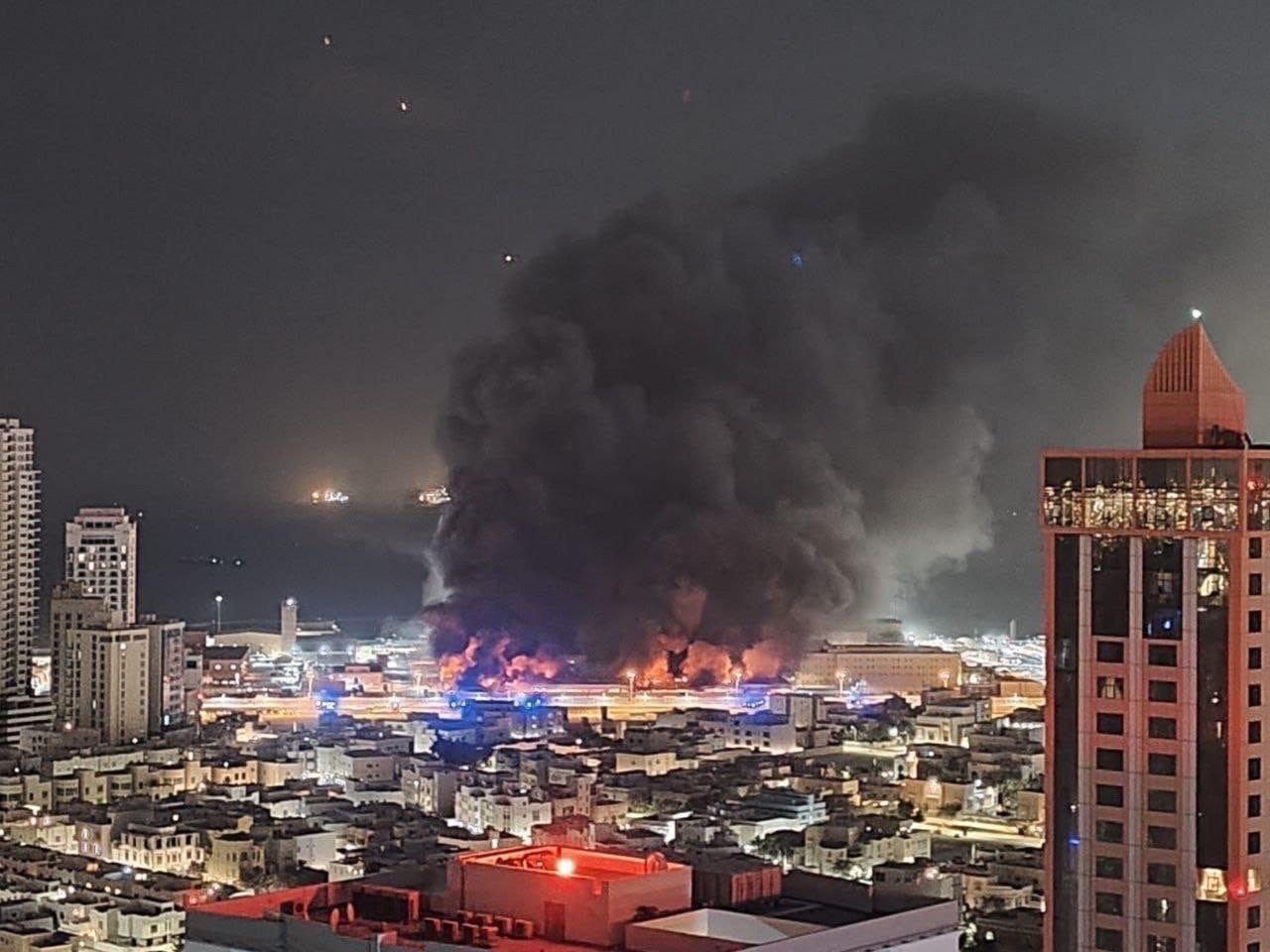
Seeing that there are no signs of the Strait of Hormuz being restored to navigation, some European countries finally couldn't sit still and wanted to talk to Iran.
The British "Financial Times" quoted people familiar with the matter as saying on the 14th that some European countries, including France, have launched exploratory contacts with Iran, seeking to reach some arrangement for the safe passage of their ships through the Strait of Hormuz, with a view to restarting energy transportation from the Gulf. The report also said that Italy is also trying to open channels for dialogue.
However, there is currently no clear answer as to whether the negotiations can advance and whether Iran is willing to negotiate on this matter.
Europe has not been kind to Iran in recent years. Following the footsteps of the United States, European countries have launched sanctions on Iran and criticized its human rights situation. Since the United States and Israel launched military strikes against Iran, although Europe has expressed different opinions – some are closer to Washington, and some have openly questioned the legality of the United States and Israel's actions, on the whole, Europe has not sided with Iran.
However, now that the Strait of Hormuz is blocked, European countries have to face reality.
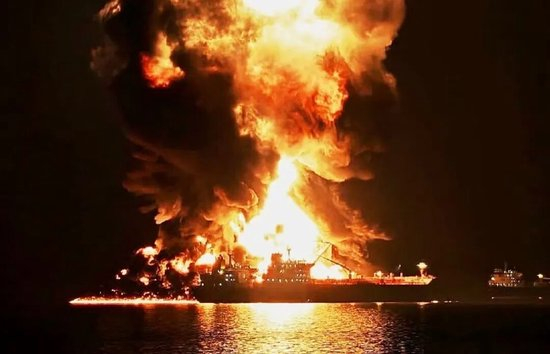
On March 11, an oil tanker caught fire in the ship-to-ship transfer area of Khor Zubair Port near Basra, Iraq.
For Europe, blocking a strait affects more than just a few ships. The Strait of Hormuz is responsible for about one-fifth of the world's oil and liquefied natural gas transportation. Although Europe is not the region most directly dependent on this channel, after the Russia-Ukraine conflict, European countries sharply reduced Russian energy imports and became highly dependent on liquefied natural gas from the Middle East. The energy structure has become more fragile and more sensitive to fluctuations in global oil and gas prices and natural gas spot markets.
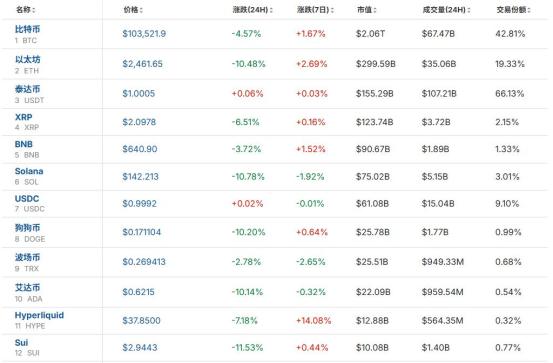
The impact is first reflected in energy prices. International oil prices have risen sharply, with London Brent crude oil futures prices once rising to about US$119 per barrel, setting a new high since 2022. As the European natural gas benchmark price, the price of Dutch TTF natural gas futures once soared by more than 80% compared with before the war. It can be seen that the obstruction of shipping directly triggered market panic.
The British "Guardian" quoted Citi analysts as warning that if the Strait of Hormuz is completely closed for three months, European wholesale natural gas prices may rise to $100/MWh, nearly three times the pre-crisis level, which will seriously exacerbate Europe's cost of living crisis. Goldman Sachs also predicts that even a month-long blockade will be enough to increase European natural gas prices by 130% compared with pre-crisis levels.
Secondly, the supply chain faces the risk of disruption. Currently, some energy facilities in the Middle East have stopped production due to war and overlapping waterways are blocked. The European natural gas supply chain is facing huge uncertainty. Europe's current natural gas inventories are only about 30% of storage capacity. Industry data shows that German gas storage inventories are about 21% of storage capacity, which is the lowest level for the same period in recent years.
The Bruegel Institute pointed out that Europe's direct dependence on Gulf oil and gas is relatively limited, but any long-term disturbance to the Strait of Hormuz will be transmitted to Europe through global oil and gas prices and increase the difficulty of replenishing its reserves for the next winter.
Finally, there are inflationary and recessionary pressures. Shipping detours or stagnations have caused global oil shipping costs to soar rapidly, and the rise in energy and transportation costs will be quickly passed on to production costs, thereby pushing up local prices in Europe, eroding corporate profit margins and household purchasing power, and creating huge resistance to Europe's economic recovery.
Europe is no stranger to this pain.
After the conflict between Russia and Ukraine broke out, Europe paid a high price to get rid of its energy dependence on Russia. Financial subsidies, high-priced gas purchases, pressure on industries, and tightening of people's livelihoods took several years to fill the hole until it stopped losing blood.
But now, the fire in the Middle East has opened another hole. With the Strait of Hormuz, Europe's anxiety was almost immediately reawakened. Old wounds have not healed, and new ones have appeared. This is the background that Europe is eager to talk about right now.
But what makes Europe even more uncomfortable is not just energy.
Since the Trump administration began its second term, what Europe has felt is not an "alliance dividend" but one blow after another. The threat of tariffs has returned, and the United States has recently launched trade investigations against the EU and many European countries. Karas, the EU's high representative for foreign affairs and security policy, bluntly said that the United States is trying to "split Europe."
The most obvious move was the threat to annex Greenland. Trump has repeatedly threatened to acquire Greenland on the grounds of so-called "national security," which has caused the transatlantic alliance to fall apart at an alarming rate. It has also made it increasingly clear to Europe that "alliance" does not mean that its own interests will be prioritized.
As a result, Europe's situation is now increasingly embarrassing. On the one hand, Eastern European countries, especially Poland and other countries, still need to rely on the United States for security and diplomacy; on the other hand, Europe continues to find that the United States will not be particularly merciful when it threatens because of the word "ally."
The aftermath of the energy crisis caused by the Russia-Ukraine conflict is still there, and the fire in the Middle East has been burned again. However, the United States has brought about the reality that in addition to asking Europe to continue to cooperate, it has put European interests in the back seat again and again.
Europe wants to talk to Iran, and the core materials of the discussion are straits, shipping and energy. Because it has followed the same path all the way to today, Europe finds that what it has gained in exchange is not a more stable sense of security, but a higher price, less room for maneuver, and an America that increasingly does not hide its "America First" policy.