At the beginning of 2025, TikTok experienced a dramatic shutdown and restart in the United States, and every move it made attracted global attention. This regulatory tug-of-war across the Pacific not only highlights the severe challenges TikTok faces in overseas markets, but also reveals its difficulty in surviving in the international environment.
Although regulatory pressure from Europe and the United States continues to increase, TikTok's global popularity continues to rise, and downloads have grown rapidly, demonstrating its strong market appeal and user base.
KJ123 learned that the latest data from AppFigures showed that in January 2025, TikTok took first place in the global application download rankings, ending Instagram’s dominance for more than a year. Among them, the explosive growth of the Southeast Asian market has become a key engine, especially Indonesia, which contributed the largest share of TikTok's new global downloads in a single month.
As the largest economy in Southeast Asia, the importance of the Indonesian market to TikTok is self-evident. Official data shows that by continuing to increase investment in localization, TikTok has provided total advertising credit to Indonesian government agencies, state-owned enterprises, and small, medium and micro enterprises in 2024. It has reached 15.3 billion Indonesian rupiah (approximately US$940,000), an increase of 6 times from the initial stage.
What is more critical is its layout in the e-commerce field. After experiencing policy fluctuations, TikTok invested in the acquisition of local e-commerce giant Tokopedia. It not only successfully resolved the regulatory crisis in Indonesia that prohibited direct transactions on social platforms, but also relied on Tokopedia's mature logistics network and user base to deeply integrate live streaming e-commerce with the traditional shelf model, further consolidating its market position.
In addition to Indonesia, TikTok e-commerce also performed well in the Thai market. Data shows that from January to August 2024, TikTok Shop's product purchase volume increased threefold, and the amount of cooperation between brands and creators increased fourfold, driving more than 3 million local users to earn income through content creation.
With the vigorous development of Southeast Asia's digital economy, the e-commerce industry is facing unprecedented opportunities for transformation and growth. According to the "2024 Southeast Asia Digital Economy Report" jointly released by Google, Temasek and Bain, the scale of Southeast Asia's digital economy is expected to reach US$263 billion in 2024, a year-on-year increase of 15%. Among them, short videos and live broadcasts have become important driving forces for the growth of e-commerce. More than 40% of Southeast Asian online shoppers rely on video content when making purchasing decisions.
With the right time, place and people, TikTok Shop successfully seized the opportunity of social e-commerce and quickly emerged as a force that cannot be ignored in the Southeast Asian e-commerce market. Surveys show that TikTok Shop has become one of the most popular shopping channels in Southeast Asia, thanks to the strong appeal of short videos and live broadcasts. It is expected that TikTok Shop’s e-commerce market share in Southeast Asia will reach 15% by 2024, an increase of 5% from 2023.
According to KJ123, TikTok Shop’s global site layout has expanded to 6 regions, among which Vietnam, Thailand, Philippines, Malaysia, Singapore and Indonesia in Southeast Asia have become the first key markets for TikTok e-commerce.
In order to take advantage of the e-commerce boom in Southeast Asia, TikTok is accelerating its e-commerce layout and launching a series of innovative measures. For example, the "refund without return" function has been effective since January 8, and the "Resumption of Work and Production Task Competition" launched last year for the Southeast Asian market.
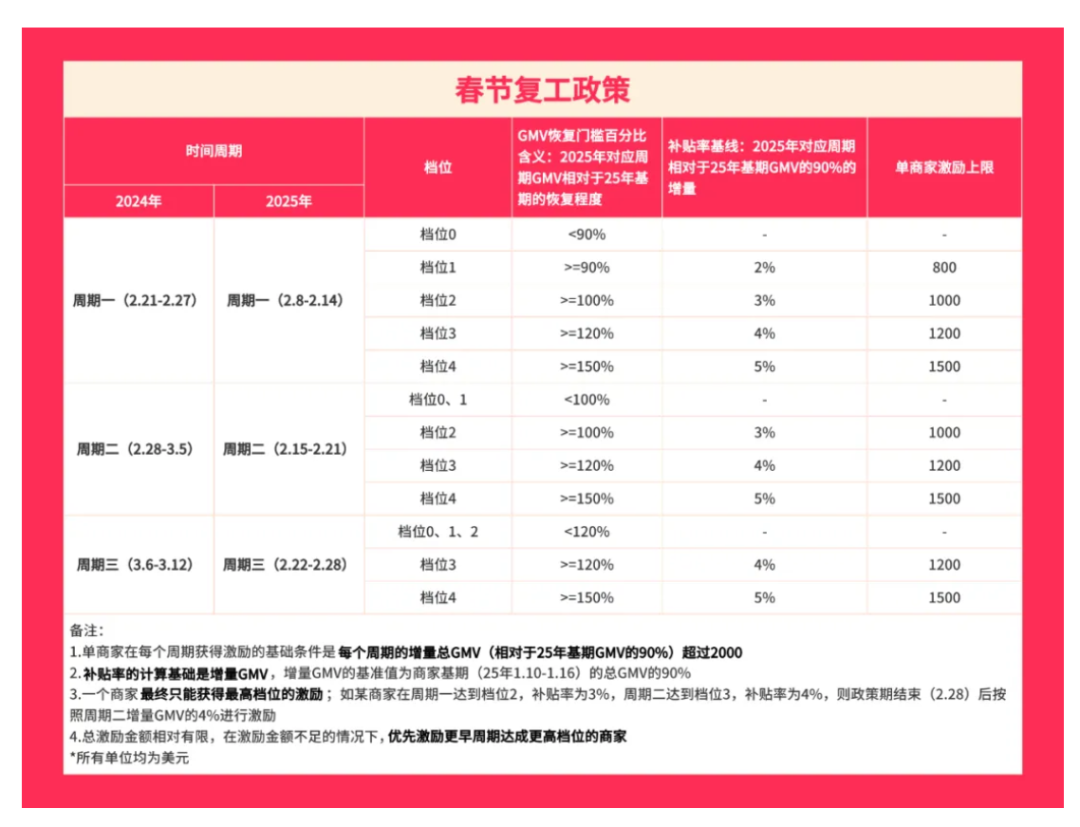
According to the official announcement of TikTok Shop Southeast Asia, this "Resumption of Work and Production Task Competition" will cover the five major markets of Malaysia, Thailand, Philippines, Vietnam and Singapore. In order to motivate platform merchants, TikTok Shop has launched a number of support policies, including a GMV growth incentive plan from January 1 to March 31, a Spring Festival resumption support plan, and advertising investment growth incentives, aiming to help merchants achieve business growth at the beginning of the new year.
However, it is worth noting that TikTok’s development in the e-commerce field in Southeast Asia has not been smooth sailing, and it still faces multiple challenges.
In order to protect local enterprises, Southeast Asian countries have strengthened their supervision of the e-commerce market, especially the supervision of cross-border enterprises. For example, the Vietnamese government has tightened regulations on taxation and counterfeit products. Recently, Thailand’s Ministry of Commerce has united 16 government agencies and major e-commerce platforms to jointly crack down on the online sales of substandard and illegal products. According to a statement from Thailand’s Ministry of Commerce, they have implemented a “removal from shelves at notice” policy. Once goods are deemed substandard, they will be removed immediately to ensure that consumers are protected from low-quality products.
In addition to the challenges of government regulation, TikTok also needs to deal with fierce competition from established e-commerce giants such as Shopee and Lazada. These platforms not only have a huge user base and mature operating systems, but are also actively exploring new areas of social e-commerce to enhance their competitiveness. Taking the Shopee Malaysia site as an example, during the Spring Festival this year, Shopee live shopping experienced explosive growth. The number of buyers on Shopee Live surged 116% year-on-year, holiday food searches increased by more than 3,000%, and orders from local merchants increased by 240%.
In addition, TikTok also faces challenges from other platforms in the field of social e-commerce that TikTok is good at. For example, YouTube has partnered with Shopee to launch YouTube Shopping services in Indonesia, Thailand and Vietnam. Since YouTube has a deep user base in Southeast Asia, this will undoubtedly bring greater competitive pressure to TikTok.
Although the road ahead is full of challenges, TikTok has shown momentum to compete with e-commerce giant Shopee in the Southeast Asian market. Although its fate in the United States is still unresolved, in Southeast Asia, the future development of TikTok e-commerce is worth looking forward to. In the future, we will wait and see whether TikTok can further enhance its status in the Southeast Asian market.
——– END ——–