The Russian government continues to intensify its crackdown on critics of the Kremlin. On the 13th, the Russian Ministry of Justice included Nina Khrushcheva, the great-granddaughter of former Soviet leader Nikita Khrushchev and a scholar now living in the United States, on the list of "foreign agents."
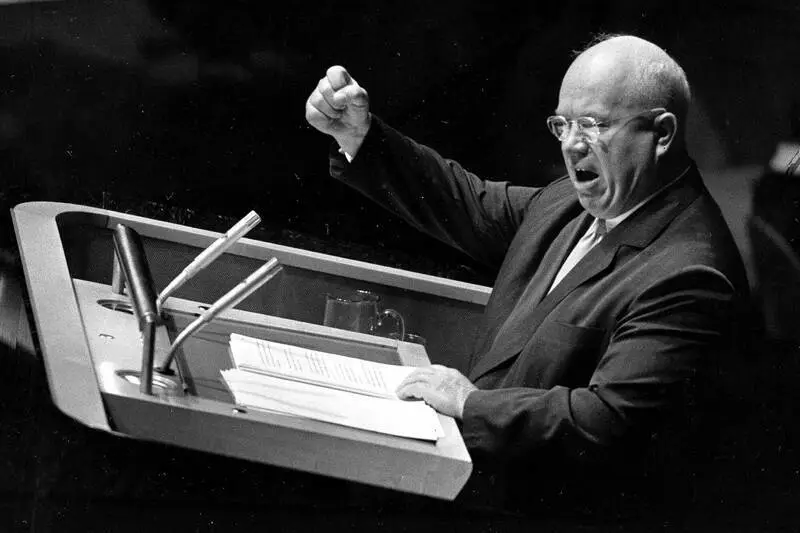
Former Soviet leader Khrushchev. (AP file photo)
According to Reuters, Russian state media TASS cited a statement from the Ministry of Justice saying that Nina Khrushcheva spread "false information" about Russia's policies and publicly opposed Moscow's so-called "special military operations" against Ukraine, that is, Russia's war against Ukraine in 2022, and was therefore included in the list of "foreign agents."
In Russia, the term "foreign agent" often carries the connotation of "engaging in espionage or anti-Russian activities." The Kremlin has frequently used the label in recent years to target critics of the government. As of the 13th, 1,164 people have been included in the list, including politicians, journalists, artists, non-governmental organizations and media organizations.
Nina, 62, is currently a professor at New School University in New York, USA. In response to an interview with Reuters, she said she was not surprised by this decision: "If they don't do this, they would be derelict in their duties." She also joked about her family background: "There is indeed some historical irony in this, but it is not shocking – when Stalin is re-respected, Khrushchev will naturally be devalued."
What Nina is referring to is that Russian society's historical evaluation of former Soviet leader Stalin has rebounded in recent years. Khrushchev led the Soviet Union from 1953 to 1964 and issued the famous "Secret Report" at the 20th Congress of the Communist Party of the Soviet Union in 1956, publicly condemning Stalin's reign of terror. Russia just commemorated the 70th anniversary of this speech last month, which once again triggered discussions on the historical evaluation of Stalin and Khrushchev.
Nina said it was still difficult to tell how much actual impact being classified as a "foreign agent" would have. However, according to relevant Russian laws, those included on the list must indicate their status as "foreign agents" on social media and public publications, and their income in Russia may also be restricted.