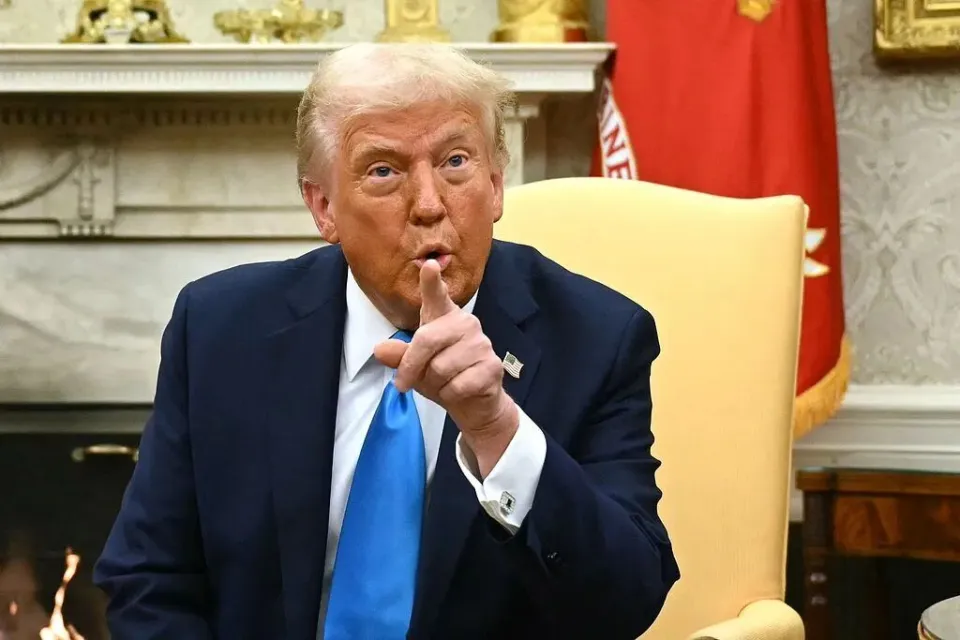
At the Bitcoin 2024 conference in Nashville, Donald Trump announced to loud applause from the audience that he would fire the chairman of the Securities and Exchange Commission and appoint a pro-digital asset regulator if he returns to the White House.
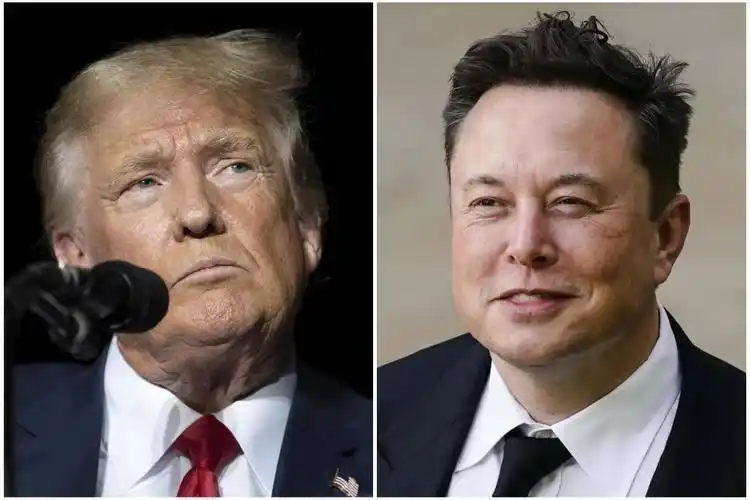
The former president had been critical of cryptocurrencies, but since he began selling his own NFTs, Trump has shifted his stance and won support from many in the cryptocurrency community, including Elon Musk and the Winklevoss twins.
Trump has not only positioned himself as a supporter of cryptocurrency, but has also raised millions of dollars in campaign funds from the industry and expressed his hope that the United States will lead the world in Bitcoin and other digital assets.
It was supposed to be a cryptocurrency conference but could easily have been mistaken for a Trump rally.
At one event, vendors hawked red hats emblazoned with the slogan “Make Bitcoin Great Again,” and the audience erupted in applause when Donald Trump promised to fire Securities and Exchange Commission Chairman Gary Gensler if he returned to the White House and replace him with a regulator who loves the digital asset industry.
“I promise the Bitcoin community that the day I am sworn in, the anti-cryptocurrency movement of Joe Biden and Kamala Harris will end,” Trump said at the Bitcoin 2024 conference in Nashville on Saturday, comparing cryptocurrencies to the steel industry of a century ago. “If Bitcoin is going to go to the moon,” he added, “I want the United States to be the country leading the charge.”
The speech marked a sweeping shift in the former president's attitude toward an asset class he once viewed as a crime-ridden scam when he was in office. It also signals a growing convergence between what was once an outsider political machine and an outsider financial movement that is moving into the mainstream.
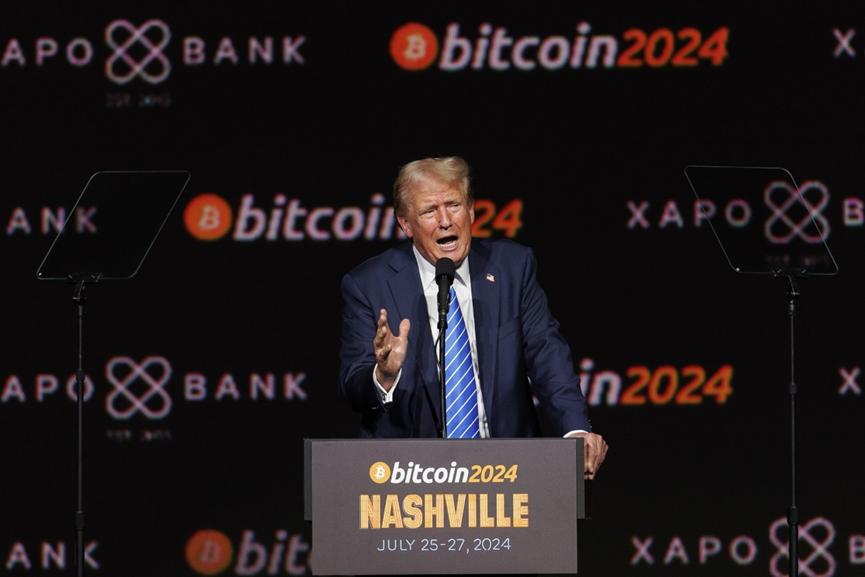
Trump spoke at the Bitcoin 2024 conference in Nashville on July 27. Trump, once a critic of cryptocurrencies, has changed his attitude since he started selling his NFTs
Conventional wisdom holds that this strategy is nothing more than a classic Trump transactional relationship. He needs votes and money in what looks set to be a tight presidential race, and he's taking advantage when the Joe Biden administration cracks down on the cryptocurrency industry.
If that's the case, then the strategy clearly worked. The cryptocurrency ecosystem’s public image is dominated by cyber warriors with deep pockets, which for Trump was fertile ground for raising tens of millions in campaign funds and a legion of passionate supporters.
His new role as a cheerleader for the industry has helped him win support from the likes of Dogecoin enthusiast Elon Musk, billionaire twins Tyler and Cameron Winklevoss, and venture capitalists Marc Andreessen and Ben Horowitz.
“As Bitcoin Conference demonstrated, President Trump wants our country to regain its position as a global leader in technology, innovation and manufacturing,” said Brian Hughes, a senior adviser to the campaign. “This includes cryptocurrencies and other industries.”
All the donations and noise coming from the cryptocurrency space did not go unnoticed by the other side. Bitcoin fans circulated a letter purportedly signed by more than two dozen Democratic lawmakers and candidates on social platform X. The letter was sent to the party’s national committee urging a softer approach to digital assets.
Despite enjoying so much new support, there is another important factor in Trump’s conversion into a believer in cryptocurrencies. Put simply, he fell in love with his own-themed non-fungible tokens (NFTs) — and the backers who bought them — and that enthusiasm has turned into widespread recognition for the entire industry, according to insiders.
Trump’s questions about the valuation of digital assets have not slowed his enthusiasm for promoting NFTs. That was made abundantly clear in May when he gave impromptu remarks at a rally at Mar-a-Lago to supporters who had purchased at least 47 digital trading cards. These pop art-style portraits of the former president include images of him dressed as cowboys, superheroes and other fantasy characters.
The NFTs cost $99 each, but Trump has publicly said whether he could sell them more expensively.
"There's a big difference between $99 and $499, $599, maybe $1,000, I don't know," he told viewers, according to a video of the event during a recess in his New York hush-money criminal trial. "But I don't want to do that. I want to keep the price the same. Now, no one is going to believe it, they're going to say 'Oh, that's bullshit' about this guy."
Not long ago, Trump himself was a critic of cryptocurrencies, accusing Bitcoin and other tokens of promoting crime and criticizing the valuations constructed from "castles in the air." But Trump changed his mind after he and his wife Melania started selling NFTs.
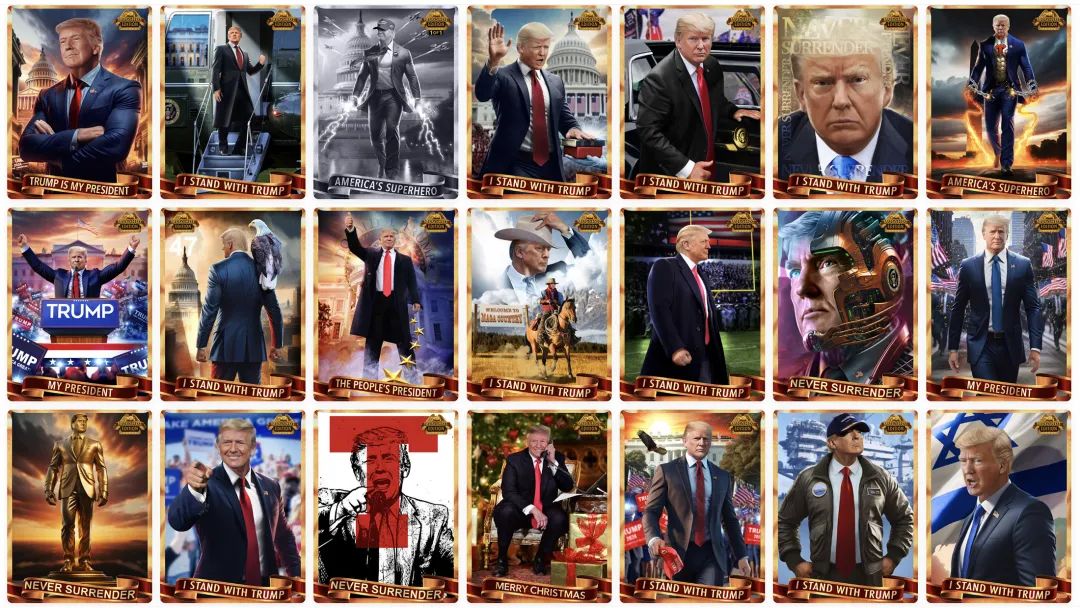
“Trump’s NFTs were what really introduced him to the cryptocurrency community for the first time,” said Kristin Smith, CEO of the Blockchain Association, a trade group that has been one of the liaisons between the Trump campaign and the cryptocurrency industry.
For a scandal-plagued industry facing multiple legal actions from the government, Trump’s pivot on cryptocurrencies has literally turned him into one of his NFT superheroes. And for Trump, the topic gives him another wedge with which to attack his Democratic opponents — a powerful one given the industry's enthusiasm for voting and unprecedented related fundraising.
The pro-cryptocurrency Fairshake Political Action Committee (PAC) and two joint super PACs have raised $170 million this election cycle, although they have primarily focused on congressional races and donated to both parties.
Trump’s symbiotic relationship with the industry is evident in Nashville: As cryptocurrency fans hailed a friendlier regulatory environment, Trump raised huge donations from them. He charged $844,600 for seating at one of his cryptocurrency “roundtables,” and $60,000 per person — $100,000 per couple — for a photo reception with him.
More money will be raised on Monday, when Mike Belshe, CEO of cryptocurrency firm BitGo, will host a fundraiser in Palo Alto, California.
While there are many celebrities in the cryptocurrency world who associate with Trump today, there are some lesser-known figures who also deserve credit — or blame — for guiding him into this wonderful world of digital assets.
One of them is Bill Zanker, founder of adult education company The Learning Annex and co-author of Think Big and Kick Ass. Zonker said he is a long-time friend of Trump and has arranged for Trump to be a speaker for the learning center.
Zanke said in an interview that he approached Trump about two and a half years ago and pitched him an idea: NFTs that featured artistic images of the former president. Zanke recalled that Trump was interested but didn’t want to call them NFTs.
"I want to call it a digital trading card on a computer," Zonker said Trump told him. "If you call them NFTs, people don't understand."
Then came the collapse of Sam Bankman-Fried’s FTX exchange and a spate of other industry bankruptcies in 2022 — a chain of events that left millions of victims “backpacking” and triggered a crackdown on the industry from the Biden administration.
In December 2022, Zanke went to Mar-a-Lago in what he called the "cryptic winter of winter" and asked, "Mr. President, do you still want to continue?" He said, "You know, Bill, a lot of my friends said I shouldn't do it. But I love it, let's do it."
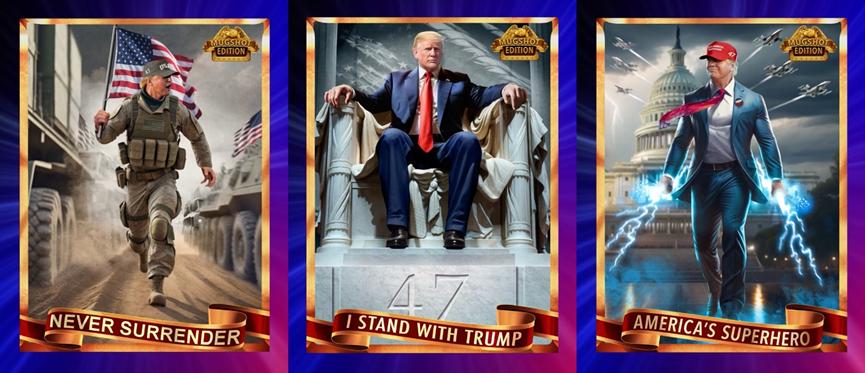
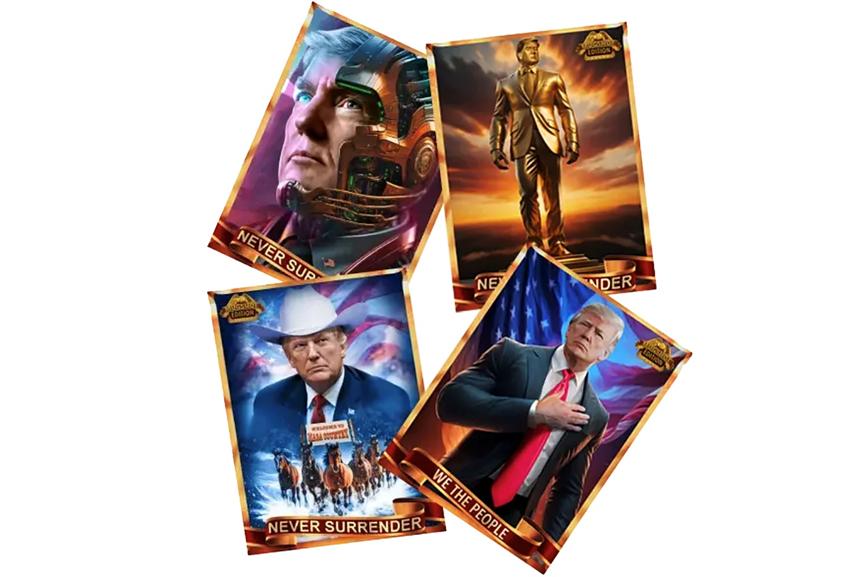
The digital cards are released as a "MugShot Edition" and sell for $99 each.
Trump’s role in this project is anything but passive. “Every picture, he personally reviewed it,” said Bill Zanker. "He spent a lot of time on it. He loved the project and called it 'pop art.'" Zanke also added that the project inspired Trump to spend time studying cryptocurrencies and asked a lot of questions to help him understand related topics such as the Ethereum blockchain.
According to Zanke, these NFTs are so popular that each new collection sells out within hours. Then, two events were held at Mar-a-Lago, one late last year and another in May, for Trump to meet with buyers.
“He fell in love with this group of people: young, ambitious, unregulated,” Zanke said. “He was asked, ‘What do you think about cryptocurrencies?’ and he said, ‘I like it, I don’t like it all going overseas.’ Of course, that got the audience enthusiastic.”
At one point, the subject of accepting campaign donations in cryptocurrency came up, and Trump called his friends to the stage.
"'Zanke, should we accept cryptocurrency donations?'" Zanke recalled Trump asking. “I said yes. He became the crypto president.” So far, the campaign says it has raised more than $4 million in cryptocurrency donations, in addition to traditional U.S. dollar contributions from industry supporters.
The Trump Trading Card NFTs — nearly 200,000 in total, divided into three series — earned Trump and his partners more than $20 million in revenue, according to Zonker, who declined to say how the revenue was divided.
In the wake of NFT activity, the industry’s pursuit of Trump — and his pursuit of potential donors who have become rich in cryptocurrencies — continues to grow.
The next big event was in June, where Trump and his guests ate cookies and mesmerized a small group of executives from cryptocurrency miners at the Mar-a-Lago tea room. These companies own vast, high-tech data centers, conduct transactions on the blockchain, and are compensated in Bitcoin or other cryptocurrencies.
“We talked about how to engage the Bitcoin community in the political process,” said Brian Morgenstern, head of public policy at miner Riot Platforms Inc., who previously worked at the White House and Treasury Department during the Trump administration. “If you don’t engage and talk to the candidates, you can’t change policy.”
Trump is clearly very engaged. After meeting with miners, he became a full-throated cheerleader for cryptocurrencies, posting on his Truth Social platform that he wanted all remaining Bitcoins to be "Made in the USA!!!" and saying that Bitcoin mining could be "our last line of defense against central bank digital currencies."
This refers to a central bank digital currency (CBDC), financial institutions’ response to cryptocurrencies that is still in the research phase in the United States. Critics of CBDCs warn that they could be used as surveillance tools because they make it easier for government authorities to track financial flows. Of course, they also pose strong competition to cryptocurrency stablecoins that track the value of the U.S. dollar and other fiat currencies.
A Satochip cryptocurrency wallet on display at the Bitcoin 2024 conference, showing a photo taken after Trump's assassination attempt
Trump’s circle of cryptocurrency advisers is growing, as he relies on billionaire Tesla CEO Elon Musk to advise the industry. His former opponent in the Republican primary, entrepreneur Vivek Ramaswamy, also said he had discussed potential cryptocurrency policy with Trump.
On Capitol Hill, he has found some cryptocurrency believers among Republican allies. Tennessee Senator Bill Hagerty, who has emerged as one of Trump's campaign surrogates on cryptocurrency issues, attended a June meeting with miners at Mar-a-Lago and a Bitcoin conference in Nashville.
The cryptocurrency industry featured prominently at the Republican National Convention in Milwaukee earlier this month, with Wisconsin Rep. Bryan Steil participating in a blockchain panel on cryptocurrencies and Hagerty speaking out for the industry on a manufacturing panel.
“We have to get the bureaucracy back in Washington, D.C., to play by the rules, and some of the agencies that we’re seeing have exceeded their authority and created uncertainty — and uncertainty has a very negative impact on capital investment,” Hagerty said.
Just outside the secure perimeter of the Republican National Convention, supporters handed out paper fans promoting the MAGA (Make America Great Again) memecoin, a crypto project that has recruited Trump ally Roger Stone as a partner.
The fans are the latest sign that Trump and the culture surrounding him have become a major phenomenon among traders of memecoins, one of the least innovative but riskiest coins that are easy targets for pump-and-dump scams.
MAGA is the largest Trump-related meme coin, with a total market capitalization of more than $300 million, according to tracking platform CoinGecko. Although these coins have no official connection to Trump, that has not stopped their popularity.
The team at memecoin platform Pump.fun noticed that on July 13 alone, the day after Trump’s assassination attempt, more than 2,000 Trump-related tokens were created.
Of course, there are political risks with Trump being so closely tied to such a notorious asset class if another FTX-like situation arises, or if prices simply fall causing sentiment to sour.
However, having the cryptocurrency industry itself so ideologically aligned with the Republican Party could pose greater risks, according to Hilary Allen, a professor at American University Washington College of Law who focuses on financial law.
“This may alienate some users because cryptocurrency itself is a very ideological investment,” she said. “This may increase appeal to Republican users but may alienate Democratic users.”
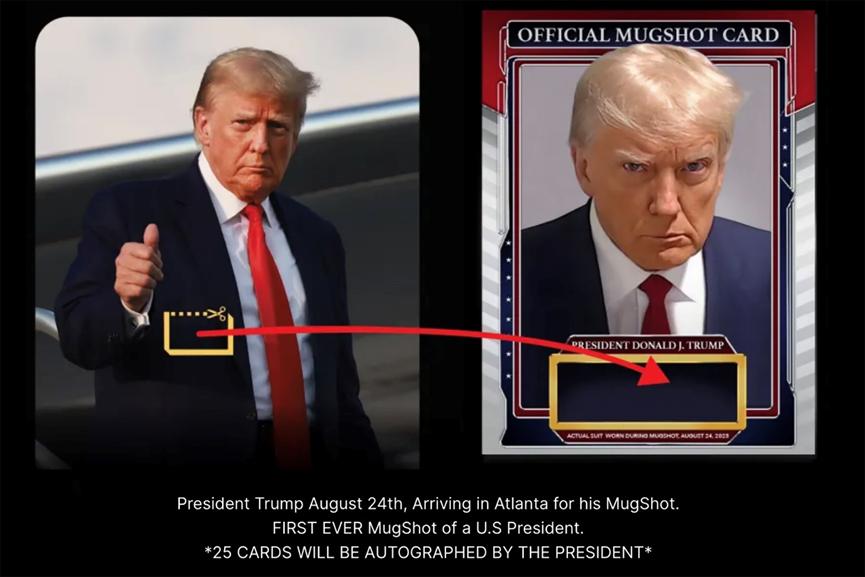
Trump trading card site offers real rewards to NFT purchasers, including a physical trading card featuring fragments of the suit he wore during a police photo shoot in Fulton County, Georgia, on August 24, 2023
Only time will tell whether Trump wins a second term and delivers the more favorable regulatory environment the industry wants. Currently, according to betting on Polymarket, a crypto platform that allows people outside the United States to place bets on political outcomes, Trump is the most likely to win, with an implied probability of 57%.
If he wins, friendly regulators may not be his only gift to the industry.
In Nashville, Trump said he would order the government not to sell cryptocurrencies seized in criminal cases and instead use them as the basis for what he called a strategic Bitcoin reserve.
However, Bitcoin gave up its pre-speech gains after Trump did not confirm plans to order the government to buy up to 1 million Bitcoins, while his opponent Robert F. Kennedy Jr. said at a meeting on Friday that Trump may make such an announcement.
Meanwhile, even amid a busy campaign schedule, Trump is plotting the next steps for his own cryptocurrency venture.
A fourth Trump NFT series is in the works, and Zanker said he hopes it will be released in August, promising it will be the "biggest and best yet" with "a lot of surprises." (Some past purchases have included real-world rewards, like a reception at Mar-a-Lago or pieces of the suit Trump wore when he was photographed as a suspect in the Georgia election extortion case.)
"We met with him before the assassination attempt to review the artwork," Zanke said. "He would look at every picture carefully."