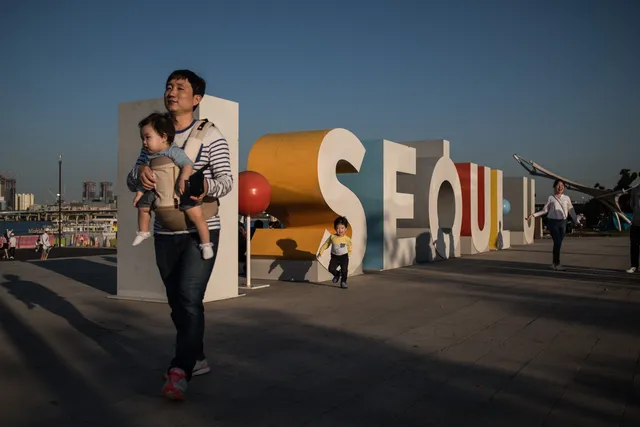
According to news on March 10, 2026, in order to alleviate the pressure of childcare and cope with the continued low fertility rate, Jeju Island, South Korea, has officially launched a grandparent care subsidy policy, which will provide a monthly subsidy of approximately US$200 (approximately 1,400 yuan) to eligible grandparents. The project will be launched in March and has been approved by the local council. It is a childcare support measure launched based on the successful experience of Seoul.
Seoul will launch the "Grandchild Care Subsidy" as early as 2023, requiring grandparents or relatives to provide at least 40 hours of childcare services per month to receive a subsidy of 300,000 won (approximately US$204, approximately 1,430 yuan). A survey in February 2026 showed that the satisfaction rate for this policy was as high as 99.2%, and 99.5% of the respondents were willing to recommend others to apply. By the end of 2025, 5,466 people had enjoyed the subsidy. The policy is mainly aimed at families with children aged 2 to 3 years old. The family income does not exceed 150% of the national median. It gives priority to families with dual incomes, single parents, and multiple children and other families with childcare difficulties. Dual-income families can enjoy a 25% deduction when calculating the income.
As dual-income families increase and childcare costs rise, grandparents have become an important support for childcare in Korean families. Data show that among the caregivers participating in the project, 54% are maternal grandmothers, 36.4% are paternal grandmothers, and less than 10% are grandfathers. There are various reasons why parents choose grandparent care. 48% do not have enough trust in professional childcare personnel, 46.4% lack emergency childcare channels, and 45.6% find it difficult to arrange childcare on their own. Many parents said that they originally wanted to financially subsidize their parents, and government subsidies have effectively reduced the family burden.
The person in charge of the Seoul Women and Family Foundation said that the subsidy can not only relieve family financial pressure, but also allow children to gain emotional stability in family companionship and help them grow up healthily. This policy is part of the childcare support system launched by the Mayor of Seoul in 2023. It also includes services such as parental leave subsidies, emergency childcare, and municipal children's cafes.
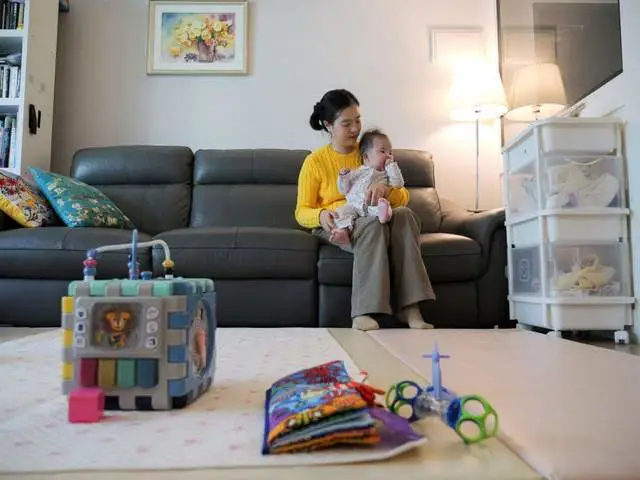
Childcare costs in South Korea continue to rise. The current average monthly childcare expenditure reaches 1.116 million won (approximately 758 US dollars, approximately 5,300 yuan), exceeding the one million won mark for the first time. Driven by a number of policies, South Korea will have 254,500 births in 2025, a year-on-year increase of 6.8%. The total fertility rate has rebounded from 0.75 to 0.8, returning to the 0.8 range for the first time in four years. Officials believe that government fertility incentives have played a positive role.
From Seoul to Jeju Island, providing subsidies to grandparents who take care of their grandchildren is becoming a mainstream approach in South Korea's response to the population crisis. It not only respects the traditional care model of the family, but also uses practical support to reduce the burden on young parents and explore feasible ways to increase the willingness to have children.