Do you still remember that a while ago, the "Encyclopedia of Anti-Japanese Dramas" became popular on the Internet?
This "Internet Celebrity Book", written by a Japanese author, collects 21 Chinese anti-Japanese TV dramas and calls them "unexpected anti-Japanese patriotic comedies". At first glance, it seems that the anti-Japanese dramas are regarded as comedies.
As soon as the news came out, it immediately attracted the attention of a large number of Chinese media and self-media, and joined the army of complaints.
But if you read this "Encyclopedia of Anti-Japanese Divine Dramas" carefully, you will know that the author has a "true love" for "Anti-Japanese Divine Dramas", and this "Encyclopedia" is also a "conscience work" that is both vivid and rigorous.
In many previous media and self-media reports, you may have seen the most widely circulated complaints. Everyone originally thought that the anti-Japanese drama was nonsense, but the Japanese, as the real protagonists, took the initiative to stand up, and the complaints were so sharp and humorous, which accurately hit our laughing spots.
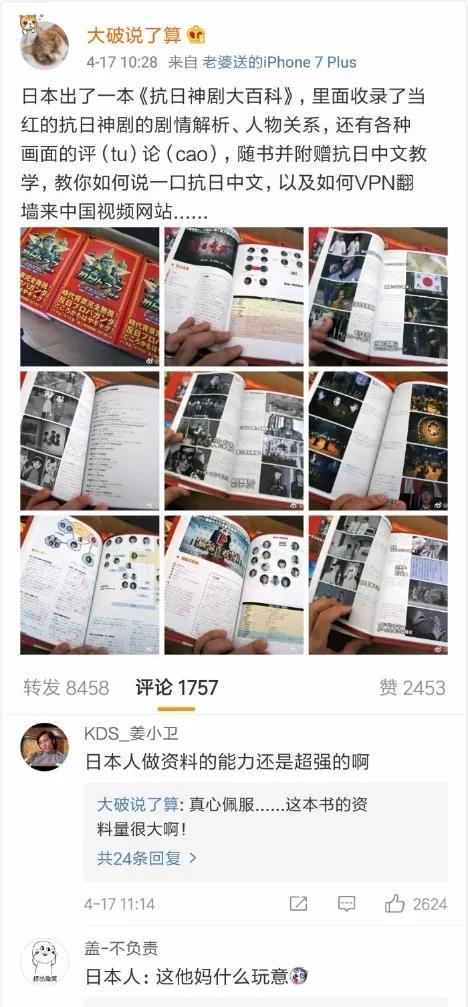
But apart from being funny, what we can also see is that, apart from comments such as "Hahaha", "What the hell", "Shame on you and sent abroad", the top one is this:
"The Japanese are still very capable of producing information."
This comment received thousands of likes, obviously because of the research spirit in the book, which can be seen everywhere.
The author combed through the plots of 21 TV series in detail, condensed the stories of 678 episodes with a total broadcast time of 30,180 minutes into pictures and texts, divided the forces of the various parties, and drew a diagram of the relationship between the characters.
Then connect the characters' relationships with more intricate story lines, and draw the main and branch plot outlines:
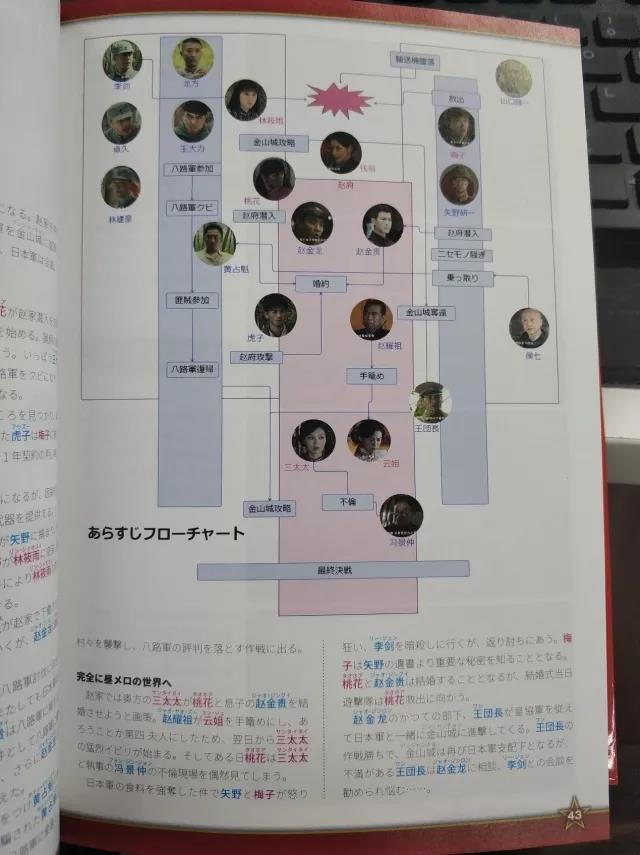
Finally, I analyzed the stills one by one, and further explained the plot next to the stills, interspersed with complaints, and helped the crew catch countless bugs:
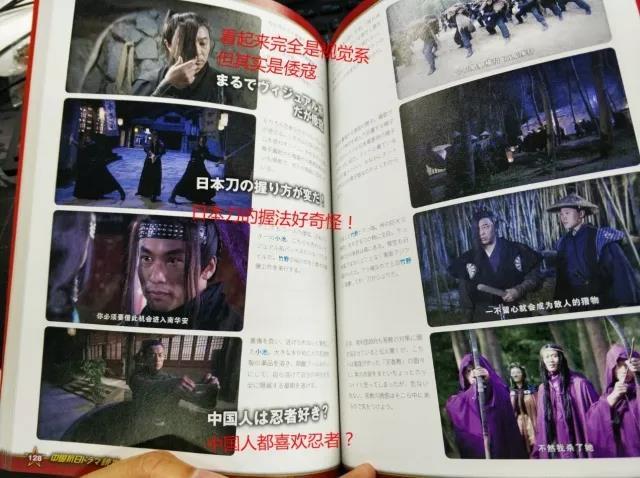
All this makes us feel that this book is not as simple as imagined.
Therefore, we also ordered a copy of "Encyclopedia of Anti-Japanese Divine Drama" on Amazon Japan, and the physical book has just been obtained. After reading it, I felt that there was quite a lot worth saying in it.
In addition to basic TV series analysis, the author has done a comprehensive job, including a lot of popular science and interview content, all of which are interspersed in the columns of the book, including but not limited to:
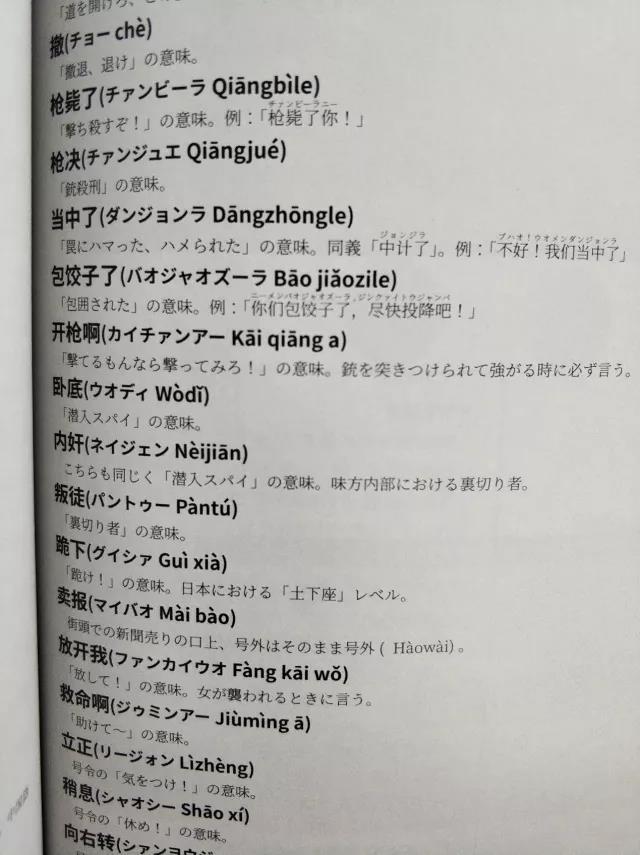
Chapter "Learning Chinese through Anti-Japanese Divine Drama", but there are some mistakes, such as "It's not good that we are among them", the Chinese line should be "We were fooled"
And through these contents, I found that the author was not just here to make fun of him.
The author has his own motives for writing this book, which are also related to certain factors of the times. Two Japanese actors who participated in the anti-Japanese drama were interviewed in the book and also expressed their feelings as a "Japanese professional".
Even this "Encyclopedia of Anti-Japanese Divine Dramas", which is popular for its comedy, also introduces a serious anti-Japanese TV drama that the author feels does not have much room to complain about, because it is indeed included in the dozens of dramas he has watched and cannot be ignored (I will talk about which one later). It can be seen that this "divine drama" defined in his book is not the other "divine drama".
These are actually quite serious things, but they are also very interesting. So we would like to answer some questions that you may be concerned about in the form of a question and answer. Not only does it introduce the fun of this book, but I also hope to show everyone these behind-the-scenes things.
Is the writing style of the book serious or naughty?
It's basically serious, but the complaints are naughty.
Here you can slightly translate a few paragraphs of the preface, and also explain the author’s thoughts first:
"When news about Chinese anti-Japanese TV dramas spreads everywhere, you can see comments such as 'I want to watch it' or 'It looks very interesting' on social networks such as 2ch and Twitter. This book wants to help everyone who has said so, slowly and easily introduce to everyone the works that the author – that is, an ordinary viewer – is interested in and has watched to the end.
"This type of TV series will never be shown in Japan. It would be my honor if I could lower the threshold for entering the world of anti-Japanese TV dramas and make it easy for those who are interested to watch. In this sense, I wrote this book focusing on various types of anti-Japanese TV dramas, simple story outlines, and interesting scene explanations. There are many characters in these stories, and they are broadcast for a very long time. Even if you can understand Chinese, it is still extremely difficult to follow the story.
"Therefore, this book illustrates the development of these stories in the form of a character relationship diagram, and outlines the key points of the main plot. In addition, a column is inserted in the book to introduce how to watch anti-Japanese TV dramas, and briefly introduces some classic "plots" for your reference. Finally, in order to make the actors and characters more consistent with the atmosphere of the actual work, and to be consistent with the subtitles on the image screenshots, their names are recorded in simplified Chinese characters."
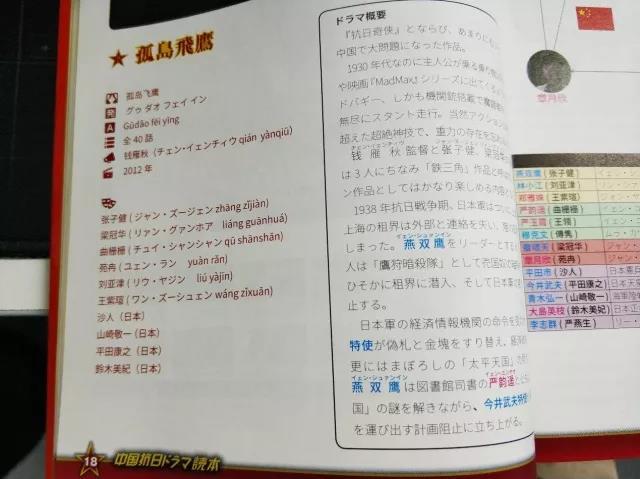
Basic information such as the title of the play, pinyin, number of episodes, director, year, starring actors, etc. are thoughtfully marked, as well as Japanese kana phonetic notation.
This style of writing is quite formal, and is how Japanese papers are written. The introduction to the plot of the TV series at the end of the encyclopedia actually continues this style of writing.
After roughly reading the entire book, I think "Encyclopedia of Anti-Japanese Divine Dramas" is both serious and ridiculing, and it is not the kind of serious nonsense, because it is a serious discovery, retelling and emphasis on the nonsense in the Anti-Japanese Divine Dramas.
As for the anti-China remarks, it can be seen from the preface and the book that the author really likes to watch anti-Japanese dramas and wants to "slowly and easily introduce" anti-Japanese dramas to other Japanese people. Although some complaints may have some misunderstandings about China and even Chinese culture, they are by no means like the Japanese right wing who deny aggression and clamor for anti-China.
The author does not regard these dramas as anti-Japanese propaganda, but as some kind of nonsensical entertainment worth sharing and studying.
Let’s talk about that anti-Japanese drama that even the author has no place to complain about?
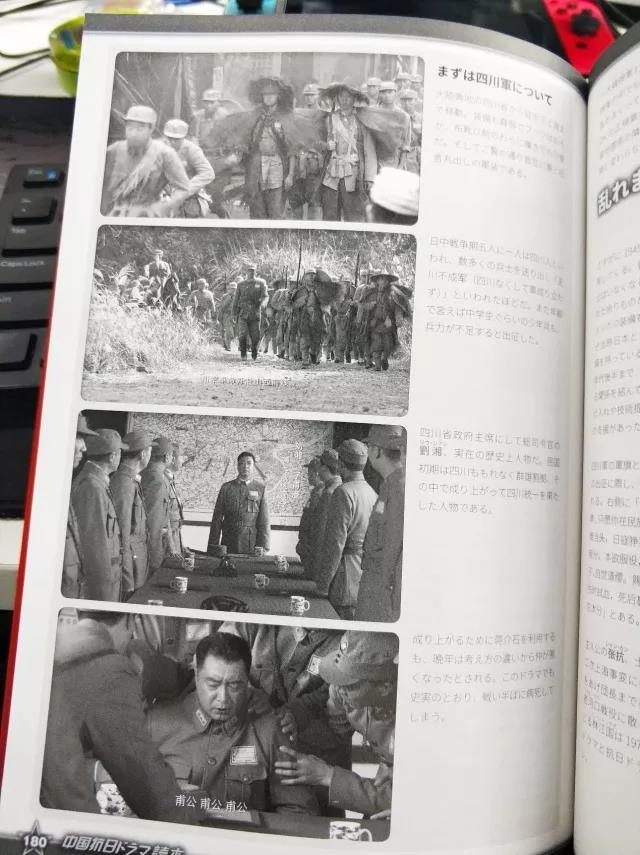
This TV series is "The Warriors Go Out of Sichuan", also known as "The Iron-Blooded Journey". It has more than 400 reviews on Douban, with a score of 8.6.
Encyclopedia's evaluation of it is: It is a serious war TV series with many real characters appearing, depicting the Sichuan Army, and almost no place to complain.
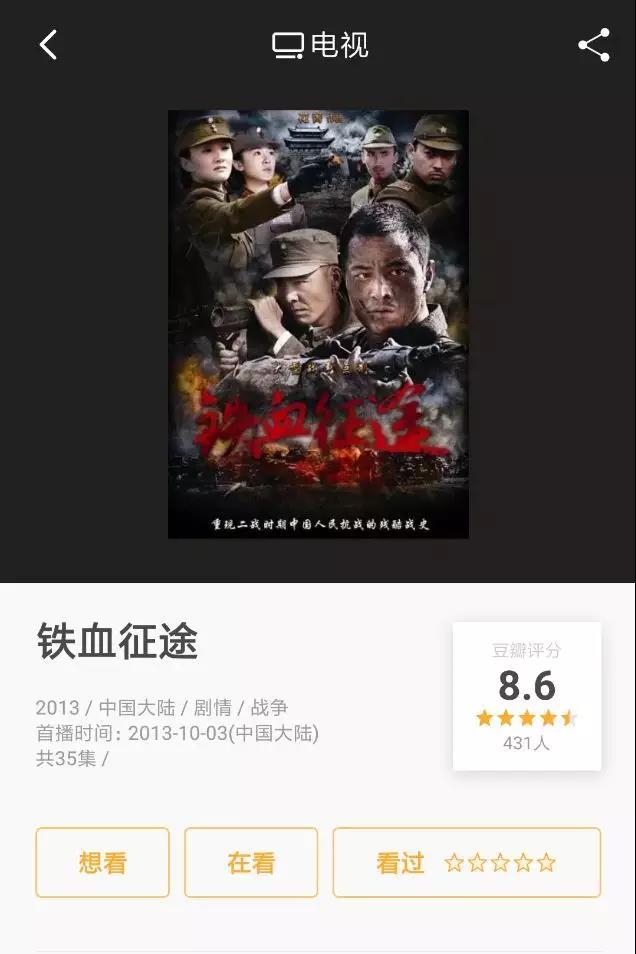
Of course, that doesn’t mean that there are no problems in “The Strong Man Out of Sichuan”. For example, in the following Japanese military order, the copy says:
The Japanese military order book that has always brought us joy (because many anti-Japanese drama documents are written in Japanese, and the names are taken from Japanese politicians, actors and even ACG characters), this time the Japanese is very good, except that the word Linfen in Shanxi Province in the lines is written on it instead of Linyi in Shandong Province.
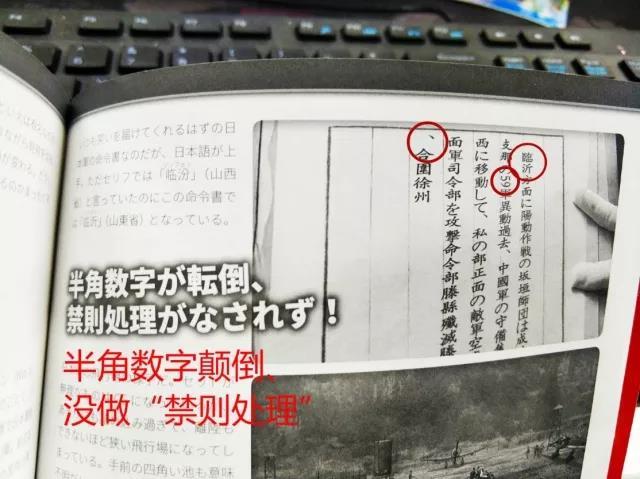
This is already the most serious complaint against the game. Unexpectedly, such a bug related to Chinese geography knowledge was discovered by Japanese friends. The comments in large characters such as "Half-width numbers are reversed" on the side are just two typographical issues: the Arabic half-width numbers in the order book are not arranged vertically and the punctuation should not be placed at the beginning of the line. These are completely details. The author of the encyclopedia really pays attention to the details.
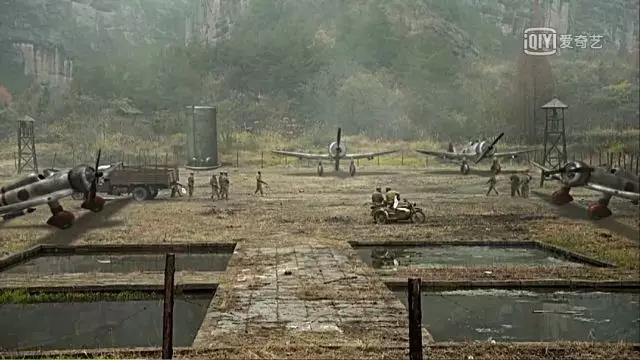
The relatively shabby CG airplane in the play
Another thing is that the plane in the drama is made of CG, the runway is too narrow, and the square pool next to it has no meaning (but these pools can be understood as fire pools commonly found in airports).
When I saw this book circulating on the Internet, some people were worried that it would be used as material for Japan's fictional history textbooks. However, after getting the book, I found that there were many instructions before and after which TV series were fictional and which were historical facts.
In the plot analysis of this TV series, the author's writing is respectful enough. For example, when describing the difficult situation of the Sichuan Army, not a single sentence was ridiculed in tone or content.
Which work has the highest rating in Encyclopedia?
Sure enough, "The Anti-Japanese Heroes" is still "tearing apart Japanese enemies".
It was the first work introduced in the encyclopedia, and was hailed by the author as "a terrifying and dazzling super-large entertainment work like a pyramid."
In the scene where the opponent tears the Japanese apart, the comments in the book are also relatively restrained:
Du Dapeng, a character with strange powers, has such a hard head that he is called the Iron Head Man by the world. In short, he is a fool who can overwhelm everything with his brute force, but his mind is empty. His "hand-killing Japanese" and related portraits in China reports can be said to be the symbol of this TV series in a sense.
Next to it is a slogan in big words: Tear apart the Japanese soldiers!
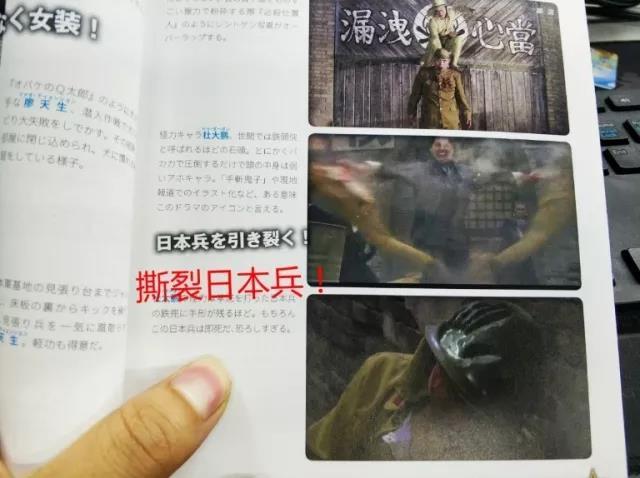
In fact, the Japanese have heard of the trick of tearing up Japanese soldiers with their hands. There was a scene in the drama-within-a-drama "Anti-Japanese Martyrs" in the Japanese comic "Academy of Evil" in which "the enemy is smashed with one's feet and the cannonballs are blocked with one's hands." They may be used to it.
Tell me about any other interesting reviews?
The table of contents of this book can be said to be the essence of the book, and the condensed evaluations are reflected in it. Here is a translation:
"Eagle": In the style of "Fist of the North Star" and "Mad Max", ATVs equipped with machine guns run rampant in the magic cave city of Shanghai!
"The Awakener" (Beast Train): The beautiful major and the Edo-knotted officer appear one after another, which makes Kyotaro Nishimura (a Japanese mystery writer who has written a series of mystery novels about trains and stations) even confused by the suspense of the "Asia" train!
"Arrow": I was expecting it to be an action movie in which the ninja army defeats Wia, but in the second half it turned into a complicated palace battle drama that is very popular among women!
"Ultimate Showdown": a showdown between Japanese and Chinese acrobatic troupes, street performers who challenged the Japanese gas war, and an anti-Japanese TV series with a messy script!
"Young Fire" (Goddess Athena): The ultimate absurd drama that was treated as something private by the producer, ignored the test of the times, and had to be remade!
"Guns N' Roses": A nuclear warhead is enshrined at a shrine, followed by a mysterious dance, a nonsensical anti-Japanese drama in the style of an American drama!
"The Battle at the Swallow Gate": Set in the early Republic of China, victory and failure, teacher-student love, friendship… It is a martial arts thief action movie in the style of a hot-blooded boy's comic!
"Codename Nine-Eared Dog": A trendy anti-Japanese drama series featuring Hong Kong and Taiwanese celebrities, infrared lasers, biometric authentication, Mitsuru Toyama (the founder of the Japanese ultra-nationalist secret group Black Dragon Society), and Kitaki Ikki (a Japanese fascist)!
"Towering Xing'an Mountains": An anti-Japanese forestry TV series produced with a low budget from the Inner Mongolia Autonomous Region, telling the story of three eras including the Anti-Japanese War period!
"Mission Impossible": An uncle who specializes in anti-Japanese dramas treated his wife as the heroine and mobilized a luxurious cast, but in the end it failed!
"Martial Tigers": The monks of the Southern Shaolin Temple fight against the corrupt court of the late Ming Dynasty and the Japanese pirates. This is not an anti-Japanese war, but an anti-Japanese drama!
"Iron-Blooded Blade": An anti-Japanese comedy with a combination of Japanese military officers who are just as fun as Mancai and constantly make jokes, and also have gorgeous action elements!
"New Dragon Crossing the River": A Kung Fu action TV series in which Hong Kong stars perform in Shanghai, the enemy is a large-scale gangster and Japanese spies!
"Strange Town": An anti-Japanese TV series that won the Excellence Award in the Recording Department but was suspended due to blood splatter and excessive brutality!
Where did the author watch these anti-Japanese dramas?
In the guide that teaches Japanese people how to scientifically watch Chinese TV series online, the author recommends some websites. He also mentioned many times in the book that these websites were basically his main way to watch anti-Japanese dramas, most of which were on CCTV, as well as Youku, Baidu Video, PPTV, etc.
In the references and websites at the end of the book, Iron Blood Network and Baidu Encyclopedia also appear.
The encyclopedia doesn't mention "Bright Sword"?
It is indeed not mentioned in the text, but the author cannot fail to read such a well-known work, so the author also has an explanation in the preface:
"In order to introduce various anti-Japanese dramas in detail, and due to page and space restrictions, quite famous works such as "Bright Sword" and "Arrow on the String" have not been published. If there are still opportunities for publication in the future, I would like to continue to introduce them."
Because the standards of "divine drama" mentioned by the author are different, it is really possible that the author will continue to introduce "Bright Sword".
It can be seen from the author's Twitter and blog that he is still studying various anti-Japanese TV dramas.
What has attracted a lot of attention recently is "Underground Traffic Station" directed by Yingda. It is a very classic comedy. His evaluation is "an anti-Japanese comedy that will be hilarious if you understand Chinese." You can look forward to it.
By the way, his Twitter ID is Minami Yunko, a well-known Japanese female spy
What did "Japanese professional" Miura Kenichi say in the interview?
Along with Koji Yano and Tenma Shibuya, the well-known actor Miura Kenichi, who is known as a "Japanese professional", participated in "Strange Town" and "Guns N' Roses" among the 21 anti-Japanese dramas in Encyclopedia. The author took this opportunity to interview Miura.
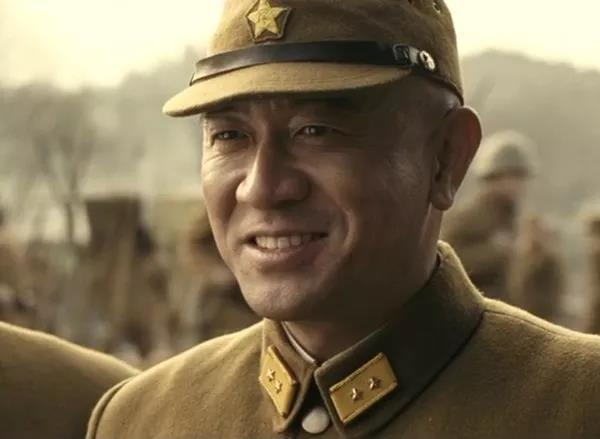
Miura made a very interesting statement in the interview. He believed that the outbreak of anti-Japanese dramas was due to the Hong Kong TV and film industry's march into the mainland. Chinese directors felt that anti-Japanese dramas were complacent and needed innovation, while Hong Kong and Taiwan directors continued the characteristics of Hong Kong films and felt that they should be more interesting. The two sides reached an agreement.
Indeed, many directors of anti-Japanese dramas are from Hong Kong and Taiwan.
For example, Liu Shiyu, the director of "Anti-Japanese Heroes" (Tearing up Japs with Hands), and Yu Mingsheng, the director of "Arrow on the String" (Archery), are both from Hong Kong. Lin Jianzhong, the director of "Iron Mission" (Stone Masturbation), is from Taiwan. Li Hantao, the director of "Wutai Mountain Anti-Japanese Legend" (30 Nuns Kill Japs), is a Hong Kong director who graduated from National Taiwan University.
Miura also told some anecdotes that happened after filming the anti-Japanese drama. He said that Chinese people always ask him, after filming an anti-Japanese drama, what will happen to the Japanese when he returns to Japan?
He always answered like this: "
When I go back, I am often asked by my classmates and friends, if I play a bad guy in a Chinese anti-Japanese drama, will I be abused by the Chinese? In fact, in China, everyone is also worried about what will happen to me when I go back to Japan. Therefore, I have received concern from both sides… In fact, I will not be hurt by either side. "
Miura also said that he often hears from Chinese audiences and producers, "You are obviously a capable actor, why do you always play such stupid roles?" At the same time, China's radio and television are also criticizing anti-Japanese dramas, so he feels that Chinese people are increasingly pursuing the quality of such TV dramas.
Has the author been to China? Does he understand China at all?
The author has been to China, and it was during a business trip in China that he discovered the beauty of the anti-Japanese drama.
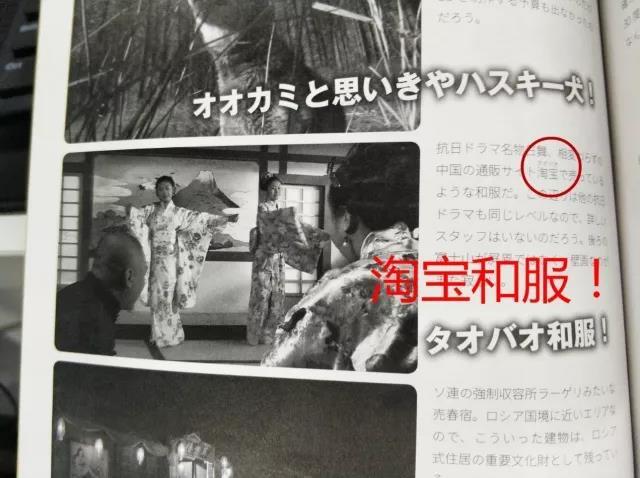
As for whether he understands China, at least he knows Taobao:
We also know that the palm technique of "Huagu Gumian" comes from Jin Yong's "The Deer and the Cauldron":
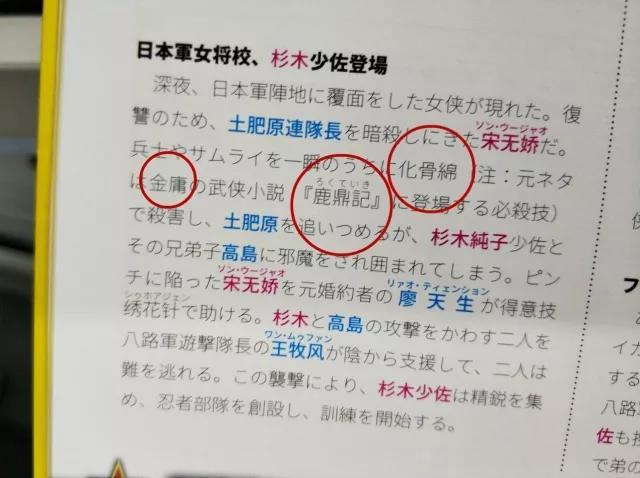
I have indeed done my homework. You may not be able to say that you are a master of China, but you have a good understanding of it.
So what kind of person is the author? Is he a university professor who specializes in cultural studies?
Not really.
The author, Ubo Iwata, is just an ordinary office worker in Aichi Prefecture, Japan. He is engaged in "information system-related work and does everything."
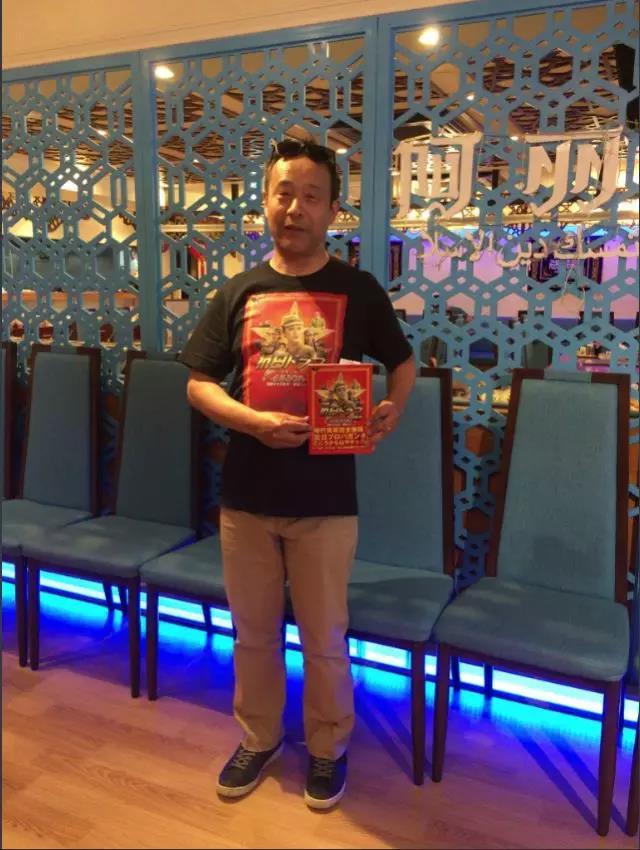
The author himself, and his customized T-shirt of the same style as Encyclopedia
By chance, he went to Shanghai on a business trip and "encountered" an anti-Japanese drama. He also encountered constant fraud on the road in Shanghai. He felt that it was necessary to learn Chinese, so he was recommended by colleagues in the same group to learn Chinese through Chinese TV dramas.
As he watched, he found these weird anti-Japanese TV dramas "uniquely charming", so he lost control and began to "learn Chinese from the anti-Japanese dramas." His level improved by leaps and bounds, and he soon became better than his colleagues. Now he can basically pass the fake ones as real ones in the shops frequented by Chinese people in Nagoya.
Iwata now comes to China for backpacking trips every year. He took advantage of the anti-Japanese drama to really fall in love with the charm of China.
Apart from being funny, what does the author think of the anti-Japanese drama?
What he said is to "appreciate generously".
In the preface, he said:
“The anti-Japanese TV dramas that have become a hot topic between China and Japan (mostly with bad connotations) are, in the final analysis, just TV dramas.
Scenes like Detective Daimon in "Western Cops" (Japanese police dramas of the 1970s), using shotguns to kill criminals from a distance from a helicopter, are useless. They are all fiction. "
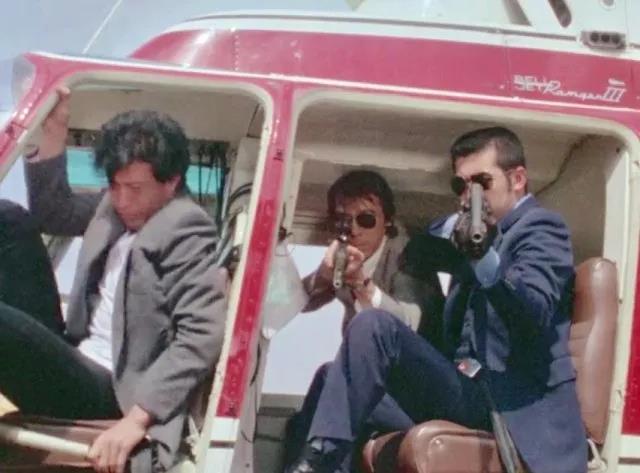
"Western Police" stills
The author feels that TV dramas are relatively "boring and vulgar" no matter which country they are in. However, TV dramas in the past were "boring but interesting". Now, for some unknown reason, they have become "boring and even less interesting." This has led to the "television disengagement" of Japan's younger generation, and the average TV viewing time among young people has continued to decline.
"I spent my childhood in the 1970s and 1980s, which was the heyday of TV dramas. As I said before, it seems that it is impossible for our country to produce a TV series like "Western Police" that is budgeted and boring now? I feel a little lonely."
On the contrary, the explosion of China's anti-Japanese dramas and their ratings are "the same as Japan's TV dramas in the past." The anti-Japanese dramas replaced "Japan's boring action dramas that are now extinct" and soothed his loneliness.
10
What do other Japanese readers think of the anti-Japanese drama?
Take the Asahi Shimbun’s book review on May 26 as an example.
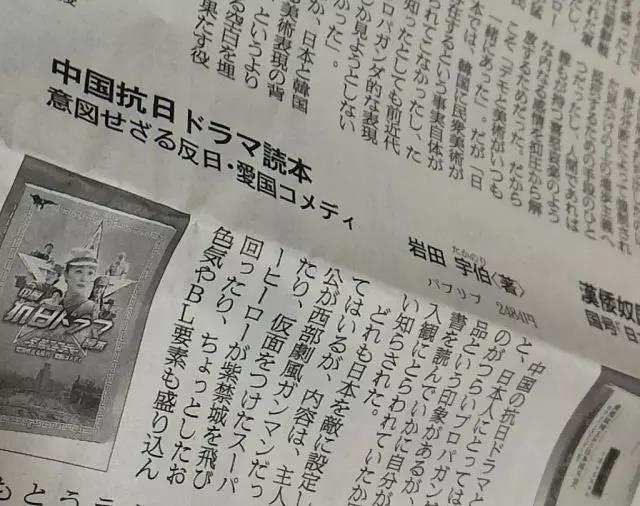
The Asahi Shimbun book review was published in the encyclopedia
Book reviews said that this book broke the reviewer's inherent impression. I originally thought that the anti-Japanese TV series were all anti-Japanese propaganda, "I didn't expect it to be such a ridiculous and entertaining action film… It reminds me of the movie in World War II where the Axis powers drove UFOs to attack from the back of the moon." (It should refer to the 2012 science fiction war comedy film co-produced by Finland, Germany, and Australia. It tells the absurd and funny story of the Nazi German army who escaped to the moon to build a space fleet after being defeated in 1945, and attacked humans in an attempt to occupy the earth.)
As for other Japanese readers, many are also "hahaha". What the hell is the anti-Japanese drama like? In recent years, it has become more and more known to more Japanese people. It is the kind of "old story" that makes you happy every time you watch it.
But the book "Encyclopedia of Anti-Japanese Divine Drama" has become an Internet celebrity in China. This is a new thing, and they are even happier when they see it.
11
So, do you have any recommendations for similar books?
I'm surprised that no one has mentioned this matter despite the fact that Encyclopedia has been popular for so long.
Opening the cover of the "Encyclopedia of Anti-Japanese Divine Drama", there are two recommended books on the left side: "The Great Illustrated Book of Chinese Amusement Parks: Northern Chapter" and "The Great Illustrated Book of Chinese Amusement Parks: The Central Chapter".
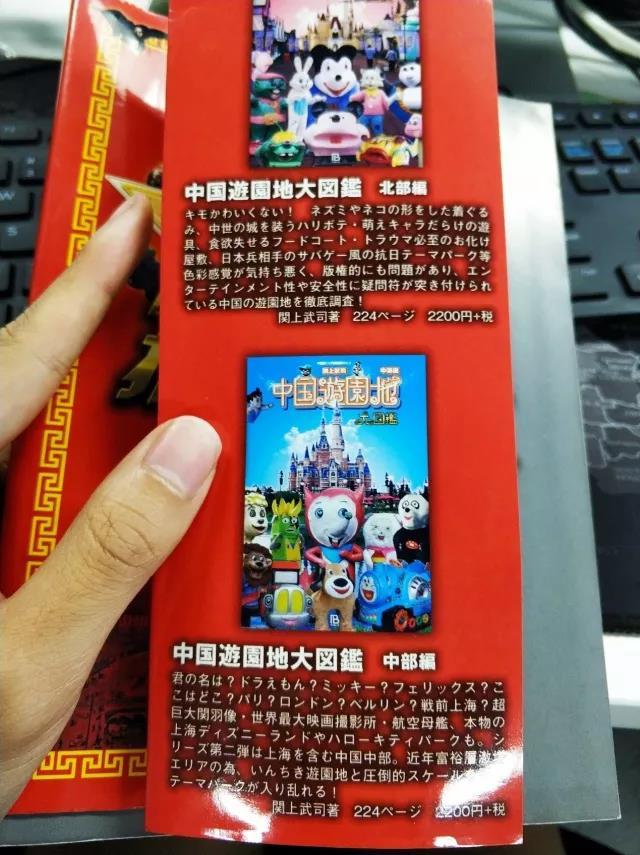
"Amusement Park" is an amusement park, and you will know what it is about just by looking at the title of the book. But if you take a closer look at the covers of these two books, if you can’t see clearly, there are big pictures below:
These two books also contain the same detailed information and complaints as the "Encyclopedia of Anti-Japanese Dramas":
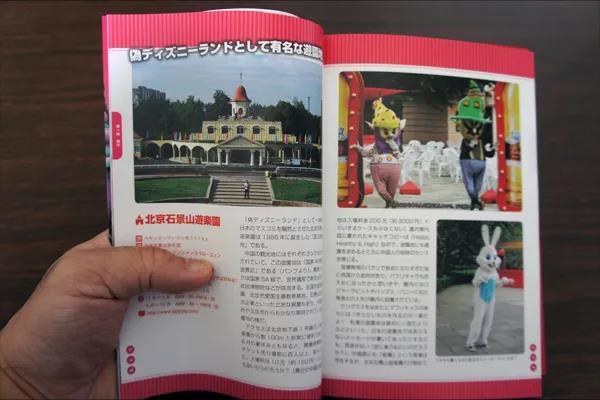
Beijing Shijingshan Amusement Park
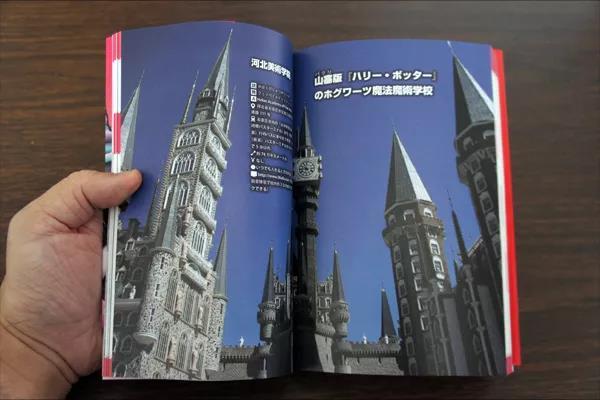
Hebei Academy of Fine Arts
These are two love letters written by a Japanese friend to copycat amusement parks in mainland China. He spent five years visiting nearly 100 Chinese cartoon-themed amusement parks and was impressed by the degraded versions of Disney and other animated characters, so he bravely recorded it all.
But that is another story.