While the world is paying attention to the U.S. war against Iran, the U.S. government refuses to admit that it is involved in a war on the grounds that it is not a "war."
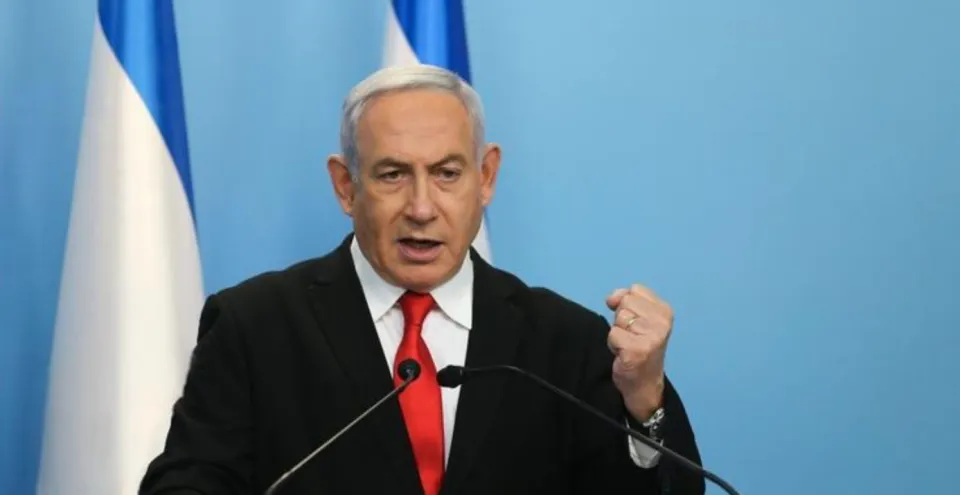
Four days after the bombing of Iran, when asked "if this is a war," House Speaker Mike Johnson responded: "We are not at war right now." So what is this if not a war? "I think this is an operation. A very specific, clear mission – an operation," he said.
What is the difference between "operation" and "war"? Senator Josh Hawley said literally that it is only a war when Congress declares war and U.S. ground troops intervene.
The problem lies here. A "war" is a major matter that requires authorization from Congress, but an "action" is like a police enforcement action or a painless surgical operation that ends quickly, and of course does not carry the unpleasant stigma of "waging a war."
The Atlantic Monthly's previous article "Never Say That Word That Begins with W" sarcastically pointed out that this was not just a word game to deceive oneself, but also an attempt to carefully avoid public opposition caused by negative associations, because since the Vietnam War, "war" has only meant "quagmire" and "Americans obviously don't want to have anything to do with the meaning of this word"; while "action" is more naturally associated with images such as "success" and "painless".
As long as you don't call it a "war," you don't need to get authorization from Congress, let alone declare war. Just change the term, and there are so many benefits. It's really wonderful.
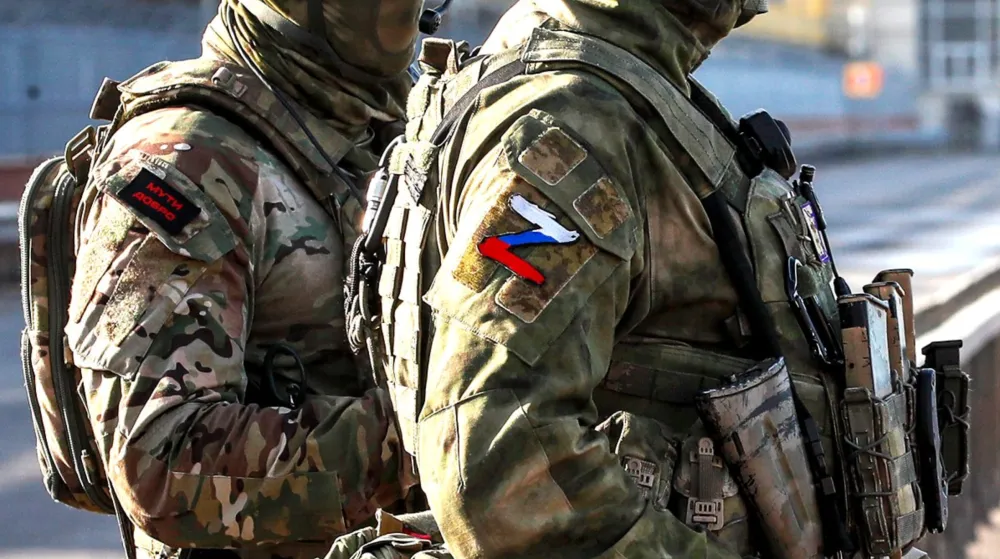
The Trump administration so deliberately avoids calling this war a "war," and such a cover-up cannot be hidden from others. The New York Times uncomfortably noted that this is similar to Russia's invasion of Ukraine four years ago: Putin also refused to call it a war at the time, and Russia has still called it a "special military operation" (SVO).
If anything, the Russians not only blame the victims for the "war" but also show contempt for "I didn't use my full strength at all."
After the invasion of Ukraine, Putin declared: "We did not start the so-called war in Ukraine. We are working hard to end it." State Duma Chairman Vyacheslav Volodin insisted two months after the war broke out: "This is a special military operation. If Russia launched a full-scale war, it would have ended long ago."
The literal translation of the recruitment advertisement on the streets of St. Petersburg is "Serve Russia! Recruiting. According to the contract requirements, you must use Russian." At first glance, I thought it was recruiting for some company.
The word "war" is really embarrassing to many politicians. Therefore, the military departments of all countries are now called "Ministry of Defense", and none seems to be called "Ministry of War".
It is almost human nature to conceal the unspeakable. Think about it, in order not to directly say words like "death" and "going to the toilet", how many euphemisms have been invented in Chinese alone. Some noble literati even talk about "money" and call it "A Du Wu" – literally translated as "that thing". Kong Yiji, written by Lu Xun, has a famous saying: "Stealing books cannot be counted as stealing… stealing books!…Can the things of scholars be counted as stealing?" For scholars, "stealing" is too ugly, but as long as you tell yourself that "stealing books" is not stealing, you don't have to face the embarrassing truth.
In political matters, euphemisms go beyond concealing the truth and can seriously mislead people. Although the language of the Third Reich is full of war metaphors, it is worth noting that the Nazis never used such an ugly word as "massacre". They called it the "Final Solution" as if it was just a bloodless administrative order. People who are unfamiliar with that brutal history of ethnic cleansing may think that they are just buying a bus ticket to move when they hear the word "population transfer".
Himmler, who presided over the Holocaust, was absolutely cold-blooded and ruthless towards the Jews, but for the first time on the front line, he faced Jews being shot and almost vomited. Seeing the nauseated expressions of the German soldiers who were being executed, he decided to avoid this uncomfortable and horrific scene, so the gas chambers in the concentration camps came into being.
The bloody scene is terrifying. When I was a child, I saw chickens being killed in the countryside. After the blood was drained, it was still flopping on the ground in pain. Pig killings were even worse. It took several adults to work together to tie up a pig. During the process of its disembowelment and bleeding, it kept howling miserably. I saw it once and never wanted to watch it again. No wonder there is a Western proverb that says: “If you like to eat sausages, it’s best not to know how the sausages are made.”
Modern people living in cities will not think of these scenes when eating meat, because they do not have the visual impact of such direct experience. Studies have confirmed that compared to face-to-face bloody fighting, aerial combat in which the enemy and victims are invisible puts less psychological burden on the soldier: he just drops the bomb and then leaves, just like playing a video game.
In a sense, euphemism plays such a role: it can cover up the embarrassing and terrible "dirty work" in an understatement, making it easier for both combatants and the public to accept it psychologically – of course, at the expense of the truth, but in war, the truth is always the first victim.
George Orwell had already realized this in his article "Politics and the English Language":
In our time, political speeches and articles defend unforgivable wrongs. Things like the continuation of British rule in India, the purges and deportations of the Russians, the dropping of atomic bombs on Japan, you can indeed defend them, but the arguments you can use are not only too cruel to be accepted by most people, but also inconsistent with the purpose of the political group itself.
Therefore, political language has to use a lot of euphemisms, beggars and ambiguous words. Undefended villages are attacked by air raids, residents are driven into the wild, cattle and sheep are machine-gunned, and shacks are reduced to ashes after being hit with incendiary bombs: this is called "pacification." Millions of peasants had their land and houses confiscated, and their owners were evicted from their homes and could only take away the belongings they could carry with them: this is called "population transfer" or "border rectification." People were imprisoned for months without trial, executed by firing squad, or sent to arctic lumber camps to die of scurvy: it was called "the extermination of the unreliable." This phrasing is needed because one wants to state facts without evoking a mental image of those facts.
For this reason, there has long been a "reverse naming" movement in Europe and the United States, which systematically uses euphemisms in the political field and deliberately redefines some abbreviations. For example, the FBI is interpreted as the Federal Bureau of Intimidation, and the IDF is changed to the Israeli Offense Force.
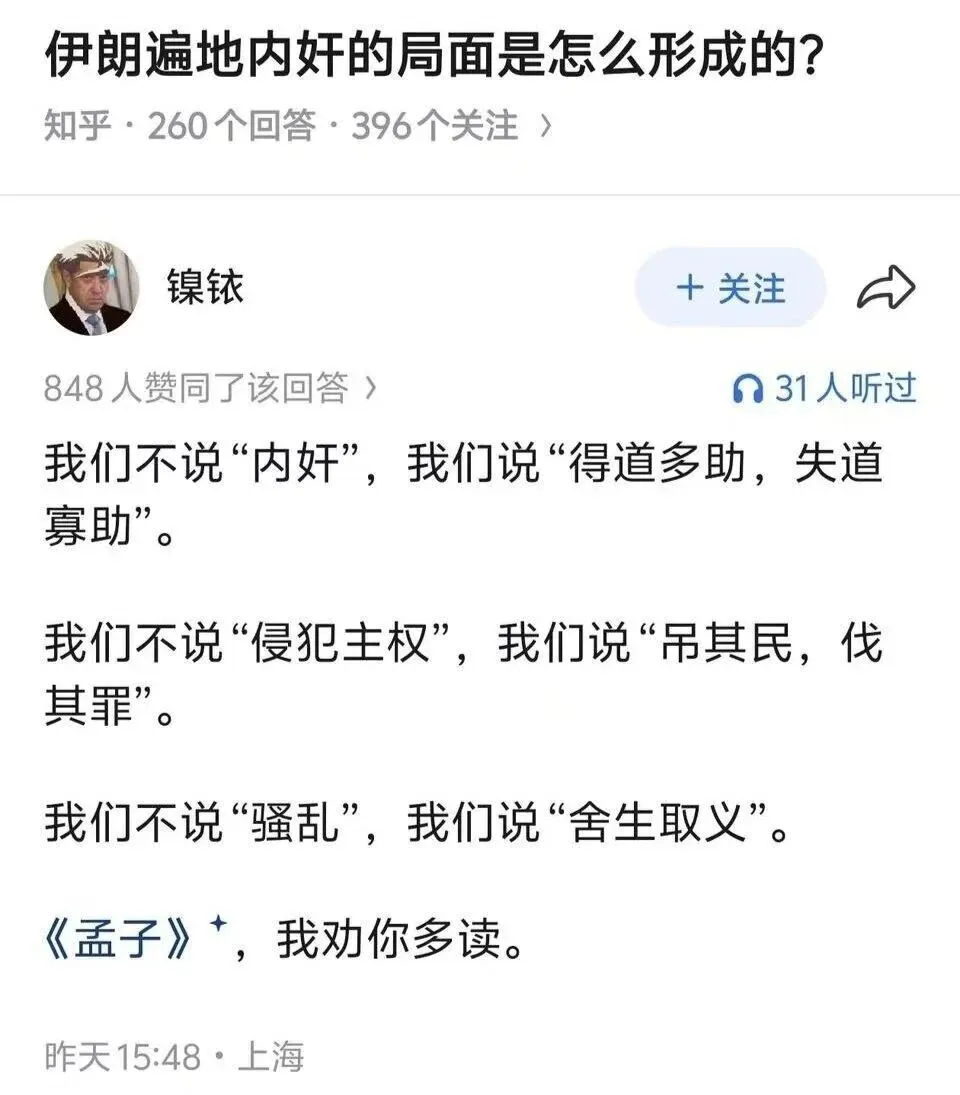
In this regard, the habits of Chinese society are still different. Under normal circumstances, Chinese society does not shy away from talking about "war" itself, as long as it is a "just war." However, the Chinese people are particularly concerned about the moral connotation of words.
I have written before that the United States invaded Iraq in 2003 and Russia invaded Ukraine in 2022. Someone said: "You use the word 'invasion', which is quite conscientious." I don't know which part he was referring to. To me, both of them are of course "invasions", but as far as I know, many people firmly believe that only one of them can be called an "invasion."
There is no such moral overtone in English. The word "invasion" is conceptually neutral and refers to "an assault, attack, act of entering a country or territory as an enemy." Even at the end of World War II, when the US military invaded Germany as a righteous force, they also used the word invasion.
However, in Chinese custom, one must emphasize the justifiable moral legitimacy of a certain party. The just party can conquer the north and south, but only the attacks launched by the unjust party are called "invasions". In this regard, East Asian cultures are very similar. One of the focuses of Japan’s textbook incident that triggered a strong backlash from the Chinese people was that Japan ambiguously claimed that it had “entered” China. To this day, whether the unconditional surrender in 1945 is called "the end of the war" or "the defeated war" can still reveal a Japanese's political tendency.
The reason why so many people have to dig out words is of course not because they have nothing to do but because people’s ideology is influenced by these concepts – that’s why Confucius said, “If the name is not correct, the words will not be consistent.” Only by clearly defining the concept itself and clarifying the facts can we “accord the name and be responsible for the reality.”
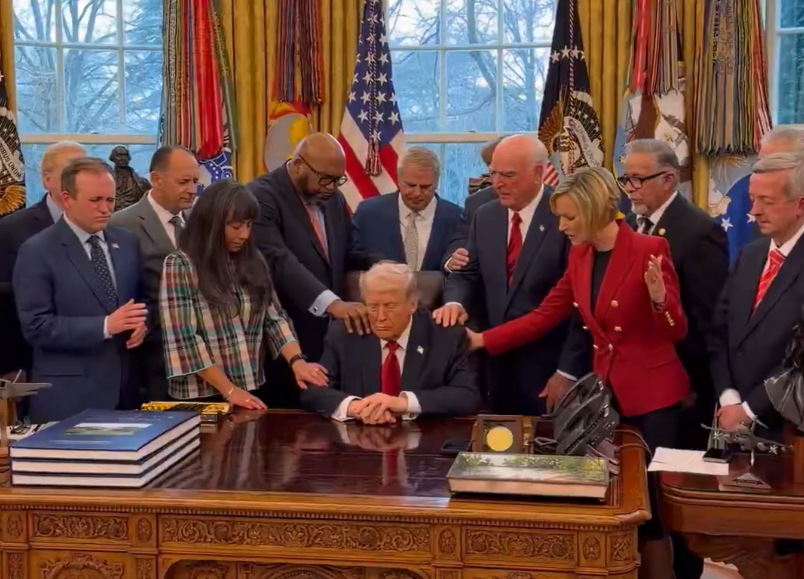
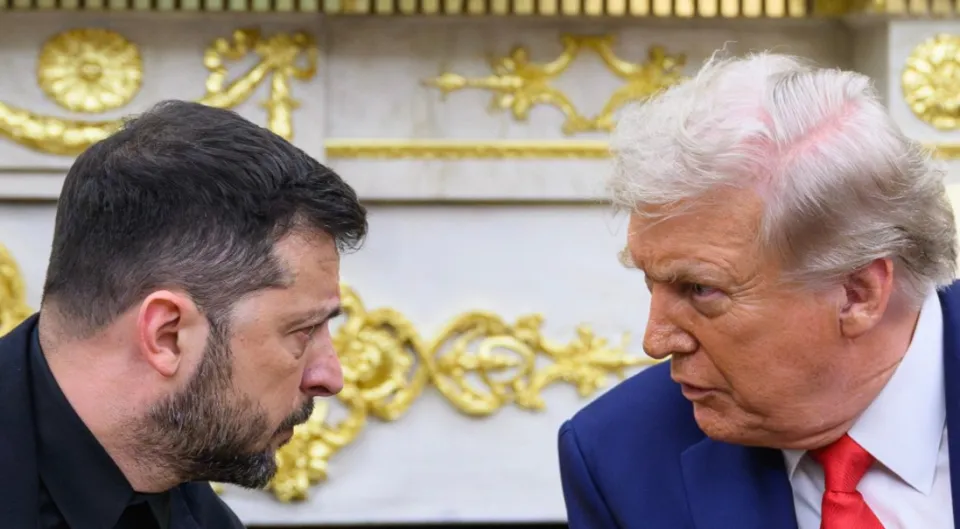
In this sense, the debate within the Trump administration about whether to call this war a "war" or an "action" is not a boring war of words. It points to a change worthy of attention: Trump likes to bypass the formal procedures that constrain his hands and feet, and instead uses a set of informal words and operations. This not only allows him to unilaterally launch wars without being accused of lack of legality, but more importantly, these important operations can be secretly decided by a closed small circle without formal discussion.
This approach was already visible when he arrested Maduro: this was also regarded as an "operation", and the other party was not regarded as a national leader, but a criminal suspect. Although this bombing of Iran hit more than 5,500 targets, in Trump's eyes, it was not an act of war between countries, but more like a violent law enforcement by the police. In other words, this already presupposes that the two parties do not have equal rights, but that one party thinks it is just and takes all necessary actions.
The greatest danger and hidden danger lies here: who has the right to judge justice and injustice?